
Contents
Introduction & Spiritual Essence
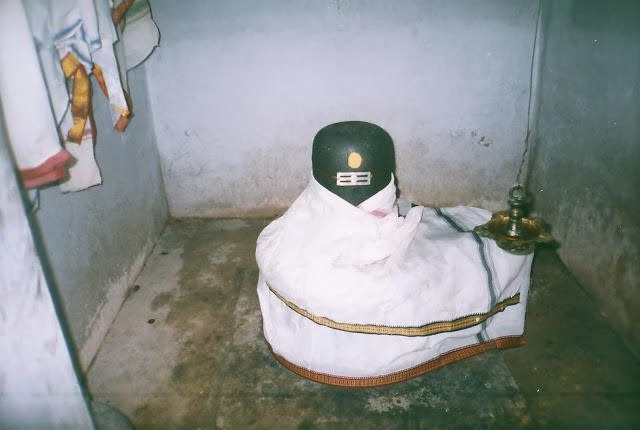
The Kalahastheeswarar Temple in Pillaiyarpalayam, Kanchipuram, stands as a profound spiritual sanctuary dedicated to Lord Shiva. Here, the presiding deity is worshipped as Kalahastheeswarar (the Lord of the Spider/Moth), embodying the element of Vayu (Air). Alongside this sanctum, the temple houses a shrine for Palaniandavar (Lord Murugan), making it a dual center of devotion. The temple is revered as one of the significant “Panja Bhootha Sthalams” (Five Element Temples) of Kanchipuram, representing the element of Air. [Pañja Bhūtha Sthala]
Phalaśruti: Why do devotees visit this sacred site? According to temple lore, offering prayers here is believed to cleanse ancestral karma and grant relief from Rahu-Ketu doshas. The sanctity of Kalahastheeswarar is said to carry the power to remove the illusion of the material world (Maya) and grant spiritual liberation (Moksha) to the devotee.
Historical Origins & Scriptural Legend
Legends of Vayu and the Spider
Tradition holds that this temple is deeply connected to the primordial elements. The name “Kalahastheeswarar” is traditionally associated with a legend involving a Spider (Kalahasti) and the Moth (Hasthi), symbolizing the eternal struggle between the Creator and the created. More deeply, the temple represents the element of Vayu (Air), where Lord Shiva is said to have manifested to bless the Devas.
According to temple records, the site was originally constructed during the Pallava dynasty (approx. 7th–9th century CE), with significant additions and renovations made by the Chola Kings (11th century CE) and later during the Vijayanagara Empire. While specific inscriptions at this smaller Kanchipuram shrine focus on land grants, the architectural style firmly dates the structural core to the early Chola period.
Architectural Marvels
The temple showcases the classic Dravidian style of architecture, characterized by towering gateways (Gopurams) and intricate stonework. The main sanctum (Garbhagriha) houses the Shiva Lingam, which faces East.
Key architectural elements include:
- The Vastu Orientation: The temple follows the strict principles of Vastu Shastra, with the axis aligning to the East, capturing the first rays of the sun for morning rituals.
- Dravidian Features: You will observe the tiered storeys of the Rajagopuram, which though modest in height compared to the larger Ekambareswarar temple, features detailed stucco figures and sculptures of deities.
- Pancha Bhootha Significance: As a Air (Vayu) temple, the sanctum is designed to allow natural ventilation, symbolizing the free flow of cosmic energy.
The temple complex also includes a mandapa (hall) supported by ornate pillars depicting scenes from Shiva Purana. While not officially listed as a UNESCO site, it falls under the heritage protection of the Archaeological Survey of India (ASI) for its historical significance within the Kanchipuram zone.
Photo Gallery
Click on the images above to view the architecture of the Kalahastheeswarar temple.
Darshan & Ritual Logistics
The temple maintains a strict daily schedule for rituals, offering a serene atmosphere for prayer. Below are the operational timings for 2026.
Daily Timings
| Session | Timing |
|---|---|
| Morning Darshan | 06:00 AM – 12:00 PM |
| Afternoon Break | 12:00 PM – 04:00 PM |
| Evening Darshan | 04:00 PM – 08:30 PM |
Key Sevas (Rituals) & Booking
Devotees can participate in several sevas. To streamline the experience, Online Seva Booking is available via the official Tamil Nadu temple portals (ttd.tamilnadutourism.tn.gov.in).
- Abhishekam: Ritual bathing of the deity with water, milk, and honey. Best performed on Mondays.
- Archana: Recitation of the 108 names of Lord Shiva.
- Rudra Abhishekam: A special Vedic ritual performed for removing obstacles.
2026 Festival Calendar
Major festivals are celebrated with great fervor. Mark your calendar:
- Pradosham (Monthly): 14th & 29th of every month (specific dates vary by lunar calendar).
- Maha Shivaratri: February 26, 2026.
- Arudra Darshanam: June 28, 2026 (Celebration of Nataraja).
Practical Visitor Guidance
To ensure a peaceful darshan, please adhere to the following guidelines:
- Dress Code: Traditional attire is mandatory. Men should wear dhotis or trousers with shirts; women should wear sarees, churidars, or skirts.
- Photography Rules: Photography is prohibited inside the inner sanctum (Garbhagriha). Mobile photography is allowed in the outer precincts.
- Crowd Management: Early mornings (6:00 AM – 8:00 AM) are ideal for a quiet darshan. Weekends and Mondays witness higher footfall.
- Seasonal Advice: Kanchipuram can be hot in May and June; carry a water bottle and an umbrella. The monsoon (October–December) brings cool weather, but rain gear is recommended.
- Accessibility: The temple complex is on level ground, making it accessible for elderly devotees. Wheelchairs are available upon request at the counter.
Pilgrimage Connectivity
Located in the heart of Kanchipuram, the temple is easily accessible.
How to Reach
- By Air: Chennai International Airport (MAA) is the nearest airport, located approximately 75 km away. From there, you can hire a taxi or take a bus to Kanchipuram.
- By Rail: Kanchipuram Railway Station is the nearest railhead, just 4 km from Pillaiyarpalayam. Alternatively, Chengalpattu Junction (28 km) offers frequent connections to Chennai.
- By Road: Kanchipuram is well-connected by NH 48 (Chennai–Bangalore Highway). Buses are frequently available from Chennai (CMBT) and Koyambedu.
Nearby Sacred Sites (Pilgrimage Circuit)
Extend your spiritual journey by visiting these nearby landmarks:
- Thirumetrali Temple: Located very close to Pillaiyarpalayam, this is a revered Paadal Petra Sthalam (one of the 275 revered Shiva temples).
- Ekambareswarar Temple: The largest temple in Kanchipuram, representing the element of Earth (Prithvi), located 4 km away.
- Kamakshi Amman Temple: The central Shakti (Goddess) shrine of Kanchipuram, essential for a complete pilgrimage circuit.
Frequently Asked Questions (FAQs)
1. Is there a VIP darshan entry?
Yes, the temple administration offers a special darshan ticket (often priced nominally) for faster entry during peak hours. This can be purchased at the temple counter or booked online.
2. What is the significance of this temple being a “Pancha Bhootha” shrine?
Kanchipuram hosts five major Shiva temples, each representing a natural element. Kalahastheeswarar Temple represents Vayu (Air), distinguishing it from the other temples like Ekambareswarar (Earth) and Kailasanathar (Ether).
3. Is the temple wheelchair accessible?
Yes, the inner prakaram (circumambulatory path) is flat and tiled, making it relatively easy for senior citizens and wheelchair users to navigate.
4. Are Non-Hindus allowed inside?
Like most ancient Shiva temples in Tamil Nadu, entry is generally restricted to Hindus only. Please respect the local customs and traditions.
5. Is there a luggage counter?
Yes, a cloakroom is available near the entrance where you can deposit your luggage and footwear securely for a nominal fee.
Contact Details
For specific inquiries regarding rituals or festivals:
- Address: Kalahastheeswarar Temple, Pillaiyarpalayam, Kanchipuram, Tamil Nadu 631501.
- Administration: The Executive Officer, Kanchipuram Hindu Religious & Charitable Endowments (HR&CE) Department.
Disclaimer: Timings and ritual schedules are subject to change during festivals. Please check the official Tamil Nadu Tourism or HR&CE website for real-time updates before planning your visit.
Recent Posts

Shri Kaamkoteeshwar Mandir, Varanasi – History & Significance
In the heart of Kashi, the eternal city of Lord Shiva, where the Ganges flows with celestial grace, stands the Shri Kaamkoteeshwar Mandir. This sacred Sannidhi is not merely a temple but a profound spiritual bridge between the Northern…

ओ सांवरे तूने ही मुझको संभाला – Lyrics & Meaning
ओ सांवरे तूने ही मुझको संभाला – A Prayer to Shyam Origin & Spiritual Essence Why This Bhajan Resonates Devotees chant this when overwhelmed by life’s storms—the refrain ‘तूने ही मुझको संभाला’ is the soul’s sigh of relief: “You…

कथा ये है महाराज मेरे की – Lyrics & Meaning
कथा ये है महाराज मेरे की छत्रपति संभाजी महाराज – A Prayer to Chhatrapati Sambhaji Maharaj Origin & Spiritual Essence Why This Bhajan Resonates Devotees chant this when their spirit feels tested—its powerful refrain “महाराज मेरे” is a soul’s…

Rigveda Samhita Yathartha Anuvada (ऋग्वेद संहिता यथार्थ अनुवाद) – Complete Set with Anvayartha & Hindi/English Translation
The Rigveda is the oldest surviving scripture of humanity and the foundational text of Sanātana Dharma. For serious students, scholars, UPSC aspirants studying ancient Indian history, Sanskrit learners, and spiritual seekers, a precise and grammatically structured translation is indispensable.…

आना भी अकेला है जाना भी अकेला है – Lyrics & Meaning | BharatTemples
आना भी अकेला है जाना भी अकेला है – A Prayer to the Divine Witness Origin & Spiritual Essence Why This Bhajan Resonates Devotees turn to this bhajan in moments of deep reflection—when life’s attachments begin to ache. The…

माता शेरावाली के द्वार जो भी जाता है – Lyrics & Meaning
माता शेरावाली के द्वार जो भी जाता है – A Prayer to Maa Sherawali Origin & Spiritual Essence Why This Bhajan Resonates Devotees turn to this bhajan in times of fear or uncertainty—its promise that no one leaves Maa’s…

मार लेना सपणी उबार लेणा भवरा – Lyrics & Meaning
मार लेना सपणी उबार लेणा भवरा – A Prayer to the Divine Beloved Origin & Spiritual Essence Why This Bhajan Resonates Devotees chant this in moments of deep vulnerability—its cry of “मार लेना सपणी, उबार लेणा भवरा” is the…

हमें श्याम सुंदर भरोसा तुम्हारा – Lyrics & Meaning
हमें श्याम सुंदर भरोसा तुम्हारा – A Prayer to Shyam Sundar Origin & Spiritual Essence Why This Bhajan Resonates Devotees chant this when feeling alone—its refrain ‘de do sahara’ is the soul’s cry for divine support. Lyrics in Hindi…

Mere Satguru Ne Di Thi Davai Lyrics in Hindi & Meaning
Mere Satguru Ne Di Thi Davai: Invoking the Guru’s Liberating Wisdom This soul-stirring bhajan venerates the Satguru (True Spiritual Master) as the divine physician who dispenses the only remedy for life’s deepest sufferings. Composed by Sant Karmaveer Tufani, it…

Janm Diyo Thari Maa Dukh Dekhiyo Lyrics in Hindi & Meaning
जन्म दियो थारी माँ दुख देखियो (Maa’s Grief Upon Birthing You) This soul-stirring Chetavani Bhajan (admonitory hymn) is addressed to the Divine Mother (Maa) – a call for repentance when children forget their filial duties in the dark age…