
Contents
- 1 Introduction & Spiritual Essence
- 2 Historical Origins & Scriptural Legend
- 3 Architectural Marvels
- 4 Darshan & Ritual Logistics
- 5 Practical Visitor Guidance
- 6 Pilgrimage Connectivity
- 7 Frequently Asked Questions (FAQ)
- 7.1 1. Is there a VIP darshan entry available?
- 7.2 2. What is the significance of the Manikarnigai Teertham?
- 7.3 3. Can we conduct naming ceremonies or first hair removal (Mundan) in the temple?
- 7.4 4. What is the best time of year to visit Vedaranyam?
- 7.5 5. Is non-vegetarian food allowed in Vedaranyam?
- 8 Contact Details
Introduction & Spiritual Essence
Perched on the serene shores of the Bay of Bengal, the Vedaranyeswarar Temple, Vedaranyam, Nagapattinam stands as a monumental beacon of Shaivism. Dedicated to Lord Shiva, this temple is revered as the place where the Vedas themselves worshipped the Supreme Being. The primary deity, Vedaranyeswarar, is a Swayambhu Lingam (self-manifested), symbolizing divine energy that requires no human intervention for its creation.
Consort to Vedaranyeswarar is Goddess Veda Nayaki, also known as Veena Vadha Vidushani. This temple is not just a structure but a living organism of faith, holding the title of one of the 275 Paadal Petra Sthalam (temples glorified by the Nayanars in the 7th century Tevaram) and one of the Sapta Vidanga Stalam (seven temples where the Thyagaraja form is worshipped).
Phalaśruti: Why Devotees Visit
The spiritual potency of Vedaranyam is profound. According to temple records and the Thiru Vilaiyadal Puranam, bathing in the Manikarnigai Teertham (temple tank) is believed to bestow the punya (merit) of bathing in the holy rivers Ganga, Yamuna, and Narmada simultaneously.
Specific benefits sought by devotees include:
- Cleansing Ancestral Karma: Performing rituals here is believed to liberate ancestors from cycles of suffering.
- Removal of Malefic Planetary Effects: Especially those caused by Sarpa Dosha (serpent afflictions).
- Child Blessings & Wisdom: Couples praying for progeny and parents seeking education for children.
- Relief from Sins: Tradition holds that even severe sins, such as Brahmahathi (unintentional killing), are absolved here.
Historical Origins & Scriptural Legend
Chola Dynasty Origins
The architectural and historical grandeur of the temple traces back to the Chola Dynasty. Specifically, it is attributed to Aditya Chola (871–907 CE). History records indicate that Aditya Chola built a series of temples along the banks of the river Cauvery to commemorate his victory in the historic Thiruppurambiyam battle. Numerous stone inscriptions dating back to the Chola era are still legible on the temple walls, documenting land grants and ritualistic protocols.
The Sthala Purana: The Vedas and the Locked Door
According to the Sthala Purana, the temple was originally known as Thirumaraikadu. The name translates to “The Grove of Sacred Hymns.” Legend states that the four Vedas worshipped Lord Shiva here. Upon completion of their worship, the Vedas locked the main entrance to prevent Kali Yuga (the current age of decay) from diminishing the temple’s sanctity.
Centuries later, the revered Nayanar saints, Saint Appar and Saint Gnanasambandar, arrived at Thirumaraikadu. Finding the main door shut, they were confused by devotees entering through a side entrance. Learning that the Vedas themselves had locked the door, Appar wept in devotional ecstasy, singing ten verses known as Pannin Ner Moshiyal. Miraculously, the main doors opened.
To ensure devotees could access the temple freely in the future, Saint Gnanasambandar sang a hymn beginning with “Chathuram Marai”, which commanded the doors to open and close at designated times, a tradition maintained to this day.
Architectural Marvels
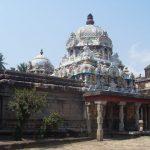
The temple is a classic example of Dravidian Architecture. It is designed according to the principles of Vastu Shastra, oriented to align with the rising sun over the Bay of Bengal.
The Rajagopuram and Mandapas
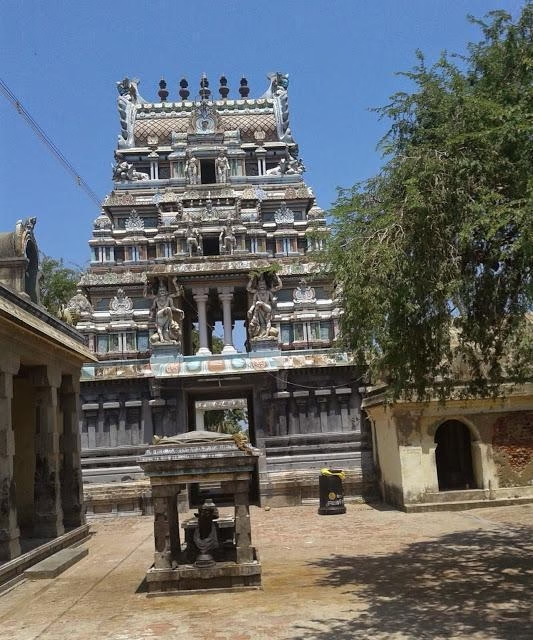
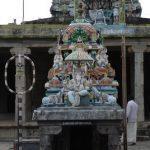
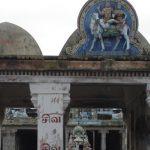
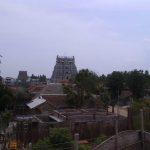
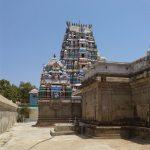
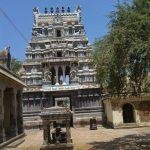
The Rajagopuram (main gateway tower) is five-tiered, welcoming pilgrims into a spacious courtyard divided by two Prakarams (enclosed courtyards). The central Mandapa (hall) features intricate carvings depicting stories from the Thiru Vilaiyadal Puranam. The pillars are monolithic, showcasing the finesse of Chola artisans.
The Sanctum Sanctorum
The Garbhagriha (inner sanctum) houses the Swayambhu Lingam of Vedaranyeswarar, facing east. The sanctum is unique due to its association with the Thyagaraja aspect. In the Sapta Vidanga Stalam series, the Thyagaraja idol here is called Bhuvani Vidangar.
Notable Sculptures and Sthala Vriksham
- Sthala Vriksham (Sacred Tree): Two trees dominate the temple landscape—the Vanni Maram (Acacia) and the Punnai Maram (Indian Laurel). Legend says the Vedas reside in these trees during Kali Yuga.
- The Divine Marriage: Agastya Muni is said to have witnessed the celestial marriage of Shiva and Parvati here, a scene captured in reliefs near the southern wall.
- Thyagaraja Idol: The processional deity (Utsava Murthy) is known as Bhuvani Vidangar. The dance performed by this idol is famous as Hamsa Nadanam (Swan Dance).
Darshan & Ritual Logistics
The temple operates on a strict schedule of six daily rituals (Arthajama Poojas). Devotees are encouraged to check the specific timings during festivals.
Daily Timings (2026 Schedule)
| Session | ||
|---|---|---|
| Morning | 06:00 AM – 11:00 AM | General Darshan & Early Pujas |
| Afternoon | Closed | Sanctum Sanctorum Rest Period |
| Evening | 05:00 PM – 08:30 PM | Evening Aarti & Closing Rituals |
Key Sevas & Online Booking
The temple administration is managed by the Hindu Religious and Endowment Board (HR&CE), Tamil Nadu. While physical booking is available at the counter, the system is increasingly moving online.
- Abhishekam: Performed with sandalwood paste, turmeric, milk, and sacred ash (Vibhuti). Timing: 8:00 AM to 10:30 AM.
- Archana: Chanting of the 108 names of Shiva.
- Annadhanam: Free midday meal for pilgrims (donations accepted).
- Online Booking: Visit the official Tamil Nadu HR&CE portal to book Abhishekam and Special Darshan tickets in advance.
2026 Festival Calendar
Temple festivals in 2026 will follow the Tamil Calendar. Note: Dates are approximate based on celestial alignments.
- Masi Magam Brahmotsavam (Feb/Mar 2026): The most significant festival. The processional deity visits the Aadhi Sethu (shore). Phalaśruti: Bathing in the sea on this day is equal to 100 baths at Rameswaram.
- Aadi Pooram (Jul/Aug 2026): A 10-day festival dedicated to Goddess Veda Nayaki.
- Skanda Sashti (Oct/Nov 2026): Dedicated to Lord Murugan, celebrated with grand processions.
- Pradosham: Occurs twice monthly (13th day of the Waxing/Waning moon). Expect heavy crowds.
Practical Visitor Guidance
Dress Code and Etiquette
As a major Paadal Petra Sthalam, modesty is mandatory. Men should wear dhotis or formal trousers and shirts; women should wear sarees, salwar kameez, or traditional attire. Western clothing (shorts, skirts above knee) is strictly prohibited.
Crowd Management
Best Hours to Visit: Weekday mornings (Tuesday or Thursday) between 7:00 AM and 9:00 AM offer the smoothest darshan experience. Avoid weekends and Pradosham days if possible.
Seasonal Advice: Tamil Nadu coastal weather is humid. In May (peak summer), carry water and head coverings. During the Monsoon (Oct-Dec), carry an umbrella.
Facilities
- Mobile Lockers: Available near the entrance for a nominal fee.
- Shoe Storage: Free shoe deposit is available.
- Photography: Strictly prohibited inside the sanctum sanctorum and around the inner prakaram. Mobile photography is permitted in the outer corridors.
- Accessibility: The temple is wheelchair accessible up to the second prakaram. However, the inner sanctum has high stone steps, which may be challenging for the elderly.
Pilgrimage Connectivity
How to Reach Vedaranyam
Vedaranyam is a coastal town in the Nagapattinam district. It is well-connected by road and rail.
- By Air: The nearest airport is Trichy (Tiruchirappalli) International Airport, located approximately 135 km away. Taxis and buses are available from the airport.
- By Rail: Vedaranyam Railway Station is the nearest railhead, just 2 km from the temple. Alternatively, Nagapattinam Railway Station (45 km) offers more connectivity to major cities.
- By Road: The town is located on State Highway 22 (SH-22) and is accessible via National Highway 232 (NH 232). Direct buses run frequently from Thanjavur, Nagapattinam, and Tiruvarur.
Nearby Sacred Sites (Pilgrimage Circuit)
- Agathiyampalli (3 km): Another Paadal Petra Sthalam located near the sea shore.
- Kodiakarai (12 km): A dense coastal reserve forest with the Vedaranyeswarar shrine and a lighthouse. It is one of the seven Sapta Vidanga Stalam.
- Ramar Padam (2 km): A shrine housing the footprints of Lord Rama. Legend says Rama worshipped here to absolve sins from the Ravana war.
- Naluvedapathi: A nearby village known for its massive Banyan tree, considered auspicious for performing rites.
Frequently Asked Questions (FAQ)
1. Is there a VIP darshan entry available?
Yes, the temple offers a “Special Darshan” ticket which allows pilgrims to bypass the general queue. These tickets can be purchased online via the HR&CE website or at the temple counter (subject to availability). Children below 12 years are usually allowed free entry.
2. What is the significance of the Manikarnigai Teertham?
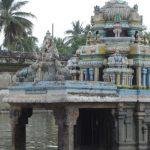
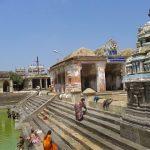
The Manikarnigai Teertham is the temple tank located within the complex. It is considered one of the most sacred waters in Tamil Nadu. Devotees believe that a dip here washes away sins equivalent to the merit gained by bathing in holy rivers like the Ganges. It is also associated with the Goddess appearing as Sundari Ambal.
3. Can we conduct naming ceremonies or first hair removal (Mundan) in the temple?
Absolutely. The Vedaranyeswarar Temple is a popular venue for Anna Prashana (first solid food ceremony), naming ceremonies, and Chudakarana (first haircut). These rituals must be booked in advance through the temple office or online portal.
4. What is the best time of year to visit Vedaranyam?
The ideal time is between October and February. The weather is pleasant, and you can witness festivals like Navaratri and the onset of the Margazhi season. However, for the spiritually inclined, the Masi Magam festival (February/March) is the most auspicious time to visit.
5. Is non-vegetarian food allowed in Vedaranyam?
Vedaranyam is a temple town. While the temple strictly follows Saivite vegetarian protocols, there are hotels in the town that serve non-vegetarian food. However, it is recommended to avoid non-vegetarian food on the day of your darshan to maintain ritual purity.

Contact Details
Sri Thiru Marai Kadar Temple
Vedaranyam, Nagapattinam District
Phone: +91- 4369 -250 238
Recent Posts

Shri Kaamkoteeshwar Mandir, Varanasi – History & Significance
In the heart of Kashi, the eternal city of Lord Shiva, where the Ganges flows with celestial grace, stands the Shri Kaamkoteeshwar Mandir. This sacred Sannidhi is not merely a temple but a profound spiritual bridge between the Northern…

ओ सांवरे तूने ही मुझको संभाला – Lyrics & Meaning
ओ सांवरे तूने ही मुझको संभाला – A Prayer to Shyam Origin & Spiritual Essence Why This Bhajan Resonates Devotees chant this when overwhelmed by life’s storms—the refrain ‘तूने ही मुझको संभाला’ is the soul’s sigh of relief: “You…

कथा ये है महाराज मेरे की – Lyrics & Meaning
कथा ये है महाराज मेरे की छत्रपति संभाजी महाराज – A Prayer to Chhatrapati Sambhaji Maharaj Origin & Spiritual Essence Why This Bhajan Resonates Devotees chant this when their spirit feels tested—its powerful refrain “महाराज मेरे” is a soul’s…

Rigveda Samhita Yathartha Anuvada (ऋग्वेद संहिता यथार्थ अनुवाद) – Complete Set with Anvayartha & Hindi/English Translation
The Rigveda is the oldest surviving scripture of humanity and the foundational text of Sanātana Dharma. For serious students, scholars, UPSC aspirants studying ancient Indian history, Sanskrit learners, and spiritual seekers, a precise and grammatically structured translation is indispensable.…

आना भी अकेला है जाना भी अकेला है – Lyrics & Meaning | BharatTemples
आना भी अकेला है जाना भी अकेला है – A Prayer to the Divine Witness Origin & Spiritual Essence Why This Bhajan Resonates Devotees turn to this bhajan in moments of deep reflection—when life’s attachments begin to ache. The…

माता शेरावाली के द्वार जो भी जाता है – Lyrics & Meaning
माता शेरावाली के द्वार जो भी जाता है – A Prayer to Maa Sherawali Origin & Spiritual Essence Why This Bhajan Resonates Devotees turn to this bhajan in times of fear or uncertainty—its promise that no one leaves Maa’s…

मार लेना सपणी उबार लेणा भवरा – Lyrics & Meaning
मार लेना सपणी उबार लेणा भवरा – A Prayer to the Divine Beloved Origin & Spiritual Essence Why This Bhajan Resonates Devotees chant this in moments of deep vulnerability—its cry of “मार लेना सपणी, उबार लेणा भवरा” is the…

हमें श्याम सुंदर भरोसा तुम्हारा – Lyrics & Meaning
हमें श्याम सुंदर भरोसा तुम्हारा – A Prayer to Shyam Sundar Origin & Spiritual Essence Why This Bhajan Resonates Devotees chant this when feeling alone—its refrain ‘de do sahara’ is the soul’s cry for divine support. Lyrics in Hindi…

Mere Satguru Ne Di Thi Davai Lyrics in Hindi & Meaning
Mere Satguru Ne Di Thi Davai: Invoking the Guru’s Liberating Wisdom This soul-stirring bhajan venerates the Satguru (True Spiritual Master) as the divine physician who dispenses the only remedy for life’s deepest sufferings. Composed by Sant Karmaveer Tufani, it…

Janm Diyo Thari Maa Dukh Dekhiyo Lyrics in Hindi & Meaning
जन्म दियो थारी माँ दुख देखियो (Maa’s Grief Upon Birthing You) This soul-stirring Chetavani Bhajan (admonitory hymn) is addressed to the Divine Mother (Maa) – a call for repentance when children forget their filial duties in the dark age…