

Contents
- 1 Chenganmaaleeswarar Temple: A Definitive Pilgrimage Guide to Chenganmaal
Chenganmaaleeswarar Temple: A Definitive Pilgrimage Guide to Chenganmaal
Updated for 2026 | Lead Architect & SEO Strategist: bharattemples.com
Welcome to the sacred village of Chenganmaal, nestled near Thiruporur in the spiritual district of Kanchipuram. As we guide you through the Chenganmaaleeswarar Temple, we step into a narrative woven by the devotion of Lord Vishnu himself and the architectural grandeur of the Dravidian style.
Introduction & Spiritual Essence
At the heart of this village lies the Chenganmaaleeswarar Temple, a revered abode of Lord Shiva. The primary deity, Chenganmaaleeswarar, is a self-manifested (Swayambhu) Lingam facing east. His divine consort is enshrined as Goddess Brihannayaki, facing south, radiating maternal grace.
Phalaśruti: The Spiritual Benefits
Devotees flock to this ancient shrine seeking liberation from sins and the removal of obstacles in their path to prosperity. According to temple records and local belief, worshipping here cleanses ancestral karma. The temple is particularly potent for those seeking relief from Pitru Dosha (ancestral afflictions), as the adjacent pond—Vishnu Theertham—is believed to have been sanctified by the feet of Lord Vishnu during his penance.
Historical Origins & Scriptural Legend
Constructors and Century:
While the precise donor inscriptions are faint with time, the structural elements and stone carvings date the temple construction back to the 12th Century CE. It stands as a testament to the craftsmanship of the local artisans during the post-Chola/Vijayanagara era in the Kanchipuram region.
The Legend of Vishnu’s Penance:
Tradition holds a profound story regarding the temple’s sthala purana (local lore). It is said that Lord Vishnu, in his form as Srinivasa, performed intense penance here to win the hand of Goddess Padmavathi.
According to the legend, Vishnu offered 1008 lotus flowers to Lord Shiva. As he completed the ritual, he discovered that one flower was missing from the count of 1008. Distressed by this imperfection in his devotion, Lord Vishnu did not lose heart. Instead, he offered himself as the final lotus flower to Shiva. Pleased by this ultimate sacrifice and truth, Lord Shiva blessed Vishnu, granting him the name Chenganmaaleeswarar (The Lord of the East who accepts the flower offering).
Architectural Marvels
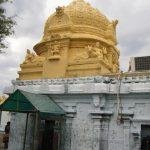
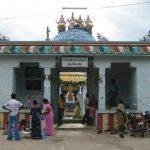
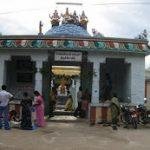
The temple is a classic example of Dravidian Architecture. Unlike grandiose temples, Chenganmaaleeswarar offers an intimate and powerful spiritual atmosphere.
Structural Elements:
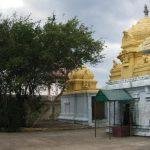
– Entrance: The temple notably lacks a Rajagopuram (grand gateway tower), typical of smaller, ancient shrives, preserving its rustic antiquity.
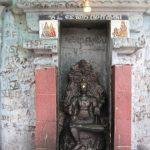
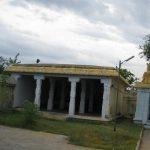
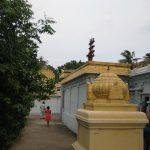
– Sanctum & Mandapas: The inner sanctum houses the east-facing Lingam. Adjacent to the main shrine is a stone-pillared Urchava Mandapam (processional hall) and a dedicated shrine for Sri Selva Vinayagar (Ganesha) in the southwest corner of the Prakaram (corridor).
– Sculptures: The outer walls and pillars feature intricate carvings of deities including Sri Subramanyar, Sri Dhakshinamurthy, Sri Brahma, and Sri Durgai. A unique feature is the shrine for Surya Bhagavan (Sun God) facing west near the main entrance.
– Sacred Trees & Water: The Sthala Viruksham is the Vilvam (Bael tree). A massive temple tank, known as Vishnu Theertham, is located on the northern side, serving as the holy water source for rituals.
Note: While this temple is a significant local heritage site, it is not a designated ASI monument or UNESCO World Heritage site, maintaining its status as a living, active place of worship.
Darshan & Ritual Logistics (2026 Schedule)
To ensure a seamless darshan experience, please refer to the daily timings and major festival dates below. Devotees can now book specific Sevas in advance.
Daily Temple Timings
| Session | Timing | Days |
|---|---|---|
| Morning | 07:00 AM – 12:00 PM | All Days |
| Evening | 04:00 PM – 07:00 PM | All Days |
Key Sevas and Booking
Available Sevas:
– Abhishekam: Performed to the main deity with milk, honey, and sacred ash.
– Archana: Personalized chanting of names and hymns.
– Deepa Aradhana: Lamp offering.
How to Book:
While the temple management is traditionally managed by the local community, many rural temples in the Kanchipuram district are integrated with the Tamil Nadu Hindu Religious & Charitable Endowments (HR&CE) online portal. For the most current online booking links for 2026, visit the official HR&CE website or inquire at the temple counter upon arrival.
2026 Major Festival Dates
- Pradosham: Bi-monthly (13th and 28th of every month) – Evening prayer sessions.
- Maha Shivaratri: February 26, 2026 – Special night-long darshan and abhishekam.
- Karthigai Deepam: December 4, 2026 – Lighting of the lamp festival.
- Arudra Darshanam: January 12, 2026 – Celebrating the cosmic dance of Shiva.
Photo Gallery
Practical Visitor Guidance
Visiting Chenganmaal requires preparation to maintain the sanctity of the pilgrimage.
- Dress Code: Traditional attire is mandatory. Men should wear Dhoti or trousers with a shirt; women should wear Saree, Salwar Kameez, or full-length skirts. Avoid shorts and sleeveless tops.
- Photography & Mobiles: Photography is generally restricted inside the inner sanctum. Use the provided lockers (if available) or switch phones to silent mode to respect the devotional atmosphere.
- Accessibility: The temple has a level floor, but the corridors are narrow. Senior citizens can request assistance from temple volunteers for priority darshan.
- Crowd Management: Mornings (8:00 AM – 10:00 AM) are the best times for a peaceful darshan. During summer (April–June), carry a water bottle and an umbrella as the prakaram can get hot.
Pilgrimage Connectivity
How to Reach
The temple is strategically located for devotees traveling from Chennai.
- By Road: Chenganmaal village is located approximately 40 km from Chennai on the Old Mahabalipuram Road (OMR). It is situated just 2 km before Thiruporur (coming from Chennai). The nearest highway is OMR/SH-58.
- Nearest Railway Station: Chengalpattu Junction (approx. 25 km away).
- Nearest Airport: Chennai International Airport (MAA) (approx. 35-40 km via ECR/OMR).
Nearby Sacred Sites (Pilgrimage Circuit)
Extend your spiritual journey by visiting these nearby landmarks:
- Thiruporur Murugan Temple: Located just 2 km away, this is a major shrine dedicated to Lord Murugan, known for its grand architecture and active worship.
- Vedagiriswarar Temple (Thirukalukundram): About 10 km away, famous for the two eagles that are believed to visit the temple daily.
- Kelambakkam Kailasanathar Temple: An ancient Shiva temple on OMR known for its unique stone carvings and historical significance.
Frequently Asked Questions (FAQ)
1. Is there a VIP darshan entry available?
As a rural temple, there is no formal VIP entry system like in larger temples. However, devotees with special needs or those conducting elaborate rituals may contact the temple priest for priority access during non-rush hours.
2. What is the significance of the pond here?
The pond is called Vishnu Theertham. According to legend, Lord Vishnu bathed here before performing his penance. Bathing in this tank is believed to purify the soul and help overcome planetary afflictions, particularly related to Jupiter (Guru).
3. Are non-Hindus allowed inside the temple?
Generally, entry is restricted to followers of the Hindu faith to maintain the sanctity of the shrine. It is advisable to check with the temple authorities at the entrance regarding specific policies.
4. What is the best time to visit with family?
The best time is between October and February when the weather in Kanchipuram is pleasant. Weekday mornings offer a quieter experience compared to weekends.
5. Is there accommodation available nearby?
The temple itself does not have guest houses. However, devotees can find decent lodges and guest houses in Thiruporur (2 km) and Kelambakkam (5 km). For luxury stays, Mahabalipuram (20 km) offers excellent resorts.
Conclusion
The Chenganmaaleeswarar Temple stands as a silent guardian of the legendary pact between Vishnu and Shiva. A visit here is not just a sightseeing trip but a journey into the depths of devotion. As you walk the prakaram where Lord Vishnu once stood as a flower, may you find the peace and blessings you seek.
For more updates on heritage temples and live darshan feeds, follow bharattemples.com. Jai Shri Ram / Om Namah Shivaya.
Recent Posts

Shri Kaamkoteeshwar Mandir, Varanasi – History & Significance
In the heart of Kashi, the eternal city of Lord Shiva, where the Ganges flows with celestial grace, stands the Shri Kaamkoteeshwar Mandir. This sacred Sannidhi is not merely a temple but a profound spiritual bridge between the Northern…

ओ सांवरे तूने ही मुझको संभाला – Lyrics & Meaning
ओ सांवरे तूने ही मुझको संभाला – A Prayer to Shyam Origin & Spiritual Essence Why This Bhajan Resonates Devotees chant this when overwhelmed by life’s storms—the refrain ‘तूने ही मुझको संभाला’ is the soul’s sigh of relief: “You…

कथा ये है महाराज मेरे की – Lyrics & Meaning
कथा ये है महाराज मेरे की छत्रपति संभाजी महाराज – A Prayer to Chhatrapati Sambhaji Maharaj Origin & Spiritual Essence Why This Bhajan Resonates Devotees chant this when their spirit feels tested—its powerful refrain “महाराज मेरे” is a soul’s…

Rigveda Samhita Yathartha Anuvada (ऋग्वेद संहिता यथार्थ अनुवाद) – Complete Set with Anvayartha & Hindi/English Translation
The Rigveda is the oldest surviving scripture of humanity and the foundational text of Sanātana Dharma. For serious students, scholars, UPSC aspirants studying ancient Indian history, Sanskrit learners, and spiritual seekers, a precise and grammatically structured translation is indispensable.…

आना भी अकेला है जाना भी अकेला है – Lyrics & Meaning | BharatTemples
आना भी अकेला है जाना भी अकेला है – A Prayer to the Divine Witness Origin & Spiritual Essence Why This Bhajan Resonates Devotees turn to this bhajan in moments of deep reflection—when life’s attachments begin to ache. The…

माता शेरावाली के द्वार जो भी जाता है – Lyrics & Meaning
माता शेरावाली के द्वार जो भी जाता है – A Prayer to Maa Sherawali Origin & Spiritual Essence Why This Bhajan Resonates Devotees turn to this bhajan in times of fear or uncertainty—its promise that no one leaves Maa’s…

मार लेना सपणी उबार लेणा भवरा – Lyrics & Meaning
मार लेना सपणी उबार लेणा भवरा – A Prayer to the Divine Beloved Origin & Spiritual Essence Why This Bhajan Resonates Devotees chant this in moments of deep vulnerability—its cry of “मार लेना सपणी, उबार लेणा भवरा” is the…

हमें श्याम सुंदर भरोसा तुम्हारा – Lyrics & Meaning
हमें श्याम सुंदर भरोसा तुम्हारा – A Prayer to Shyam Sundar Origin & Spiritual Essence Why This Bhajan Resonates Devotees chant this when feeling alone—its refrain ‘de do sahara’ is the soul’s cry for divine support. Lyrics in Hindi…

Mere Satguru Ne Di Thi Davai Lyrics in Hindi & Meaning
Mere Satguru Ne Di Thi Davai: Invoking the Guru’s Liberating Wisdom This soul-stirring bhajan venerates the Satguru (True Spiritual Master) as the divine physician who dispenses the only remedy for life’s deepest sufferings. Composed by Sant Karmaveer Tufani, it…

Janm Diyo Thari Maa Dukh Dekhiyo Lyrics in Hindi & Meaning
जन्म दियो थारी माँ दुख देखियो (Maa’s Grief Upon Birthing You) This soul-stirring Chetavani Bhajan (admonitory hymn) is addressed to the Divine Mother (Maa) – a call for repentance when children forget their filial duties in the dark age…