
Contents
Introduction & Spiritual Essence
The Chand Bhairav Temple in Varanasi (Kashi) stands as a vigilant guardian within the sacred precincts of the Durga Kund complex. Dedicated to Chand Bhairav, a fierce yet benevolent manifestation of Lord Shiva, this temple embodies the protective energy of Kashi. In the pantheon of Bhairavas, Chand Bhairav is revered as the ‘Lord of the Stars’ and a conqueror of time.
Phalaśruti: Why Visit Chand Bhairav?
According to the sacred texts of Kashi Khand, worshipping Chand Bhairav yields profound spiritual benefits:
- Protection from Evil: Devotees believe that offering prayers here shields them from negative energies and black magic.
- Overcoming Fear: It instills courage (Veera Rasa) and develops a strong mental framework to face life’s challenges.
- Divine Grace: As the protector of Kashi, worshiping him ensures prosperity and happiness for the devotee and their family.
- Ancestral Karma: It is traditionally believed that offering milk and bhang at the Bhairav temple helps in cleansing ancestral debts and karmic blockages.
Historical Origins & Scriptural Legend
The history of the Chand Bhairav Temple is deeply interwoven with the mythology of the region. While specific construction dates are often unrecorded due to the ancient nature of Kashi’s shrines, the spiritual lineage is well-documented in the Puranas.
The Legend of the Eight Bhairavas
Tradition holds that after Goddess Durga slayed the demon Durgasur (as detailed in Kashi Khand, Chapter 72), she created nine Shaktis and eight forms of Bhairav to protect the holy city of Kashi and its denizens.
Chand Bhairav is one of these eight eternal guardians. While Kashi is home to many Bhairavas, the Chand Bhairav at Durga Kund is particularly revered. Temple records and local oral legends suggest that this shrine represents a divine energy center established to maintain the spiritual balance of the universe.
Architectural Marvels
The temple is a striking example of Dravidian architecture, characterized by its imposing tower (Shikhara) and rectangular sanctum. While the historical origins are ancient, the visible structure has been restored and modified over centuries, maintaining a distinct South Indian influence in the heart of North India.
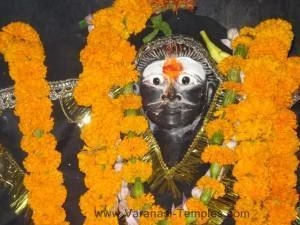
- The Sanctum (Garbhagriha): The inner sanctum houses the deity in a form that is both fierce and benevolent. The dark stone idol of Chand Bhairav is adorned with a silver crown and a sacred thread.
- Mandapas: The temple complex includes pillared halls that facilitate rituals and offer shelter to pilgrims.
- Sculptural Details: The outer walls feature intricate carvings depicting various forms of Lord Shiva and protective motifs typical of Dravidian temple art.
Darshan & Ritual Logistics
The rituals at Chand Bhairav Temple follow the traditional Vedic schedule. The atmosphere shifts from the quiet of the morning to the vibrant energy of evening aartis.
Daily Timings
| Session | Timings | Notes |
|---|---|---|
| Morning Darshan | 05:00 AM – 12:00 PM | Best time for peaceful darshan |
| Mid-Day Break | 12:00 PM – 3:00 PM | Sanctum closed for ritual cleansing |
| Evening Darshan | 03:00 PM – 10:30 PM | Includes Sandhya Aarti |
Key Sevas & 2026 Festival Dates
Devotees can perform specific Sevas to seek the blessings of Chand Bhairav. Note that online booking is available through the official Kashi Vishwanath or Varanasi temple portals.
- Abhishekam: Ritual bathing of the deity with milk, honey, and bhang (offered specifically to Bhairav).
- Archana: Recitation of the 108 names of Lord Bhairav.
- Bhairav Havan: A special fire ritual for removing obstacles (requires prior booking).
Major Festivals in 2026:
- Shivaratri (Feb 26, 2026): Elaborate night-long awakening and special Rudrabhishek.
- Magh Mela (Jan 2026): Continuous chanting and offerings.
- Kashi Yatra (Oct-Nov 2026): Special processions likely within the Durga Kund complex.
Practical Visitor Guidance
Visiting the Chand Bhairav Temple requires adherence to local customs to ensure a respectful experience.
- Dress Code: Modest traditional attire is recommended (dhoti/saree or kurta-pajama). Avoid shorts or sleeveless tops.
- Photography: Photography is strictly prohibited inside the inner sanctum.
- Mobile Lockers: Electronic items (cameras, phones) are not allowed in the sanctum. Free lockers are usually available near the entrance of the larger Durga Kund complex.
- Crowd Management: The temple is located near Durga Kund, a high-traffic area.
Best Time to Visit
To avoid the summer heat of Varanasi, plan visits between October and March. If visiting in May or June, start the journey early morning (6 AM) and carry plenty of water. Evenings are generally crowded, particularly on Mondays.
Pilgrimage Connectivity
The temple is situated in the B.27/2, Durga Kund area, a prominent locality in Varanasi.
How to Reach
- Nearest Airport: Lal Bahadur Shastri International Airport (VNS) is approximately 25 km away. A taxi (approx. 1 hour) is the most convenient option.
- Nearest Railway Station: Varanasi Junction (BSB) is 7 km from the temple. Autorickshaws and e-rickshaws are widely available.
- Road Access: The temple is easily accessible via the Varanasi-Allahabad Highway (NH-19). Vehicles can approach the Durga Kund drop-off point.
Nearby Sacred Sites
Expand your pilgrimage circuit with these nearby spiritual centers:
- Durga Kund Temple (Maa Durga): Located in the same complex, it is one of the most famous Shakti Peethas in Varanasi.
- Sankat Mochan Hanuman Temple: Located a few kilometers away, this temple is dedicated to Lord Hanuman and is famous for its Tulsi garden.
- Kashi Vishwanath Temple: The primary Jyotirlinga of Lord Shiva, located about 3 km away (requires vehicle or walking through the old city).
Photo Gallery
Frequently Asked Questions (FAQ)
1. Is there a VIP or special entry for Chand Bhairav Temple?
While there is no formal “VIP” ticket system for the Chand Bhairav shrine specifically, special entry passes are issued for the larger Durga Kund complex. Devotees seeking specific Sevas can book priority darshan slots through the official UP Tourism or Kashi Vishwanath websites.
2. Can I offer Bhang at Chand Bhairav Temple?
Yes, unlike many other temples, Bhang is a traditional offering associated with Lord Bhairav. It is usually offered during Shivaratri and special occasions. However, pilgrims should purchase Bhang from authorized government shops (Bhang Shop) and offer it respectfully at the designated area near the temple complex.
3. What is the significance of the Durga Kund location?
Chand Bhairav is placed in Durga Kund to signify the protective bond between Shiva (Chand Bhairav) and Shakti (Maa Durga). Just as the Goddess destroyed the demon, Bhairav guards her sanctuary, symbolizing the balance of destruction and protection in Kashi.
4. Is online Seva booking available?
Yes. For the convenience of pilgrims, the Varanasi temple administration has introduced digital services. You can book Abhishekam and other rituals via the official Varanasi Temple website or the UP Tourism portal.
5. Is the temple accessible for senior citizens?
The main sanctum requires climbing a few stairs. However, the complex has ramps in the outer areas. Wheelchair access to the innermost sanctum may be difficult due to the heritage structure’s age.
Recent Posts

Shri Kaamkoteeshwar Mandir, Varanasi – History & Significance
In the heart of Kashi, the eternal city of Lord Shiva, where the Ganges flows with celestial grace, stands the Shri Kaamkoteeshwar Mandir. This sacred Sannidhi is not merely a temple but a profound spiritual bridge between the Northern…

ओ सांवरे तूने ही मुझको संभाला – Lyrics & Meaning
ओ सांवरे तूने ही मुझको संभाला – A Prayer to Shyam Origin & Spiritual Essence Why This Bhajan Resonates Devotees chant this when overwhelmed by life’s storms—the refrain ‘तूने ही मुझको संभाला’ is the soul’s sigh of relief: “You…

कथा ये है महाराज मेरे की – Lyrics & Meaning
कथा ये है महाराज मेरे की छत्रपति संभाजी महाराज – A Prayer to Chhatrapati Sambhaji Maharaj Origin & Spiritual Essence Why This Bhajan Resonates Devotees chant this when their spirit feels tested—its powerful refrain “महाराज मेरे” is a soul’s…

Rigveda Samhita Yathartha Anuvada (ऋग्वेद संहिता यथार्थ अनुवाद) – Complete Set with Anvayartha & Hindi/English Translation
The Rigveda is the oldest surviving scripture of humanity and the foundational text of Sanātana Dharma. For serious students, scholars, UPSC aspirants studying ancient Indian history, Sanskrit learners, and spiritual seekers, a precise and grammatically structured translation is indispensable.…

आना भी अकेला है जाना भी अकेला है – Lyrics & Meaning | BharatTemples
आना भी अकेला है जाना भी अकेला है – A Prayer to the Divine Witness Origin & Spiritual Essence Why This Bhajan Resonates Devotees turn to this bhajan in moments of deep reflection—when life’s attachments begin to ache. The…

माता शेरावाली के द्वार जो भी जाता है – Lyrics & Meaning
माता शेरावाली के द्वार जो भी जाता है – A Prayer to Maa Sherawali Origin & Spiritual Essence Why This Bhajan Resonates Devotees turn to this bhajan in times of fear or uncertainty—its promise that no one leaves Maa’s…

मार लेना सपणी उबार लेणा भवरा – Lyrics & Meaning
मार लेना सपणी उबार लेणा भवरा – A Prayer to the Divine Beloved Origin & Spiritual Essence Why This Bhajan Resonates Devotees chant this in moments of deep vulnerability—its cry of “मार लेना सपणी, उबार लेणा भवरा” is the…

हमें श्याम सुंदर भरोसा तुम्हारा – Lyrics & Meaning
हमें श्याम सुंदर भरोसा तुम्हारा – A Prayer to Shyam Sundar Origin & Spiritual Essence Why This Bhajan Resonates Devotees chant this when feeling alone—its refrain ‘de do sahara’ is the soul’s cry for divine support. Lyrics in Hindi…

Mere Satguru Ne Di Thi Davai Lyrics in Hindi & Meaning
Mere Satguru Ne Di Thi Davai: Invoking the Guru’s Liberating Wisdom This soul-stirring bhajan venerates the Satguru (True Spiritual Master) as the divine physician who dispenses the only remedy for life’s deepest sufferings. Composed by Sant Karmaveer Tufani, it…

Janm Diyo Thari Maa Dukh Dekhiyo Lyrics in Hindi & Meaning
जन्म दियो थारी माँ दुख देखियो (Maa’s Grief Upon Birthing You) This soul-stirring Chetavani Bhajan (admonitory hymn) is addressed to the Divine Mother (Maa) – a call for repentance when children forget their filial duties in the dark age…