
Contents
Introduction & Spiritual Essence
The ancient city of Varanasi (Kashi) is revered as the eternal abode of Lord Shiva, yet even within this holy landscape, there exists a sanctuary of fierce protection and absolute salvation: the Kaal Bhairav Temple. Located in the labyrinthine alleys of the old city, this temple is dedicated to Kaal Bhairav, the fierce manifestation of Lord Shiva who serves as the “Swaswarud” (self-appointed guardian) of Varanasi.
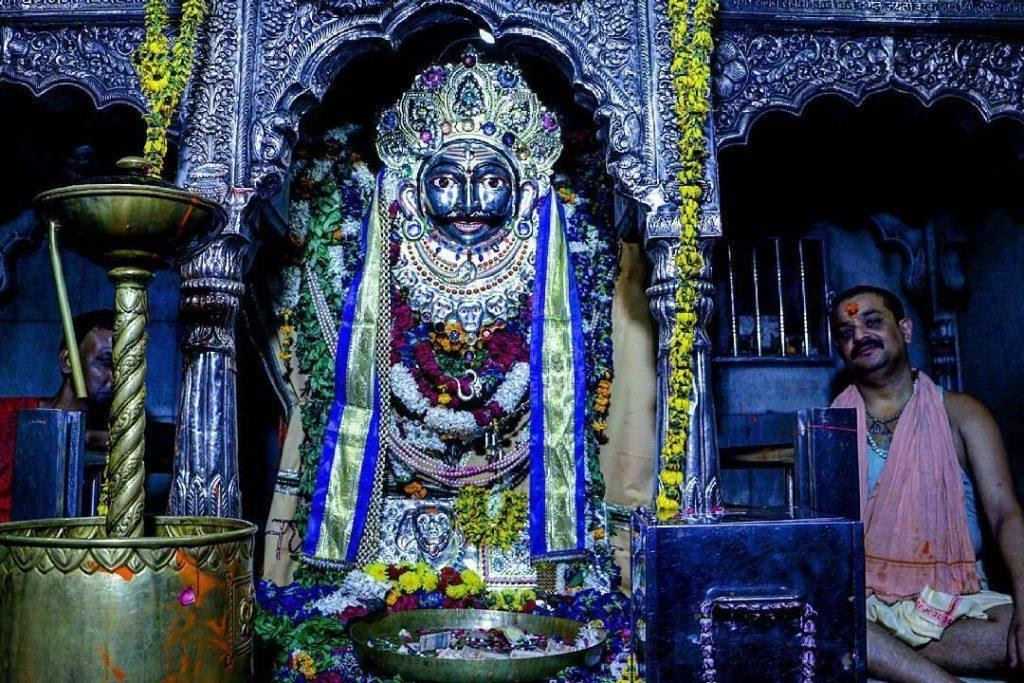
According to Hindu mythology, the primary deity here is Kaal Bhairav, often referred to as the “Lord of Time.” He is depicted in a terrifying yet benevolent form, wielding a trident (Trishul) and accompanied by a dog. The temple houses a murti (idol) of Kaal Bhairav in a reclining posture, unique to this shrine. Unlike the destructive aspects of time, here Kaal Bhairav represents the power that grants Moksha (liberation) and destroys the cycle of rebirth.
Phalaśruti: The Fruits of Devotion
Why do millions of devotees flock to this temple annually? The spiritual benefits are profound:
- Cleansing of Ancestral Karma: It is believed that worshipping Kaal Bhairav releases the devotee and their ancestors from the cycle of sins.
- Removal of Fear: As the conqueror of fear (Bhaya), devotees seek his blessings to overcome psychological fears and external dangers.
- Protection in Travel: Local tradition holds that Kashi residents seek permission from Kaal Bhairav before leaving the city and offer gratitude upon their safe return.
- Resolution of Brahma Hatya Dosh: As explained in the legend, the deity absolves the specific affliction of killing a Brahmin, symbolizing the destruction of the ego.
Historical Origins & Scriptural Legend
While the exact construction date of the current structure is often cited as the 17th century, the spiritual roots of the Kaal Bhairav Temple trace back to the dawn of creation itself.
The Sthala Purana
Tradition holds that once Lord Brahma boasted of his supremacy before Lord Shiva. In response, Shiva manifested a fierce form, Kaal Bhairav, who severed one of Brahma’s five heads. This act incurred the sin of Brahma Hatya (killing a Brahmin). Kaal Bhairav was instructed to wander until he found absolution. He entered the sacred grounds of Kashi, where the sin immediately dissolved into the Kapal Mochan Tirtha. Thus, Kaal Bhairav chose Varanasi as his eternal home, serving as the judge of time who weighs the sins and virtues of all souls entering the city.
Scriptural References
The Kashi Khand (Chapter 31) of the Skanda Purana explicitly details these events. It states that no one can achieve liberation without the grace of Kaal Bhairav. Furthermore, the Vedas themselves proclaim Shiva as the supreme being, and Kaal Bhairav is the terrifying yet compassionate form of that ultimate reality.
Architectural Marvels
The Kaal Bhairav Temple showcases a distinct blend of spiritual symbolism and architectural prowess, primarily reflecting the Dravidian style. While most temples in Varanasi feature Nagara style architecture, this shrine is a testament to the southern influence brought in by various dynasties over centuries.
Key Features
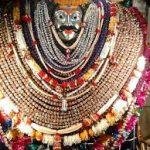
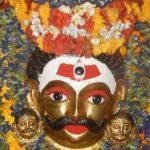
- The Sanctum (Garbhagriha): The inner chamber houses the silver-faced idol of Kaal Bhairav. The deity is shown reclining on a corpse, symbolizing his control over death.
- The Crown and Ornaments: The murti is adorned with a golden crown and jewelry, offering a stark contrast to his fierce visage.
- Vastu Shastra: The temple layout follows Vastu principles to channel energy. The inner sanctum is designed to amplify the acoustic resonance of chants, creating a vibrating spiritual atmosphere.
- Surrounding Walls: Intricate carvings depict scenes from the Puranas, specifically the episode of Brahma and the creation of Bhairav.
While not officially designated as an ASI protected monument, the temple is maintained with high reverence, preserving its ancient stone work and silver plating.
Darshan & Ritual Logistics (2026 Schedule)
Performing Abhishekam (ritual bathing) with milk, honey, and ghee is the most popular seva here. Devotees also offer black sesame oil (Til ka Tel) to light the lamp, which is believed to ward off evil spirits.
Daily Temple Timings
| Session | Timings |
|---|---|
| Morning Darshan | 05:30 AM – 12:00 PM |
| Midday Break | 12:00 PM – 04:30 PM |
| Evening Darshan | 04:30 PM – 09:00 PM |
| Night Shayan | 09:00 PM – 05:30 AM |
Key Sevas & Online Booking
To ensure a seamless experience, the Shri Kashi Vishwanath Temple Trust manages several sevas. While specific Pujas for Kaal Bhairav are often performed on-site, devotees can coordinate through the central Varanasi administration.
- Abhishekam: Performed during morning hours. Requires prior registration.
- Bhairav Archana: Chanting of specific Beej Mantras.
- Sringar Darshan: Adorning the deity with flowers and silk (usually on Tuesdays).
Online Portal: Visit the official Kashi Vishwanath Corridor website or the Shri Kashi Vishwanath Temple Trust portal for 2026 bookings.
Major Festivals in 2026
- Bhairav Ashtami: This is the most significant day at the temple. It falls on Friday, November 13, 2026. A special procession and Maha Abhishekam are held.
- Annakut: (Post-Diwali) Massive quantities of food are offered to the deity.
- Sombari Mela: Every Tuesday and Sunday sees an influx of devotees offering sesame oil lamps.
Practical Visitor Guidance
Visiting the Kaal Bhairav Temple requires preparation due to the dense, ancient nature of Varanasi’s streets.
Rules & Etiquette
- Dress Code: Traditional attire is preferred. Men should wear dhotis or trousers with a shirt; women should wear sarees or salwar kameez. Avoid shorts or sleeveless tops.
- Photography: Strictly prohibited inside the sanctum. Photography of the exterior architecture is usually permitted.
- Mobile Lockers: Due to security protocols, mobile phones and leather items are not allowed inside. Dedicated locker facilities are available near the temple entrance for a nominal fee.
- Leather: As a Shiva temple, leather belts, wallets, and bags are prohibited.
Crowd Management
- Best Hours: Visit between 6:00 AM – 8:00 AM for a peaceful darshan. Evening hours (6:00 PM – 8:00 PM) are crowded but spiritually charged.
- Seasonal Advice: May and June are hot; carry a water bottle and cover your head. Winters (Nov-Feb) are pleasant but require warm layers as wind blows from the Ganga.
Pilgrimage Connectivity
How to Reach
- Nearest Airport: Lal Bahadur Shastri International Airport (LBS) is approx. 25 km away. Taxis and E-rickshaws are easily available.
- Nearest Railway Station: Varanasi Junction (BSB) is 5 km away. Auto-rickshaws are the best mode to reach the temple.
- By Road: The temple is located in the Golghar/Bazardiha area. Access is via NH 19 or the Varanasi-Allahabad highway. Private vehicles must park at designated parking lots near Maidagin or Golghar due to narrow lanes.
Nearby Sacred Sites (Pilgrimage Circuit)
Devotees are encouraged to complete a spiritual circuit around Kaal Bhairav:
- Kashi Vishwanath Temple: Just 15-20 minutes away by foot.
- Manikarnika Ghat: The primary cremation ground where souls are liberated.
- Kapal Mochan Teerth: The nearby holy tank where Brahma’s head (Kapal) is believed to have fallen.
Frequently Asked Questions (FAQ)
1. What is the significance of the dog in Kaal Bhairav Temple?
The dog is the vahana (vehicle) of Kaal Bhairav. It represents loyalty, protection, and the ability to smell out secrets or sins. In the temple context, it signifies that Kaal Bhairav protects his devotees as fiercely as a dog guards its owner.
2. Is there a VIP darshan entry available?
While there is no formal VIP ticket system for Kaal Bhairav Temple specifically, devotees seeking priority access can register for “Special Darshan” via the Shri Kashi Vishwanath Temple Trust portals during major festivals. Generally, patience and devotion are the only requirements.
3. Can non-Hindus enter the temple?
Traditionally, entry to the inner sanctum is restricted to Hindus. However, visitors of other faiths may view the exterior architecture and observe rituals from the courtyard.
4. Why is sesame oil offered to Kaal Bhairav?
Sesame oil (Til Ka Tel) is used to light lamps in the temple. It is believed that offering oil lamps pleases Kaal Bhairav, removes the darkness of ignorance, and neutralizes malefic planetary influences (Shani Dosha).
5. What is the difference between Kaal Bhairav and Kal Bhairav?
Both refer to the same deity. “Kaal” refers to time/death, while “Bhairav” refers to the fierce aspect of Shiva. The spelling varies based on transliteration standards, but the temple in Varanasi is universally known as the Kaal Bhairav Temple.
Photo Gallery
How to Reach
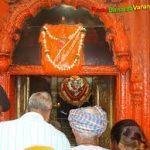
Kaal Bhairav is located at K-32/22, Bhaironath, Golghar, Bazardiha, Maheshpur, Varanasi, Uttar Pradesh 221002. People can approach this place by rickshaw either through Bisheshwarganj cross roads or through Golghar (Maidagin). This is a very famous temple and devotees will be guided by the local residents.
Contact Details
Address: k37/124, Golghar, Bazardiha, Maheshpur, Varanasi, Uttar Pradesh 221002
Phone: 070079 63016
Recent Posts

Shri Kaamkoteeshwar Mandir, Varanasi – History & Significance
In the heart of Kashi, the eternal city of Lord Shiva, where the Ganges flows with celestial grace, stands the Shri Kaamkoteeshwar Mandir. This sacred Sannidhi is not merely a temple but a profound spiritual bridge between the Northern…

ओ सांवरे तूने ही मुझको संभाला – Lyrics & Meaning
ओ सांवरे तूने ही मुझको संभाला – A Prayer to Shyam Origin & Spiritual Essence Why This Bhajan Resonates Devotees chant this when overwhelmed by life’s storms—the refrain ‘तूने ही मुझको संभाला’ is the soul’s sigh of relief: “You…

कथा ये है महाराज मेरे की – Lyrics & Meaning
कथा ये है महाराज मेरे की छत्रपति संभाजी महाराज – A Prayer to Chhatrapati Sambhaji Maharaj Origin & Spiritual Essence Why This Bhajan Resonates Devotees chant this when their spirit feels tested—its powerful refrain “महाराज मेरे” is a soul’s…

Rigveda Samhita Yathartha Anuvada (ऋग्वेद संहिता यथार्थ अनुवाद) – Complete Set with Anvayartha & Hindi/English Translation
The Rigveda is the oldest surviving scripture of humanity and the foundational text of Sanātana Dharma. For serious students, scholars, UPSC aspirants studying ancient Indian history, Sanskrit learners, and spiritual seekers, a precise and grammatically structured translation is indispensable.…

आना भी अकेला है जाना भी अकेला है – Lyrics & Meaning | BharatTemples
आना भी अकेला है जाना भी अकेला है – A Prayer to the Divine Witness Origin & Spiritual Essence Why This Bhajan Resonates Devotees turn to this bhajan in moments of deep reflection—when life’s attachments begin to ache. The…

माता शेरावाली के द्वार जो भी जाता है – Lyrics & Meaning
माता शेरावाली के द्वार जो भी जाता है – A Prayer to Maa Sherawali Origin & Spiritual Essence Why This Bhajan Resonates Devotees turn to this bhajan in times of fear or uncertainty—its promise that no one leaves Maa’s…

मार लेना सपणी उबार लेणा भवरा – Lyrics & Meaning
मार लेना सपणी उबार लेणा भवरा – A Prayer to the Divine Beloved Origin & Spiritual Essence Why This Bhajan Resonates Devotees chant this in moments of deep vulnerability—its cry of “मार लेना सपणी, उबार लेणा भवरा” is the…

हमें श्याम सुंदर भरोसा तुम्हारा – Lyrics & Meaning
हमें श्याम सुंदर भरोसा तुम्हारा – A Prayer to Shyam Sundar Origin & Spiritual Essence Why This Bhajan Resonates Devotees chant this when feeling alone—its refrain ‘de do sahara’ is the soul’s cry for divine support. Lyrics in Hindi…

Mere Satguru Ne Di Thi Davai Lyrics in Hindi & Meaning
Mere Satguru Ne Di Thi Davai: Invoking the Guru’s Liberating Wisdom This soul-stirring bhajan venerates the Satguru (True Spiritual Master) as the divine physician who dispenses the only remedy for life’s deepest sufferings. Composed by Sant Karmaveer Tufani, it…

Janm Diyo Thari Maa Dukh Dekhiyo Lyrics in Hindi & Meaning
जन्म दियो थारी माँ दुख देखियो (Maa’s Grief Upon Birthing You) This soul-stirring Chetavani Bhajan (admonitory hymn) is addressed to the Divine Mother (Maa) – a call for repentance when children forget their filial duties in the dark age…