
Contents
Vishalakshi Gauri Temple, Varanasi
| Date built: | – |
|---|---|
| Deity: | Vishalakshi Gauri |
| Architectural style: | Hindu Temple |
| Major festivals | Ashwin Navratri & Chaitra Navratri |
| Locale: | Mir Ghat, Varanasi |
| District:: | Varanasi |
| Address: | Vishalakshi Gauri Temple, Mir Ghat, Varanasi |
| Phone | – |
Introduction & Spiritual Essence
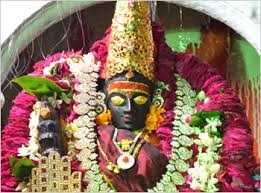
The Vishalakshi Gauri Temple, located at Mir Ghat in the holy city of Varanasi (Kashi), is revered as one of the most potent Shakti Peethas in Hindu mythology. The presiding deity, Maa Vishalakshi (the “Wide-Eyed Goddess”), is worshipped as a form of Adi Shakti, radiating vision and wisdom to the universe. In local vernacular, the temple is often associated with Annapurna, the provider of food, yet Vishalakshi embodies the aspect of spiritual sight and benevolence.
Phalaśruti (Spiritual Benefits):
Devotees visit this temple to cleanse ancestral karma and seek blessings for matrimonial harmony. It is strongly believed in the Kashi Khand (a section of the Skanda Purana) that unmarried girls worshipping here with true devotion are blessed with suitable partners, while childless couples are granted progeny. The temple is particularly potent during Navratri, as Vishalakshi is one of the revered nine forms of Goddess Durga (Nau Gauri).
Historical Origins & Scriptural Legend
While the precise construction date remains elusive in physical records, the temple’s existence is deeply anchored in ancient scriptures. According to the Skanda Purana, the site is tied to the legend of Sage Vyasa, who cursed Varanasi when he received no food offerings. Maa Vishalakshi appeared in the form of a housewife to satiate his hunger, establishing her role as the provider—a narrative that later syncretized her identity with Annapurna.
Historically, the temple is a focal point of South Indian devotion. Tamil pilgrims have venerated this site for centuries, viewing it as the northern counterpart to Kanchi Kamakshi and Madurai Meenakshi. Notably, the Tamil community played a pivotal role in the temple’s 1971 renovation, preserving its sanctity and structural integrity against the ravages of time.
Architectural Marvels
Though the architectural style is broadly categorized as a traditional Hindu Temple, the structure reflects the organic evolution of Kashi’s temple architecture. The sanctum houses two distinct idols: the Aadi Vishalakshi (the primordial deity) located at the rear, adorned in an orange garland, and a later-installed murti at the front. The temple complex is situated within the powerful Dharma Peeth area, encompassing shrines of Dharmeshwar and Vishwa Bhuja Gauri, creating a spiritual corridor that aligns with Vastu Shastra principles of energy flow.
Note: Current efforts are underway to document the intricate sculptures and shikhara details, which exemplify the Nagara and Dravida fusion influences common in Kashi.
Darshan & Ritual Logistics
Assuming the current date is 2026, devotees should note the seasonal variation in temple timings. The temple follows a traditional schedule, opening early for the morning Mangala Aarti and closing after the evening Shayan Aarti.
| Session | Timings | Notes |
|---|---|---|
| Morning Darshan | 05:30 AM – 12:00 PM | Best time: 6:00 AM (Mangala Aarti) |
| Afternoon Break | 12:00 PM – 4:00 PM | Sanctum is closed for deity rest |
| Evening Darshan | 4:00 PM – 9:00 PM | Sandhya Aarti begins at sunset |
Key Sevas & Online Booking:
To perform specific rituals such as Kumari Puja (feeding young girls) or Abhishekam, devotees are advised to contact the temple administration or utilize the Kashi Vishwanath Temple online portal, which often manages permits for associated shrines. Specific dates for 2026:
- Chaitra Navratri: April 2 – April 10, 2026
- Ashwin Navratri: September 22 – October 1, 2026
- Deepavali: October 18, 2026 (Special Maha Aarti)
Practical Visitor Guidance
Dress Code & Etiquette: As with all Shakti Peethas, modest attire is mandatory. Traditional Indian wear is preferred. Photography is restricted inside the inner sanctum; however, it may be permitted in the courtyard. Lockers for mobile devices and leather items are available near the entrance or at neighboring ghats due to space constraints in the historic Mir Ghat lane.
Crowd Management:
Varanasi attracts millions during Navratri. To experience a peaceful darshan, visit between 5:30 AM and 7:00 AM. In summer months (May–June), the humidity in the ghat lanes is high; carry a water bottle and wear light, breathable fabrics. Evenings are crowded with Aarti processions approaching Dashashwamedh Ghat.
Pilgrimage Connectivity
How to Reach:
The temple is located at D.3/85, Mir Ghat. It is accessible via the lanes leading from Dashashwamedh Ghat or Bansphatak Vishwanath Gulli.
- Nearest Airport: Lal Bahadur Shastri International Airport (VAR), approx. 25 km away.
- Nearest Railway Station: Varanasi Junction (BSB), approx. 5 km away.
- Road Access: Accessible via NH 19 and Varanasi-Ghazipur Highway. Rickshaws can take you to Bansphatak, from where a 5-minute walk through historic lanes leads to Mir Ghat.
Nearby Sacred Sites:
1. Kashi Vishwanath Temple: Just a short walk across the ghat.
2. Annapurna Devi Temple: Located nearby, often visited in the same pilgrimage circuit.
3. Dharmeshwar Temple: Another shrine within the Dharma Peeth complex.
Frequently Asked Questions (FAQs)
1. Is there a VIP darshan entry at Vishalakshi Temple?
While there is no strict “VIP” ticket system like larger complexes, senior citizens and devotees with medical constraints can request assistance from the temple priests at the gate for priority entry during non-peak hours.
2. Can we book the Kanya Pooja (feeding young girls) online?
Booking for specific rituals like Kanya Pooja is typically arranged through local priests or temple trusts. It is recommended to visit the temple office a day in advance during Navratri.
3. Is there a luggage storage facility?
There are limited storage facilities at Mir Ghat. Devotees are advised to travel light and utilize cloakrooms at the nearby Dashashwamedh Ghat police booth or the Kashi Vishwanath Corridor entry points.
4. Why is Vishalakshi Temple significant for South Indians?
Vishalakshi is considered the northern anchor of the triad of major Devi temples—Kanchi Kamakshi (East), Madurai Meenakshi (South), and Kashi Vishalakshi (North)—making it a vital stop for Tamil and Telugu pilgrims.
5. What is the significance of the two idols in the sanctum?
The idol at the rear is the Aadi Vishalakshi (the primordial form), while the front idol is a later reconstruction installed for daily worship, allowing specific ritual offerings without disturbing the ancient structure.
Photo Gallery
Recent Posts

Shri Kaamkoteeshwar Mandir, Varanasi – History & Significance
In the heart of Kashi, the eternal city of Lord Shiva, where the Ganges flows with celestial grace, stands the Shri Kaamkoteeshwar Mandir. This sacred Sannidhi is not merely a temple but a profound spiritual bridge between the Northern…

ओ सांवरे तूने ही मुझको संभाला – Lyrics & Meaning
ओ सांवरे तूने ही मुझको संभाला – A Prayer to Shyam Origin & Spiritual Essence Why This Bhajan Resonates Devotees chant this when overwhelmed by life’s storms—the refrain ‘तूने ही मुझको संभाला’ is the soul’s sigh of relief: “You…

कथा ये है महाराज मेरे की – Lyrics & Meaning
कथा ये है महाराज मेरे की छत्रपति संभाजी महाराज – A Prayer to Chhatrapati Sambhaji Maharaj Origin & Spiritual Essence Why This Bhajan Resonates Devotees chant this when their spirit feels tested—its powerful refrain “महाराज मेरे” is a soul’s…

Rigveda Samhita Yathartha Anuvada (ऋग्वेद संहिता यथार्थ अनुवाद) – Complete Set with Anvayartha & Hindi/English Translation
The Rigveda is the oldest surviving scripture of humanity and the foundational text of Sanātana Dharma. For serious students, scholars, UPSC aspirants studying ancient Indian history, Sanskrit learners, and spiritual seekers, a precise and grammatically structured translation is indispensable.…

आना भी अकेला है जाना भी अकेला है – Lyrics & Meaning | BharatTemples
आना भी अकेला है जाना भी अकेला है – A Prayer to the Divine Witness Origin & Spiritual Essence Why This Bhajan Resonates Devotees turn to this bhajan in moments of deep reflection—when life’s attachments begin to ache. The…

माता शेरावाली के द्वार जो भी जाता है – Lyrics & Meaning
माता शेरावाली के द्वार जो भी जाता है – A Prayer to Maa Sherawali Origin & Spiritual Essence Why This Bhajan Resonates Devotees turn to this bhajan in times of fear or uncertainty—its promise that no one leaves Maa’s…

मार लेना सपणी उबार लेणा भवरा – Lyrics & Meaning
मार लेना सपणी उबार लेणा भवरा – A Prayer to the Divine Beloved Origin & Spiritual Essence Why This Bhajan Resonates Devotees chant this in moments of deep vulnerability—its cry of “मार लेना सपणी, उबार लेणा भवरा” is the…

हमें श्याम सुंदर भरोसा तुम्हारा – Lyrics & Meaning
हमें श्याम सुंदर भरोसा तुम्हारा – A Prayer to Shyam Sundar Origin & Spiritual Essence Why This Bhajan Resonates Devotees chant this when feeling alone—its refrain ‘de do sahara’ is the soul’s cry for divine support. Lyrics in Hindi…

Mere Satguru Ne Di Thi Davai Lyrics in Hindi & Meaning
Mere Satguru Ne Di Thi Davai: Invoking the Guru’s Liberating Wisdom This soul-stirring bhajan venerates the Satguru (True Spiritual Master) as the divine physician who dispenses the only remedy for life’s deepest sufferings. Composed by Sant Karmaveer Tufani, it…

Janm Diyo Thari Maa Dukh Dekhiyo Lyrics in Hindi & Meaning
जन्म दियो थारी माँ दुख देखियो (Maa’s Grief Upon Birthing You) This soul-stirring Chetavani Bhajan (admonitory hymn) is addressed to the Divine Mother (Maa) – a call for repentance when children forget their filial duties in the dark age…