
Contents
- 1 Katyayani Temple, Varanasi: The Divine Adobe of Maa Katyayani
Katyayani Temple, Varanasi: The Divine Adobe of Maa Katyayani
This ancient temple, located in the heart of Varanasi, is dedicated to the goddess Katyayani, one of the forms of the powerful Hindu goddess Durga. The temple is famous for its unique architecture, intricate carvings, and vibrant festivals that attract devotees from all over the world.
| Date built: | 18th Century (Current Structure) |
|---|---|
| Deity: | Maa Katyayani (Shakti) |
| Architectural style: | Nagara (North Indian) |
| Major festivals | Navratri (Chaitra & Sharad) |
| Locale: | Scindia Ghat, Varanasi |
| District: | Varanasi |
| Address: | Ck-7/158, Scindia Ghat, Ghasi Tola, Varanasi, Uttar Pradesh 221001 |
| Phone | (0)9838773329 |
Introduction & Spiritual Essence
Located in the sacred locality of Ghasi Tola near Scindia Ghat, the Katyayani Temple is a jewel of spiritual architecture in Varanasi. Here, Maa Katyayani is worshipped as the Swayambhu (self-manifested) deity, radiating a fierce yet benevolent aura.
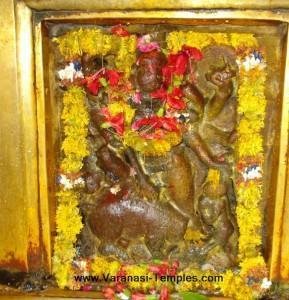
The Deity: Maa Katyayani is the sixth incarnation of Maa Durga. Unlike her fierce manifestations, she represents harmony and grace while destroying evil. Her iconography here depicts a radiant golden complexion, four arms holding a sword and lotus, and a gesture of protection (Abhaya Mudra). Her vehicle, the lion, symbolizes courage.
Phalaśruti (Spiritual Benefits):
According to the Kashi Khand, worship here yields profound results. It is believed that:
- Cleansing Ancestral Karma: Performing rituals here helps resolve Pitru Dosha, bringing peace to ancestors.
- Mental Peace & Liberation: Devotees seeking freedom from sorrow, fear, and suffering find solace in her divine presence.
- Fulfillment of Desires: As the goddess who granted the Gopis their wish to marry Lord Krishna, she is revered as the granter of righteous desires.
Historical Origins & Scriptural Legend
The history of this temple is a blend of Vedic mythology and local oral traditions.
Scriptural Reference (Kashi Khand):
According to Kashi Khand, Chapter 82, a pious king named Amitrajit ruled a kingdom devoted to Vishnu. Through the intervention of Narad Rishi, the King and his queen, Malayagandini, were blessed with a child born under an inauspicious planetary combination. To save the King from death, the child was sent to Vikata Devi at the Pancha Mudra Maha Peeth. This Vikata Devi is revered here as Katyayini.
Historical Construction:
While legends span the Vedic period, the current architectural structure dates back to the 18th century. It is widely believed to have been constructed by Rani Bhavani of the Nagpur kingdom, a devout patron of the arts and spirituality. Over the centuries, renovations have preserved the sanctity of this ancient site.
Architectural Marvels & Vastu
The temple is a masterpiece of Nagara style architecture, typical of the Himalayan and North Indian regions.
Key Elements:
- Shikhara (Spire): The temple features a towering Shikhara with multiple Urushringas (miniature spires), creating a visually complex and ascending structure that directs the devotee’s gaze upward toward the heavens.
- Mandapas (Halls): The intricate Mandapas feature carved pillars depicting scenes from Hindu mythology, showcasing the zenith of 18th-century craftsmanship.
- Sculptural Artistry: The façade is adorned with detailed carvings of deities, floral motifs, and geometric patterns, reflecting the harmonious integration of nature and the divine.
Surrounded by the broader religious boundary of the Pancha Mudra Maha Peeth, the temple complex adheres to strict Vastu Shastra principles, ensuring maximum positive energy flow.
Darshan & Ritual Logistics (2026 Guide)
The temple maintains a strict schedule to accommodate daily devotees and special festival crowds. Below is the standard operating schedule for 2026.
| Timings | Morning | Evening |
|---|---|---|
| Opening Hours | 5:30 AM | 6:00 PM |
| Arti (Sandhya) | 6:30 AM | 7:30 PM |
| Closing Hours | 12:00 PM | 9:00 PM |
Key Sevas & Online Booking:
- Abhishekam: Performed with milk, honey, and ghee. Best done during morning hours.
- Chandi Paath: A complete recitation of the Durga Saptashati (usually requires prior registration).
- Online Booking: While direct booking can be challenging for smaller shrines, visitors can coordinate via the temple phone number ((0)9838773329) or through the Varanasi District Administration Portal for festival access.
2026 Festival Dates:
- Navratri (Chaitra): March 30 – April 7, 2026 (Huge crowd on the 6th day, Shashti Tithi).
- Navratri (Sharad): September 18 – September 26, 2026.
- Diwali: November 21, 2026.
Practical Visitor Guidance
Visiting Scindia Ghat requires preparation to ensure a comfortable and respectful experience.
Dress Code & Etiquette:
Modest, traditional attire is recommended. Men should wear dhotis or trousers, and women should prefer sarees or salwar kameez. Western attire like shorts is generally discouraged in the inner sanctum.
Photography & Electronics:
Photography is restricted near the inner sanctum. Mobile phones should be kept on silent mode. It is advisable to use mobile lockers available in the area or leave valuables at your hotel.
Crowd Management:
- Best Hours: 5:30 AM – 7:00 AM (Morning) and 8:00 PM – 9:00 PM (Evening).
- Seasonal Advice: Varanasi summers (April–June) are intensely hot; carry water and an umbrella. Winters (Dec–Jan) are pleasant but foggy.
Accessibility:
The temple is situated at Scindia Ghat. Access requires descending steps to the river level, which may be challenging for those with mobility issues. Cycle rickshaws can take you up to Chowk, from where a walk through the narrow alleys is required.
Pilgrimage Connectivity
How to Reach:
- By Air: Lal Bahadur Shastri International Airport (VNS) is approx. 25 km away. Prepaid taxis are available to Dashashwamedh Ghat (approx. ₹500-₹700).
- By Train: Varanasi Junction (BSB) is the primary station (10 km away). Auto-rickshaws to Godaulia or Chowk are readily available.
- By Road: Varanasi is on NH-19 (formerly NH-2). The temple is accessible via boat or walking from Dashashwamedh Ghat (20-minute walk).
Nearby Sacred Sites (Pilgrimage Circuit):
- Atma Veereshwar Temple: Located on the same premises, dedicated to Lord Shiva.
- Bhaironath Temple (BhἌrat Mata Mandir): Just 1 km away.
- Sankat Mochan Hanuman Temple: 3 km away (accessible via auto-rickshaw).
Frequently Asked Questions (FAQ)
1. Is there a VIP Darshan entry at Katyayani Temple?
Unlike larger temples like Kashi Vishwanath, Katyayani Temple does not have a formal VIP ticket system. Darshan is generally free and open to all, though seva bookings allow closer access to the deity.
The 6th day, known as Maha Shashti, is dedicated to Maa Katyayani. Devotees believe that worshipping her on this day removes obstacles in marriage and grants success.
3. Is there an entry fee?
There is no entry fee for general darshan. However, offerings (flowers, coconuts) and specific sevas have nominal charges.
4. Can I perform an Abhishekam myself?
Generally, the temple priests perform the Abhishekam. However, you can sponsor the ritual and witness it. It is best to inquire with the head priest upon arrival.
5. Is the temple open year-round?
Yes, the temple remains open throughout the year. However, it is closed for brief periods during major renovations or local festivals; calling ahead is advisable.
Recent Posts

Shri Kaamkoteeshwar Mandir, Varanasi – History & Significance
In the heart of Kashi, the eternal city of Lord Shiva, where the Ganges flows with celestial grace, stands the Shri Kaamkoteeshwar Mandir. This sacred Sannidhi is not merely a temple but a profound spiritual bridge between the Northern…

ओ सांवरे तूने ही मुझको संभाला – Lyrics & Meaning
ओ सांवरे तूने ही मुझको संभाला – A Prayer to Shyam Origin & Spiritual Essence Why This Bhajan Resonates Devotees chant this when overwhelmed by life’s storms—the refrain ‘तूने ही मुझको संभाला’ is the soul’s sigh of relief: “You…

कथा ये है महाराज मेरे की – Lyrics & Meaning
कथा ये है महाराज मेरे की छत्रपति संभाजी महाराज – A Prayer to Chhatrapati Sambhaji Maharaj Origin & Spiritual Essence Why This Bhajan Resonates Devotees chant this when their spirit feels tested—its powerful refrain “महाराज मेरे” is a soul’s…

Rigveda Samhita Yathartha Anuvada (ऋग्वेद संहिता यथार्थ अनुवाद) – Complete Set with Anvayartha & Hindi/English Translation
The Rigveda is the oldest surviving scripture of humanity and the foundational text of Sanātana Dharma. For serious students, scholars, UPSC aspirants studying ancient Indian history, Sanskrit learners, and spiritual seekers, a precise and grammatically structured translation is indispensable.…

आना भी अकेला है जाना भी अकेला है – Lyrics & Meaning | BharatTemples
आना भी अकेला है जाना भी अकेला है – A Prayer to the Divine Witness Origin & Spiritual Essence Why This Bhajan Resonates Devotees turn to this bhajan in moments of deep reflection—when life’s attachments begin to ache. The…

माता शेरावाली के द्वार जो भी जाता है – Lyrics & Meaning
माता शेरावाली के द्वार जो भी जाता है – A Prayer to Maa Sherawali Origin & Spiritual Essence Why This Bhajan Resonates Devotees turn to this bhajan in times of fear or uncertainty—its promise that no one leaves Maa’s…

मार लेना सपणी उबार लेणा भवरा – Lyrics & Meaning
मार लेना सपणी उबार लेणा भवरा – A Prayer to the Divine Beloved Origin & Spiritual Essence Why This Bhajan Resonates Devotees chant this in moments of deep vulnerability—its cry of “मार लेना सपणी, उबार लेणा भवरा” is the…

हमें श्याम सुंदर भरोसा तुम्हारा – Lyrics & Meaning
हमें श्याम सुंदर भरोसा तुम्हारा – A Prayer to Shyam Sundar Origin & Spiritual Essence Why This Bhajan Resonates Devotees chant this when feeling alone—its refrain ‘de do sahara’ is the soul’s cry for divine support. Lyrics in Hindi…

Mere Satguru Ne Di Thi Davai Lyrics in Hindi & Meaning
Mere Satguru Ne Di Thi Davai: Invoking the Guru’s Liberating Wisdom This soul-stirring bhajan venerates the Satguru (True Spiritual Master) as the divine physician who dispenses the only remedy for life’s deepest sufferings. Composed by Sant Karmaveer Tufani, it…

Janm Diyo Thari Maa Dukh Dekhiyo Lyrics in Hindi & Meaning
जन्म दियो थारी माँ दुख देखियो (Maa’s Grief Upon Birthing You) This soul-stirring Chetavani Bhajan (admonitory hymn) is addressed to the Divine Mother (Maa) – a call for repentance when children forget their filial duties in the dark age…