
Contents
Introduction & Spiritual Essence
Perched on the serene banks of the holy Ganga, the Trilochaneshwar Temple stands as a timeless sentinel of faith in Varanasi. The presiding deity is Lord Shiva in the form of Trilochaneshwar (The Lord with Three Eyes). Unlike an installed murti, this is a Swayambhu (self-manifested) Lingam that holds a unique place in the spiritual geography of Kashi.
Phalaśruti: The Spiritual Benefits
According to the sacred Kashi Khand (Skanda Purana), the spiritual potency of this temple is unparalleled. The scriptures state that merely uttering the name “Trilochan” purifies a devotee of all sins, whether committed knowingly or unknowingly.
- Cleansing of Karma: While sins committed elsewhere are absolved by residing in Kashi, sins committed within Kashi are cleansed solely by eulogizing Trilochan Ling.
Ancestral Blessings: Performing specific rituals here, particularly Shraadh Karma, grants high-level enlightenment and the blessings of ancestors.
Historical Origins & Scriptural Legend
The history of Trilochaneshwar is rooted deeply in ancient texts rather than stone inscriptions of a specific dynasty. While the exact century of construction is not recorded, the temple’s existence is as old as the scripture that documents it.
The Legend of the Three Rivers
Tradition holds that in the south of Trilochan, three sacred rivers—Yamuna, Saraswati, and Narmada—once converged. The Kashi Khand (Chapter 75) narrates that these rivers performed an Abhishek (ritual bathing) of the Trilochan Ling with their divine waters.
The Descent from Patal Lokas
The temple records and local pundits describe the Trilochan Ling as a Swayambhu manifestation that did not originate on earth. Scriptural legend describes it piercing through the seven layers of Patal Lokas (underworlds) to emerge on the surface, making it a direct conduit to the divine realms.
Architectural Marvels
The temple exhibits traditional Dravidian architectural style. While Varanasi is predominantly known for Nagara-style temples, Trilochaneshwar showcases the distinct curved shikharas and pillared halls characteristic of Dravidian aesthetics.
Structural Highlights
- The Sanctum Sanctorum: The Lingam is visualized locally as the Eye of the Personified Vishweshwar (Kashi Vishwanath). Pundits believe Trilochan is the third eye of the cosmic form of Lord Shiva.
- Ancient Wells: The temple premises house two sacred water bodies mentioned in the Kashi Khand:
- Padodak Koop: An ancient well existing within the temple compound. Although currently covered for safety, a pump is used to draw its sanctified water for rituals.
- Pilpila Teerth: Located near the temple (often identified with the nearby Pilpila Kup), this is the site where the three rivers met. Bathing here before darshan is considered highly auspicious.

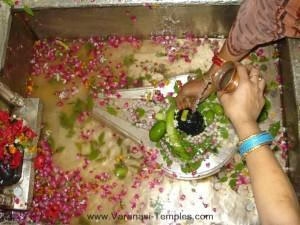
Trilochaneshwar Temple Interior
Darshan & Ritual Logistics (2026 Guide)
Managing darshan in Varanasi requires planning. Below is the schedule for the upcoming year.
Daily Timings
The temple follows a standard Kashi schedule, opening early for Mangala Aarti.
| Session | Timing |
|---|---|
| Morning Darshan | 5:00 AM – 12:00 PM |
| Afternoon Break | 12:00 PM – 3:00 PM |
| Evening Darshan | 3:00 PM – 9:00 PM |
Key Sevas & 2026 Festivals
Online Seva Booking: While many rituals are managed directly at the temple, devotees looking to book specific Sevas or Pujas across Varanasi should check the official Kashi Vishwanath Corridor portal or local priest networks for real-time availability.
- Akshay Tritiya (April 2026): In the month of Vaishaka (April-May), the Shukla Paksha Tritheeya (3rd day of the waxing moon) is exceptionally auspicious. Devotees observing a fast (Vrath) and performing Shraadh Karma (rituals for forefathers) attain high enlightenment.
- Maha Shivaratri: The temple observes heavy footfall; the Lingam is adorned with Bilva leaves and seasonal flowers.
- Monthly Pradosh: Every Pradosh (13th day of the lunar fortnight) is celebrated with special Abhishekam.
Practical Visitor Guidance
Dress Code & Etiquette
As with all Shiva temples in Varanasi, modesty is key. Men should remove shirts (or wear traditional kurta) and wear dhoti or trousers. Women should wear sarees or full-length dresses. Leather items (belts, bags) are generally discouraged inside the inner sanctum.
Crowd Management
- Best Hours: Visit between 5:00 AM – 7:00 AM for a peaceful darshan, or between 2:00 PM – 4:00 PM.
- Seasonal Advice: Varanasi summers (May-June) are intense. Carry a water bottle and an umbrella. The narrow lanes near Trilochan Ghat can get humid.
- Photography: Strictly prohibited inside the sanctum sanctorum. Mobile phones should be kept on silent.
Pilgrimage Connectivity
How to Reach Trilochaneshwar Temple
Address: A-2/80, Trilochan Ghat, Varanasi, Uttar Pradesh.
- By Air: Lal Bahadur Shastri International Airport (LBS) is approx. 25 km away. Taxis are available to Dashashwamedh Ghat.
- By Rail: Varanasi Junction (BSB) is the nearest major railway station (5 km).
- Local Transport:
- Take an Auto or Cycle Rickshaw from Dashashwamedh or Godaulia to Machhodari.
- From Machhodari, walk through the heritage lanes towards Trilochan Ghat.
- Boat Route: Hire a boat to Trilochan Ghat and climb the steps directly to the temple entrance.
Nearby Sacred Sites (The Kashi Pilgrimage Circuit)
- Varanasi Devi Temple: Located inside the same temple complex (mentioned in Kashi Khand, Chapter 33). A must-visit shrine within the premises.
- Kashi Vishwanath Temple (Jyotirlinga): Located about 1.5 km away (walking distance via the ghats).
- Sankat Mochan Hanuman Temple: About 3 km away, situated on the banks of the Assi Ghat.
Frequently Asked Questions
1. What is the significance of Trilochan Ling?
The Trilochan Ling represents the third eye of Lord Shiva. It is a Swayambhu Ling believed to have emerged from the seven underworlds. It is unique because it is considered the power source that absorbs sins committed specifically within Kashi.
2. Is there a VIP Darshan entry?
Generally, VIP entry is not required at Trilochaneshwar as it is less crowded than the main Vishwanath temple. However, senior citizens and divyang (physically challenged) devotees are given priority entry by temple authorities.
3. Can we perform Shraadh rituals here?
Yes, Trilochaneshwar is highly recommended for Shraadh Karma (ancestor rites). According to scriptures, performing rituals here on Akshay Tritiya or during Pitru Paksha is extremely effective.
4. Is the temple accessible by vehicle?
No, the temple is located in the old city near the Ghat. One must walk through narrow heritage lanes. The nearest vehicle access point is Machhodari, where parking is available.
5. What is Padodak Koop?
It is an ancient well within the temple courtyard mentioned in Kashi Khand. It is considered a sacred water source, though currently covered for safety, water is drawn for temple use.
Recent Posts

Shri Kaamkoteeshwar Mandir, Varanasi – History & Significance
In the heart of Kashi, the eternal city of Lord Shiva, where the Ganges flows with celestial grace, stands the Shri Kaamkoteeshwar Mandir. This sacred Sannidhi is not merely a temple but a profound spiritual bridge between the Northern…

ओ सांवरे तूने ही मुझको संभाला – Lyrics & Meaning
ओ सांवरे तूने ही मुझको संभाला – A Prayer to Shyam Origin & Spiritual Essence Why This Bhajan Resonates Devotees chant this when overwhelmed by life’s storms—the refrain ‘तूने ही मुझको संभाला’ is the soul’s sigh of relief: “You…

कथा ये है महाराज मेरे की – Lyrics & Meaning
कथा ये है महाराज मेरे की छत्रपति संभाजी महाराज – A Prayer to Chhatrapati Sambhaji Maharaj Origin & Spiritual Essence Why This Bhajan Resonates Devotees chant this when their spirit feels tested—its powerful refrain “महाराज मेरे” is a soul’s…

Rigveda Samhita Yathartha Anuvada (ऋग्वेद संहिता यथार्थ अनुवाद) – Complete Set with Anvayartha & Hindi/English Translation
The Rigveda is the oldest surviving scripture of humanity and the foundational text of Sanātana Dharma. For serious students, scholars, UPSC aspirants studying ancient Indian history, Sanskrit learners, and spiritual seekers, a precise and grammatically structured translation is indispensable.…

आना भी अकेला है जाना भी अकेला है – Lyrics & Meaning | BharatTemples
आना भी अकेला है जाना भी अकेला है – A Prayer to the Divine Witness Origin & Spiritual Essence Why This Bhajan Resonates Devotees turn to this bhajan in moments of deep reflection—when life’s attachments begin to ache. The…

माता शेरावाली के द्वार जो भी जाता है – Lyrics & Meaning
माता शेरावाली के द्वार जो भी जाता है – A Prayer to Maa Sherawali Origin & Spiritual Essence Why This Bhajan Resonates Devotees turn to this bhajan in times of fear or uncertainty—its promise that no one leaves Maa’s…

मार लेना सपणी उबार लेणा भवरा – Lyrics & Meaning
मार लेना सपणी उबार लेणा भवरा – A Prayer to the Divine Beloved Origin & Spiritual Essence Why This Bhajan Resonates Devotees chant this in moments of deep vulnerability—its cry of “मार लेना सपणी, उबार लेणा भवरा” is the…

हमें श्याम सुंदर भरोसा तुम्हारा – Lyrics & Meaning
हमें श्याम सुंदर भरोसा तुम्हारा – A Prayer to Shyam Sundar Origin & Spiritual Essence Why This Bhajan Resonates Devotees chant this when feeling alone—its refrain ‘de do sahara’ is the soul’s cry for divine support. Lyrics in Hindi…

Mere Satguru Ne Di Thi Davai Lyrics in Hindi & Meaning
Mere Satguru Ne Di Thi Davai: Invoking the Guru’s Liberating Wisdom This soul-stirring bhajan venerates the Satguru (True Spiritual Master) as the divine physician who dispenses the only remedy for life’s deepest sufferings. Composed by Sant Karmaveer Tufani, it…

Janm Diyo Thari Maa Dukh Dekhiyo Lyrics in Hindi & Meaning
जन्म दियो थारी माँ दुख देखियो (Maa’s Grief Upon Birthing You) This soul-stirring Chetavani Bhajan (admonitory hymn) is addressed to the Divine Mother (Maa) – a call for repentance when children forget their filial duties in the dark age…