
Contents
Introduction & Spiritual Essence
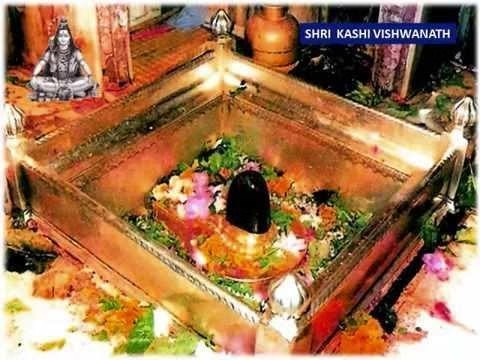
Vishweshwar Vishwanath Temple stands as the spiritual heart of Sanatana Dharma. Located in the ancient lanes of Varanasi (Kashi), this shrine is one of the twelve Jyotirlingas, the most revered abodes of Lord Shiva. Known locally as Shri Kashi Vishwanath, the presiding deity here is a Swayambhu (self-manifested) linga, radiating divine energy for centuries.
Phalaśruti: Why Visit?
According to the ancient Kashi Khand of Shiv Puran, visiting this temple yields spiritual merit (punya) that transcends time:
- Ancestral Cleansing: It is believed that touching the Vishweshwar Ling and praying cleanses sins accumulated over the past two generations of ancestors.
- Moksha Prapti: Unlike other temples where devotees are restricted from entering the inner sanctum, the Kashi Vishwanath temple allows direct Darshan and Sparsa (touching) of the linga, which is said to liberate the soul.
- Prosperity: Offering a single flower with pure devotion is equivalent to offering hundreds of golden flowers, bestowing blessings of abundance.
Historical Origins & Scriptural Legend
The history of the temple is a testament to resilience and devotion. While the exact date of the original temple is lost to antiquity, the structure standing today is a reconstruction of immense historical significance.
The Destroyer and the Preserver
The original Kashi Vishwanath Temple was destroyed in 1193 CE and subsequently rebuilt by Hindu kings. In 1780 CE, the current structure was constructed by Her Highness Maharani Ahilyabai Holkar of Indore, marking a pivotal moment in the restoration of Hindu heritage. Standing adjacent to the sanctum is a gold-plated statue of Maharani Ahilyabai, honoring her contribution.
The Jyotirlinga Origin
As per the Shiva Purana, a fierce argument arose between Lord Brahma and Lord Vishnu regarding supremacy. To settle the dispute, Lord Shiva pierced the three worlds appearing as an infinite pillar of light—the Jyotirlinga. Vishwanath in Varanasi represents the spot where this eternal light first appeared.
Architectural Marvels
The temple architecture is a blend of Nagara style intricacy and royal patronage. The sanctum sanctorum sits within a square courtyard, surrounded by shrines dedicated to Kaalbhairav, Dhandapani, Avimukteshwara, Sanishwara, and Virupaksh Gauri.
Notable Features
- The Gold Dome: The temple is famous for its three domes made of pure gold, dominating the skyline of Varanasi.
- The Sanctum (Garbha Griha): The Jyotirlinga is a dark brown stone (not self-manifested in its original form today due to historical invasions, but enshrined in a silver altar). The linga is roughly 60 cm tall and 90 cm in circumference.
- Jnana Vapi (Wisdom Well): Located north of the main shrine, legend holds that the original Jyotirlinga was hidden in this well by the head priest to protect it from destruction by invaders.
Darshan & Ritual Logistics
Planning your visit requires understanding the complex logistics of India’s most visited shrine. The temple operations are highly regulated to manage millions of devotees.
Daily Timings (2026 Schedule)
Note: Timings may vary slightly during festivals or seasonal changes.
| Darshan / Aarti Type | Timing | Description |
|---|---|---|
| Mangla Aarti | 03:00 AM – 04:00 AM | The morning awakening ritual. Ticket required for entry. |
| Bhog Aarti | 11:15 AM – 12:20 PM | Midday offering of food to the deity. |
| Sapta Rishi Pooja | 07:00 PM – 07:30 PM | Special evening ritual performed by descendants of the seven great sages. |
| Shringar Aarti | 09:00 PM – 10:15 PM | Night decoration ritual of the deity. |
| Shayan Aarti | 10:30 PM – 11:00 PM | The final closing ritual. The temple remains open 24 hours, though briefly closed for cleaning. |
Online Seva Booking
To avoid on-ground crowds, devotees are encouraged to book sevas online. The official website for Kashi Vishwanath is www.shrikashivishwanath.org. Popular sevas include:
- Abhishekam: Ritual bathing of the linga (usually morning hours).
- Archana: Recitation of names (can be done individually or collectively).
- Sapta Rishi Pooja: Exclusive entry passes for the 7:00 PM evening ritual.
Key 2026 Festival Dates
- Maha Shivratri: February 26, 2026. (Expect crowds exceeding 1 million).
- Deepavali Amavasya: October 21, 2026. The day after Diwali features the 56 Bhog Annakoot Shringar, a grand offering believed to ensure household food security.
- Shravan Mondays: July and August 2026. Mondays during the holy month of Shravan see massive processions.
Practical Visitor Guidance
Rules & Regulations
- Dress Code: Traditional attire is mandatory. Men should wear dhotis or trousers with bare torsos; women should wear sarees or salwar kameez. Western attire is strictly prohibited.
- Electronic Items: Mobile phones, cameras, belts, and bags are prohibited inside the sanctum. Free and paid locker facilities are available near the temple entrance gates.
- Accessibility: The temple is located in narrow lanes (Vishwanath Gali). The area is old and crowded, making wheelchair access difficult without prior arrangement with authorities.
Crowd Management Strategy
As the Lead Heritage Architect, I recommend the following strategy to navigate the Kashi Vishwanath Corridor:
- Best Time to Visit: 4:00 AM – 5:00 AM (after Mangla Aarti crowd disperses) or late night (11:00 PM – 1:00 AM).
- Seasonal Advice: Summers (April–June) are extremely hot; carry a water bottle and a head covering. Winters (Dec–Jan) are misty; carry woolens.
- Queue Type: There are separate queues for general darshan and VIP darshan. Follow the signage strictly.
Pilgrimage Connectivity
How to Reach Varanasi
Air: Lal Bahadur Shastri International Airport (VAR) is approximately 25 km from the temple. Taxis and airport shuttles are available 24/7.
Rail: Varanasi Junction (BSB) is the main railway station, 5 km away. The other major station is Varanasi City (BCY). Auto-rickshaws can drop you at Godaulia, the gateway to the temple lanes.
Road: Varanasi is connected via NH 19 (formerly NH-2) and NH 35. State-run buses and private cabs ply regularly from Lucknow, Patna, and Allahabad.
Nearby Sacred Sites (Pilgrimage Circuit)
Extend your spiritual journey with these nearby landmarks:
- Maa Annapurna Temple: Located just 200 meters from Kashi Vishwanath. The Goddess of Food, essential for every devotee’s journey.
- Sankat Mochan Hanuman Temple: Famous for its large Hanuman statue and the ritual of offering vermilion. Located 2 km away.
- Manikarnika Ghat: The primary cremation ghat. It is considered a Shakti Peetha and the site of the Daksha Yagna, located walking distance from the temple.
Frequently Asked Questions (FAQ)
1. Is there a VIP Darshan entry available?
Yes, the Shri Kashi Vishwanath Temple Trust provides a paid entry pass (Gauri Darshan) which allows devotees to bypass the long general queues. However, during peak festivals like Mahashivratri, even VIP queues can be long.
2. Can we offer milk or water to the Jyotirlinga personally?
Direct offerings (Abhishekam) are typically performed by the temple priests. Devotees can purchase offerings (Panchamrit, water, milk) at the counter, which the priests will perform on your behalf. You can offer flowers and Bilva leaves personally during Shringar.
3. What is the significance of the Jnana Vapi well?
The Jnana Vapi (Wisdom Well) is located north of the main temple. Legend states that during Mughal invasions, the original Jyotirlinga was hidden in this well by the head priest to protect the sanctity of the shrine.
4. Is there a dress code for foreigners?
Strict dress code applies to all visitors. Foreigners are requested to cover their shoulders and legs (knee-length). Dhotis and sarees are available for rent near the entrance gates.
5. How far is Dashashwamedh Ghat from the temple?
Dashashwamedh Ghat is approximately 1 km from the temple. It is a 15-20 minute walk through the bustling lanes of Varanasi, or a short auto-rickshaw ride.
Photo Gallery


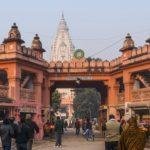
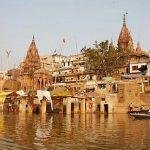
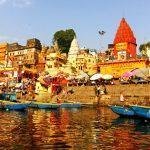
![kashi-vishwanath-temple[1], Vishweshwar Vishwanath Temple, Varanasi](https://www.bharattemples.com/wp-content/uploads/bt/2018/06/kashi-vishwanath-temple1-150x150.jpg)
Contact Details
Address: Lahori Tola, Varanasi, Uttar Pradesh 221001
Phone: 0542 239 2629
Recent Posts

Shri Kaamkoteeshwar Mandir, Varanasi – History & Significance
In the heart of Kashi, the eternal city of Lord Shiva, where the Ganges flows with celestial grace, stands the Shri Kaamkoteeshwar Mandir. This sacred Sannidhi is not merely a temple but a profound spiritual bridge between the Northern…

ओ सांवरे तूने ही मुझको संभाला – Lyrics & Meaning
ओ सांवरे तूने ही मुझको संभाला – A Prayer to Shyam Origin & Spiritual Essence Why This Bhajan Resonates Devotees chant this when overwhelmed by life’s storms—the refrain ‘तूने ही मुझको संभाला’ is the soul’s sigh of relief: “You…

कथा ये है महाराज मेरे की – Lyrics & Meaning
कथा ये है महाराज मेरे की छत्रपति संभाजी महाराज – A Prayer to Chhatrapati Sambhaji Maharaj Origin & Spiritual Essence Why This Bhajan Resonates Devotees chant this when their spirit feels tested—its powerful refrain “महाराज मेरे” is a soul’s…

Rigveda Samhita Yathartha Anuvada (ऋग्वेद संहिता यथार्थ अनुवाद) – Complete Set with Anvayartha & Hindi/English Translation
The Rigveda is the oldest surviving scripture of humanity and the foundational text of Sanātana Dharma. For serious students, scholars, UPSC aspirants studying ancient Indian history, Sanskrit learners, and spiritual seekers, a precise and grammatically structured translation is indispensable.…

आना भी अकेला है जाना भी अकेला है – Lyrics & Meaning | BharatTemples
आना भी अकेला है जाना भी अकेला है – A Prayer to the Divine Witness Origin & Spiritual Essence Why This Bhajan Resonates Devotees turn to this bhajan in moments of deep reflection—when life’s attachments begin to ache. The…

माता शेरावाली के द्वार जो भी जाता है – Lyrics & Meaning
माता शेरावाली के द्वार जो भी जाता है – A Prayer to Maa Sherawali Origin & Spiritual Essence Why This Bhajan Resonates Devotees turn to this bhajan in times of fear or uncertainty—its promise that no one leaves Maa’s…

मार लेना सपणी उबार लेणा भवरा – Lyrics & Meaning
मार लेना सपणी उबार लेणा भवरा – A Prayer to the Divine Beloved Origin & Spiritual Essence Why This Bhajan Resonates Devotees chant this in moments of deep vulnerability—its cry of “मार लेना सपणी, उबार लेणा भवरा” is the…

हमें श्याम सुंदर भरोसा तुम्हारा – Lyrics & Meaning
हमें श्याम सुंदर भरोसा तुम्हारा – A Prayer to Shyam Sundar Origin & Spiritual Essence Why This Bhajan Resonates Devotees chant this when feeling alone—its refrain ‘de do sahara’ is the soul’s cry for divine support. Lyrics in Hindi…

Mere Satguru Ne Di Thi Davai Lyrics in Hindi & Meaning
Mere Satguru Ne Di Thi Davai: Invoking the Guru’s Liberating Wisdom This soul-stirring bhajan venerates the Satguru (True Spiritual Master) as the divine physician who dispenses the only remedy for life’s deepest sufferings. Composed by Sant Karmaveer Tufani, it…

Janm Diyo Thari Maa Dukh Dekhiyo Lyrics in Hindi & Meaning
जन्म दियो थारी माँ दुख देखियो (Maa’s Grief Upon Birthing You) This soul-stirring Chetavani Bhajan (admonitory hymn) is addressed to the Divine Mother (Maa) – a call for repentance when children forget their filial duties in the dark age…