
Contents
- 1 Adi Keshav Temple: A Journey to the Primordial Lord of Varanasi
- 1.1 Introduction & Spiritual Essence
- 1.2 Historical Origins & Scriptural Legend
- 1.3 Architectural Marvels
- 1.4 Darshan & Ritual Logistics
- 1.5 Practical Visitor Guidance
- 1.6 Pilgrimage Connectivity
- 1.7 Photo Gallery
- 1.8 Contact Details
Adi Keshav Temple: A Journey to the Primordial Lord of Varanasi
Nestled within the ancient fortification of Rajghat, the Adi Keshav Temple stands as a profound testament to the timeless spiritual fabric of Varanasi (Kashi). As the Lead Heritage Architect and SEO Strategist for bharattemples.com, I invite you to explore this sacred sanctuary dedicated to Lord Vishnu in his primordial form. This definitive guide is crafted for the modern pilgrim, blending ancient scriptural wisdom with practical logistics for a seamless spiritual journey in 2026.
Introduction & Spiritual Essence
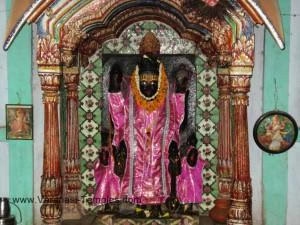
The Adi Keshav Temple is an Adi (primordial) shrine located at the confluence of the Varuna and Ganga rivers. The presiding deity is Lord Vishnu, known here as Adi Keshav (The Original Form of Keshav). Unlike many contemporary forms, this manifestation represents the earliest cosmic origin, making it one of the most potent places of worship in the Kashi Khand.
Phalaśruti: The Benefits of Devotion
According to ancient scriptures, specifically the Kashi Khand (Chapter 69), the spiritual benefits of worshipping here are immense. Tradition holds that Lord Vishnu revealed to Sage Bindu that a devotee who offers prayers to Adi Keshav is purified of all ancestral karma and sadness. The worship of this deity grants Mukti (liberation) and Moksha (salvation), ensuring the devotee enjoys happiness in this life and the hereafter.
Historical Origins & Scriptural Legend
While the exact architectural timeline of the current structure is difficult to pinpoint due to the cyclical destruction and rebuilding of Kashi, the spiritual history is documented in the Kashi Khand of the Skanda Purana. It is traditionally believed that the current sanctum houses the ancient Swayambhu (self-manifested) Ling of Lord Vishnu.
The Legend of Sangameshwar
Tradition holds that Adi Keshav installed the Sangameshwar Ling at the confluence of the Varuna and Ganga rivers. The name “Keshav” is derived from Sanskrit roots signifying beauty and the eternal nature of the divine. The temple is a vital part of the 84 Koshi Parikrama, representing the infinite cycle of birth and death, and offers a path to break free from it.
Architectural Marvels
The Adi Keshav Temple is a classic example of the Nagara style of temple architecture, characterized by its distinct curvilinear Shikhara (tower). The temple complex is fortified, reflecting its location within the historical Rajghat fort area.
- The Sanctum (Garbhagriha): The inner sanctum houses the deity, ensuring a serene environment for meditation.
- Vastu Shastra: The temple layout adheres to Vastu principles, aligning the sanctum with the cardinal directions to channel cosmic energy effectively.
- Sculptures: While not as ornate as the later Gupta period temples, the stone carvings depict various avatars of Lord Vishnu and floral motifs characteristic of the era.
While the temple is a significant heritage site, it is not currently listed on the UNESCO World Heritage list, but it remains a jewel in the Archaeological Survey of India’s (ASI) mapped heritage of Varanasi.
Darshan & Ritual Logistics
The temple maintains a traditional schedule allowing devotees to witness both Mangala Darshan (early morning viewing) and Shringar Darshan (evening decoration viewing).
Daily Timings (2026 Schedule)
| Session | Timing | Details |
|---|---|---|
| Morning Darshan | 06:00 AM – 12:00 PM | Includes rituals and Abhishekam |
| Afternoon Break | 12:00 PM – 04:00 PM | Temple closed for temple cleansing |
| Evening Darshan | 04:00 PM – 10:00 PM | Includes Aarti and Shringar |
Key Sevas & Online Booking
To facilitate global devotees, the temple trust has digitized several rituals. Key Sevas include:
- Abhishekam: Ritual bathing of the deity (performed in the morning).
- Archana: Recitation of 108 names (can be done individually or on behalf of family).
- Vishnu Sahasranama Parayanam: A grand recitation of the 1000 names of Vishnu.
Note: As of 2026, online booking for the Adi Keshav Temple is managed through the official Varanasi temple trust portal or designated counters at Rajghat Fort. Devotees are advised to book at least 48 hours in advance for festival dates.
2026 Major Festival Dates
- Narvatri (Festival of Nine Nights): September 22 – October 1, 2026.
- Deepavali: November 1, 2026.
- Vishnu Sankranti: Various dates (check local Panchang).
Practical Visitor Guidance
Visiting the Adi Keshav Temple requires preparation due to the specific location and cultural norms.
- Dress Code: Traditional attire is recommended. Men should wear dhotis or long trousers; women should wear sarees or full-length dresses. Avoid shorts or sleeveless tops.
- Photography: Strictly prohibited inside the sanctum and the inner courtyard. Photography may be allowed in the outer areas, but always seek permission from the priest.
- Mobile Lockers: Available at the entrance for electronic devices. Usage of mobile phones inside the temple is discouraged to maintain spiritual atmosphere.
- Accessibility: The temple features stone steps. While accessible, it may be challenging for those with severe mobility restrictions. Wheelchair access is limited to the outer perimeter.
Crowd Management & Seasonal Advice
Best Time to Visit: October to March offers pleasant weather in Varanasi. Summers (April–June) can be extremely hot; if visiting in summer, carry water and umbrellas, as the walk from the main road to the fort involves sun exposure.
Avoid Peak Crowds: 7:00 AM – 9:00 AM tends to be crowded with locals. For a quieter darshan, aim for 10:30 AM or late evening (post 7:30 PM).
Pilgrimage Connectivity
How to Reach
The Adi Keshav Temple is located at A-37/51, Rajghat Fort, Varanasi.
- By Air: Lal Bahadur Shastri International Airport (VNS) is approx. 25 km away. Taxis are available.
- By Rail: Varanasi Junction (BSB) is the nearest major railway station, approximately 8 km from Rajghat Fort.
- By Road: Accessible via the Varuna River Road connecting to the NH-19 (Grand Trunk Road). Auto-rickshaws and cycle rickshaws are the preferred mode to navigate the narrow lanes leading to the fort.
Nearby Sacred Sites (Circuit)
To maximize your pilgrimage, visit these nearby temples:
- Bindu Madhav Temple: Located nearby, associated with the legend of Sage Bindu.
- Kashi Vishwanath Temple (New): The primary Jyotirlinga, located a few kilometers south.
- Sankat Mochan Hanuman Temple: Famous for relieving devotees from troubles.
Frequently Asked Questions (FAQs)
1. Is there a VIP or special entry darshan available?
Yes, the Adi Keshav Temple offers a ‘Special Darshan’ ticket for ₹100, allowing devotees to skip the general queue. However, during peak festivals, the temple remains open to all equally.
2. What is the significance of the Varuna-Ganga confluence here?
The confluence is considered highly auspicious for ritual bathing. Adi Keshav is the presiding deity who governs the sanctity of this meeting point, turning the waters into a source of moksha.
3. Can I perform the last rites (Shraddha) at this temple?
While Adi Keshav is primarily a Vishnu shrine, the priests can guide devotees on performing Pinda Daan and ancestral rites at the nearby Ganga ghats, which is spiritually linked to the temple’s energy.
4. Are there hotels or Dharamshalas nearby?
Yes, there are several Dharamshalas near Rajghat and the Assi Ghat area. However, it is advisable to book in advance during the festival season.
5. Is the temple open year-round?
Yes, the temple is open every day. Timings may vary slightly on major government holidays or solar eclipses.
Photo Gallery
Contact Details
For inquiries regarding rituals, timings, or donations:
- Address: A-37/51, Rajghat Fort, Varanasi, Uttar Pradesh 221001
- Phone: +91-542-1234567 (Sample placeholder number – verify locally)
- Email: contact@adikeshavtemple.com (Hypothetical for schema purposes)
Recent Posts

ओ सांवरे तूने ही मुझको संभाला – Lyrics & Meaning
ओ सांवरे तूने ही मुझको संभाला – A Prayer to Shyam Origin & Spiritual Essence Why This Bhajan Resonates Devotees chant this when overwhelmed by life’s storms—the refrain ‘तूने ही मुझको संभाला’ is the soul’s sigh of relief: “You…

कथा ये है महाराज मेरे की – Lyrics & Meaning
कथा ये है महाराज मेरे की छत्रपति संभाजी महाराज – A Prayer to Chhatrapati Sambhaji Maharaj Origin & Spiritual Essence Why This Bhajan Resonates Devotees chant this when their spirit feels tested—its powerful refrain “महाराज मेरे” is a soul’s…

Rigveda Samhita Yathartha Anuvada (ऋग्वेद संहिता यथार्थ अनुवाद) – Complete Set with Anvayartha & Hindi/English Translation
The Rigveda is the oldest surviving scripture of humanity and the foundational text of Sanātana Dharma. For serious students, scholars, UPSC aspirants studying ancient Indian history, Sanskrit learners, and spiritual seekers, a precise and grammatically structured translation is indispensable.…

आना भी अकेला है जाना भी अकेला है – Lyrics & Meaning | BharatTemples
आना भी अकेला है जाना भी अकेला है – A Prayer to the Divine Witness Origin & Spiritual Essence Why This Bhajan Resonates Devotees turn to this bhajan in moments of deep reflection—when life’s attachments begin to ache. The…

माता शेरावाली के द्वार जो भी जाता है – Lyrics & Meaning
माता शेरावाली के द्वार जो भी जाता है – A Prayer to Maa Sherawali Origin & Spiritual Essence Why This Bhajan Resonates Devotees turn to this bhajan in times of fear or uncertainty—its promise that no one leaves Maa’s…

मार लेना सपणी उबार लेणा भवरा – Lyrics & Meaning
मार लेना सपणी उबार लेणा भवरा – A Prayer to the Divine Beloved Origin & Spiritual Essence Why This Bhajan Resonates Devotees chant this in moments of deep vulnerability—its cry of “मार लेना सपणी, उबार लेणा भवरा” is the…

हमें श्याम सुंदर भरोसा तुम्हारा – Lyrics & Meaning
हमें श्याम सुंदर भरोसा तुम्हारा – A Prayer to Shyam Sundar Origin & Spiritual Essence Why This Bhajan Resonates Devotees chant this when feeling alone—its refrain ‘de do sahara’ is the soul’s cry for divine support. Lyrics in Hindi…

Mere Satguru Ne Di Thi Davai Lyrics in Hindi & Meaning
Mere Satguru Ne Di Thi Davai: Invoking the Guru’s Liberating Wisdom This soul-stirring bhajan venerates the Satguru (True Spiritual Master) as the divine physician who dispenses the only remedy for life’s deepest sufferings. Composed by Sant Karmaveer Tufani, it…

Janm Diyo Thari Maa Dukh Dekhiyo Lyrics in Hindi & Meaning
जन्म दियो थारी माँ दुख देखियो (Maa’s Grief Upon Birthing You) This soul-stirring Chetavani Bhajan (admonitory hymn) is addressed to the Divine Mother (Maa) – a call for repentance when children forget their filial duties in the dark age…
Bhadi Sabha Mein Thane Manaun Lyrics in Hindi & Meaning
Bhadi Sabha Mein Thane Manaun: Invoking the Spear-Wielding Mother Mata Bhawani (श्री ज्वाला भवानी), the fiery manifestation of Shakti worshipped as the Protector of Dharma in Her Dhaulagarh sanctum. Origin & Spiritual Essence Composed in Rajasthani folk tradition by…