
Contents
Amanalingeswarar Temple: The Kailash of South India
Introduction & Spiritual Essence
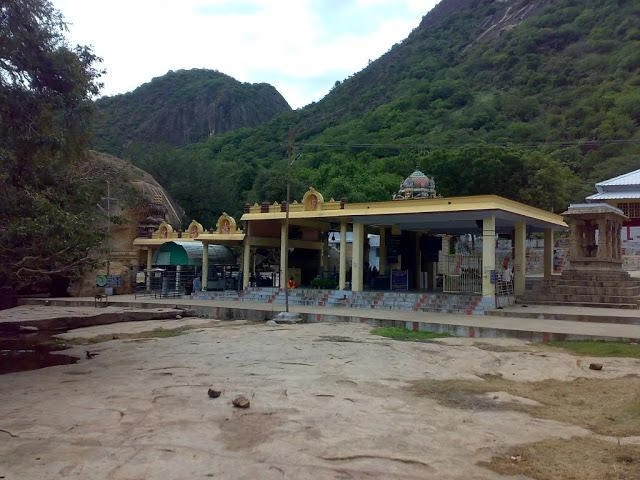
Nestled at the foothills of the Thirumoorthy Hills, adjoining the serene Thirumoorthy Reservoir in the Tirupur district, the Amanalingeswarar Temple stands as a timeless beacon of devotion. Locally revered as the Thirumoorthy Temple, this ancient shrine is a sacred haven where the divine manifests as Swayambhumurthis (self-manifested deities). The presiding deity, Lord Amanalingeswarar, is a representation of the Guru (Jupiter), offering wisdom and liberation to devotees.
Phalaśruti (Spiritual Benefits): Why do pilgrims flock to this secluded sanctuary? Legend holds that the very soil here is blessed by the presence of Sage Athri and Mother Anusuya. Devotees believe that worshipping here cleanses ancestral karma and removes obstacles to marriage and childbirth.
- Child Boon: It is strongly believed that bathing in the holy Thoni River and offering prayers at the Saptha Kannikas shrine grants the boon of progeny.
- Relief from Afflictions: Those suffering from skin ailments (Maru) bathe in the river and offer salt and pepper, seeking the grace of Lord Shiva for healing.
- Education & Career: Unmarried youth and students pray to the Varadikal stone (where the Three Moorthies stayed) for success in higher education and employment.
Historical Origins & Scriptural Legend
The history of Thirumoorthy Hills is woven into the fabric of the Sthala Purana. While specific dynastic construction dates are obscured by the temple’s primitive cave origins, architectural analysis suggests a legacy maintained over centuries.
The Legend of the Three Moorthies:
According to tradition, this is the site where Lord Brahma, Lord Vishnu, and Lord Shiva appeared before the sage Athri and Anusuya in the form of three children. To test Anusuya’s purity, the trinity (in disguise) asked for alms. Anusuya, adhering to her vows, transformed the deities into infants and breastfed them. Upon the return of Sage Athri, the deities revealed their true forms and blessed the couple. As the Trinity (Mummoorthy) resided here, the hill came to be known as Thirumoorthy Hills.
Jain Connection:
Historical evidence suggests that Jain monks (Samanar) flourished here during the early centuries of the common era. A massive rock near the temple features an upside-down sculpture of a Jain priest, believed to have rolled down from the hills during a flood centuries ago. This artifact stands as a testament to the region’s syncretic spiritual history.
Architectural Marvels
The temple showcases a blend of Dravidian architecture with distinct characteristics of a cave temple (Malai Kottam). Unlike towering stone gopurams, the sanctity here lies in the natural rock formations.
- The Sanctum: The primary deity, Amanalingeswarar, resides in a natural niche within the rock face, forming a cave-like enclosure.
- Spacious Mandapas: The temple features a spacious front hall (Mandapa) with rare sculptures. The Eight-Pillared Mandapam is historically significant as the spot where the Three Lords are said to have rested.
- Notable Shrines:
- Saptha Kannikas Shrine: A unique sanctum dedicated to the seven virgins who saved the child-form of the Lord from a rolling boulder using seven pieces of turmeric.
- Varadikal: A specific stone platform where devotees sit to pray for boons.
- Sthala Vriksham: The sacred Arasa Maram (Peepal Tree).
- Topography: The temple is integrated into the landscape, with the Pancha Lingas situated approximately 900 meters above the base level, accessible via a trekking path.
Darshan & Ritual Logistics
The temple follows a continuous schedule, allowing pilgrims ample time for worship. Four major pujas are performed daily.
Daily Timings (2026 Schedule)
| Session | Timing | Puja Type |
|---|---|---|
| Morning | 06:30 AM – 12:30 PM | Ushathkalam, Kalasanthi, Makaram |
| Special Puja | 12:30 PM | Midday Puja (Special on Sundays) |
| Evening | 04:00 PM – 06:30 PM | Pradosham, Sayarakshai |
Key Sevas & Offerings
- Abhishekam: Performed daily. The sandal paste offering is unique here—devotees roll small balls of sandalwood paste onto the Lingam. If it sticks to the forehead, the wish is granted.
- Archana: Specialized Archana for Lord Dakshinamurthy (Guru aspect) is highly recommended for students and those seeking knowledge.
- Pradosham: Celebrated with fervor, especially during the Tamil months of Aavani (Aug-Sept) and Puratasi (Sept-Oct).
Festival Calendar 2026
- Maha Shivaratri (Feb/Mar 2026): Four major pujas are conducted; expect a massive influx of pilgrims. Arrive by 4:00 AM.
- Aadi Amavasya (July/Aug 2026): A new moon day with significant crowds, particularly for ancestral rites.
- Thai Amavasya (Jan/Feb 2026): Another major new moon event favoring family prosperity.
- Annual Abishek Days (August 2026): Specific dates aligned with the Tamil calendar; check local listings closer to the date.
Online Seva Booking: Currently, the temple operates largely on an in-person basis for archana and abhishekam tickets. However, for general donations and specific special darshans during festivals, updates are posted on the Tamil Nadu Hindu Religious & Charitable Endowments (HRCE) portal.
Practical Visitor Guidance
Visiting Amanalingeswarar Temple requires preparation due to its location near a dam and hills.
Dress Code & Etiquette
Traditional attire is preferred. Men should wear dhotis or trousers with shirts; women should wear sarees, salwar kameez, or full-length skirts. Avoid shorts or sleeveless tops.
Crowd Management & Best Hours
- Best Time to Visit: Weekday mornings (Tuesday to Thursday) between 9:00 AM and 11:00 AM.
- Seasonal Advice:
- Summer (April – June): Udumalaipettai gets hot. Carry ample water; the temple is open-air but the queue can be lengthy.
- Monsoon (July – Nov): Beautiful scenery, but trekking to the Pancha Lingas can be slippery.
Accessibility & Facilities
- Footwear: A dedicated shoe-keeping facility is available (usually free or nominal charge).
- Mobile Lockers: Limited availability; it is advisable to travel light and leave valuables in your vehicle.
- Physical Accessibility: The main sanctum is accessible via steps. However, the path to the Pancha Lingas at the hilltop is a steep trek and not suitable for those with mobility issues.
Pilgrimage Connectivity
How to Reach
- By Road: The temple is located at Dhali, connecting Palani and Coimbatore. It is 23 km from Udumalaipettai and 50 km from Pollachi via NH 83.
- By Rail: The nearest railway station is Udumalaipettai (UDT). It is a broad-gauge station well-connected to Pollachi and Dharapuram.
- By Air: The nearest airport is Coimbatore International Airport (CBE), approximately 85 km away (approx. 2 hours drive).
Religious Circuit (Nearby Sacred Sites)
Extend your pilgrimage to these nearby temples to complete the spiritual circuit of the Western Ghats:
- Palani Dhandayuthapani Swamy Temple: Located 65 km away. One of the six abodes (Arupadaiveedu) of Lord Murugan.
- Muthukumaraswamy Temple (Maruthamalai): Located near Coimbatore. A hill temple dedicated to Lord Murugan, adding to the spiritual ascent.
- Siruvani Waterfalls & Temple: Located near Pollachi, known for its medicinal waters and associated small shrines.
Frequently Asked Questions (FAQs)
1. Is there a VIP Darshan entry?
No, strictly speaking, there is no commercial VIP entry. However, devotees purchasing higher-value Archana or Abhishekam tickets may experience a slightly faster queue during non-peak hours.
2. Can we perform a pooja ourselves inside the sanctum?
Usually, no. Only authorized temple priests are allowed inside the inner sanctum. However, you can carry your own flowers and coconuts (without husk) for offering to the outer deity, which the priest will then pass to the inner sanctum.
3. Is the trek to Pancha Lingas safe for children?
The initial temple complex is safe for all ages. However, the trek to the Pancha Lingas (900m elevation) is moderately difficult. It is recommended for children above 10 years who are physically fit. Carry water and walking sticks.
4. What is the significance of the ‘Varadikal’ stone?
The ‘Varadikal’ is the stone believed to be where the Three Lords (Brahma, Vishnu, Shiva) sat. Unmarried individuals and those seeking specific boons sit on this stone with a coconut and fruits in hand, closing their eyes and praying. It is said that if you accidentally touch the fruit while praying, the boon will come true.
5. Is the Thoni River water safe for bathing?
Yes, it is a fresh stream flowing from the Panchalingam Falls. It is considered highly sacred. However, take care of your belongings and avoid using soaps/shampoos to maintain purity.
Recent Posts

ओ सांवरे तूने ही मुझको संभाला – Lyrics & Meaning
ओ सांवरे तूने ही मुझको संभाला – A Prayer to Shyam Origin & Spiritual Essence Why This Bhajan Resonates Devotees chant this when overwhelmed by life’s storms—the refrain ‘तूने ही मुझको संभाला’ is the soul’s sigh of relief: “You…

कथा ये है महाराज मेरे की – Lyrics & Meaning
कथा ये है महाराज मेरे की छत्रपति संभाजी महाराज – A Prayer to Chhatrapati Sambhaji Maharaj Origin & Spiritual Essence Why This Bhajan Resonates Devotees chant this when their spirit feels tested—its powerful refrain “महाराज मेरे” is a soul’s…

Rigveda Samhita Yathartha Anuvada (ऋग्वेद संहिता यथार्थ अनुवाद) – Complete Set with Anvayartha & Hindi/English Translation
The Rigveda is the oldest surviving scripture of humanity and the foundational text of Sanātana Dharma. For serious students, scholars, UPSC aspirants studying ancient Indian history, Sanskrit learners, and spiritual seekers, a precise and grammatically structured translation is indispensable.…

आना भी अकेला है जाना भी अकेला है – Lyrics & Meaning | BharatTemples
आना भी अकेला है जाना भी अकेला है – A Prayer to the Divine Witness Origin & Spiritual Essence Why This Bhajan Resonates Devotees turn to this bhajan in moments of deep reflection—when life’s attachments begin to ache. The…

माता शेरावाली के द्वार जो भी जाता है – Lyrics & Meaning
माता शेरावाली के द्वार जो भी जाता है – A Prayer to Maa Sherawali Origin & Spiritual Essence Why This Bhajan Resonates Devotees turn to this bhajan in times of fear or uncertainty—its promise that no one leaves Maa’s…

मार लेना सपणी उबार लेणा भवरा – Lyrics & Meaning
मार लेना सपणी उबार लेणा भवरा – A Prayer to the Divine Beloved Origin & Spiritual Essence Why This Bhajan Resonates Devotees chant this in moments of deep vulnerability—its cry of “मार लेना सपणी, उबार लेणा भवरा” is the…

हमें श्याम सुंदर भरोसा तुम्हारा – Lyrics & Meaning
हमें श्याम सुंदर भरोसा तुम्हारा – A Prayer to Shyam Sundar Origin & Spiritual Essence Why This Bhajan Resonates Devotees chant this when feeling alone—its refrain ‘de do sahara’ is the soul’s cry for divine support. Lyrics in Hindi…

Mere Satguru Ne Di Thi Davai Lyrics in Hindi & Meaning
Mere Satguru Ne Di Thi Davai: Invoking the Guru’s Liberating Wisdom This soul-stirring bhajan venerates the Satguru (True Spiritual Master) as the divine physician who dispenses the only remedy for life’s deepest sufferings. Composed by Sant Karmaveer Tufani, it…

Janm Diyo Thari Maa Dukh Dekhiyo Lyrics in Hindi & Meaning
जन्म दियो थारी माँ दुख देखियो (Maa’s Grief Upon Birthing You) This soul-stirring Chetavani Bhajan (admonitory hymn) is addressed to the Divine Mother (Maa) – a call for repentance when children forget their filial duties in the dark age…
Bhadi Sabha Mein Thane Manaun Lyrics in Hindi & Meaning
Bhadi Sabha Mein Thane Manaun: Invoking the Spear-Wielding Mother Mata Bhawani (श्री ज्वाला भवानी), the fiery manifestation of Shakti worshipped as the Protector of Dharma in Her Dhaulagarh sanctum. Origin & Spiritual Essence Composed in Rajasthani folk tradition by…