

Contents
- 1 Introduction & Spiritual Essence
- 2 Historical Origins & Scriptural Legend
- 3 Architectural Marvels
- 4 Darshan & Ritual Logistics
- 5 Practical Visitor Guidance
- 6 Pilgrimage Connectivity
- 6.1 How to Reach
- 6.2 Nearby Sacred Sites (Circuit)
- 6.3 Frequently Asked Questions
- 6.4 1. Is there a VIP Darshan entry?
- 6.5 2. What is the significance of the Palpayasam?
- 6.6 3. Can I visit with my family on a Sunday?
- 6.7 4. Are there restaurants nearby?
- 6.8 5. How strictly is the mobile camera rule enforced?
Introduction & Spiritual Essence
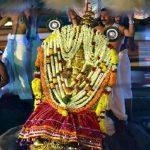
Welcome to the Ambalappuzha Sri Krishna Temple, a timeless spiritual sanctuary nestled on the banks of the serene Ambalappuzha River in Kerala. Known locally as Amabalappuzha Unnikannan (The Little Krishna of Ambalappuzha), this temple stands as a testament to devotion and the enduring bond between divinity and humanity. The primary deity here is worshipped as Parthasarthi, the charioteer of Arjuna in the Mahabharata, depicted holding a whip in the right hand and a sacred conch (Shankhu) in the left.
Phalaśruti (Spiritual Benefits): Devotees believe that offering prayers here alleviates the sorrows of life. The temple is particularly renowned for the legend of the “Paalpayasam Debt,” suggesting that consuming the holy offering here cleanses one of accumulated karmic debts. It is also directly associated with the Guruvayoor Temple; during Tipu Sultan’s raids in the late 18th century, the idol of Guruvayoorappan was brought here for safekeeping, imbuing this shrine with Guruvayoor’s protective energies.
Historical Origins & Scriptural Legend
The Architecture of Divinity
According to temple records and local tradition, the current shrine was constructed between the 15th and 17th centuries under the patronage of the Chembakasserry Pooradam Thirunal-Devanarayanan Thampuran. However, the origin story reaches back further into the mists of time. Tradition holds that the King and his mentor, Vilwamangalath Swamiyar, were boating on the river when they heard the celestial notes of a flute. Drawn to the sound, they discovered a divine boy playing the flute on a branch of a Peepal tree.
Recognizing the boy as Lord Krishna, the King built the temple on that very spot. The 3-foot idol installed there is unique; it is believed that the original idol meant for the temple was rejected due to flaws, and an existing idol was installed instead. This idol is always covered in sandalwood paste (Chandanam), preserving its sanctity.
Architectural Marvels
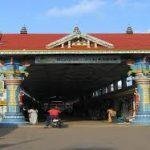
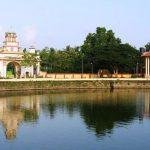
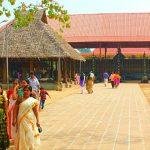
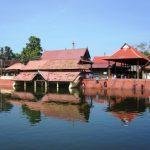
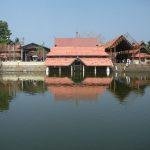
The temple is a classic example of traditional Kerala architecture, characterized by gabled roofs, wooden carvings, and laterite walls. The Sanctum Sanctorum (Sreekovil) is circular with a copper-plated roof, rising elegantly against the backdrop of the backwaters.
Inside the temple complex, visitors can admire:
- Frescoes of Dasavathara: The inner walls of the sanctum are adorned with paintings depicting the ten incarnations of Lord Vishnu. These murals, rendered in natural vegetable dyes, showcase the Kerala mural art style.
- The Ashta Dikpalakas: Sculptures representing the guardians of the eight directions are placed around the sanctum.
- The Mandapas: The Nalambalam (corridor) surrounding the sanctum allows devotees to perform pradakshina (circumambulation) while viewing the intricate wooden pillars.
Darshan & Ritual Logistics
A visit to Ambalappuzha is incomplete without experiencing the daily rituals. The temple follows strict Agama traditions. Below are the standard darshan timings for 2026. Please note: Timings may vary during festival seasons.
| Session | Timings | Rituals |
|---|---|---|
| Morning Darshan | 05:00 AM – 12:00 PM | Opening, Nirmalyam, Abhishekam, Ucha Puja |
| Midday Closure | 12:00 PM – 03:30 PM | Deity rest (Sree Bhavan rests) |
| Evening Darshan | 03:30 PM – 09:00 PM | Deeparadhana, Athazha Puja, Harivarasanam |
| Night Closure | 09:00 PM | Temple closes |
Key Sevas & Online Booking
Devotees can book specific Sevas through the official temple portal or the Kerala Devaswom Board.
- Abhishekam (Ritual Bath): Performed daily at 8:00 AM and 6:00 PM. Booking recommended 7 days in advance.
- Archana (Chanting of Names): Continuous chants during darshan hours.
- Palpayasam Seva: The offering of the sacred milk pudding. Tickets are available at the counter and online.
Festival Dates 2026:
- Champakulam Boat Race: July 5, 2026 (Coincides with the anniversary of the idol installation).
- Arattu Utsavam: The 10-day annual festival falls in March/April (Meenam). The 2026 festival concludes on April 14th with the Arattu (holy bath).
Practical Visitor Guidance
To ensure a smooth pilgrimage, please adhere to the following guidelines:
Dress Code & Conduct
Modest attire is mandatory. Men should wear dhotis or trousers (no shorts/shirts allowed inside the sanctum). Women are required to wear sarees, half-sarees, or full-length skirts. Western attire is generally discouraged in the inner courtyard.
Photography & Lockers
Strict Prohibition: Photography is forbidden inside the Sanctum Sanctorum and the painting galleries. Mobile phones and cameras must be deposited at the free locker facility provided by the temple near the entrance.
Accessibility & Crowd Management
The temple complex is compact. During the summer months (April–May) and festival seasons, the crowd swells significantly.
- Best Time to Visit: Early morning (5:30 AM – 7:00 AM) or late evening (after 7:00 PM) to avoid the rush.
- Hydration: Carry water; Alapuzha humidity can be high.
Pilgrimage Connectivity
How to Reach
Ambalappuzha is located 14 km south of Alappuzha town and is well-connected.
- Nearest Railway: Ambalappuzha Railway Station (1 km from temple) or Alappuzha Railway Station (14 km).
- Nearest Airport: Cochin International Airport (KGOK), approx 85 km away.
- By Road: Located on SH 12 (Alappuzha – Cherthala Road). Buses are frequent from Alappuzha KSRTC.
Nearby Sacred Sites (Circuit)
- Krishnapuram Palace: Located 4 km away, this 18th-century palace houses the famous mural painting Gajendrakrishnam.
- Mannarassala Temple: A 30-minute drive towards Haripad, this is the premier serpent shrine in Kerala.
- Alappuzha Beach & Lighthouse: After darshan, head back to Alapuzha town for a serene coastal visit.
Frequently Asked Questions
1. Is there a VIP Darshan entry?
The temple does not strictly distinguish between general and VIP devotees. However, those with Seva tickets (Abhishekam/Archana) are allowed entry during specific slots, which bypass the general queue. Senior citizens and differently-abled devotees are given priority access on request at the counter.
2. What is the significance of the Palpayasam?
The Palpayasam is not just a culinary delight but a divine remnant (Prasadam). Legend says Lord Krishna promised the local king that he would continue to accept the “debt” of rice in the form of Payasam offered to devotees forever. It is served in two quantities: half a cup (Kudam) and a full cup (Pala).
3. Can I visit with my family on a Sunday?
Yes, the temple is open every day of the week. Sundays typically see a higher influx of domestic tourists, so an early morning visit is advised.
4. Are there restaurants nearby?
Yes, the Devaswom provides an extensive feast (Sadya) for lunch and dinner (dinner requires advance booking). Several private restaurants in the town center serve authentic Kerala cuisine.
5. How strictly is the mobile camera rule enforced?
Very strictly. Security personnel check bags at the entrance. Using a phone inside the temple premises can result in confiscation or fines. It is best to leave devices in the provided lockers.
Recent Posts

ओ सांवरे तूने ही मुझको संभाला – Lyrics & Meaning
ओ सांवरे तूने ही मुझको संभाला – A Prayer to Shyam Origin & Spiritual Essence Why This Bhajan Resonates Devotees chant this when overwhelmed by life’s storms—the refrain ‘तूने ही मुझको संभाला’ is the soul’s sigh of relief: “You…

कथा ये है महाराज मेरे की – Lyrics & Meaning
कथा ये है महाराज मेरे की छत्रपति संभाजी महाराज – A Prayer to Chhatrapati Sambhaji Maharaj Origin & Spiritual Essence Why This Bhajan Resonates Devotees chant this when their spirit feels tested—its powerful refrain “महाराज मेरे” is a soul’s…

Rigveda Samhita Yathartha Anuvada (ऋग्वेद संहिता यथार्थ अनुवाद) – Complete Set with Anvayartha & Hindi/English Translation
The Rigveda is the oldest surviving scripture of humanity and the foundational text of Sanātana Dharma. For serious students, scholars, UPSC aspirants studying ancient Indian history, Sanskrit learners, and spiritual seekers, a precise and grammatically structured translation is indispensable.…

आना भी अकेला है जाना भी अकेला है – Lyrics & Meaning | BharatTemples
आना भी अकेला है जाना भी अकेला है – A Prayer to the Divine Witness Origin & Spiritual Essence Why This Bhajan Resonates Devotees turn to this bhajan in moments of deep reflection—when life’s attachments begin to ache. The…

माता शेरावाली के द्वार जो भी जाता है – Lyrics & Meaning
माता शेरावाली के द्वार जो भी जाता है – A Prayer to Maa Sherawali Origin & Spiritual Essence Why This Bhajan Resonates Devotees turn to this bhajan in times of fear or uncertainty—its promise that no one leaves Maa’s…

मार लेना सपणी उबार लेणा भवरा – Lyrics & Meaning
मार लेना सपणी उबार लेणा भवरा – A Prayer to the Divine Beloved Origin & Spiritual Essence Why This Bhajan Resonates Devotees chant this in moments of deep vulnerability—its cry of “मार लेना सपणी, उबार लेणा भवरा” is the…

हमें श्याम सुंदर भरोसा तुम्हारा – Lyrics & Meaning
हमें श्याम सुंदर भरोसा तुम्हारा – A Prayer to Shyam Sundar Origin & Spiritual Essence Why This Bhajan Resonates Devotees chant this when feeling alone—its refrain ‘de do sahara’ is the soul’s cry for divine support. Lyrics in Hindi…

Mere Satguru Ne Di Thi Davai Lyrics in Hindi & Meaning
Mere Satguru Ne Di Thi Davai: Invoking the Guru’s Liberating Wisdom This soul-stirring bhajan venerates the Satguru (True Spiritual Master) as the divine physician who dispenses the only remedy for life’s deepest sufferings. Composed by Sant Karmaveer Tufani, it…

Janm Diyo Thari Maa Dukh Dekhiyo Lyrics in Hindi & Meaning
जन्म दियो थारी माँ दुख देखियो (Maa’s Grief Upon Birthing You) This soul-stirring Chetavani Bhajan (admonitory hymn) is addressed to the Divine Mother (Maa) – a call for repentance when children forget their filial duties in the dark age…
Bhadi Sabha Mein Thane Manaun Lyrics in Hindi & Meaning
Bhadi Sabha Mein Thane Manaun: Invoking the Spear-Wielding Mother Mata Bhawani (श्री ज्वाला भवानी), the fiery manifestation of Shakti worshipped as the Protector of Dharma in Her Dhaulagarh sanctum. Origin & Spiritual Essence Composed in Rajasthani folk tradition by…