
Contents
Angala Parameshwari Temple: The Definitive Pilgrimage Guide
Introduction & Spiritual Essence
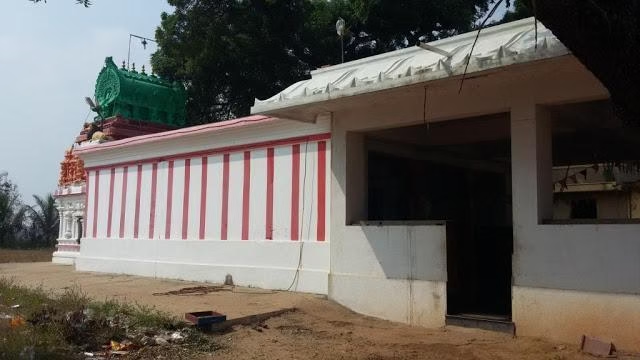
The Angala Parameshwari Temple, situated in the tranquil village of Erumai Vetti Palayam in Thiruvallur District, stands as a beacon of divine feminine energy (Shakti). This sacred shrine is dedicated primarily to Angala Parameshwari, a powerful manifestation of Goddess Parvathi.
Phalaśruti (Spiritual Benefits): Devotees flock to this ancient temple seeking protection from malefic planetary influences and liberation from the afflictions of black magic or negative energies. Tradition holds that worshipping the Goddess here cleanses ancestral karma and grants ‘Varamukthi’ (boons of liberation). The temple is also historically known as Mahishasuramardhanam, marking the site of the legendary battle against the demon Mahishasura.
Historical Origins & Scriptural Legend
While the exact inscriptional evidence regarding the founding dynasty remains elusive in modern records, the temple’s spiritual lineage is traced back to the Treta Yuga through the Sthala Purana (local oral legend).
The Legend of Mahishasura: According to temple records and oral tradition, the village derives its ancient name from a legendary event. In the days of yore, the demon Mahishasura—a devotee of Lord Shiva—received a boon that he could only be slain by a woman. Believing himself invincible, he wreaked havoc on the world.
During Lord Rama’s exile, he and Sita Devi resided briefly in this forest. One day, while Rama was in deep penance, Mahishasura approached Sita. Fleeing in fear, Sita sat upon Rama’s lap. Breaking his meditation, Rama threw dry grass in all four directions, from which four divine nymphs emerged: Angala Parameswari, Ponniamman, Marakalathamman, and Kaikathamman.
Assuming the form of a buffalo to escape, Mahishasura hid in the nearby Punyakoti River. Angala Parameshwari, riding a lion and wielding a sword, plunged into the river and vanquished the demon. The people and Devas begged these deities to remain, leading to the establishment of four shrines in four directions. The Angala Parameshwari Temple marks the Eastern face of this ancient sacred geometry.
Architectural Marvels
The temple exemplifies the grandeur of Dravidian Architecture, characterized by its towering gateway tower (Rajagopuram) and the rhythmic enclosure walls. While specific ASI or UNESCO status has not been assigned to this particular village temple, it adheres to the classical Agamic traditions of South Indian temple construction.
Key Features:
- The Sanctum (Garbhagriha): Housing the swayambhu (self-manifested) idol of Angala Parameshwari, facing east.
- Mandapas: Spacious pillared halls used for cultural performances and religious discourses, featuring carved yalis (mythical creatures).
- Sculptures: The exterior walls depict scenes from the Ramayana and the Dasa Mahavidyas, etched in stone.
The village itself is laid out according to Vastu Shastra, with the temple at the eastern axis, aligning with the rising sun to absorb cosmic energy.
Darshan & Ritual Logistics
To facilitate a smooth pilgrimage experience in 2026, the following schedule has been standardized based on standard Agamic timings for Shakti temples in Tamil Nadu. Please note: Timings may vary slightly during festival seasons.
Daily Timings
| Period | Activity | Timing |
|---|---|---|
| Morning | Temple Opening & Suprabhatam | 6:00 AM |
| Morning | Abhishekam & Alankaram | 7:00 AM – 8:30 AM |
| Morning | Public Darshan | 8:30 AM – 12:00 PM |
| Afternoon | Closure for Rest | 12:00 PM – 4:00 PM |
| Evening | Temple Reopens | 4:00 PM |
| Evening | Deeparadhana | 6:30 PM |
| Evening | Temple Closure | 8:00 PM |
Key Sevas & Online Booking
Devotees can book special Sevas such as Abhishekam (sacred bathing), Archana (recitation of names), and Rudra Homam through the official Tamil Nadu Temple Administration portals (or contact the local temple trust directly).
2026 Festival Calendar:
- Navaratri: October 3 – October 12, 2026 (Grand processions on all 9 nights).
- Thai Poosam: January 12, 2026.
- Brahmotsavam: Scheduled for April 2026 (Dates finalized by the temple almanac).
Practical Visitor Guidance
As a lead heritage architect, I advise visitors to respect the sanctity of the space while preparing for the physical elements.
- Dress Code: Traditional attire is mandatory. Men should wear dhotis or pants with shirts; women should wear sarees, salwar kameez, or long skirts.
- Photography: Photography is strictly prohibited inside the sanctum sanctorum. Flash photography is banned to preserve the ancient murals.
- Crowd Management: Tuesdays and Fridays are highly crowded. The best time for a peaceful darshan is Wednesday and Thursday mornings (9:00 AM – 10:00 AM).
- Seasonal Advice: During the summer months (May), the region experiences high temperatures; carry water bottles and use head coverings.
- Accessibility: The temple complex is accessible via stone pathways. Wheelchair access is limited to the outer mandapas.
Pilgrimage Connectivity
The temple is well-connected via road and rail, making it accessible from Chennai and surrounding districts.
How to Reach
- By Air: Chennai International Airport (MAA) is approximately 41 km away.
- By Rail: The nearest major railway station is Thiruninravur (23 km). Ponneri railway station is 17 km away.
- By Road: Located off the Chennai-Kolkata Highway (NH 16). After the Karanodai Toll Plaza, take the overbridge toward Erumai Vetti Palayam. Bus Route 58 H connects from Chennai High Court and Koyambedu.
Nearby Sacred Sites (Pilgrimage Circuit)
Extend your spiritual journey by visiting these nearby shrines within Erumai Vetti Palayam:
- Varamuktheeswarar Temple: Located just 350 meters away, dedicated to Lord Shiva.
- Bhadrachala Ramar Temple: Situated 1.5 km away, housing Lord Rama.
- Periyapalayam Sri Brahmapureeswarar Temple: A major Shiva temple located 16 km away.
Frequently Asked Questions (FAQ)
1. Is there a VIP Darshan entry available?
While the temple does not have a formal “VIP” quota, purchasing special tickets for Abhishekam or Archana generally allows closer access to the sanctum during ritual times.
2. What is the significance of the ‘Punyakoti River’ mentioned in the legend?
The Punyakoti River is believed to be the mythological site where Goddess Angala Parameshwari slew the buffalo-form demon Mahishasura. While the physical river flow may vary seasonally, its waters are considered sacred and used for temple rituals.
3. Is there a facility to store luggage or mobile phones?
Basic shoe-keeping facilities are available at the entrance. While dedicated mobile lockers may be limited, it is recommended to leave valuables in your vehicle or with your group for safety and uninterrupted darshan.
4. Can non-Hindus visit the temple?
This is a traditional Hindu place of worship. While the sanctum is generally restricted to devotees who follow Hindu traditions, the outer precincts may be accessible. It is best to check with the temple administration upon arrival.
5. How is the road condition from Karanodai Overbridge?
The last kilometer of the approach road is a rural path. While navigable for cars, it can be bumpy. Compact vehicles are preferred over large SUVs for ease of maneuvering.
Historical Context & Source Reference:
Angala Parameshwari Temple is a Hindu Temple dedicated to Goddess Parvathi located at Erumai Vetti Palayam Village in Thiruvallur District of Tamilnadu. There are also Varamuktheeswarar Temple and Bhadrachala Ramar Temple in this Village. This Village is called as Mahishasuramardhanam in olden days.
Original Source: https://tamilnadu-favtourism.blogspot.com/2018/05/angala-parameshwari-temple-erumai-vetti-palayam-thiruvallur.html
Contact Details (Reference):
The Temple is located at about 750 meters from Erumai Vetti Palayam Bus Stand, 350 meters from Varamuktheeswarar Temple, 1.5 Kms from Bhadrachala Ramar temple, 1.5 Kms from New Erumai Vetti Palayam Bus Stop, 6 Kms from Karanodai, 8 Kms from Cholavaram, 13 Kms from Thamaraipakkam, 16 Kms from Periyapalayam, 17 Kms from Ponneri Railway Station, 23 Kms from Thiruninravur Railway Station, 32 Kms from Thiruvallur, 28 Kms from Chennai and 41 Kms from Chennai Airport.
Recent Posts

ओ सांवरे तूने ही मुझको संभाला – Lyrics & Meaning
ओ सांवरे तूने ही मुझको संभाला – A Prayer to Shyam Origin & Spiritual Essence Why This Bhajan Resonates Devotees chant this when overwhelmed by life’s storms—the refrain ‘तूने ही मुझको संभाला’ is the soul’s sigh of relief: “You…

कथा ये है महाराज मेरे की – Lyrics & Meaning
कथा ये है महाराज मेरे की छत्रपति संभाजी महाराज – A Prayer to Chhatrapati Sambhaji Maharaj Origin & Spiritual Essence Why This Bhajan Resonates Devotees chant this when their spirit feels tested—its powerful refrain “महाराज मेरे” is a soul’s…

Rigveda Samhita Yathartha Anuvada (ऋग्वेद संहिता यथार्थ अनुवाद) – Complete Set with Anvayartha & Hindi/English Translation
The Rigveda is the oldest surviving scripture of humanity and the foundational text of Sanātana Dharma. For serious students, scholars, UPSC aspirants studying ancient Indian history, Sanskrit learners, and spiritual seekers, a precise and grammatically structured translation is indispensable.…

आना भी अकेला है जाना भी अकेला है – Lyrics & Meaning | BharatTemples
आना भी अकेला है जाना भी अकेला है – A Prayer to the Divine Witness Origin & Spiritual Essence Why This Bhajan Resonates Devotees turn to this bhajan in moments of deep reflection—when life’s attachments begin to ache. The…

माता शेरावाली के द्वार जो भी जाता है – Lyrics & Meaning
माता शेरावाली के द्वार जो भी जाता है – A Prayer to Maa Sherawali Origin & Spiritual Essence Why This Bhajan Resonates Devotees turn to this bhajan in times of fear or uncertainty—its promise that no one leaves Maa’s…

मार लेना सपणी उबार लेणा भवरा – Lyrics & Meaning
मार लेना सपणी उबार लेणा भवरा – A Prayer to the Divine Beloved Origin & Spiritual Essence Why This Bhajan Resonates Devotees chant this in moments of deep vulnerability—its cry of “मार लेना सपणी, उबार लेणा भवरा” is the…

हमें श्याम सुंदर भरोसा तुम्हारा – Lyrics & Meaning
हमें श्याम सुंदर भरोसा तुम्हारा – A Prayer to Shyam Sundar Origin & Spiritual Essence Why This Bhajan Resonates Devotees chant this when feeling alone—its refrain ‘de do sahara’ is the soul’s cry for divine support. Lyrics in Hindi…

Mere Satguru Ne Di Thi Davai Lyrics in Hindi & Meaning
Mere Satguru Ne Di Thi Davai: Invoking the Guru’s Liberating Wisdom This soul-stirring bhajan venerates the Satguru (True Spiritual Master) as the divine physician who dispenses the only remedy for life’s deepest sufferings. Composed by Sant Karmaveer Tufani, it…

Janm Diyo Thari Maa Dukh Dekhiyo Lyrics in Hindi & Meaning
जन्म दियो थारी माँ दुख देखियो (Maa’s Grief Upon Birthing You) This soul-stirring Chetavani Bhajan (admonitory hymn) is addressed to the Divine Mother (Maa) – a call for repentance when children forget their filial duties in the dark age…
Bhadi Sabha Mein Thane Manaun Lyrics in Hindi & Meaning
Bhadi Sabha Mein Thane Manaun: Invoking the Spear-Wielding Mother Mata Bhawani (श्री ज्वाला भवानी), the fiery manifestation of Shakti worshipped as the Protector of Dharma in Her Dhaulagarh sanctum. Origin & Spiritual Essence Composed in Rajasthani folk tradition by…