
Contents
Introduction & Spiritual Essence
Pazhamuthicholai Temple (also spelled Pazhamutircolai), located on the lush slopes of the Alagar Hills in Madurai, Tamil Nadu, is a divine abode of Lord Muruga. It is revered as the 6th Arupadai Veedu (Holy Battlefield Shrine) of Lord Muruga in Tamil Nadu. Unlike the bustling cities surrounding Madurai, this temple offers a serene, sylvan atmosphere that perfectly befits the Lord of the Hills.
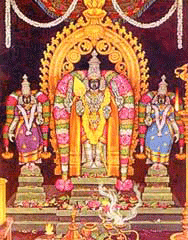
The primary deity here is Kurinji Nilakkizhavan (the Lord who shines in the hills). The murti is a standing form of Lord Muruga, flanked by his consorts, Valli and Teyvayanai. The presence of a stone Vel (spear) is of particular significance, revered as a powerful source of spiritual energy.
Phalaśruti: The Benefits of Pilgrimage
Devotees flock to Pazhamuthicholai for specific spiritual and material benefits:
- Health and Vitality: The temple is renowned for curing ailments and bestowing longevity. The renowned poet-saint Arunagirinathar explicitly states in his Tiruppugazh that Lord Muruga runs to bless devotees with health.
- Destruction of Ignorance: As the site where Muruga blessed Avvaiyar with the revelation of “roasted fruits,” the shrine symbolizes the opening of the mind to infinite knowledge.
- Ancestral Cleansing: Worshipping here is believed to cleanse ancestral karma and offer peace to departed souls.
Historical Origins & Scriptural Legend
While the hills and the natural surroundings are ancient, the current temple structure is a modern reconstruction. However, the spiritual legacy dates back to the Sangam Period (circa 300 BCE – 300 CE).
Scriptural References:
According to the classical Tamil text Tirumurukarruppatai by the poet Nakkirar, Pazhamuthicholai is identified as one of the six major abodes of Muruga. The poet describes the hill’s natural beauty, flora, and fauna in vivid detail, confirming its status as an ancient site of worship.
The Nûpura Ganga:
Tradition holds that a perennial spring flows atop the hill called Nûpura Ganga. Legend says this water originated from the anklet of Lord Vishnu (Tirumal). This site is deeply connected to the literary masterpiece Silappatikaram, composed by the poet Ilango Adigal, who is believed to have meditated here in the madavi mandapa.
Architectural Marvels
The temple complex exemplifies the classical Dravidian architectural style, harmoniously integrated with the natural landscape.
Structure and Design
- Sanctum (Garbhagriha): The main shrine houses the Moolavar (primary deity), a standing stone sculpture of Muruga facing east. The deity holds the Vel and is flanked by Valli and Teyvayanai.
- Rock Formations: The temple is built amidst natural rock caves, preserving the ancient tradition of worship in natural settings (Pazhamuthi).
- SThala Vriksha: The sacred tree of the temple is the Rose Apple (Neradu/Jambu) Tree. It is believed that the fruits ripen exactly during the Skanda Sashti festival.
While the temple does not hold a UNESCO designation, it is maintained as a significant heritage site by the Temple Administration Board. The nearby Azhagar Kovil (Kallazhagar Temple) is a UNESCO-protected monument, adding to the historical significance of the region.
Darshan & Ritual Logistics
Plan your visit with the current timings and festival schedules for the year 2026.
Daily Timings
| Session | Timing | Details |
|---|---|---|
| Morning | 06:00 AM – 12:00 PM | Opens with Abhishekam. Best for peaceful darshan. |
| Afternoon | 12:00 PM – 04:00 PM | Temporary closure in some seasons; usually open on weekends. |
| Evening | 04:00 PM – 08:00 PM | Alankaram (decoration) and closing rituals. |
Key Sevas & Online Booking
Devotees can book specific rituals in advance. The temple office is located at the foot of the hill near the Alagar Kovil complex.
- Abhishekam: Performed with milk, honey, and sandalwood paste.
- Archana: Recitation of Skanda Sashti Kavacham or Thiruppugazh.
- Vazhipadu (Offerings): Specific offerings for health and knowledge.
Booking Note: As of 2026, the temple administration utilizes the Tamil Nadu Tourism & Temple Board Portal for major festival bookings. Daily seva bookings are processed at the physical counter.
2026 Festival Dates
- Thai Poosam: January 2026 (Pusam star in Thai)
- Thirukarthikai: November/December 2026
- Skanda Sashti: The most important festival. Expected dates: November 2026 (Ending with Soorasamharam).
Practical Visitor Guidance
Dress Code & Etiquette
As with all Tamil Nadu temples, conservative dress is mandatory.
- Men: Dhoti (veshti) or trousers with a formal shirt. No vests or shorts.
- Women: Saree, Half-saree, or Salwar Kameez.
Facilities
- Mobile & Lockers: Strict restrictions on electronic items apply to the inner sanctum. Free mobile lockers are available at the entrance of the Alagar Hills parking area.
- Photography: Prohibited inside the temple sanctum. Allowed in the outer praharam (circumambulation path).
- Accessibility: The temple is accessible by a ghat road. While vehicles are allowed near the temple, there are steps leading to the sanctum. Elderly visitors can request assistance from the temple volunteers.
Crowd Management
- Best Hours: 06:00 AM – 07:30 AM on weekdays.
- Avoid: Sunday afternoons and festival evenings.
- Seasonal Advice: Carry a water bottle and wear comfortable footwear. The Alagar Hills can be warm during May, though the temple is shaded. The post-monsoon season (October–February) offers the pleasant weather.
Pilgrimage Connectivity
How to Reach
The temple is situated on the Alagar Hills, approximately 19 km from the Madurai city center.
- By Air: Madurai International Airport (IXM) is the nearest airport (approx. 25 km via State Highway 36). Direct flights connect to Delhi, Dubai, and major Indian cities.
- By Rail: Madurai Junction (MDU) is the major railway hub. From there, one can hire a taxi or take a bus.
- By Road: The temple is connected via the Madurai – Alagar Hills Road (SH-36). State-run buses ply frequently from Madurai Mattuthavani Integrated Bus Terminus (MMT).
Nearby Sacred Sites (Pilgrimage Circuit)
Madurai is a dense cluster of ancient shrines. Extend your trip to these locations:
- Azhagar Kovil (Kallazhagar Temple): Located at the foot of the same hills, dedicated to Lord Vishnu. A UNESCO-protected monument.
- Meenakshi Amman Temple: The heart of Madurai city, dedicated to Goddess Parvati.
- Tirupparankunram: The first among the six Arupadai Veedus, dedicated to Muruga as a householder (8 km from the city).
Frequently Asked Questions (FAQ)
1. Is there a VIP Darshan entry available?
Yes, the temple administration allows a special entry for senior citizens and differently-abled devotees. There is no specific “VIP” ticket, but seva ticket holders get priority during crowded hours.
2. How far is Pazhamuthicholai from Madurai Meenakshi Temple?
It is approximately 19 km (12 miles) from the Meenakshi Temple. Travel time by car is about 40–50 minutes depending on traffic.
3. Can I visit Pazhamuthicholai and Azhagar Kovil on the same day?
Yes. These temples are located on the same hill range. It is highly recommended to visit Azhagar Kovil at the base and then proceed up the hill to Pazhamuthicholai.
4. Is the road to the temple steep?
The ghat road is winding and scenic. It is motorable, but can be narrow. Drivers should exercise caution. For those who prefer, walking paths are available for the final ascent.
5. Is non-vegetarian food allowed in the area?
No. The temple premises and the surrounding Alagar Hills are strictly vegetarian zones. Alcohol and smoking are prohibited.
| Date built: | – |
|---|---|
| Deity: | muruga |
| Architectural style: | Dravidian architecture |
| Major festivals | Skanda Sashti festival |
| Locale: | madurai |
| District:: | madurai |
| Address: | Alagar Hills R.F., Tamil Nadu 624401 |
| Phone | 095842 36781 |
Pazhamutircolai is situated 19 kilometres from the temple town of Madurai. The place is full of natural beauty and sylvan surroundings. This hill is also known as Vrishabhadri or Idabagiri. At the foot of the hill is situated Azhakar Kovil, which is one among the 108 divyadesams sanctified by the hymns of Azhwars sung in praise of the Vishnu enshrined in this temple. Atop the hill Lord Muruga stands majestically in the temple as the Lord of the Hills popularly known as Kurinji Nilakkizhavan in Tamil. The temple of Pazhamutircolai can be reached by a motorable road leading to the hill.
Pazhamutircholai is mentioned as the sixth of Lord Murugan’s Aaru Patai Vidukal, the six holiest Murugan shrines described by Cankam poet Nakkirar in his poem Tirumurukarruppatai. Regarding the identity of the sixth major site, there is no consensus among scholars and many local temples are ascribed the distinction. Most scholars, priests and devotees identify Pazhamutircholai with the shrine of Palamutircolai, twelve miles north of Madurai in the Alagar Hills, above the Alagarcoil Vishnu temple. While this temple is not as large or bustling as the other five recognized shrines, it is just as incredible to visit.
This shrine is located on the northern outskirts of Madurai in a pleasant wooded hill not far from Alagar Visnu Kovil, a fortified temple complex revered as one of the 108 abodes of Vishnu glorified by the hymns of the Alwars. At the top of the hill, is Noopura Ganga, a perennial waterfall with a temple dedicated to Rakkayi Amman. The Nûpura Ganga atop the hill is said to originated from the anklet of Tirumal or Visnu and hence the name of the spring. It is said that sitting in the madavi mandapa near the spring Ilangovadigal wrote one of the five mahakavyas in Tamil, viz., Cilappatikaram. Even today the place is very fertile with many trees and different flora and fauna, a standing testimony to the vivid description of the place’s natural beauty as found in Tirumurugattruppadaiof Nakkeerar.
Though the sthala is of ancient origin, the temple as in existence today was constructed only recently. From days of yore Vel has been worshited as the moolavar or main deity. The idol of Lord Muruga in a standing posture has a single face and four hands with Valli and Teyvayanai on both sides. The Vel made up of stone is of special significance and is worshipped with a great veneration by devotees.
The sthala vriksha is a rose apple tree. The fruits of this tree ripen during Skanda Sashti festival. The temple that was in existence during Sangam period no longer existed in Arunagirinatha’s time. The recently constructed temple is considered as Pazhamutircolai and worshipped by the devotees. It is needless to say that it is one of the six abodes of Lord Muruga very extensively praised and described by Nakkeerar in Tirumurugatruppadai.
Arunagirinathar also reveres this shrine in his Tiruppukal. Arunagirinatha sang 16 Tiruppugzh psalms to Pazhamutircolai Muruga. Though one might be in possession of all types of wealth, if he wants to lead a healthy life bereft of any disease he should necessarily visit Pazhamutircolai. Arunagirinatha very emphatically says in the most unequivocal terms that Lord Muruga should come before him running to bless each and everyone with health and wealth as has been very clearly described in the Tiruppugazh psalm.
Not far from Palamutircholai south of Madurai is another of the Aaru Patai Vedukal, Tirupparankunram.
Architecture
Legend / Local stories
The great Tamil poet and saint Avvaiyar was tested by Muruga here.In an episode of Divine Play with Avvaiyar, one of the most famous devotees of Muruga, the Lord enacted the following drama. One day Avvaiyar became tired while traveling under the hot sun and sought refuge under the shadow of a fruit tree, hungry and thirsty, when a boy who sitting on the tree asked her whether she wanted fruits from the tree. When Avvaiyar told him that she did, the boy asked Avvaiyar whether she wanted roasted fruits or unroasted fruits. Avvaiyar who was a famous Tamil poet and incredibly knowledgeable litterateur scoffed silently at the very thought of the existence of a “roasted fruit” and decided that the boy didn’t have knowledge even about a fruit. However, tired as she was, she decided that she didn’t want to argue with the boy and asked him to pick unroasted fruits for her, which the boy then proceeded to do. Several fruits fell out of the tree and Avvaiyar picked them up,blowing on them to remove the sand. Smiling, the boy asked Avvaiyar if she was blowing on his “roasted fruits” to cool them down.
Avvaiyar was astonished as to how a small village cowboy could have played such an intelligent drama. Blowing on the fruit to remove the sand was indeed poetically comparable to an attempt to cool “roasted fruits”. Humbled by the immense poetic knowledge and clever wordplay of the boy, Avvaiyar begged the boy to reveal her true identity, unable to reconcile herself with the fact that a simple cowherd could have such profound thoughts. The boy then disappeared and in his place, Muruga appeared. Avvaiyar, stunned to find herself in Divine Company, bowed in obeisance and realising the infinite nature of knowledge, prayed to Muruga to bless her and continue bestowing his Infinite Grace on her to aid her virtually endless quest for knowledge.


How to Reach:
Note: The input context mentioned Palani and Coimbatore. However, the Pazhamuthicholai Temple is located in Madurai, not Palani. The instructions below reflect the correct location for this temple.
Pazhamuthicholai is approximately 19 kilometers from the Madurai city center. Mode of transport includes taxi, bus, and private vehicle.
By plane
The nearest air port is in Madurai. Madurai International Airport has regular flights from Ahmedabad, Bangalore, Chennai, Hyderabad, Mumbai, New Delhi and Dubai. Airlines such as Air India, Indigo, Spicejet and Sri Lankan Airlines operate flights out of Madurai Airport.
By Train
There is a rail line through Madurai Junction. It connects to major cities across India. From the station, one can take a taxi or bus to Alagar Hills.
By bus
The state transport corporation (SETC) and private bus operators ply buses from Madurai Mattuthavani Bus Stand to Alagar Hills. Frequent town buses connect the city center to the foothills.
Contact Details
Alagar Hills R.F., Tamil Nadu 624401
Recent Posts

ओ सांवरे तूने ही मुझको संभाला – Lyrics & Meaning
ओ सांवरे तूने ही मुझको संभाला – A Prayer to Shyam Origin & Spiritual Essence Why This Bhajan Resonates Devotees chant this when overwhelmed by life’s storms—the refrain ‘तूने ही मुझको संभाला’ is the soul’s sigh of relief: “You…

कथा ये है महाराज मेरे की – Lyrics & Meaning
कथा ये है महाराज मेरे की छत्रपति संभाजी महाराज – A Prayer to Chhatrapati Sambhaji Maharaj Origin & Spiritual Essence Why This Bhajan Resonates Devotees chant this when their spirit feels tested—its powerful refrain “महाराज मेरे” is a soul’s…

Rigveda Samhita Yathartha Anuvada (ऋग्वेद संहिता यथार्थ अनुवाद) – Complete Set with Anvayartha & Hindi/English Translation
The Rigveda is the oldest surviving scripture of humanity and the foundational text of Sanātana Dharma. For serious students, scholars, UPSC aspirants studying ancient Indian history, Sanskrit learners, and spiritual seekers, a precise and grammatically structured translation is indispensable.…

आना भी अकेला है जाना भी अकेला है – Lyrics & Meaning | BharatTemples
आना भी अकेला है जाना भी अकेला है – A Prayer to the Divine Witness Origin & Spiritual Essence Why This Bhajan Resonates Devotees turn to this bhajan in moments of deep reflection—when life’s attachments begin to ache. The…

माता शेरावाली के द्वार जो भी जाता है – Lyrics & Meaning
माता शेरावाली के द्वार जो भी जाता है – A Prayer to Maa Sherawali Origin & Spiritual Essence Why This Bhajan Resonates Devotees turn to this bhajan in times of fear or uncertainty—its promise that no one leaves Maa’s…

मार लेना सपणी उबार लेणा भवरा – Lyrics & Meaning
मार लेना सपणी उबार लेणा भवरा – A Prayer to the Divine Beloved Origin & Spiritual Essence Why This Bhajan Resonates Devotees chant this in moments of deep vulnerability—its cry of “मार लेना सपणी, उबार लेणा भवरा” is the…

हमें श्याम सुंदर भरोसा तुम्हारा – Lyrics & Meaning
हमें श्याम सुंदर भरोसा तुम्हारा – A Prayer to Shyam Sundar Origin & Spiritual Essence Why This Bhajan Resonates Devotees chant this when feeling alone—its refrain ‘de do sahara’ is the soul’s cry for divine support. Lyrics in Hindi…

Mere Satguru Ne Di Thi Davai Lyrics in Hindi & Meaning
Mere Satguru Ne Di Thi Davai: Invoking the Guru’s Liberating Wisdom This soul-stirring bhajan venerates the Satguru (True Spiritual Master) as the divine physician who dispenses the only remedy for life’s deepest sufferings. Composed by Sant Karmaveer Tufani, it…

Janm Diyo Thari Maa Dukh Dekhiyo Lyrics in Hindi & Meaning
जन्म दियो थारी माँ दुख देखियो (Maa’s Grief Upon Birthing You) This soul-stirring Chetavani Bhajan (admonitory hymn) is addressed to the Divine Mother (Maa) – a call for repentance when children forget their filial duties in the dark age…
Bhadi Sabha Mein Thane Manaun Lyrics in Hindi & Meaning
Bhadi Sabha Mein Thane Manaun: Invoking the Spear-Wielding Mother Mata Bhawani (श्री ज्वाला भवानी), the fiery manifestation of Shakti worshipped as the Protector of Dharma in Her Dhaulagarh sanctum. Origin & Spiritual Essence Composed in Rajasthani folk tradition by…