Asitang Bhairav Temple, Varanasi: History, Darshan Timings & Guide
Receive daily temple updates, divine darshan, and morning bhajans directly on WhatsApp.
Contents
- 1 Introduction & Spiritual Essence
- 2 Historical Origins & Scriptural Legend
- 3 Architectural Marvels
- 4 Photo Gallery
- 5 Darshan & Ritual Logistics
- 6 Practical Visitor Guidance
- 7 Pilgrimage Connectivity
- 8 Frequently Asked Questions (FAQ)
Introduction & Spiritual Essence
The Asitang Bhairav Temple in Varanasi is a sacred sanctuary dedicated to Lord Bhairav, a fierce manifestation of Lord Shiva. Located in the heart of the ancient city of Kashi, this temple is part of a spiritual quartet of Bhairavs that protect the city. The name “Asitang” refers to a specific form of Bhairav, embodying the dark complexion and immense power required to conquer death and negativity.
Phalaśruti: The Benefits of Visiting
According to the Kashi Khand of the Skanda Purana, worshipping Asitang Bhairav brings specific spiritual boons:
- Overcoming Fear: Devotees worship here to overcome the primal fear of death and the unknown.
- Karmic Cleansing: It is believed that offering prayers here helps cleanse ancestral karma and removes obstacles from one’s path.
- Mental Fortitude: As stated in the original text: “Devotees who worship these Bhairavs will develop a strong mental frame work and will be courageous.”
Historical Origins & Scriptural Legend
While the exact architectural date of the current structure is difficult to pinpoint due to the antiquity of Varanasi, the theological origins are well-documented in scriptures.
📖 Related: Chatur Mukheshwar Temple Varanasi: History, Darshan Timings & Complete Guide
The Legend of Kashi Khand (Chapter 72)
Tradition holds that following the slaying of the demon Durgasur by Goddess Durga, eight forms of Bhairav were created to protect the holy city of Kashi. Asitang Bhairav is one of these forms. He is the guardian of the southern direction and governs the Mritika (Earth) element. He is often depicted with a trident (Trishul) and a skull, symbolizing the destruction of the ego.
Renovations
The temple has undergone several renovations over the centuries by local devotees. The structure reflects the evolving devotional aesthetics of Varanasi, blending ancient scriptural mandates with local masonry styles.
Architectural Marvels
The Asitang Bhairav Temple features a blend of traditional North Indian Nagara style influences adapted to the urban constraints of Varanasi’s galis.
Key Architectural Elements
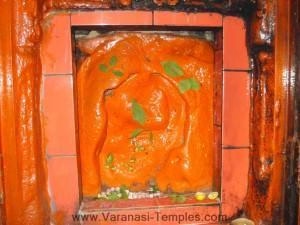
- Sanctum Sanctorum (Garbhagriha): The inner chamber houses the swayambhu (self-manifested) idol of Asitang Bhairav. The idol is typically made of black stone, representing the “Asit” (dark) aspect.
- Shikhara: The temple spire is modest yet distinct, adorned with minimal carvings typical of folk temples in the region.
- Mandapa: A pillared hall allows devotees to gather for aarti and offerings. The interiors are often kept dimly lit to enhance the atmosphere of mystery and devotion associated with Bhairav.
Photo Gallery
Asitang-Bhairav2-300×225, Asitang Bhairav Temple, Varanasi
Darshan & Ritual Logistics
Asitang Bhairav is worshipped with red flowers (specifically hibiscus) and vermillion (sindoor). The atmosphere is particularly vibrant during twilight.
Daily Timings
| Session | Timing |
|---|---|
| Morning Darshan | 05:00 AM – 12:00 PM |
| Afternoon Break | 12:00 PM – 4:00 PM |
| Evening Darshan | 04:00 PM – 11:00 PM |
| Special Aarti | 06:30 PM (Sandhya Aarti) |
📖 Related: Avimukteshwar Temple, Varanasi: History, Timings & Complete Guide
Sevas & Online Booking
While many historic shrines in Varanasi operate on traditional offerings, modern logistics allow for easier planning.
- Abhishekam: Ritual bathing of the deity with milk, honey, and ghee. Best performed on Mondays.
- Archana: Offering of 108 names of Bhairav.
- Online Booking: Devotees can generally book sevas for major Varanasi temples through the official Kashi Vishwanath Temple app or the Varanasi Tourism Portal. However, for Asitang Bhairav, sevas are traditionally booked in person at the temple counter.
Festival Dates 2026
Special pujas are held during:
- Maha Shivaratri (Feb 26, 2026): A night-long vigil and special Abhishekam.
- Bhairav Ashtami (Nov 12, 2026): A major festival dedicated to the forms of Bhairav.
- Kalashtami (Monthly): Observed on the 8th day of the dark fortnight every month.
Practical Visitor Guidance
Dress Code & Rules
- Attire: Traditional Indian attire is recommended. Men should wear dhotis or long trousers; women should wear sarees or salwar kameez.
- Photography: Photography is strictly prohibited inside the inner sanctum. You may take photos of the exterior architecture.
- Mobile/Storage: As with most temples in Varanasi, electronic devices may need to be deposited at the entrance or kept in silent mode. Use authorized lockers if available.
Crowd Management & Best Time to Visit
- Best Hours: Early morning (6:00 AM) or late evening (8:00 PM) to avoid the rush of the galis.
- Seasonal Advice: Varanasi summers (April–June) are extremely hot; carry a water bottle and a head covering. Winters (Dec–Jan) are pleasant but foggy.
Pilgrimage Connectivity
How to Reach
The Asitang Bhairav Temple is located in the Maha Mrityunjay Temple vicinity, near Vriddh Kaleshwar in K.52/39.
- Nearest Airport: Lal Bahadur Shastri International Airport (LBS) (approx. 25 km).
- Nearest Railway Station: Varanasi Junction (BSB) (approx. 4 km).
- By Road: The temple is accessible via NH 19 and local roads leading to Dashashwamedh Ghat. Auto-rickshaws are the best mode of transport to reach the narrow lane near Bisheshwarganj G.P.O.
📖 Related: Bharabhooteshwar Temple, Varanasi: History, Darshan Timings & Legends
Nearby Sacred Sites (Pilgrimage Circuit)
Extend your spiritual journey by visiting:
- Kaal Bhairav Temple: Located just 1 km away, this is the most famous form of Bhairav in Varanasi.
- Maha Mrityunjay Temple: Located adjacent to Asitang Bhairav, dedicated to the conqueror of death.
- Manikarnika Ghat: The holiest cremation ground, governed by the divine presence of Lord Bhairav.
Frequently Asked Questions (FAQ)
1. What is the specific significance of Asitang Bhairav?
Asitang Bhairav is specifically worshipped for overcoming the fear of death and gaining mental stability. He is the guardian of the southern direction in Kashi.
2. Is there a VIP darshan entry?
Unlike the main Kashi Vishwanath Corridor, Asitang Bhairav Temple generally does not have a formal VIP entry system. Darshan is open to all, though donations are accepted for special pujas.
3. Can I offer alcohol (Shraap) to Bhairav?
While historically part of the offering to some forms of Bhairav, alcohol is generally not permitted in the main sanctum of most temples in Varanasi today due to modern regulations. Check with the temple priest for traditional alternatives like coconut water or sugarcane juice.
4. How far is the temple from Kashi Vishwanath?
It is approximately 15-20 minutes by auto-rickshaw from the Kashi Vishwanath Corridor, depending on the traffic in the old city.
5. Is the temple accessible for the elderly?
Due to the location in the narrow lanes of old Varanasi, wheelchairs may be difficult to navigate. We recommend a rickshaw to the nearest drop-off point, followed by a short walk.