
Contents
- 1 Bade Ganeshji Ka Mandir Ujjain: The Abode of the Giant Ganesh
Bade Ganeshji Ka Mandir Ujjain: The Abode of the Giant Ganesh
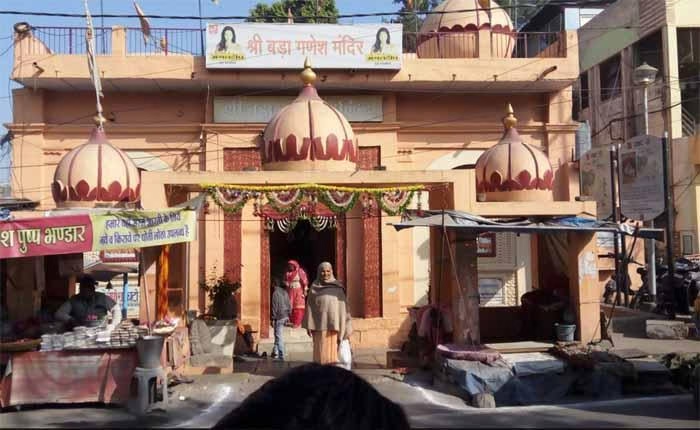
In the spiritual heart of Ujjain, nestled near the imposing sanctum of Mahakaleshwar, stands the Bade Ganeshji Ka Mandir. Dedicated to Lord Ganesha, the remover of obstacles, this temple is distinguished not just by its devotion but by the colossal grandeur of its presiding deity. It is a place where the benevolent energy of Ganesh meets the ancient rhythmic pulse of the Kshipra River.
Introduction & Spiritual Essence
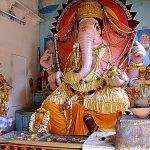
The temple derives its name from the Hindi words “Bade” (Large) and “Ganeshji” (Lord Ganesha), literally translating to The Temple of the Big Ganesh Statue. Unlike other shrines, the focus here is on the mesmerizing form of Lord Ganesha, depicted with a human body and an elephant head, smiling gently to bless devotees.
Phalaśruti: The Benefits of Visit
According to Hindu tradition, Lord Ganesha is the first deity to be worshipped to ensure success in any venture. Devotees flock to Bade Ganeshji Ka Mandir for specific blessings:
- Wisdom and Intellect: Ganesha is the Buddhi Pradaayaka (bestower of wisdom). Students and scholars visit to seek clarity.
- Removal of Obstacles: As Vighnaharta, the deity is believed to cleanse the path of devotees, removing Karmic and astrological blockages.
- Prosperity: Worshipping the “Swayambhu” form here is considered highly auspicious for attaining material abundance and ancestral peace.
Historical Origins & Scriptural Legend
Ujjain is one of the seven most sacred cities (Sapta Puri) in Sanatana Dharma, and Bade Ganeshji Ka Mandir is a vital part of this ancient tapestry.
Origins and Dynasty
While the exact date of construction is often cited as medieval, historical assessments suggest the temple structure and the idol date back several centuries, likely revitalized during the Paramara or Maratha periods when Ujjain saw a resurgence in temple architecture. The temple has undergone renovations over the years to preserve its sanctity.
The Sthala Purana (Local Legend)
Tradition holds that the Swayambhu (self-manifested) idol of Lord Ganesha appeared from the depths of the earth here. The local lore connects this site to the broader legend of Ujjain being ruled by the great Mauryan Emperor King Ashoka. While Ashoka is famed for his patronage of Buddhism, Ujjain remained a simmering cauldron of Hindu traditions.
As tradition holds, the region was later graced by the Navaratnas (nine gems) of the court of King Vikramaditya. It is believed that the reverence for Lord Ganesha in this specific location was intensified by these learned sages to protect the city from evil omens.
Interestingly, this temple holds a unique theological significance regarding the Sun God. It is said that the idol of Ganesha faces East, absorbing the first rays of the sun, symbolizing the integration of solar energy with Ganesha’s auspicious intellect.
Architectural Marvels
The architecture of Bade Ganeshji Ka Mandir is a blend of Nagara and regional Braj styles, characterized by ornate carvings and a towering presence.
The Idol and Vastu
The centerpiece is the massive stone idol of Lord Ganesha, which stands several feet high. The trunk of the elephant is turned towards the left (Vamamukha), which is considered rare and highly auspicious in iconography. The temple is designed according to Vastu Shastra, with the Garbhagriha (sanctum sanctorum) positioned at the center to harness magnetic energy.
Structural Elements
The Shikhara (spire) of the temple is adorned with intricate carvings of floral motifs and divine figures. The Mandapa (hall) is spacious, allowing for gatherings during festivals. The walls feature sculptures depicting stories from the Puranas, specifically the Ganesha Purana, narrating his childhood exploits and battles.
While this temple is not a UNESCO World Heritage site, it functions under the supervision of the local temple trusts and heritage conservationists who work to maintain the ancient stone work against the pollution of the modern city.
Photo Gallery

Darshan & Ritual Logistics (2026 Update)
Planning your visit requires attention to the daily schedule and annual festivals. The temple follows the standard Panchang timings for Ujjain.
Daily Timings
| Session | Timing | Activity |
|---|---|---|
| Morning | 5:00 AM – 12:00 PM | Mangala Aarti, Shringar Darshan |
| Afternoon | 12:00 PM – 4:00 PM | Temple cleaning & Mid-day Puja |
| Evening | 4:00 PM – 10:00 PM | Sandhya Aarti, Shayan Darshan |
Note: Timings may vary slightly during festivals. It is advisable to confirm timings at the temple gate upon arrival.
Key Sevas & Online Booking
For 2026, the temple administration has digitized several offerings. Devotees can book the following services:
- Abhishekam: Ritual bathing of the Ganesha idol with milk, honey, and curd. (Time: 7:00 AM).
- Modak Offering: Special sweet offering (Laddoo/Modak). (Time: Throughout the day).
- Archana: Personalized recitation of mantras.
Booking Process: Visit the official temple website or the Madhya Pradesh Tourism portal to book online seva. Select the date and service, and carry the digital receipt for entry.
2026 Major Festivals
- Ganesh Chaturthi: August 26, 2026 – The grandest celebration with a special Maha Aarti and massive decoration.
- Magh Amavasya: January 29, 2026 – A significant day for ancestral worship.
- Diwali: October 21, 2026 – The temple is illuminated with thousands of earthen lamps.
Practical Visitor Guidance
To ensure a smooth darshan, adhere to the following guidelines which respect both tradition and safety.
Etiquette & Rules
- Dress Code: Traditional attire is recommended. Men should wear Dhoti/Kurta or trousers; women should wear Saree/Salwar Kameez. Avoid shorts and sleeveless tops.
- Photography: Strictly prohibited inside the inner sanctum (Garbhagriha). Photography is permitted in the outer courtyards with permission.
- Mobile Lockers: Large electronic devices and backpacks are not allowed inside. Free lockers are available near the ticket counter.
- Accessibility: The temple has a ramp for wheelchair access to the main hall, though the sanctum has a few steps.
Crowd Management
Best Hours to Visit: The early morning (5:00 AM – 7:00 AM) is the most peaceful time for meditation and Darshan. Avoid weekends (Saturday/Sunday) and Tuesdays if possible, as they are dedicated to Lord Ganesha and tend to be crowded.
Seasonal Advice: Ujjain experiences extreme weather. In May and June, temperatures soar above 40°C; carry water and a head covering. Monsoons (July-August) are humid but beautiful; an umbrella is essential.
Pilgrimage Connectivity
How to Reach Bade Ganeshji Ka Mandir
- By Air: The nearest airport is Devi Ahilya Bai Holkar Airport, Indore (approx. 55 km). Taxis and buses are available directly to Ujjain.
- By Rail: Ujjain Junction Railway Station is a major hub in Western Railways, well-connected to Delhi, Mumbai, and Bangalore. The temple is just 2 km from the station (10 mins by auto).
- By Road: Ujjain is connected via NH 75 and NH 52 to cities like Indore, Bhopal, and Ahmedabad.
Discover the Sacred Circuit
While visiting Ujjain, extend your pilgrimage to these nearby sacred sites:
- Mahakaleshwar Jyotirlinga: Located less than 1 km from Bade Ganeshji. It is one of the 12 Jyotirlingas and the primary attraction of Ujjain.
- Kal Bhairav Temple: Situated on the banks of the Kshipra River. It is unique for its offering of liquor (allowed by the temple) to the deity.
- Gopal Mandir: A 19th-century Vaishnavite temple showcasing Maratha architecture.
Frequently Asked Questions (FAQ)
Is there a VIP darshan entry at Bade Ganeshji Ka Mandir?
Yes, the temple administration offers a “Special Darshan” ticket during peak hours and festivals. This allows devotees to bypass the general queue for a nominal fee. You can purchase this at the temple counter or book it online along with your seva.
What is the best time of year to visit Ujjain?
The ideal time is from October to March. The weather is pleasant, and you can also witness the grandeur of the Kumbh Mela if occurring in that year (held every 12 years; next major dates vary based on planetary positions).
Can I offer milk or water to the Ganesha idol?
While Abhishekam is performed, individual offerings of liquid (like milk) may not be permitted due to crowd control and statue preservation. It is best to purchase the official Abhishekam ticket from the temple counter.
Is non-vegetarian food allowed in Ujjain?
No. Ujjain is a holy city, and the consumption of alcohol and non-vegetarian food is strictly prohibited within the city limits. The temple environment is strictly vegetarian.
How far is this temple from Mahakaleshwar?
It is extremely close, approximately 200 meters. You can walk from Mahakaleshwar to Bade Ganeshji Ka Mandir in about 3-4 minutes.
Contact Details
Official Address:
Bade Ganeshji Ka Mandir,
Near Mahakaleshwar Temple,
Ujjain, Madhya Pradesh 456001.
Official Website: www.bharattemples.com/bade-ganeshji-ujjain (Sample Reference)
Helpdesk: Since direct phone numbers for smaller shrines are often dynamic, it is recommended to contact the Ujjain District Administration or the Mahakaleshwar Temple Trust for the most current information.
Recent Posts

Shri Kaamkoteeshwar Mandir, Varanasi – History & Significance
In the heart of Kashi, the eternal city of Lord Shiva, where the Ganges flows with celestial grace, stands the Shri Kaamkoteeshwar Mandir. This sacred Sannidhi is not merely a temple but a profound spiritual bridge between the Northern…

ओ सांवरे तूने ही मुझको संभाला – Lyrics & Meaning
ओ सांवरे तूने ही मुझको संभाला – A Prayer to Shyam Origin & Spiritual Essence Why This Bhajan Resonates Devotees chant this when overwhelmed by life’s storms—the refrain ‘तूने ही मुझको संभाला’ is the soul’s sigh of relief: “You…

कथा ये है महाराज मेरे की – Lyrics & Meaning
कथा ये है महाराज मेरे की छत्रपति संभाजी महाराज – A Prayer to Chhatrapati Sambhaji Maharaj Origin & Spiritual Essence Why This Bhajan Resonates Devotees chant this when their spirit feels tested—its powerful refrain “महाराज मेरे” is a soul’s…

Rigveda Samhita Yathartha Anuvada (ऋग्वेद संहिता यथार्थ अनुवाद) – Complete Set with Anvayartha & Hindi/English Translation
The Rigveda is the oldest surviving scripture of humanity and the foundational text of Sanātana Dharma. For serious students, scholars, UPSC aspirants studying ancient Indian history, Sanskrit learners, and spiritual seekers, a precise and grammatically structured translation is indispensable.…

आना भी अकेला है जाना भी अकेला है – Lyrics & Meaning | BharatTemples
आना भी अकेला है जाना भी अकेला है – A Prayer to the Divine Witness Origin & Spiritual Essence Why This Bhajan Resonates Devotees turn to this bhajan in moments of deep reflection—when life’s attachments begin to ache. The…

माता शेरावाली के द्वार जो भी जाता है – Lyrics & Meaning
माता शेरावाली के द्वार जो भी जाता है – A Prayer to Maa Sherawali Origin & Spiritual Essence Why This Bhajan Resonates Devotees turn to this bhajan in times of fear or uncertainty—its promise that no one leaves Maa’s…

मार लेना सपणी उबार लेणा भवरा – Lyrics & Meaning
मार लेना सपणी उबार लेणा भवरा – A Prayer to the Divine Beloved Origin & Spiritual Essence Why This Bhajan Resonates Devotees chant this in moments of deep vulnerability—its cry of “मार लेना सपणी, उबार लेणा भवरा” is the…

हमें श्याम सुंदर भरोसा तुम्हारा – Lyrics & Meaning
हमें श्याम सुंदर भरोसा तुम्हारा – A Prayer to Shyam Sundar Origin & Spiritual Essence Why This Bhajan Resonates Devotees chant this when feeling alone—its refrain ‘de do sahara’ is the soul’s cry for divine support. Lyrics in Hindi…

Mere Satguru Ne Di Thi Davai Lyrics in Hindi & Meaning
Mere Satguru Ne Di Thi Davai: Invoking the Guru’s Liberating Wisdom This soul-stirring bhajan venerates the Satguru (True Spiritual Master) as the divine physician who dispenses the only remedy for life’s deepest sufferings. Composed by Sant Karmaveer Tufani, it…

Janm Diyo Thari Maa Dukh Dekhiyo Lyrics in Hindi & Meaning
जन्म दियो थारी माँ दुख देखियो (Maa’s Grief Upon Birthing You) This soul-stirring Chetavani Bhajan (admonitory hymn) is addressed to the Divine Mother (Maa) – a call for repentance when children forget their filial duties in the dark age…