
Contents
- 1 Introduction & Spiritual Essence
- 2 Historical Origins & Scriptural Legend
- 3 Architectural Marvels
- 4 Darshan & Ritual Logistics
- 5 Practical Visitor Guidance
- 6 Pilgrimage Connectivity
- 7 Frequently Asked Questions (FAQ)
- 8 Architecture
- 9 Legend / Local stories
- 10 Photo Gallery
- 11 How to Reach:
- 12 Contact Details
Introduction & Spiritual Essence
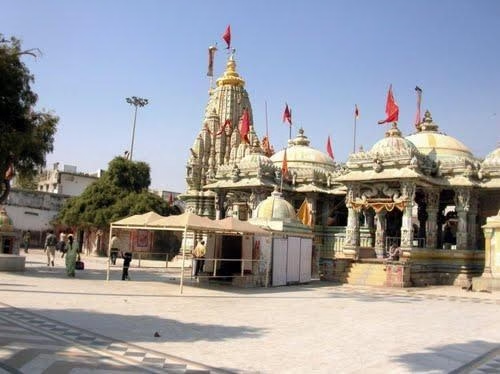
Nestled in the heart of Gujarat lies the sacred temple town of Becharaji, a focal point for devotees of the Divine Mother. Here, the primary deity is worshipped as Bahuchara Mata (also known as Bala). She is a manifestation of Shakti who embodies compassion, protection, and fertility. This temple is renowned as one of the three significant Shakti Peethas in Gujarat, alongside Ambaji and Pavagadh, drawing pilgrims seeking spiritual solace and divine blessings.
Phalaśruti: Why Devotees Visit
The spiritual potency of Becharaji is unparalleled. According to local traditions and the beliefs of the faithful, a visit to this holy abode fulfills deep-seated desires and washes away sins. The temple is particularly revered by the Hijra (Eunuch) community for whom Bahuchara Mata is the presiding deity, offering them identity and protection. Devotees also visit to:
- Cleanse Ancestral Karma: Performing rituals here is believed to bring peace to forefathers’ souls.
- Seek Blessings for Offspring: The deity is worshipped as Bala (a child), invoking blessings for marital harmony and fertility.
- Overcome Obstacles: The temple guards are known to play a unique role in the devotee’s life, ensuring that those who enter with a pure heart face no hurdles.
Historical Origins & Scriptural Legend
The history of Becharaji is woven with mythological significance and royal patronage. While the exact date of the original structure remains elusive in official records, the town’s development is deeply tied to the Baroda State.
Scriptural References and Sthala Purana
According to the Sthala Purana (local legend), the origin of Bahuchara Mata is situated at the Varakhdiwala Temple in Becharaji. Historical texts, including Anand no Garbo written by Bhakta Vallabha Dhola, suggest the original presence of the Goddess was between Sankhalpur and Dedana villages. The Goddess is also associated with Toda Mata, whose temple is located approximately 2 km north of the main town in Sankhalpur.
Architectural Evolution
The current temple fort and main gate were constructed by Manajirao Gaekwad in Samvat 1839 (approximately 1783 AD) during his tenure as the Suba of Kadi. He generously granted three villages for the temple’s maintenance. The central temple structure was built by the Maratha Fadanvesh and has undergone significant renovations over the centuries. Notably, Sayajirao Gaekwad later extended the Gaekwar’s Baroda State Railway (GBSR) specifically to connect this holy site, highlighting its regional importance.
Architectural Marvels
The temple complex reflects a blend of historical architectural styles. While the primary structure has been renovated, it retains the essence of traditional Gujarati Temple Architecture.
- Vastu Shastra Elements: The layout follows ancient principles, with the Garbhagriha (sanctum sanctorum) aligned perfectly to allow natural light to illuminate the deity during auspicious hours.
- Shikhara and Mandapas: The temple features a distinct Shikhara (towering spire) typical of the region, guiding the eye upwards toward the heavens. The Mandapas (pillared halls) provide space for congregational worship and rituals.
- Sculptures: The outer walls and pillars are adorned with intricate carvings depicting mythological scenes and floral motifs. The Varakhdiwala section of the temple, renovated by Kalari King Tejpal, showcases unique stonework.
Darshan & Ritual Logistics
To facilitate a smooth pilgrimage experience, the temple trust has established specific timings for Darshan (viewing the deity) and various Sevas (services). Please note that timings are subject to change during festivals.
Daily Timings
| Session | Timing | Activity |
|---|---|---|
| Morning | 06:00 AM – 12:00 PM | Mangala Aarti, Shringar Darshan |
| Afternoon | 12:00 PM – 04:00 PM | Raj Bhog, Normal Darshan |
| Evening | 04:00 PM – 08:30 PM | Aarti, Shayan Darshan |
Key Sevas (2026 Schedule)
Devotees can participate in various rituals. It is recommended to book these in advance via the official temple trust website or authorized portals.
- Abhishekam: Ritual bathing of the idol. Best performed during morning hours.
- Archana: Recitation of holy names. Available throughout the day.
- Special Pujas: Performed on specific auspicious dates.
2026 Major Festival Dates
- Navratri (Shardiya): September 22 – October 1, 2026. (Special night processions on the 8th day – Ashtami).
- Chaitri Navratri: March 30 – April 7, 2026.
- Full Moon (Purnima) Ceremonies: Monthly event with police guard of honor procession.
Online Seva Booking
For 2026, the temple facilitates online booking for Sevas to reduce physical queues. Visit the official Mehsana District Temple Trust portal to select your preferred date and ritual.
Practical Visitor Guidance
Ensuring a respectful and hassle-free visit is essential for the spiritual atmosphere of Becharaji.
- Dress Code: Traditional Indian attire is recommended. Men should wear dhoti or trousers with a shirt; women should wear saree or salwar kameez. Avoid shorts and sleeveless tops.
- Photography Rules: Photography is strictly prohibited inside the Garbhagriha. Exterior photography may be allowed but seek permission from trustees for commercial use.
- Mobile Lockers: Free and paid locker facilities are available near the entrance for electronic devices, as mobile phones are not allowed inside the inner sanctum.
- Accessibility: The temple complex has ramps for wheelchair access, though the sanctum requires stepping over a threshold.
Crowd Management
- Best Hours to Visit: Early morning (6:00 AM) or late evening (7:00 PM) are the least crowded times. Mid-day attracts significant footfall.
- Seasonal Advice: Summers (May) in Gujarat are scorching; carry ample water and cover your head. Winters (December–January) offer the most pleasant weather for darshan.
Pilgrimage Connectivity
Becharaji is well-connected by road and rail, making it accessible for pilgrims from across India.
How to Reach
- By Air: The nearest airport is Sardar Vallabhbhai Patel International Airport, Ahmedabad (approx. 110 km). Taxis and buses are readily available.
- By Rail: The nearest railway station is Becharaji Railway Station itself, located just 2 km from the temple. Alternatively, Mehsana Junction (35 km away) offers better connectivity to major cities.
- By Road: The temple is located on the Ahmedabad-Mehsana Highway (NH-147). Regular GSRTC buses run from Ahmedabad, Mehsana, and Himatnagar.
Nearby Sacred Sites (Pilgrimage Circuit)
Enhance your journey by visiting these nearby spiritual destinations:
- Ambaji Temple (Approx. 160 km): Another major Shakti Peetha located in the Aravalli range.
- Modhera Sun Temple (Approx. 25 km): A UNESCO World Heritage site known for its stunning stepwell and solar architecture.
- Patansvaminarayan Temple (Approx. 40 km): Known for its intricate wood carvings and historical significance.
Frequently Asked Questions (FAQ)
Is there a VIP darshan entry available?
Yes, the temple trust offers a paid VIP darshan facility for senior citizens, differently-abled pilgrims, and those who wish to avoid general queues. Tickets can be purchased at the counter near the entrance.
Can we perform the Pind Daan ritual at Becharaji?
While Becharaji is primarily a Shakti Peetha, rituals for ancestors are performed here. However, for specific Pind Daan rites, it is advisable to consult the temple priests upon arrival to determine the appropriate location within the complex.
What is the significance of the police guard of honor?
On the night of every full moon (Purnima) and the 8th day of the bright half of Aso and Chaitri months, the police pay a guard of honor to the Mataji’s procession. This unique tradition highlights the deity’s historical protection of the region and her command over justice.
Are there accommodation facilities near the temple?
Yes, Becharaji has numerous Dharamshalas (pilgrim rest houses) and hotels ranging from budget to mid-range. Most are located in the Upali and Nichali markets and near the highway.
What is the best time of year to visit Becharaji?
The ideal time to visit is between October and March when the weather is cool and pleasant. The Navratri festivals are particularly vibrant but crowded.
| Date built: | – |
|---|---|
| Deity: | – |
| Architectural style: | – |
| Major festivals | – |
| Locale: | – |
| District:: | Mehsana |
| Address: | – |
| Phone | – |
The centre temple was built by Maratha Fadanvesh. It has been renovated. Learned Saint Kapildev built the varakahdi temple and was then renovated by Kalari king Tejpal. That temple too has been again renovated.
On night of every Punam (15 th day of the month as per Vikram Samvat calendar) and on 8th day of Aso sud and Chaitri sud police with arms pay Guard of Honour to Mataji’s procession. It is also considered as important place for the ‘Hijras (Eunuchs)’.
The origin of Bahuchra Mata is situated at Varakhdiwala temple in Bechraji. Bhakta Vallabha Dhola wrote in his Aanand no Garbo mentioned that the original place of Bahuchra Mata is situated at between Sankhalpur and Dedana village. Toda Mata (Bahuchara Mata) is located in Sankhalpur. Shri Toda Bahuchar Maa (Bahuchar Mataji Pragatya Sthal) is located in Sankhalpur about 2km far, northerly to the town. The temple is equally big and nice.
Architecture
Legend / Local stories
Becharaji town is small in area. Earlier, it was divided in two parts, namely, Upali Bajaar (Upper Market) and Nichali Bajaar (Lower Market). However, now it is developing at rapid pace and many new complexes are being developed, like ‘Dayanand Complex’. There are many dharamshalas in the town. Apart from this, many shops of different commodities are found there. “Becharaji APMC” and “Becharaji Taluka Kharid-Vechan Sangh or Becharaji Taluka Purchase-sales Union” are situated in the town. [State Bank Of India] and “Mehsana District Cooperative Bank” are having their branches in the town. Most of the hotels and restaurants are situated on the highway.
Photo Gallery
How to Reach:
Contact Details
Official Address
Recent Posts

ओ सांवरे तूने ही मुझको संभाला – Lyrics & Meaning
ओ सांवरे तूने ही मुझको संभाला – A Prayer to Shyam Origin & Spiritual Essence Why This Bhajan Resonates Devotees chant this when overwhelmed by life’s storms—the refrain ‘तूने ही मुझको संभाला’ is the soul’s sigh of relief: “You…

कथा ये है महाराज मेरे की – Lyrics & Meaning
कथा ये है महाराज मेरे की छत्रपति संभाजी महाराज – A Prayer to Chhatrapati Sambhaji Maharaj Origin & Spiritual Essence Why This Bhajan Resonates Devotees chant this when their spirit feels tested—its powerful refrain “महाराज मेरे” is a soul’s…

Rigveda Samhita Yathartha Anuvada (ऋग्वेद संहिता यथार्थ अनुवाद) – Complete Set with Anvayartha & Hindi/English Translation
The Rigveda is the oldest surviving scripture of humanity and the foundational text of Sanātana Dharma. For serious students, scholars, UPSC aspirants studying ancient Indian history, Sanskrit learners, and spiritual seekers, a precise and grammatically structured translation is indispensable.…

आना भी अकेला है जाना भी अकेला है – Lyrics & Meaning | BharatTemples
आना भी अकेला है जाना भी अकेला है – A Prayer to the Divine Witness Origin & Spiritual Essence Why This Bhajan Resonates Devotees turn to this bhajan in moments of deep reflection—when life’s attachments begin to ache. The…

माता शेरावाली के द्वार जो भी जाता है – Lyrics & Meaning
माता शेरावाली के द्वार जो भी जाता है – A Prayer to Maa Sherawali Origin & Spiritual Essence Why This Bhajan Resonates Devotees turn to this bhajan in times of fear or uncertainty—its promise that no one leaves Maa’s…

मार लेना सपणी उबार लेणा भवरा – Lyrics & Meaning
मार लेना सपणी उबार लेणा भवरा – A Prayer to the Divine Beloved Origin & Spiritual Essence Why This Bhajan Resonates Devotees chant this in moments of deep vulnerability—its cry of “मार लेना सपणी, उबार लेणा भवरा” is the…

हमें श्याम सुंदर भरोसा तुम्हारा – Lyrics & Meaning
हमें श्याम सुंदर भरोसा तुम्हारा – A Prayer to Shyam Sundar Origin & Spiritual Essence Why This Bhajan Resonates Devotees chant this when feeling alone—its refrain ‘de do sahara’ is the soul’s cry for divine support. Lyrics in Hindi…

Mere Satguru Ne Di Thi Davai Lyrics in Hindi & Meaning
Mere Satguru Ne Di Thi Davai: Invoking the Guru’s Liberating Wisdom This soul-stirring bhajan venerates the Satguru (True Spiritual Master) as the divine physician who dispenses the only remedy for life’s deepest sufferings. Composed by Sant Karmaveer Tufani, it…

Janm Diyo Thari Maa Dukh Dekhiyo Lyrics in Hindi & Meaning
जन्म दियो थारी माँ दुख देखियो (Maa’s Grief Upon Birthing You) This soul-stirring Chetavani Bhajan (admonitory hymn) is addressed to the Divine Mother (Maa) – a call for repentance when children forget their filial duties in the dark age…
Bhadi Sabha Mein Thane Manaun Lyrics in Hindi & Meaning
Bhadi Sabha Mein Thane Manaun: Invoking the Spear-Wielding Mother Mata Bhawani (श्री ज्वाला भवानी), the fiery manifestation of Shakti worshipped as the Protector of Dharma in Her Dhaulagarh sanctum. Origin & Spiritual Essence Composed in Rajasthani folk tradition by…