
Contents
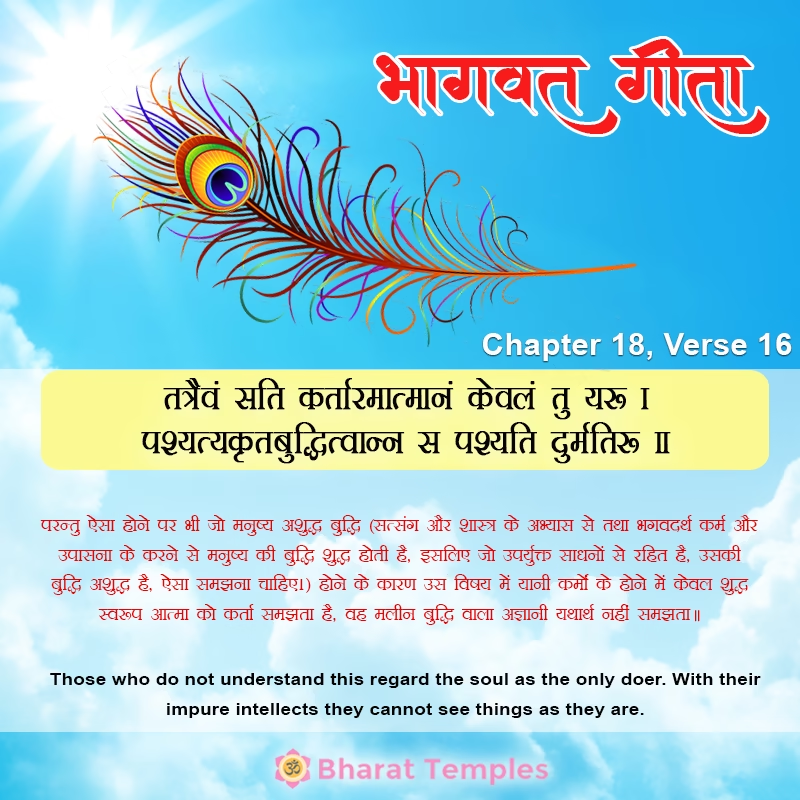
तत्रैवं सति कर्तारमात्मानं केवलं तु य: |
पश्यत्यकृतबुद्धित्वान्न स पश्यति दुर्मति: || 16
tatraivaṁ sati kartāram ātmānaṁ kevalaṁ tu yaḥ
paśhyaty akṛita-buddhitvān na sa paśhyati durmatiḥ
भावार्थ:
परन्तु ऐसा होने पर भी जो मनुष्य अशुद्ध बुद्धि (सत्संग और शास्त्र के अभ्यास से तथा भगवदर्थ कर्म और उपासना के करने से मनुष्य की बुद्धि शुद्ध होती है, इसलिए जो उपर्युक्त साधनों से रहित है, उसकी बुद्धि अशुद्ध है, ऐसा समझना चाहिए।) होने के कारण उस विषय में यानी कर्मों के होने में केवल शुद्ध स्वरूप आत्मा को कर्ता समझता है, वह मलीन बुThat intellect which is shrouded in darkness, imagining irreligion to be religion, and perceiving untruth to be the truth, is of the nature of ignorance.द्धि वाला अज्ञानी यथार्थ नहीं समझता॥16॥
Translation
Those who do not understand this regard the soul as the only doer. With their impure intellects they cannot see things as they are.
English Translation Of Sri Shankaracharya’s Sanskrit Commentary By Swami Gambirananda
18.16 Tatra is used for connecting with the topic under discussion. Tatra evam sati, this being the case, when actions are thus accomplished by the five causes mentioned above;-this portion has to be connected with ‘perverted intellect’ by way of causality [Actions are done by the body etc., but since a person thinks that the Self is the agent, therefore he is said to have a perverted intellect.]-yah, tu, anyone, an unenlightened person, who; pasyati, perceives; kevalam, the absolute, pure; atmanam, Self; as the kartaram, agent-thinking, ‘I myself am the agent of the actions being done by them’, as a conseence of imagining the Self as identified with them; why?-akrta-buddhitvat, owing to the imperfection of his intellect, owing to his intellect not having been refined by the instructions of Vedanta and the teachers, and by reasoning-.
Even the person who, believing in the Self as distinct from the body etc., looks upon the distinct [Ast. omits anyam (distinct).-Tr.], absolute Self as the agent, he, too, is surely of imperfect intellect.
Hence, owing to his having an imperfect intellect, sah, that man; na, does not; pasyati, perceive (properly) either the truth about the Self or about actions. This is the meaning. Therefore he is a durmatih, man of perverted intellect, in the sense that his intellect is contemptible, perverse, corrupted, and the cause of repeatedly undergoing births and deaths. He does not perceive even while seeing-like the man suffering from Timira seeing many moons, or like one thinking the moon to be moving when (actually) the clouds are moving, or like the one seated on some conveyance (e.g. palanin), thinking oneself to be moving when others (the bearers) are moving.
Who, again, is the man of right intellect who perceives correctly? This is being answered:
Recent Posts

Shri Kaamkoteeshwar Mandir, Varanasi – History & Significance
In the heart of Kashi, the eternal city of Lord Shiva, where the Ganges flows with celestial grace, stands the Shri Kaamkoteeshwar Mandir. This sacred Sannidhi is not merely a temple but a profound spiritual bridge between the Northern…

ओ सांवरे तूने ही मुझको संभाला – Lyrics & Meaning
ओ सांवरे तूने ही मुझको संभाला – A Prayer to Shyam Origin & Spiritual Essence Why This Bhajan Resonates Devotees chant this when overwhelmed by life’s storms—the refrain ‘तूने ही मुझको संभाला’ is the soul’s sigh of relief: “You…

कथा ये है महाराज मेरे की – Lyrics & Meaning
कथा ये है महाराज मेरे की छत्रपति संभाजी महाराज – A Prayer to Chhatrapati Sambhaji Maharaj Origin & Spiritual Essence Why This Bhajan Resonates Devotees chant this when their spirit feels tested—its powerful refrain “महाराज मेरे” is a soul’s…

Rigveda Samhita Yathartha Anuvada (ऋग्वेद संहिता यथार्थ अनुवाद) – Complete Set with Anvayartha & Hindi/English Translation
The Rigveda is the oldest surviving scripture of humanity and the foundational text of Sanātana Dharma. For serious students, scholars, UPSC aspirants studying ancient Indian history, Sanskrit learners, and spiritual seekers, a precise and grammatically structured translation is indispensable.…

आना भी अकेला है जाना भी अकेला है – Lyrics & Meaning | BharatTemples
आना भी अकेला है जाना भी अकेला है – A Prayer to the Divine Witness Origin & Spiritual Essence Why This Bhajan Resonates Devotees turn to this bhajan in moments of deep reflection—when life’s attachments begin to ache. The…

माता शेरावाली के द्वार जो भी जाता है – Lyrics & Meaning
माता शेरावाली के द्वार जो भी जाता है – A Prayer to Maa Sherawali Origin & Spiritual Essence Why This Bhajan Resonates Devotees turn to this bhajan in times of fear or uncertainty—its promise that no one leaves Maa’s…

मार लेना सपणी उबार लेणा भवरा – Lyrics & Meaning
मार लेना सपणी उबार लेणा भवरा – A Prayer to the Divine Beloved Origin & Spiritual Essence Why This Bhajan Resonates Devotees chant this in moments of deep vulnerability—its cry of “मार लेना सपणी, उबार लेणा भवरा” is the…

हमें श्याम सुंदर भरोसा तुम्हारा – Lyrics & Meaning
हमें श्याम सुंदर भरोसा तुम्हारा – A Prayer to Shyam Sundar Origin & Spiritual Essence Why This Bhajan Resonates Devotees chant this when feeling alone—its refrain ‘de do sahara’ is the soul’s cry for divine support. Lyrics in Hindi…

Mere Satguru Ne Di Thi Davai Lyrics in Hindi & Meaning
Mere Satguru Ne Di Thi Davai: Invoking the Guru’s Liberating Wisdom This soul-stirring bhajan venerates the Satguru (True Spiritual Master) as the divine physician who dispenses the only remedy for life’s deepest sufferings. Composed by Sant Karmaveer Tufani, it…

Janm Diyo Thari Maa Dukh Dekhiyo Lyrics in Hindi & Meaning
जन्म दियो थारी माँ दुख देखियो (Maa’s Grief Upon Birthing You) This soul-stirring Chetavani Bhajan (admonitory hymn) is addressed to the Divine Mother (Maa) – a call for repentance when children forget their filial duties in the dark age…