
Contents
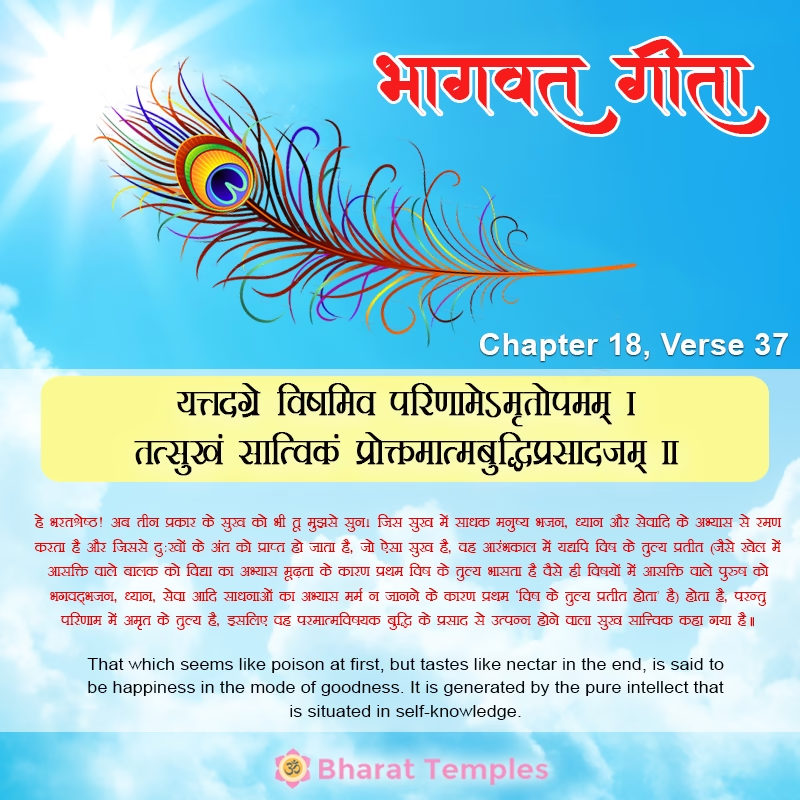
यत्तदग्रे विषमिव परिणामेऽमृतोपमम् |
तत्सुखं सात्विकं प्रोक्तमात्मबुद्धिप्रसादजम् |
yat tad agre viṣham iva pariṇāme ‘mṛitopamam
tat sukhaṁ sāttvikaṁ proktam ātma-buddhi-prasāda-jam
भावार्थ:
हे भरतश्रेष्ठ! अब तीन प्रकार के सुख को भी तू मुझसे सुन। जिस सुख में साधक मनुष्य भजन, ध्यान और सेवादि के अभ्यास से रमण करता है और जिससे दुःखों के अंत को प्राप्त हो जाता है, जो ऐसा सुख है, वह आरंभकाल में यद्यपि विष के तुल्य प्रतीत (जैसे खेल में आसक्ति वाले बालक को विद्या का अभ्यास मूढ़ता के कारण प्रथम विष के तुल्य भासता है वैसे ही विषयों में आसक्ति वाले पुरुष को भगवद्भजन, ध्यान, सेवा आदि साधनाओं का अभ्यास मर्म न जानने के कारण प्रथम ‘विष के तुल्य प्रतीत होता’ है) होता है, परन्तु परिणाम में अमृत के तुल्य है, इसलिए वह परमात्मविषयक बुद्धि के प्रसाद से उत्पन्न होने वाला सुख सात्त्विक कहा गया है॥37
Translation
That which seems like poison at first, but tastes like nectar in the end, is said to be happiness in the mode of goodness. It is generated by the pure intellect that is situated in self-knowledge.
English Translation Of Sri Shankaracharya’s Sanskrit Commentary By Swami Gambirananda
18.37 Yat, that joy which is; iva, like; visam, poison, a source of pain; agre, in the beginning-when it first comes in the early stages of (acisition) of knowledge, detachment, meditation and absorption, since they involve great struggle; but amrtopamam, comparable to nectar; pariname, in the end, when it arises from the maturity of knowledge, detachment, etc.; and which atma-buddhi-prasadajam, arises from the purity (prasada), trasparence like water, of one’s intellect (atma-buddhi); tat, that; sukham, joy; is proktam, spoken of, by the learned ones ;as sattvikam, born of sattva. Or, the phrase atma-buddhi-prasadajam may mean ‘arising from the high degree of clearness of that atma-buddhi (knowledge of or connected with the Self)’; therefore it is born of sattva.
Recent Posts

ओ सांवरे तूने ही मुझको संभाला – Lyrics & Meaning
ओ सांवरे तूने ही मुझको संभाला – A Prayer to Shyam Origin & Spiritual Essence Why This Bhajan Resonates Devotees chant this when overwhelmed by life’s storms—the refrain ‘तूने ही मुझको संभाला’ is the soul’s sigh of relief: “You…

कथा ये है महाराज मेरे की – Lyrics & Meaning
कथा ये है महाराज मेरे की छत्रपति संभाजी महाराज – A Prayer to Chhatrapati Sambhaji Maharaj Origin & Spiritual Essence Why This Bhajan Resonates Devotees chant this when their spirit feels tested—its powerful refrain “महाराज मेरे” is a soul’s…

Rigveda Samhita Yathartha Anuvada (ऋग्वेद संहिता यथार्थ अनुवाद) – Complete Set with Anvayartha & Hindi/English Translation
The Rigveda is the oldest surviving scripture of humanity and the foundational text of Sanātana Dharma. For serious students, scholars, UPSC aspirants studying ancient Indian history, Sanskrit learners, and spiritual seekers, a precise and grammatically structured translation is indispensable.…

आना भी अकेला है जाना भी अकेला है – Lyrics & Meaning | BharatTemples
आना भी अकेला है जाना भी अकेला है – A Prayer to the Divine Witness Origin & Spiritual Essence Why This Bhajan Resonates Devotees turn to this bhajan in moments of deep reflection—when life’s attachments begin to ache. The…

माता शेरावाली के द्वार जो भी जाता है – Lyrics & Meaning
माता शेरावाली के द्वार जो भी जाता है – A Prayer to Maa Sherawali Origin & Spiritual Essence Why This Bhajan Resonates Devotees turn to this bhajan in times of fear or uncertainty—its promise that no one leaves Maa’s…

मार लेना सपणी उबार लेणा भवरा – Lyrics & Meaning
मार लेना सपणी उबार लेणा भवरा – A Prayer to the Divine Beloved Origin & Spiritual Essence Why This Bhajan Resonates Devotees chant this in moments of deep vulnerability—its cry of “मार लेना सपणी, उबार लेणा भवरा” is the…

हमें श्याम सुंदर भरोसा तुम्हारा – Lyrics & Meaning
हमें श्याम सुंदर भरोसा तुम्हारा – A Prayer to Shyam Sundar Origin & Spiritual Essence Why This Bhajan Resonates Devotees chant this when feeling alone—its refrain ‘de do sahara’ is the soul’s cry for divine support. Lyrics in Hindi…

Mere Satguru Ne Di Thi Davai Lyrics in Hindi & Meaning
Mere Satguru Ne Di Thi Davai: Invoking the Guru’s Liberating Wisdom This soul-stirring bhajan venerates the Satguru (True Spiritual Master) as the divine physician who dispenses the only remedy for life’s deepest sufferings. Composed by Sant Karmaveer Tufani, it…

Janm Diyo Thari Maa Dukh Dekhiyo Lyrics in Hindi & Meaning
जन्म दियो थारी माँ दुख देखियो (Maa’s Grief Upon Birthing You) This soul-stirring Chetavani Bhajan (admonitory hymn) is addressed to the Divine Mother (Maa) – a call for repentance when children forget their filial duties in the dark age…
Bhadi Sabha Mein Thane Manaun Lyrics in Hindi & Meaning
Bhadi Sabha Mein Thane Manaun: Invoking the Spear-Wielding Mother Mata Bhawani (श्री ज्वाला भवानी), the fiery manifestation of Shakti worshipped as the Protector of Dharma in Her Dhaulagarh sanctum. Origin & Spiritual Essence Composed in Rajasthani folk tradition by…