
Contents
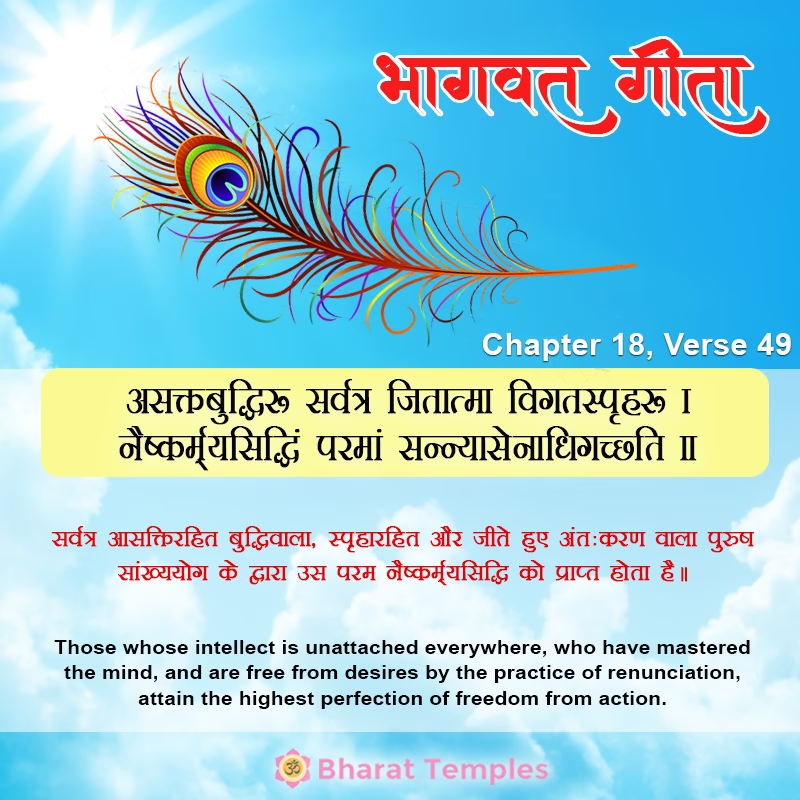
असक्तबुद्धि: सर्वत्र जितात्मा विगतस्पृह: |
नैष्कर्म्यसिद्धिं परमां सन्न्यासेनाधिगच्छति ||
asakta-buddhiḥ sarvatra jitātmā vigata-spṛihaḥ
naiṣhkarmya-siddhiṁ paramāṁ sannyāsenādhigachchhati
भावार्थ:
सर्वत्र आसक्तिरहित बुद्धिवाला, स्पृहारहित और जीते हुए अंतःकरण वाला पुरुष सांख्ययोग के द्वारा उस परम नैष्कर्म्यसिद्धि को प्राप्त होता है॥49॥
Translation
Those whose intellect is unattached everywhere, who have mastered the mind, and are free from desires by the practice of renunciation, attain the highest perfection of freedom from action.
English Translation Of Sri Shankaracharya’s Sanskrit Commentary By Swami Gambirananda
18.49 Asakta-buddhih, he whose intellect, the internal organ, remains unattached; sarvatra, to everything, with regard to son, wife and others who are the cuases of attachment; jitatma, who has conered his internal organs; and vigata-sprhah, who is desireless, whose thirst for his body, life and objects of enjoyment have been eradicated;-he who is such a knower of the Self, adhigaccahti, attains; sannyasena, through monasticism, through perfect knowledge or through renunciation of all actions preceded by this knowledge; the paramam, supreme, most excellent; naiskarmya-siddhim, perfection consisting in the state of one free from duties.
One is said to be free from duties from whom duties have daparted as a result of realizing that the actionless Brahman is his Self; his state is naiskarmyam. That siddhi (perfection) which is this naiskarmya is naiskarmya-siddhi. Or, this phrase means ‘achievement of naiskarmya’, i.e., achievement of the state of remaining established in one’s own real nature as the actionless Self-which is different from the success arising from Karma (-yoga), and is of the form of being established in the state of immediate Liberation. Accordingly has it been said, ‘৷৷.having given up all actions mentally,৷৷.without doing or causing (others) to do anything at all’ (5.13).
The stages through which one who has attained success-which has the aforesaid characteristics and which arises from the performance of one’s own duties mentioned earlier as worship of God-, and in whom has arisen discriminative knowledge, achieves perfection-in the form of exclusive adherence to Knowledge of the Self and consisting in the state of one free from duties-have to be stated. With this is view the Lord says:
Recent Posts

आना भी अकेला है जाना भी अकेला है – Lyrics & Meaning | BharatTemples
आना भी अकेला है जाना भी अकेला है – A Prayer to the Divine Witness Origin & Spiritual Essence Why This Bhajan Resonates Devotees turn to this bhajan in moments of deep reflection—when life’s attachments begin to ache. The…

माता शेरावाली के द्वार जो भी जाता है – Lyrics & Meaning
माता शेरावाली के द्वार जो भी जाता है – A Prayer to Maa Sherawali Origin & Spiritual Essence Why This Bhajan Resonates Devotees turn to this bhajan in times of fear or uncertainty—its promise that no one leaves Maa’s…

मार लेना सपणी उबार लेणा भवरा – Lyrics & Meaning
मार लेना सपणी उबार लेणा भवरा – A Prayer to the Divine Beloved Origin & Spiritual Essence Why This Bhajan Resonates Devotees chant this in moments of deep vulnerability—its cry of “मार लेना सपणी, उबार लेणा भवरा” is the…

हमें श्याम सुंदर भरोसा तुम्हारा – Lyrics & Meaning
हमें श्याम सुंदर भरोसा तुम्हारा – A Prayer to Shyam Sundar Origin & Spiritual Essence Why This Bhajan Resonates Devotees chant this when feeling alone—its refrain ‘de do sahara’ is the soul’s cry for divine support. Lyrics in Hindi…

Mere Satguru Ne Di Thi Davai Lyrics in Hindi & Meaning
Mere Satguru Ne Di Thi Davai: Invoking the Guru’s Liberating Wisdom This soul-stirring bhajan venerates the Satguru (True Spiritual Master) as the divine physician who dispenses the only remedy for life’s deepest sufferings. Composed by Sant Karmaveer Tufani, it…

Janm Diyo Thari Maa Dukh Dekhiyo Lyrics in Hindi & Meaning
जन्म दियो थारी माँ दुख देखियो (Maa’s Grief Upon Birthing You) This soul-stirring Chetavani Bhajan (admonitory hymn) is addressed to the Divine Mother (Maa) – a call for repentance when children forget their filial duties in the dark age…
Bhadi Sabha Mein Thane Manaun Lyrics in Hindi & Meaning
Bhadi Sabha Mein Thane Manaun: Invoking the Spear-Wielding Mother Mata Bhawani (श्री ज्वाला भवानी), the fiery manifestation of Shakti worshipped as the Protector of Dharma in Her Dhaulagarh sanctum. Origin & Spiritual Essence Composed in Rajasthani folk tradition by…
श्याम सुन्दरवा छोटे छोटे कनुवा Lyrics & Meaning
श्याम सुन्दरवा छोटे छोटे कनुवा (Shyam Sundarva Chhote Chhote Kanuva) is a heartfelt invocation to Lord Krishna in his most enchanting form—Shyam Sundar (the dark, beautiful one). This bhajan is a plea for the divine child Kanha to grace…
Maat Meri Chintapurni Lyrics in Hindi & Meaning
Maat Meri Chintapurni is a heartfelt devotional prayer dedicated to Maa Chintapurni, a form of the Divine Mother. She is revered as the remover of worries and the granter of wishes, especially venerated in the Himalayan region of Himachal…
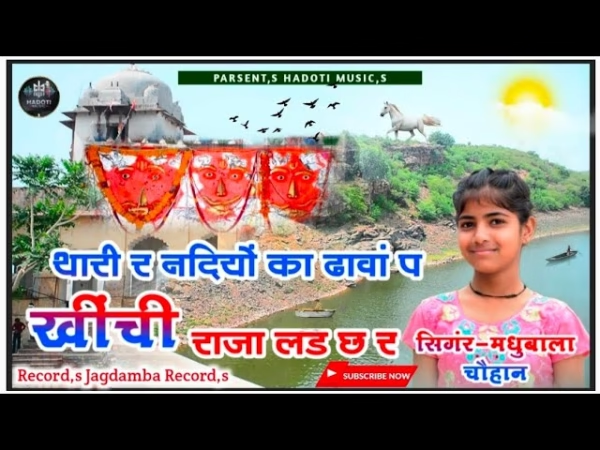
थारी रे नदियां का ढावा पे खीची राजा Lyrics & Meaning
खीची राजा का अद्भुत युद्ध: एक शौर्य गाथा यह भजन एक पौराणिक या ऐतिहासिक शूरवीर राजा की वीरता का वर्णन करता है, जो प्रायः गुजराती लोक संस्कृति में लोककथाओं का हिस्सा है। इसकी रचना दुर्गेश कटारा ने की है…