Bhagavad Gita: Chapter 2, Verse 19
Receive daily temple updates, divine darshan, and morning bhajans directly on WhatsApp.
Contents
- 1 य एनं वेत्ति हन्तारं यश्चैनं मन्यते हतम् |
- 2 उभौ तौ न विजानीतो नायं हन्ति न हन्यते || 19||
- 3 भावार्थ:
- 4 Translation
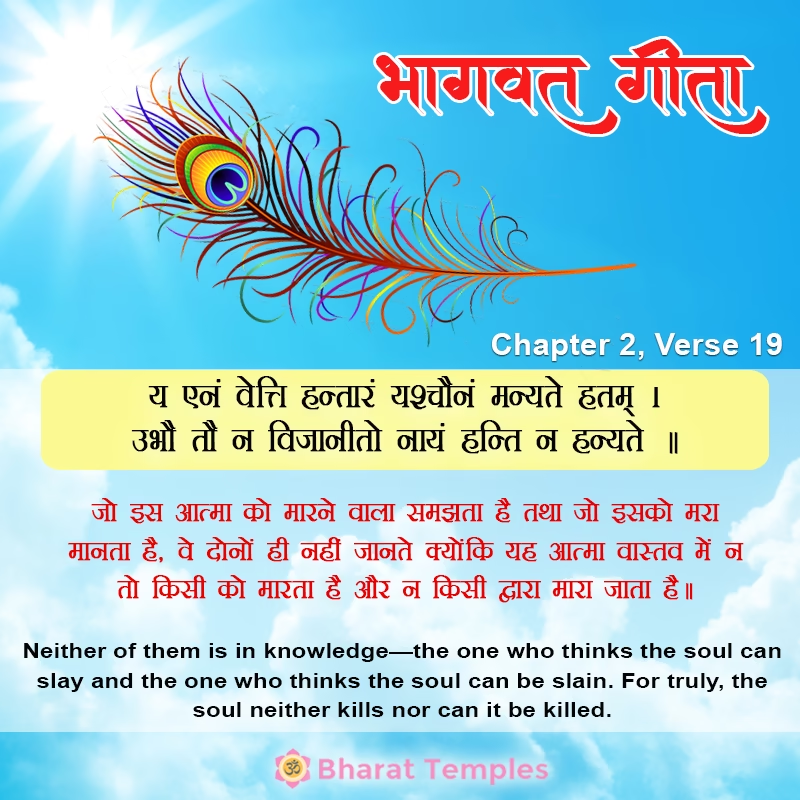
य एनं वेत्ति हन्तारं यश्चैनं मन्यते हतम् |
उभौ तौ न विजानीतो नायं हन्ति न हन्यते || 19||
ya enaṁ vetti hantāraṁ yaśh chainaṁ manyate hatam
ubhau tau na vijānīto nāyaṁ hanti na hanyate
भावार्थ:
जो इस आत्मा को मारने वाला समझता है तथा जो इसको मरा मानता है, वे दोनों ही नहीं जानते क्योंकि यह आत्मा वास्तव में न तो किसी को मारता है और न किसी द्वारा मारा जाता है॥19॥
Translation
Neither of them is in knowledge—the one who thinks the soul can slay and the one who thinks the soul can be slain. For truly, the soul neither kills nor can it be killed.
English Translation Of Sri Shankaracharya’s Sanskrit Commentary By Swami Gambirananda
2.19 But the ideas that you have, ‘Bhisma and others are neing killed by me in war; I am surely their killer’ this idea of yours is false. How? Yah, he who; vetti, thinks; of enam, this One, the embodied One under consideration; as hantaram, the killer, the agent of the act of killing; ca, and; yah, he who, the other who; manyate, thinks; of enam, this One; as hatam, the killed (who thinks) ‘When the body is killed, I am myself killed; I become the object of the act of killing’; ubhau tau, both of them; owing to non-discrimination, na, do not; vijanitah, know the Self which is the subject of the consciousness of ‘I’. The meaning is: On the killing of the body, he who thinks of the Self ( the content of the consciousness of ‘I’ ) [The Ast. omits this phrase from the precedig sentence and includes it in this place. The A.A. has this phrase in both the places.-Tr.] as ‘I am the killer’, and he who thinks, ‘I have been killed’, both of them are ignorant of the nature of the Self. For, ayam, this Self; owing to Its changelessness, na hanti, does not kill, does not become the agent of the act of killing; na hanyate, nor is It killed, i.e. It does not become the object (of the act of killing).
The second verse is to show how the Self is changeless:
📖 Related: Bhagavad Gita: Chapter 3, Verse 12