
Contents
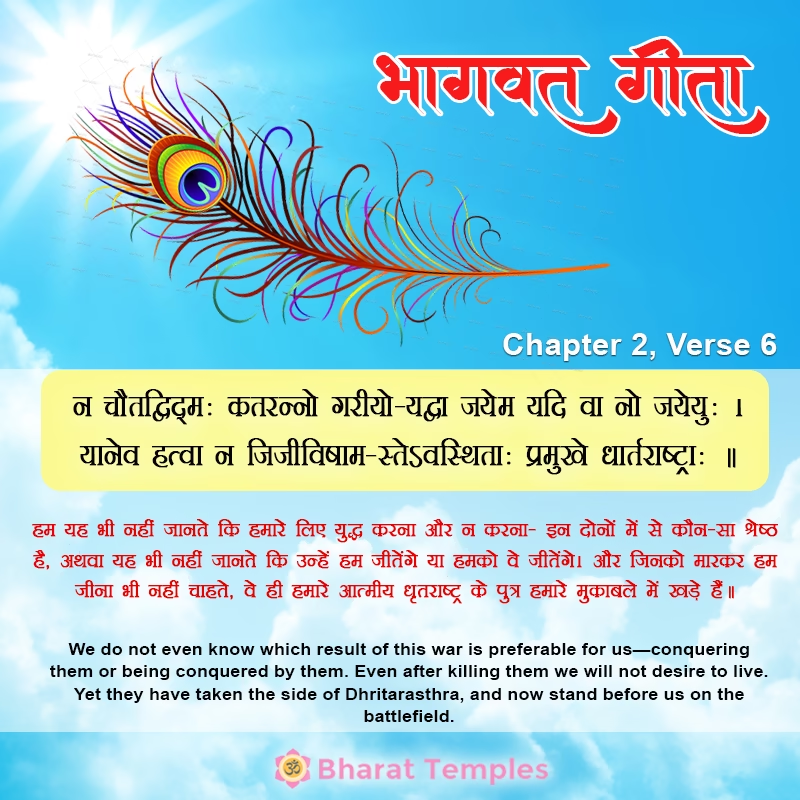
Chapter 2, Verse 6
न चैतद्विद्म: कतरन्नो गरीयो
यद्वा जयेम यदि वा नो जयेयु: |
यानेव हत्वा न जिजीविषाम
स्तेऽवस्थिता: प्रमुखे धार्तराष्ट्रा: || 2.6 ||
na chaitadvidmaḥ kataranno garīyo
yadvā jayema yadi vā no jayeyuḥ
yāneva hatvā na jijīviṣhāmas
te ’vasthitāḥ pramukhe dhārtarāṣhṭrāḥ
भावार्थ:
हम यह भी नहीं जानते कि हमारे लिए युद्ध करना और न करना- इन दोनों में से कौन-सा श्रेष्ठ है, अथवा यह भी नहीं जानते कि उन्हें हम जीतेंगे या हमको वे जीतेंगे। और जिनको मारकर हम जीना भी नहीं चाहते, वे ही हमारे आत्मीय धृतराष्ट्र के पुत्र हमारे मुकाबले में खड़े हैं॥6॥
Translation
We do not even know which result of this war is preferable for us—conquering them or being conquered by them. Even after killing them we will not desire to live. Yet they have taken the side of Dhritarasthra, and now stand before us on the battlefield.
English Translation Of Sri Shankaracharya’s Sanskrit Commentary By Swami Gambirananda
2.6 न not? च and? एतत् this? विद्मः (we) know? कतरत् which? नः for us? गरीयः better? यत् that? वा or? जयेम we should coner? यदि if? वा or? नः us? जयेयुः they should coner? यान् whom? एव even? हत्वा having slain? न not? जिजीविषामः we wish to live? ते those? अवस्थिताः (are) standing? प्रमुखे in face? धार्तराष्ट्राः sons of Dhritarashtra.
Explanation in English:
In this verse, Arjuna reveals his confusion and hopelessness. He’s emotionally and mentally overwhelmed, unable to think clearly or choose a path.
- “Na caitad vidmaḥ…” – “We don’t know what is better…”
Arjuna is paralyzed by indecision. Should he fight and win? Or would it be better to be defeated? - “Yad vā jayema yadi vā no jayeyuḥ” – “Whether we win or they win…”
Victory or defeat both seem meaningless to him at this point. - “Yān eva hatvā na jijīviṣāmaḥ” – “Those whom we do not wish to kill even at the cost of our own lives…”
Arjuna says he would rather die than kill these people, even if they are on the opposing side. - “Te ’vasthitāḥ pramukhe Dhārtarāṣṭrāḥ” – “…are now standing before us.”
The people Arjuna can’t imagine harming—his relatives, friends, and respected elders—are right in front of him, prepared to fight.
Key Takeaway:
This verse reflects Arjuna’s deep spiritual and emotional crisis. He’s caught in a dilemma where all outcomes feel wrong. His moral compass is spinning, and he’s lost his sense of clarity and purpose. This is the moment just before surrender—when he will finally seek Krishna’s guidance in the next verse.
Recent Posts

Shri Kaamkoteeshwar Mandir, Varanasi – History & Significance
In the heart of Kashi, the eternal city of Lord Shiva, where the Ganges flows with celestial grace, stands the Shri Kaamkoteeshwar Mandir. This sacred Sannidhi is not merely a temple but a profound spiritual bridge between the Northern…

ओ सांवरे तूने ही मुझको संभाला – Lyrics & Meaning
ओ सांवरे तूने ही मुझको संभाला – A Prayer to Shyam Origin & Spiritual Essence Why This Bhajan Resonates Devotees chant this when overwhelmed by life’s storms—the refrain ‘तूने ही मुझको संभाला’ is the soul’s sigh of relief: “You…

कथा ये है महाराज मेरे की – Lyrics & Meaning
कथा ये है महाराज मेरे की छत्रपति संभाजी महाराज – A Prayer to Chhatrapati Sambhaji Maharaj Origin & Spiritual Essence Why This Bhajan Resonates Devotees chant this when their spirit feels tested—its powerful refrain “महाराज मेरे” is a soul’s…

Rigveda Samhita Yathartha Anuvada (ऋग्वेद संहिता यथार्थ अनुवाद) – Complete Set with Anvayartha & Hindi/English Translation
The Rigveda is the oldest surviving scripture of humanity and the foundational text of Sanātana Dharma. For serious students, scholars, UPSC aspirants studying ancient Indian history, Sanskrit learners, and spiritual seekers, a precise and grammatically structured translation is indispensable.…

आना भी अकेला है जाना भी अकेला है – Lyrics & Meaning | BharatTemples
आना भी अकेला है जाना भी अकेला है – A Prayer to the Divine Witness Origin & Spiritual Essence Why This Bhajan Resonates Devotees turn to this bhajan in moments of deep reflection—when life’s attachments begin to ache. The…

माता शेरावाली के द्वार जो भी जाता है – Lyrics & Meaning
माता शेरावाली के द्वार जो भी जाता है – A Prayer to Maa Sherawali Origin & Spiritual Essence Why This Bhajan Resonates Devotees turn to this bhajan in times of fear or uncertainty—its promise that no one leaves Maa’s…

मार लेना सपणी उबार लेणा भवरा – Lyrics & Meaning
मार लेना सपणी उबार लेणा भवरा – A Prayer to the Divine Beloved Origin & Spiritual Essence Why This Bhajan Resonates Devotees chant this in moments of deep vulnerability—its cry of “मार लेना सपणी, उबार लेणा भवरा” is the…

हमें श्याम सुंदर भरोसा तुम्हारा – Lyrics & Meaning
हमें श्याम सुंदर भरोसा तुम्हारा – A Prayer to Shyam Sundar Origin & Spiritual Essence Why This Bhajan Resonates Devotees chant this when feeling alone—its refrain ‘de do sahara’ is the soul’s cry for divine support. Lyrics in Hindi…

Mere Satguru Ne Di Thi Davai Lyrics in Hindi & Meaning
Mere Satguru Ne Di Thi Davai: Invoking the Guru’s Liberating Wisdom This soul-stirring bhajan venerates the Satguru (True Spiritual Master) as the divine physician who dispenses the only remedy for life’s deepest sufferings. Composed by Sant Karmaveer Tufani, it…

Janm Diyo Thari Maa Dukh Dekhiyo Lyrics in Hindi & Meaning
जन्म दियो थारी माँ दुख देखियो (Maa’s Grief Upon Birthing You) This soul-stirring Chetavani Bhajan (admonitory hymn) is addressed to the Divine Mother (Maa) – a call for repentance when children forget their filial duties in the dark age…