
Contents
Introduction & Spiritual Essence: The Abode of Maa Bhattarika
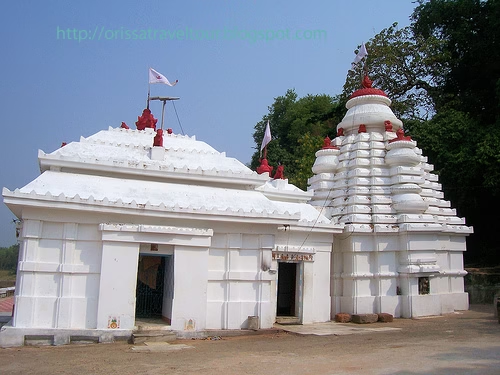
Nestled on the serene banks of the Mahanadi River in the Badamba region of Cuttack district, the Maa Bhattarika Temple stands as a beacon of Shakti worship in Odisha. Dedicated to Goddess Bhattarika, a powerful manifestation of the Divine Mother, this temple is revered not merely as a place of worship but as a living chronicle of divine intervention and legendary valor.
Who is Maa Bhattarika? The Primary Deity
Unlike conventional idols, the deity here is a Swayambhu (self-manifested) idol, believed to be carved by Lord Parasurama himself on the tip of his arrow. In the sanctum, the Goddess is depicted in Lalitasana (a seated posture of elegance), holding a lotus in one hand and bestowing blessings in the Varadamudra (gesture of boon-giving). Another form, known as Para Bhattarika, is depicted with four hands holding a noose, goad, bow, and arrow.
Phalaśruti: Why Devotees Visit
The temple attracts pilgrims seeking specific blessings and spiritual cleansing:
- Removal of Obstacles: As the deity who empowered Parasurama against his enemies, devotees visit to overcome life’s insurmountable battles and legal disputes.
- Ancestral Karma Cleansing: Rituals performed here are believed to alleviate Pitru Dosha and cleanse ancestral lineage debts.
- Protection for Fishermen & Navigators: As the presiding deity of the local community, she is worshipped as the guardian of the Mahanadi waters and navigation.
Historical Origins & Scriptural Legend
The history of Bhattarika Temple is a tapestry woven from epic mythology and regional folklore, dating back centuries.
The Parasurama Connection (Sthala Purana)
According to temple records and local tradition, the site is inextricably linked to Lord Parasurama, the sixth avatar of Vishnu. Facing certain defeat at the hands of the Kartavirya Arjuna (or Saharasjuna in some versions), Parasurama performed intense penance here. Pleased by his devotion, Goddess Durga manifested on this spot to impart divine power. It is said that Parasurama carved the idol of the Goddess on the tip of his arrow, establishing the Swayambhu murti that remains worshipped today.
Epigraphic & Dynastic Evidence
Historical analysis suggests the temple’s origins lie in the Bhaumakara dynasty era (8th–10th century CE), a period marked by the flourishing of Tantric Buddhism in Odisha. The Somavamsis, who succeeded them, reportedly converted the site into a Hindu Shakti Peetha. Inscriptions found in the vicinity trace the patronage of the Gajapati Kings of Badamba, who revered Bhattarika as their family deity.
Local Legends
Beyond the Parasurama narrative, the Ramayana finds a connection here. It is believed that Lord Rama, Sita, and Lakshmana paid homage to Bhattarika while traveling to Panchavati. A hill across the river, Mankadagadia, is still worshipped for bearing the footprints of the divine trio. Another legend speaks of Krishna and Arjuna visiting the temple to rescue Satyabhama from the demon Gosimha.
Architectural Marvels
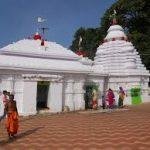
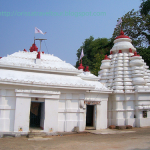
The temple architecture is a classic example of the transitional Kalinga style, blending elements of Nagara (North Indian) and Dravida (South Indian) influences, though predominantly reflecting the indigenous Odishan temple architecture.
Structure and Vastu
The temple complex is oriented according to Vastu Shastra, facing east towards the rising sun. A notable feature is the worship of Surya (the Sun God) within the Jagamohan (audience hall), an unusual but significant inclusion that links the site to Tantric rituals where the Sun is the source of energy.
Notable Features
- The Sanctum (Garbhagriha): Houses the self-manifested idol, exuding an aura of ancient power.
- The Exterior Walls: Though weathered by the humid Odisha climate, remnants of intricate carvings depicting celestial beings and mythological scenes are visible.
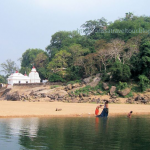
- The Surroundings: The temple sits at the foot of the Ratnagiri Hill (not to be confused with the Ratnagiri of Maharashtra), creating a dramatic backdrop where the hills meet the river.
Note: While not officially classified as an ASI protected monument, the temple is a state-protected heritage site of Odisha.
Darshan & Ritual Logistics
Visiting Bhattarika Temple requires understanding the ritualistic schedule. The temple follows traditional Odia timings, adjusted for seasonal changes. (Based on projected 2026 calendar).
Daily Darshan Timings
| Session | Timing | Activity |
|---|---|---|
| Morning | 06:00 AM – 12:00 PM | Mangala Alati, Abhishekam, Midday Puja |
| Afternoon | 12:00 PM – 04:00 PM | Temple Rests / Snana (Bathing) of Deity |
| Evening | 04:00 PM – 09:00 PM | Sandhya Alati, Bada Shringar, Pahuda |
Key Sevas and Online Booking
While the temple management committee handles daily offerings, specialized Sevas often require prior notice. Given the popularity of Maha Abhishekam, devotees are advised to contact the temple authorities well in advance.
- Maha Abhishekam: Performed on request; involves ritual bathing of the idol with milk, honey, and sanctified water.
- Chandi Path/Satyanarayan Puja: Commonly performed by families during the full moon.
- Online Booking: As of 2026, the temple is in the process of digitizing offerings. Devotees should call the official number or visit the local counter for specific Yagna bookings.
2026 Festival Calendar
- Pana Sankranti (April 14, 2026): The major annual festival, marking the Odia New Year. Special Mahayagna is performed.
- Akshaya Tritiya (May 1, 2026): A significant day for planting prosperity; special darshan is held.
- Dussehra/Maha Ashtami (October 1-10, 2026): Ten days of celebration culminating in special Maha Alati and cultural programs.
Practical Visitor Guidance
To ensure a spiritually fulfilling visit, please adhere to the following guidelines:
- Dress Code: Traditional attire is strongly encouraged. Men should wear dhotis or formal trousers with shirts; women should wear sarees, salwar kameez, or western modest attire.
- Photography: Strictly prohibited inside the Garbhagriha (sanctum sanctorum). Photography is allowed in the outer courtyard and premises with permission.
- Mobiles & Lockers: Electronic devices must be kept on silent mode. While there are no automated lockers, a dedicated counter is available for depositing mobile phones and bags before entering the inner sanctum.
- Accessibility: The temple has stone steps leading to the entrance. While manageable for most, those with mobility issues may require assistance. The inner sanctum is narrow and requires bending to enter.
- Crowd Management & Seasonal Advice:
- Best Time: Early morning (6:00 AM – 8:00 AM) offers the most peaceful darshan.
- Summer (April-June): Odisha is hot and humid. Carry a water bottle and cover your head while in the queue.
- Monsoon (July-September): The Mahanadi swells; maintain a safe distance from the riverbank near the temple.
Pilgrimage Connectivity
How to Reach
The temple is located in Sasanga village, roughly 25-30 km from the city center of Cuttack.
- By Road: From Cuttack, take NH157 towards Athgarh/Baramba. The road is well-paved, passing through scenic rural Odisha. It is approximately a 45-minute drive. Private taxis and auto-rickshaws are available from Cuttack’s Buxi Bazaar.
- By Rail: The nearest railway station is Cuttack Junction (CTC) (approx. 28 km). From there, hire a cab to Badamba/Sasanga.
- By Air: The nearest airport is Biju Patnaik International Airport (BBI) in Bhubaneswar, approximately 45 km away.
Nearby Sacred Sites (Pilgrimage Circuit)
Extend your spiritual journey by visiting these nearby attractions:
- Ratnagiri Buddhist Excavations: Just a few kilometers away, these ancient ruins offer a glimpse into Odisha’s Buddhist past, contrasting with the Shakta worship at Bhattarika.
- Varanasi (Kashmir of Odisha): A serene river ghat near Cuttack (approx. 20 km), known for its peaceful Aarti.
- Baladev Jewel Temple (Ichhapur): An ancient temple dedicated to Lord Balarama, located in the vicinity of Athgarh.
Frequently Asked Questions (FAQ)
1. Is there a VIP Darshan entry at Maa Bhattarika Temple?
Currently, the temple management does not offer a formal VIP pass system. However, senior citizens and persons with disabilities are allowed entry through a priority line upon showing valid identification.
2. What is the significance of cooked fish being offered here?
Maa Bhattarika is considered the deity of the fisherman community and navigation. In a unique ritual distinct from most Hindu temples, offering cooked fish (Prasad) is part of the folk tradition, symbolizing the region’s agrarian and riverine culture.
3. Can non-Hindus visit the temple?
While the temple is primarily a Hindu place of worship, visitors of all faiths are welcome to view the architecture and garden areas. However, entry into the inner sanctum for worship is traditionally reserved for Hindus.
4. Is accommodation available near the temple?
There are no major hotels directly at the temple site. Basic guesthouses are available in Baramba and Athgarh. For better amenities, it is recommended to stay in Cuttack (25 km) or Bhubaneswar (45 km).
5. What is the “Mankadagadia Hill” mentioned in legends?
Across the Mahanadi river lies Mankadagadia hill. Legend states that the footprints of Lord Rama, Sita, and Lakshmana are preserved on a rock there. Devotees often take a boat ride to visit this spot after darshan at the main temple.

Contact Details
Bhattarika Temple Trust
Address: Badamba, Odisha 754031, India
Phone: 09938068032
District: Cuttack
Recent Posts

Shri Kaamkoteeshwar Mandir, Varanasi – History & Significance
In the heart of Kashi, the eternal city of Lord Shiva, where the Ganges flows with celestial grace, stands the Shri Kaamkoteeshwar Mandir. This sacred Sannidhi is not merely a temple but a profound spiritual bridge between the Northern…

ओ सांवरे तूने ही मुझको संभाला – Lyrics & Meaning
ओ सांवरे तूने ही मुझको संभाला – A Prayer to Shyam Origin & Spiritual Essence Why This Bhajan Resonates Devotees chant this when overwhelmed by life’s storms—the refrain ‘तूने ही मुझको संभाला’ is the soul’s sigh of relief: “You…

कथा ये है महाराज मेरे की – Lyrics & Meaning
कथा ये है महाराज मेरे की छत्रपति संभाजी महाराज – A Prayer to Chhatrapati Sambhaji Maharaj Origin & Spiritual Essence Why This Bhajan Resonates Devotees chant this when their spirit feels tested—its powerful refrain “महाराज मेरे” is a soul’s…

Rigveda Samhita Yathartha Anuvada (ऋग्वेद संहिता यथार्थ अनुवाद) – Complete Set with Anvayartha & Hindi/English Translation
The Rigveda is the oldest surviving scripture of humanity and the foundational text of Sanātana Dharma. For serious students, scholars, UPSC aspirants studying ancient Indian history, Sanskrit learners, and spiritual seekers, a precise and grammatically structured translation is indispensable.…

आना भी अकेला है जाना भी अकेला है – Lyrics & Meaning | BharatTemples
आना भी अकेला है जाना भी अकेला है – A Prayer to the Divine Witness Origin & Spiritual Essence Why This Bhajan Resonates Devotees turn to this bhajan in moments of deep reflection—when life’s attachments begin to ache. The…

माता शेरावाली के द्वार जो भी जाता है – Lyrics & Meaning
माता शेरावाली के द्वार जो भी जाता है – A Prayer to Maa Sherawali Origin & Spiritual Essence Why This Bhajan Resonates Devotees turn to this bhajan in times of fear or uncertainty—its promise that no one leaves Maa’s…

मार लेना सपणी उबार लेणा भवरा – Lyrics & Meaning
मार लेना सपणी उबार लेणा भवरा – A Prayer to the Divine Beloved Origin & Spiritual Essence Why This Bhajan Resonates Devotees chant this in moments of deep vulnerability—its cry of “मार लेना सपणी, उबार लेणा भवरा” is the…

हमें श्याम सुंदर भरोसा तुम्हारा – Lyrics & Meaning
हमें श्याम सुंदर भरोसा तुम्हारा – A Prayer to Shyam Sundar Origin & Spiritual Essence Why This Bhajan Resonates Devotees chant this when feeling alone—its refrain ‘de do sahara’ is the soul’s cry for divine support. Lyrics in Hindi…

Mere Satguru Ne Di Thi Davai Lyrics in Hindi & Meaning
Mere Satguru Ne Di Thi Davai: Invoking the Guru’s Liberating Wisdom This soul-stirring bhajan venerates the Satguru (True Spiritual Master) as the divine physician who dispenses the only remedy for life’s deepest sufferings. Composed by Sant Karmaveer Tufani, it…

Janm Diyo Thari Maa Dukh Dekhiyo Lyrics in Hindi & Meaning
जन्म दियो थारी माँ दुख देखियो (Maa’s Grief Upon Birthing You) This soul-stirring Chetavani Bhajan (admonitory hymn) is addressed to the Divine Mother (Maa) – a call for repentance when children forget their filial duties in the dark age…