
Contents
Introduction & Spiritual Essence: Conquering Fear at Bhimchandi Vinayak
In the holy city of Varanasi (Kashi), the Bhimchandi Vinayak Temple stands as a powerful sentinel on the sacred Panchkosi Parikrama route. Dedicated to Lord Ganesha, this shrine is unique not only for its divine energy but for its origin story rooted in the triumph of righteousness over terror.
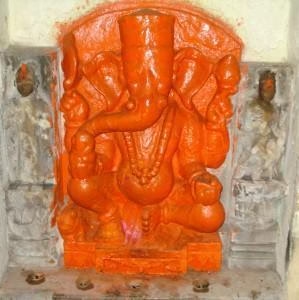
Deity & Form: The presiding deity is Bhimchandi Vinayak, a specific form of Lord Ganesha. Unlike the serene white marble forms often seen, this Murti (idol) is depicted with a fierce, protective visage. He is believed to be a Swayambhu (self-manifested) deity, radiating immense power to subdue negative energies.
Phalaśruti (Spiritual Benefit): Why do devotees flock here? The primary significance of this temple is the eradication of fear. According to local lore, worshipping Bhimchandi Vinayak removes all fears—be they related to enemies, legal disputes, or unseen forces. It is believed to cleanse ancestral karma and provide the devotee with the courage (Veera Bhava) to overcome life’s obstacles.
Historical Origins & Scriptural Legend
While specific archaeological dates for the construction are difficult to pinpoint due to the ancient nature of Varanasi’s temples, the history of Bhimchandi Vinayak is best understood through its Sthala Purana (local legend).
The Legend of Bhima and Chandi:
According to ancient traditions preserved by the local priests, this area was once terrorized by a demonic duo named Bhima and Chandi. These demons worshipped Lord Shiva and received boons that made them invincible, leading them to harass sages and disrupt the peace of Kashi.
After immense penance by the sages, Lord Ganesha appeared. A fierce battle ensued where Bhimchandi, the combined form of the demonic energy, was vanquished. In an act of divine compassion, Lord Ganesha absorbed their energy and established himself at this spot as Bhimchandi Vinayak. Thus, the temple marks the site where the terror of the cosmos was transformed into the auspiciousness of the remover of obstacles.
Architectural Marvels
The temple follows the traditional Nagara style of North Indian temple architecture, blending seamlessly into the ancient heritage of Varanasi.
Key Features:
– The Shikhara (Spire): The towering spire symbolizes the ascent of the soul toward the divine. It is adorned with intricate carvings typical of the Kashi school of architecture.
– Mandapas (Halls): The temple features a compact but spacious Mandapa for devotees to gather and perform prayers. The layout adheres to Vastu Shastra principles, ensuring positive energy flow toward the sanctum.
– Sanctum Sanctorum (Garbhagriha): The inner chamber houses the Murti of Bhimchandi Vinayak. The idol is carved from black stone, symbolizing the unmanifest cosmic potential.
Darshan & Ritual Logistics
The temple is a hub of spiritual activity, especially during the early morning hours and Chaturthi (fourth day of the lunar cycle).
Daily Timings
Timings may vary slightly during festivals.
| Session | Timing |
|---|---|
| Morning Darshan | 06:00 AM – 1:00 PM |
| Evening Darshan | 4:00 PM – 9:00 PM |
| Morning Aarti | 07:00 AM |
| Evening Aarti | 07:30 PM |
Key Sevas and 2026 Festivals
Devotees can perform Abhishekam (ritual bathing of the deity) and Archana (offering of flowers and prayers). While the temple traditionally allows devotees to perform simple poojas themselves, formal Sevas often require assistance from the temple priests.
- Online Seva Booking: As of 2026, standard booking for this specific local shrine is typically handled in person. However, for the broader Kashi Vishwanath complex (under the Kashi Vishwanath Corridor Project), bookings are integrated into the Kashi Vishwanath App. Visitors are advised to check the app for combined pilgrimage passes that may include smaller shrines like Bhimchandi Vinayak.
- 2026 Key Dates:
- Magha Ganesh Chaturthi: February 3, 2026
- Varad Ganesh Chaturthi: September 5, 2026
- Diwali (Deepotsav): October 18, 2026
Practical Visitor Guidance
Visiting Varanasi requires preparation to ensure a comfortable spiritual journey.
Dress Code & Etiquette
- Dress Code: Traditional Indian attire (Kurta-Pajama, Saree, or Dhoti) is recommended. Modesty is strictly observed.
- Footwear: Shoes must be removed at the designated stand outside the temple. The floors are cleaned regularly, but carrying socks is advisable.
- Photography: Photography is generally restricted inside the sanctum sanctorum. Mobile photography in the outer halls is permitted but should be done respectfully.
Crowd Management
- Best Hours: To avoid the rush, visit between 10:00 AM and 12:00 PM, or after 7:30 PM when the evening Aarti concludes.
- Seasonal Advice: Summer in Varanasi (April–June) is hot; carry a water bottle and a handkerchief. Winters (December–January) are cool and ideal for pilgrimage.
Pilgrimage Connectivity
How to Reach Bhimchandi Vinayak Temple
The temple is located on the outer rim of Varanasi, approximately 3-4 km from the Kashi Vishwanath Corridor.
- Nearest Airport: Lal Bahadur Shastri International Airport (VNS) is roughly 25 km away. A taxi or auto-rickshaw takes about 45–60 minutes.
- Nearest Railway Station: Varanasi Junction (BSB) is the main hub. From the station, take an auto-rickshaw (approx. 20–25 mins).
- Road Access: The temple is accessible via the Panchkosi Road. If traveling from outside, approach via NH 19 or the Varanasi-Allahabad Highway, then navigate to the inner Panchkosi loop.
Nearby Sacred Sites
Complete your Kashi pilgrimage by visiting these nearby shrines:
- Kashi Vishwanath Temple (Shri Kashi Vishwanath Mandir): The central deity of Kashi, located 4 km away.
- Sankat Mochan Hanuman Temple: Famous for relieving sorrows, located on the banks of the Assi Ghat.
- Durga Temple (Durga Kund): A stunning red-colored temple dedicated to Goddess Durga, symbolizing Shakti.
Frequently Asked Questions (FAQ)
1. Is there a VIP darshan entry?
While this temple is smaller than the main Kashi Vishwanath Corridor, local priests often allow devotees with small donations or elderly visitors to enter the sanctum directly. However, for the main Kashi Corridor, a VIP pass is available through the district administration office or the Kashi Vishwanath App.
2. Is photography allowed inside the sanctum?
No, strictly speaking, photography is prohibited inside the sanctum sanctorum to maintain the sanctity of the Darshan. It is allowed in the outer mandapas.
3. What is the significance of the Panchkosi Parikrama?
The Panchkosi Parikrama is a 5 Kos (approx. 12 mile) walking circuit around Kashi. It is considered highly auspicious, and Bhimchandi Vinayak is a vital resting point for devotees performing this ancient ritual.
4. Are there facilities for mobile lockers?
Due to the traditional nature of this specific temple, dedicated high-tech locker facilities may not be available. It is recommended to carry minimal belongings. For larger storage, facilities are available near the Kashi Vishwanath Corridor entrance.
5. Can non-Hindus visit the temple?
Kashi is a universal spiritual center. While entry is generally open to all, the inner sanctum of specific Shakta/Shaiva traditions may have restrictions for non-Hindus depending on local priestly customs. It is advisable to consult a local guide or priest upon arrival.
Recent Posts

ओ सांवरे तूने ही मुझको संभाला – Lyrics & Meaning
ओ सांवरे तूने ही मुझको संभाला – A Prayer to Shyam Origin & Spiritual Essence Why This Bhajan Resonates Devotees chant this when overwhelmed by life’s storms—the refrain ‘तूने ही मुझको संभाला’ is the soul’s sigh of relief: “You…

कथा ये है महाराज मेरे की – Lyrics & Meaning
कथा ये है महाराज मेरे की छत्रपति संभाजी महाराज – A Prayer to Chhatrapati Sambhaji Maharaj Origin & Spiritual Essence Why This Bhajan Resonates Devotees chant this when their spirit feels tested—its powerful refrain “महाराज मेरे” is a soul’s…

Rigveda Samhita Yathartha Anuvada (ऋग्वेद संहिता यथार्थ अनुवाद) – Complete Set with Anvayartha & Hindi/English Translation
The Rigveda is the oldest surviving scripture of humanity and the foundational text of Sanātana Dharma. For serious students, scholars, UPSC aspirants studying ancient Indian history, Sanskrit learners, and spiritual seekers, a precise and grammatically structured translation is indispensable.…

आना भी अकेला है जाना भी अकेला है – Lyrics & Meaning | BharatTemples
आना भी अकेला है जाना भी अकेला है – A Prayer to the Divine Witness Origin & Spiritual Essence Why This Bhajan Resonates Devotees turn to this bhajan in moments of deep reflection—when life’s attachments begin to ache. The…

माता शेरावाली के द्वार जो भी जाता है – Lyrics & Meaning
माता शेरावाली के द्वार जो भी जाता है – A Prayer to Maa Sherawali Origin & Spiritual Essence Why This Bhajan Resonates Devotees turn to this bhajan in times of fear or uncertainty—its promise that no one leaves Maa’s…

मार लेना सपणी उबार लेणा भवरा – Lyrics & Meaning
मार लेना सपणी उबार लेणा भवरा – A Prayer to the Divine Beloved Origin & Spiritual Essence Why This Bhajan Resonates Devotees chant this in moments of deep vulnerability—its cry of “मार लेना सपणी, उबार लेणा भवरा” is the…

हमें श्याम सुंदर भरोसा तुम्हारा – Lyrics & Meaning
हमें श्याम सुंदर भरोसा तुम्हारा – A Prayer to Shyam Sundar Origin & Spiritual Essence Why This Bhajan Resonates Devotees chant this when feeling alone—its refrain ‘de do sahara’ is the soul’s cry for divine support. Lyrics in Hindi…

Mere Satguru Ne Di Thi Davai Lyrics in Hindi & Meaning
Mere Satguru Ne Di Thi Davai: Invoking the Guru’s Liberating Wisdom This soul-stirring bhajan venerates the Satguru (True Spiritual Master) as the divine physician who dispenses the only remedy for life’s deepest sufferings. Composed by Sant Karmaveer Tufani, it…

Janm Diyo Thari Maa Dukh Dekhiyo Lyrics in Hindi & Meaning
जन्म दियो थारी माँ दुख देखियो (Maa’s Grief Upon Birthing You) This soul-stirring Chetavani Bhajan (admonitory hymn) is addressed to the Divine Mother (Maa) – a call for repentance when children forget their filial duties in the dark age…
Bhadi Sabha Mein Thane Manaun Lyrics in Hindi & Meaning
Bhadi Sabha Mein Thane Manaun: Invoking the Spear-Wielding Mother Mata Bhawani (श्री ज्वाला भवानी), the fiery manifestation of Shakti worshipped as the Protector of Dharma in Her Dhaulagarh sanctum. Origin & Spiritual Essence Composed in Rajasthani folk tradition by…