
Contents
Introduction & Spiritual Essence
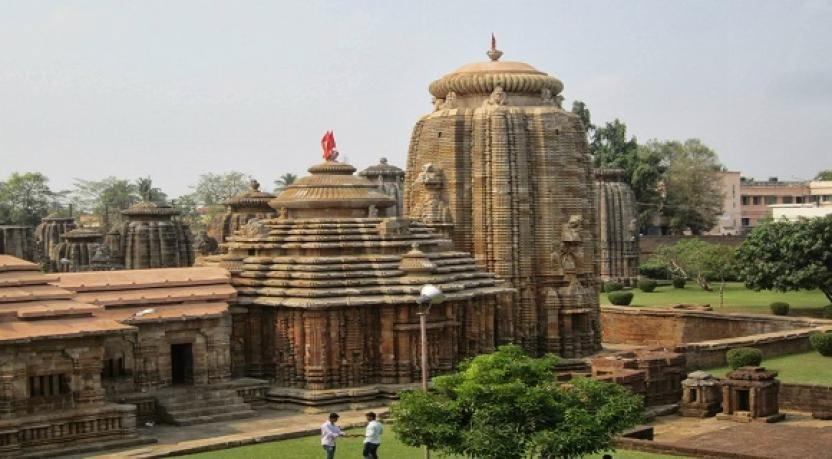
Byamokesvara Temple, also revered as Suresvara Mahadeva Temple, stands as a silent sentinel in the bustling heart of Bhubaneswar’s Old Town. Dedicated to Lord Shiva, this 10th-century shrine is a living embodiment of Odisha’s spiritual heritage. The temple enshrines a Swayambhu (self-manifested) Shiva Lingam resting on a circular Yonipitha within the sanctum sanctorum.
Devotees visit this sacred space not merely for the architectural splendor but to seek the divine grace of Lord Shiva. In the context of Phalaśruti (scriptural promises of merit), offering prayers here is believed to cleanse ancestral karma and bestow spiritual liberation. The temple’s unique location—nestled amidst the old market complex—allows for a vibrant interplay of commerce and devotion, reflecting the ancient Indian ethos where daily life and the divine are inseparable.
Historical Origins & Scriptural Legend
According to historical records and archaeological evidence, the Byamokesvara Temple history traces back to the 10th century AD. While the exact dynastic patronage is documented through architectural analysis attributed to the Somavamshi or Kesari dynasties, the temple has undergone significant restoration over the centuries.
Tradition holds that the temple was rediscovered only recently, having been buried under debris and older structures over time. It was extricated and restored to its current glory. The name “Byamokesvara” has local roots, possibly linked to the Sanskrit ‘Visvakesa’ or a local deity designation, while the name Suresvara Mahadeva elevates its status to that of a supreme ruler of the gods. The Sthala Purana (local legend) associates the site with the spiritual energy of the nearby Lingaraj Temple, suggesting a symbiotic existence where Suresvara acts as a guardian deity across the road from the colossal Lingaraj.
Architectural Marvels
The temple is a classic example of the Kalingan style of temple architecture, a regional variation of the Nagara style prevalent in Eastern India.
Structure and Plan: The temple is Pancharatha in plan, meaning the curvature of the Deul (tower) is defined by five vertical divisions called Raha, Anuratha, and Kanika pagas. The Rekha Deul (curvilinear tower) rises to a height of approximately 7.00 meters from the Baranda (platform) to the Mastaka (finial).
Notable Features:
- The Sanctum: It sits 1.50 meters below the current road level, requiring visitors to descend five steps. This lower elevation hints at the ancient ground level of Old Town.
- Sculptural Details: The Lalatabimba (lintel) features a stunning Gaja-Lakshmi carving, flanked by elephants raising lotuses. Above the doorway, the Navagrahas (nine planets) are intricately carved, with Ketu depicted as a kneeling full figure.
- Door Jambs: The Shakhas (vertical bands) are adorned with river goddesses, Ganga and Yamuna. Unusually for Bhubaneswar temples, they are positioned in the upper part of the door frame rather than the base, standing over their respective vehicles (a crocodile for Ganga, a turtle for Yamuna).
- Material: Built using coarse grey sandstone using the dry masonry technique, the temple was recently given a red wash during renovation, highlighting its contours against the urban backdrop.
Darshan & Ritual Logistics
The temple remains a living temple, actively maintained by the local shopkeepers. It is unique in that the complex is surrounded by a vibrant marketplace, offering a distinct sensory experience of sound and scent during worship.
Daily Timings
Note: Temple timings are subject to seasonal changes and local festivals. Below are the standard timings for 2026.
| Session | Timing |
|---|---|
| Morning Darshan | 06:00 AM – 12:00 PM |
| Midday Break | 12:00 PM – 04:00 PM |
| Evening Darshan | 04:00 PM – 09:00 PM |
Key Sevas and Booking
While individual booking platforms vary for smaller temples in the Old Town complex, standard rituals are performed. For specific online seva booking, devotees often utilize the broader Odisha government temple portals or consult the temple trust directly.
- Abhishekam: Performed during morning hours (requires prior notice).
- Archana: Daily individual and family archanas are available at the counter.
- Maha Shivaratri 2026: February 26, 2026 (Special night-long vigil and rituals).
- Kartik Purnima 2026: November 15, 2026 (Celebrated with lamp offerings).
Practical Visitor Guidance
Visiting the Old Town area requires preparation to ensure a comfortable and respectful pilgrimage.
Rules & Etiquette
- Dress Code: Traditional attire is recommended. Men should wear Dhoti or Kurta-Pajama; women should wear Saree or Salwar Kameez. Avoid shorts and sleeveless tops.
- Photography: Generally allowed in the outer complex but prohibited inside the sanctum sanctorum.
- Mobile Lockers: There are no official lockers in the small Byamokesvara temple complex. It is advisable to carry minimal belongings as the temple is located in a crowded market.
- Crowd Management: The temple is adjacent to the massive Lingaraj Temple. Best hours to visit are early morning (6:00 AM – 8:00 AM) or late evening to avoid market crowds.
- Seasonal Advice: Bhubaneswar can be humid. Carry a water bottle and a handkerchief. During summer (April–June), start your darshan before 8:00 AM.
Pilgrimage Connectivity
How to Reach
The Byamokesvara Temple is situated in the Tala Bazaar area of Old Town.
- By Air: The nearest airport is Biju Patnaik International Airport, Bhubaneswar (BBI), approximately 5 km away.
- By Rail: Bhubaneswar Railway Station (BBS) is the major railhead, about 4 km from Old Town. Auto-rickshaws and cabs are readily available.
- By Road: The temple is located off NH-16 (formerly NH-5). From Vani Vihar or Master Canteen square, take the road towards the Lingaraj Temple. Note: The area is pedestrian-heavy, and vehicle access is restricted deep inside the market.
Nearby Sacred Sites
To complete your spiritual circuit in Bhubaneswar, visit these nearby temples:
- Lingaraj Temple: Located directly across the road, this 11th-century architectural masterpiece is the primary landmark of Bhubaneswar.
- Mukteswar Temple: Famous for its ornate torana (gateway) and Buddha sculptures, located about 1 km away.
- Rajrani Temple: Known for its ornate exteriors and lack of an idol inside, situated roughly 1.5 km away.
Photo Gallery
Frequently Asked Questions (FAQs)
1. What is the significance of the name “Byamokesvara”?
The name is believed to be a local adaptation, possibly of “Visvakesvara” (Lord of the Universe) or a specific historical designation. It is structurally distinct yet spiritually connected to the neighboring Lingaraj complex.
2. Is there a VIP darshan entry at Byamokesvara Temple?
As a smaller, community-maintained temple within the Old Town market complex, there are no formal VIP darshan passes. Darshan is generally open and accessible for all devotees, with quick access due to the smaller crowd compared to the main Lingaraj Temple.
3. What are the security protocols for mobile phones and cameras?
While there are no strict checking points like at larger temples, devotees are expected to maintain silence and avoid photography inside the sanctum. Mobile phones should be kept on silent mode.
4. Is the temple accessible for wheelchairs?
The temple is located in the Old Town area with uneven streets. The sanctum requires descending steps, making wheelchair access difficult. However, darshan can be performed from the entrance level.
5. What is the best time to visit to avoid crowds?
Weekdays are generally less crowded than weekends. Visiting between 6:00 AM and 8:00 AM offers the most peaceful experience before the market fully awakens.
Recent Posts

Shri Kaamkoteeshwar Mandir, Varanasi – History & Significance
In the heart of Kashi, the eternal city of Lord Shiva, where the Ganges flows with celestial grace, stands the Shri Kaamkoteeshwar Mandir. This sacred Sannidhi is not merely a temple but a profound spiritual bridge between the Northern…

ओ सांवरे तूने ही मुझको संभाला – Lyrics & Meaning
ओ सांवरे तूने ही मुझको संभाला – A Prayer to Shyam Origin & Spiritual Essence Why This Bhajan Resonates Devotees chant this when overwhelmed by life’s storms—the refrain ‘तूने ही मुझको संभाला’ is the soul’s sigh of relief: “You…

कथा ये है महाराज मेरे की – Lyrics & Meaning
कथा ये है महाराज मेरे की छत्रपति संभाजी महाराज – A Prayer to Chhatrapati Sambhaji Maharaj Origin & Spiritual Essence Why This Bhajan Resonates Devotees chant this when their spirit feels tested—its powerful refrain “महाराज मेरे” is a soul’s…

Rigveda Samhita Yathartha Anuvada (ऋग्वेद संहिता यथार्थ अनुवाद) – Complete Set with Anvayartha & Hindi/English Translation
The Rigveda is the oldest surviving scripture of humanity and the foundational text of Sanātana Dharma. For serious students, scholars, UPSC aspirants studying ancient Indian history, Sanskrit learners, and spiritual seekers, a precise and grammatically structured translation is indispensable.…

आना भी अकेला है जाना भी अकेला है – Lyrics & Meaning | BharatTemples
आना भी अकेला है जाना भी अकेला है – A Prayer to the Divine Witness Origin & Spiritual Essence Why This Bhajan Resonates Devotees turn to this bhajan in moments of deep reflection—when life’s attachments begin to ache. The…

माता शेरावाली के द्वार जो भी जाता है – Lyrics & Meaning
माता शेरावाली के द्वार जो भी जाता है – A Prayer to Maa Sherawali Origin & Spiritual Essence Why This Bhajan Resonates Devotees turn to this bhajan in times of fear or uncertainty—its promise that no one leaves Maa’s…

मार लेना सपणी उबार लेणा भवरा – Lyrics & Meaning
मार लेना सपणी उबार लेणा भवरा – A Prayer to the Divine Beloved Origin & Spiritual Essence Why This Bhajan Resonates Devotees chant this in moments of deep vulnerability—its cry of “मार लेना सपणी, उबार लेणा भवरा” is the…

हमें श्याम सुंदर भरोसा तुम्हारा – Lyrics & Meaning
हमें श्याम सुंदर भरोसा तुम्हारा – A Prayer to Shyam Sundar Origin & Spiritual Essence Why This Bhajan Resonates Devotees chant this when feeling alone—its refrain ‘de do sahara’ is the soul’s cry for divine support. Lyrics in Hindi…

Mere Satguru Ne Di Thi Davai Lyrics in Hindi & Meaning
Mere Satguru Ne Di Thi Davai: Invoking the Guru’s Liberating Wisdom This soul-stirring bhajan venerates the Satguru (True Spiritual Master) as the divine physician who dispenses the only remedy for life’s deepest sufferings. Composed by Sant Karmaveer Tufani, it…

Janm Diyo Thari Maa Dukh Dekhiyo Lyrics in Hindi & Meaning
जन्म दियो थारी माँ दुख देखियो (Maa’s Grief Upon Birthing You) This soul-stirring Chetavani Bhajan (admonitory hymn) is addressed to the Divine Mother (Maa) – a call for repentance when children forget their filial duties in the dark age…