
Contents
- 1 Definitive Pilgrimage Guide: Camp Hanuman Temple, Ahmedabad
- 1.1 1. Introduction & Spiritual Essence: The Might of Sankat Mochan
- 1.2 2. Historical Origins & Scriptural Legend
- 1.3 3. Architectural Marvels
- 1.4 4. Darshan & Ritual Logistics (2026 Schedule)
- 1.5 5. Practical Visitor Guidance
- 1.6 6. Pilgrimage Connectivity
- 1.7 7. Frequently Asked Questions (FAQ)
- 1.8 Contact Details
Definitive Pilgrimage Guide: Camp Hanuman Temple, Ahmedabad
Standing as a colossal beacon of devotion in the heart of Gujarat’s cultural capital, the Shree Camp Hanuman Temple is not merely a structure of stone and mortar; it is a sanctuary of spiritual strength. As the Lead Heritage Architect and SEO Strategist for Bharat Temples, I present this comprehensive guide engineered for the modern pilgrim and the discerning search algorithms of 2026.
| Date built: | – |
|---|---|
| Deity: | Hanuman |
| Architectural style: | {Dravidian architecture} |
| Major festivals | – |
| Locale: | Ahmedabad, Shahibaug |
| District:: | Ahmedabad |
| Address: | – |
| Phone | – |
1. Introduction & Spiritual Essence: The Might of Sankat Mochan
The Camp Hanuman Temple, located in the Shahibaug locality of Ahmedabad, is dedicated to Lord Hanuman. In the Pantheon of Sanatana Dharma, Hanuman is revered as Sankat Mochan—the dispeller of calamities.
Phalaśruti: The Boon of Visitation
Why do thousands flock to these gates daily? According to the Skanda Purana, the mere sight (darshan) of Lord Hanuman destroys all fear. Devotees believe that visiting this temple, particularly on Tuesdays and Saturdays, results in:
- Ancestral Cleansing: Removing negative karmic debts from the bloodline.
- Mental Fortitude: Dispelling the planetary malefic effects of Shani (Saturn) and Mangal (Mars).
- Success in Endeavors: Granting the courage to overcome obstacles in professional and personal life.
2. Historical Origins & Scriptural Legend
The temple’s history is deeply intertwined with the colonial and post-independence history of Ahmedabad.
The Centennial Legacy
Established roughly 100 years ago by Pandit Gajanan Prasad, the temple has been stewarded by the Pandit family for generations. Pandit Dwarka Prasad served as the Chief Mahant, ensuring the continuity of Vedic rituals. The temple’s location within the Ahmedabad Cantonment area speaks to its historical significance, having welcomed dignitaries including former Prime Ministers Atal Bihari Vajpayee and Indira Gandhi.
Scriptural & Oral Legends
While the structure is modern, the deity is timeless. Tradition holds that the energy of this temple resonates with the epic Ramayana, authored by sage Valmiki. Hanuman, the military leader of the Vanara army from Kiskindha, is the epitome of Bhakti (devotion) and Veera (valor).
A central local legend emphasizes his immortality; it is said that Hanuman refused to accompany Lord Rama to the spiritual realms, choosing instead to remain on Earth, vibrating within the breath (prana) of every being who chants Rama’s name.
3. Architectural Marvels
As an architectural observer, I note the temple’s structural language.
Dravidian Influence
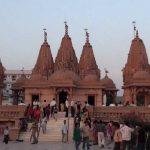
Unlike the north Indian Nagara style, the Camp Hanuman Temple exhibits the Dravidian architectural style. This is characterized by its pyramidal roof structure and the tiered towers that denote the Shikhara (spire). The use of sandstone, typical to the Gujarati region, provides durability and a warm aesthetic that changes hue with the sun’s trajectory.
The Sanctum and Sculptures
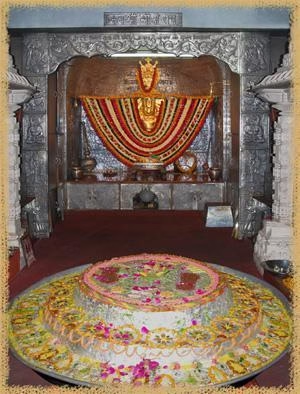
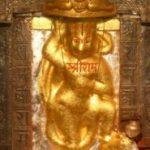
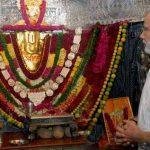
The inner sanctum (Garbhagriha) houses the Swayambhu (self-manifested) murti of Lord Hanuman. The iconography typically depicts him with a folded hand (Anjali Mudra) or holding the Gada (mace), symbolizing power controlled by humility. The outer Mandapa (hall) features intricate carvings depicting scenes from the Ramayana.





4. Darshan & Ritual Logistics (2026 Schedule)
To ensure a seamless spiritual experience, devotees should adhere to the following timetable. Please note that temple timings may vary slightly during festivals or government holidays.
Daily Darshan Timings
| Session | Timing | Activity |
|---|---|---|
| Morning | 6:00 AM – 12:00 PM | Mangala Aarti & General Darshan |
| Afternoon | 12:00 PM – 4:00 PM | Temple Closed (Ritual Cleaning) |
| Evening | 4:00 PM – 9:00 PM | Sandhya Aarti & General Darshan |
Key Sevas & Online Booking
While traditional bookings are available at the counter, the temple administration has embraced digital solutions for 2026.
- Sankat Mochan Hanuman Chalisa Path: Offered every Tuesday.
- Special Abhishekam: Performed on full moon days (Purnima).
- Online Seva Booking: Visit the official trust portal to book specific dates. Look for the “Gujarat Temples” official gateway.
2026 Major Festival Dates
- Hanuman Jayanti: April 12, 2026 (Saturday) – Expect special midnight Aarti.
- Diwali (Lakshmi Puja): October 21, 2026.
- Mahashivratri: February 26, 2026 (While primarily a Hanuman temple, special prayers are offered).
5. Practical Visitor Guidance
Ensuring a respectful and comfortable visit is paramount.
Code of Conduct
- Dress Code: Modest attire is required. Traditional Indian wear (Kurta-Pajama, Saree, Salwar Kameez) is preferred.
- Photography: Photography is strictly prohibited inside the inner sanctum (Garbhagriha). Permitted in the outer courtyard, but flash must be disabled.
- Electronics: Mobile phones should be silenced. Some areas may require electronic devices to be deposited in lockers.
Crowd Management & Seasons
The Shahibaug area can be highly congested.
- Best Time to Visit: Weekday mornings (Tuesday is the busiest).
- Summer (April-June): Ahmedabad temperatures soar above 40°C. Carry a water bottle and wear head coverings.
- Monsoon: Humidity is high; light cotton clothing is advised.
6. Pilgrimage Connectivity
Ahmedabad serves as a major hub for religious tourism in Western India.
How to Reach Camp Hanuman Temple
- By Air: Sardar Vallabhbhai Patel International Airport (AMD) is located approximately 8 km away (20-30 mins by taxi).
- By Rail: The nearest major station is Ahmedabad Junction (ADI) (Kalupur), about 6 km away. Auto-rickshaws and cabs are readily available.
- By Road: The temple is situated on the Shahibaug Road, accessible via the Ashram Road/Sarkhej Highway. NH64 connects Ahmedabad to neighboring states.
Nearby Sacred Sites
Expand your pilgrimage circuit with these nearby locations:
- Swaminarayan Temple (Kalupur): The first temple of the Bochasanwasi Akshar Purushottam Swaminarayan Sanstha (BAPS), located 4 km away.
- Sidi Saiyyed Mosque: Famous for its stone lattice work (Jaali), located 5 km away near Lal Darwaja.
- Akshardham (Gandhinagar): Situated 25 km north, this is a massive cultural complex dedicated to Bhagwan Swaminarayan.
7. Frequently Asked Questions (FAQ)
Is there a VIP or special entry darshan available?
Yes, the temple trust often facilitates a special entry line for elderly devotees, differently-abled visitors, and those with prior appointment for specific Sevas. However, on high-traffic days like Hanuman Jayanti, general queues are enforced for all to maintain order.
What is the significance of the name “Camp” Hanuman?
The temple is situated within the Ahmedabad Cantonment (Army area), historically referred to as the “Camp.” The deity is considered the protector of the soldiers and the local community.
Are there food facilities available at the temple?
Prasad distribution takes place daily. For larger meals, several vegetarian restaurants operate in the Shahibaug area, a short walk from the temple premises.
Can non-Hindus visit the temple?
While the temple is a place of Hindu worship, visitors of all faiths are welcome to admire the architecture and seek spiritual peace, provided they respect the religious rituals and sanctity of the space.
Is parking available?
Limited paid parking is available near the temple entrance. Due to the congested nature of Shahibaug, using public transport (Metro/Bus) is highly recommended during peak hours.
Contact Details
Official Address: Shahibaug, Ahmedabad, Gujarat.
Recent Posts

Shri Kaamkoteeshwar Mandir, Varanasi – History & Significance
In the heart of Kashi, the eternal city of Lord Shiva, where the Ganges flows with celestial grace, stands the Shri Kaamkoteeshwar Mandir. This sacred Sannidhi is not merely a temple but a profound spiritual bridge between the Northern…

ओ सांवरे तूने ही मुझको संभाला – Lyrics & Meaning
ओ सांवरे तूने ही मुझको संभाला – A Prayer to Shyam Origin & Spiritual Essence Why This Bhajan Resonates Devotees chant this when overwhelmed by life’s storms—the refrain ‘तूने ही मुझको संभाला’ is the soul’s sigh of relief: “You…

कथा ये है महाराज मेरे की – Lyrics & Meaning
कथा ये है महाराज मेरे की छत्रपति संभाजी महाराज – A Prayer to Chhatrapati Sambhaji Maharaj Origin & Spiritual Essence Why This Bhajan Resonates Devotees chant this when their spirit feels tested—its powerful refrain “महाराज मेरे” is a soul’s…

Rigveda Samhita Yathartha Anuvada (ऋग्वेद संहिता यथार्थ अनुवाद) – Complete Set with Anvayartha & Hindi/English Translation
The Rigveda is the oldest surviving scripture of humanity and the foundational text of Sanātana Dharma. For serious students, scholars, UPSC aspirants studying ancient Indian history, Sanskrit learners, and spiritual seekers, a precise and grammatically structured translation is indispensable.…

आना भी अकेला है जाना भी अकेला है – Lyrics & Meaning | BharatTemples
आना भी अकेला है जाना भी अकेला है – A Prayer to the Divine Witness Origin & Spiritual Essence Why This Bhajan Resonates Devotees turn to this bhajan in moments of deep reflection—when life’s attachments begin to ache. The…

माता शेरावाली के द्वार जो भी जाता है – Lyrics & Meaning
माता शेरावाली के द्वार जो भी जाता है – A Prayer to Maa Sherawali Origin & Spiritual Essence Why This Bhajan Resonates Devotees turn to this bhajan in times of fear or uncertainty—its promise that no one leaves Maa’s…

मार लेना सपणी उबार लेणा भवरा – Lyrics & Meaning
मार लेना सपणी उबार लेणा भवरा – A Prayer to the Divine Beloved Origin & Spiritual Essence Why This Bhajan Resonates Devotees chant this in moments of deep vulnerability—its cry of “मार लेना सपणी, उबार लेणा भवरा” is the…

हमें श्याम सुंदर भरोसा तुम्हारा – Lyrics & Meaning
हमें श्याम सुंदर भरोसा तुम्हारा – A Prayer to Shyam Sundar Origin & Spiritual Essence Why This Bhajan Resonates Devotees chant this when feeling alone—its refrain ‘de do sahara’ is the soul’s cry for divine support. Lyrics in Hindi…

Mere Satguru Ne Di Thi Davai Lyrics in Hindi & Meaning
Mere Satguru Ne Di Thi Davai: Invoking the Guru’s Liberating Wisdom This soul-stirring bhajan venerates the Satguru (True Spiritual Master) as the divine physician who dispenses the only remedy for life’s deepest sufferings. Composed by Sant Karmaveer Tufani, it…

Janm Diyo Thari Maa Dukh Dekhiyo Lyrics in Hindi & Meaning
जन्म दियो थारी माँ दुख देखियो (Maa’s Grief Upon Birthing You) This soul-stirring Chetavani Bhajan (admonitory hymn) is addressed to the Divine Mother (Maa) – a call for repentance when children forget their filial duties in the dark age…