
Contents
- 1 Chidambareswarar Temple, Pullambadi: A Definitive Pilgrimage Guide
Chidambareswarar Temple, Pullambadi: A Definitive Pilgrimage Guide
Authored by the Lead Heritage Architect & SEO Strategist for BharatTemples.com
1. Introduction & Spiritual Essence
Nestled in the serene village of Pullambadi, Trichy, the Chidambareswarar Temple stands as a timeless monument to the Shaivite heritage of Tamil Nadu. Dedicated to Lord Shiva, this temple is a significant spiritual haven where devotion meets ancient history.
Primary Deity & Form:
The presiding deity, Chidambareswarar, is a revered Swayambhu Moorthy (self-manifested lingam) facing the east. The temple also houses a separate shrine for the consort, Sivakami Ammai (also known as Periyanayagi), who stands gracefully in a separate sanctum.
Phalaśruti (Spiritual Benefits):
Devotees visit this sacred shrine to seek blessings for spiritual awakening and removal of obstacles. According to local tradition, worshipping Chidambareswarar helps in:
- Cleansing Ancestral Karma: Performing rites here is believed to liberate ancestors from cycles of rebirth.
- Overcoming Planetary Afflictions: The unique alignment of Navagraha shrines aids in mitigating negative planetary influences.
- Attaining Gnana (Wisdom): As the name “Chidambaram” implies consciousness, this temple is a focal point for seekers of truth.
2. Historical Origins & Scriptural Legend
The temple echoes the grandeur of the Great Chola Dynasty, the architects of Dravidian temple architecture.
Builders & Timeline:
According to temple records and stone inscriptions, the temple was constructed by the mighty Kulothunga Chola I around 1080 A.D. (approximately 900 years ago). The village was historically known as Pullanbadi within the Kaanakkiliyuur Nadu administrative division.
Scriptural Legend & Inscriptions:
Tradition holds that the original name inscribed on the stone pillars was Madurantaka Eswaram, a tribute to the Chola emperor. The temple underwent a significant renovation and Kumbabhishekam (consecration) on November 11, 2012, restoring its ancient splendor. The inscriptions etched on the temple walls provide a living record of the socio-religious life during the Chola administration.
3. Architectural Marvels
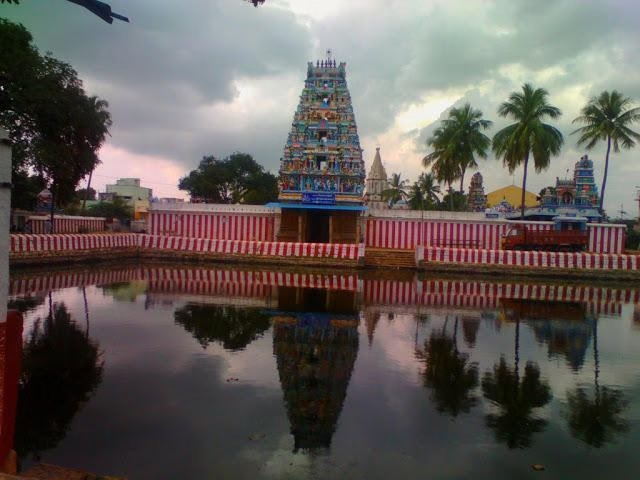
The Chidambareswarar Temple is a textbook example of Dravidian Architecture, characterized by its towering gateways and intricate sculptural detailing.
Structure & Layout:
- Rajagopurams: The temple features a magnificent 5-tiered Rajagopuram (main gateway) facing east, flanked by 3-tiered gopurams on the north and south sides.
- Prakaram: It is a single-circumambulatory passage (single prakaram) temple.
- Mandapas: The Maha Mandapam (main hall) houses a Srichakkram (divine wheel) on its roof, depicting the 12 Rashis (zodiac signs), a rare architectural feature signifying cosmic harmony.
Sculptural Highlights:
- Niche Idols: The sanctum walls are adorned with niche idols of Narthana Ganapathy (dancing Ganesha), Dakshina Moorthy, Mahavishnu, Brahma, and Durga.
- Deities: Idols of Suryan (Sun), Chandran (Moon), Kala Bhairava, Saneeswarar (Saturn), Appar, Sundarar, and Manicka Vasagar are enshrined within the complex.
- Navagrahas: Located on the northeastern side of the prakaram, the Navagraha shrine is meticulously arranged for planetary worship.
Sthaala Vriksham (Sacred Tree):
The temple hosts two sacred trees—the Vanni (Prospis cineraria) and Vilva (Bael)—located on the southern prakaram, essential for ritual offerings.
4. Darshan & Ritual Logistics
Planning your visit ensures a peaceful darshan. Below are the standard timings; however, devotees are advised to check for special hours during festivals.
| Session | Timing |
|---|---|
| Morning Darshan | 07:00 AM – 10:30 AM |
| Evening Darshan | 05:00 PM – 08:30 PM |
Key Sevas & Offerings:
- Abhishekam: Performed to the Swayambhu lingam with sacred substances (milk, honey, sandalwood).
- Archana: Personalized prayers chanting the names of the deity.
- Pradosham: Special worship conducted during twilight on Mondays and Saturdays.
Online Seva Booking:
While the temple administration is traditional, for major festivals or specific abhishekams, devotees can contact the temple executive officer or utilize the Tamil Nadu Hindu Religious & Charitable Endowments (HR&CE) online portal for availability.
Festivals 2026:
- January (Thai Poosam): A grand celebration for Lord Murugan.
- October/November (Aipasi Annabishekam): The sacred bathing of the deity with herbal pastes.
- Navarathri & Vijayadasami: Dedicated to the Goddess (September–October).
- Margazhi Festival (Dec 2025 – Jan 2026): Daily music and dance performances within the temple premises.
- Monthly Pradoshams & Karthigai Mondays: Highly auspicious for Shiva devotees.
5. Practical Visitor Guidance
To ensure a respectful and comfortable visit, please adhere to the following guidelines:
- Dress Code: Traditional attire is mandatory. Men should wear dhotis or trousers with shirts; women should wear sarees, churidars, or long skirts.
- Photography: Photography is generally restricted inside the inner sanctum (Garbhagriha). Flash photography is prohibited to preserve the ancient paintings.
- Mobile & Lockers: Large bags and mobile phones are not allowed inside the sanctum. Use the designated lockers provided at the entrance.
- Accessibility: The temple complex is flat. Wheelchair access is available for the main mandapam, though the inner sanctum involves steps.
Crowd Management:
- Best Time to Visit: Weekday mornings (7:00 AM – 8:30 AM) are the least crowded.
- Seasonal Advice: During summer (April–June), carry water and a head covering. The stone flooring absorbs heat.
6. Pilgrimage Connectivity
The temple is strategically located in the Trichy district, making it accessible for pilgrims exploring the Cauvery Delta region.
How to Reach:
- By Air: Trichy International Airport is the nearest airport, located approximately 41 km away.
- By Rail: Pullambadi Railway Station is just 1.5 km from the temple. Alternatively, Trichy Junction (36 km) offers broader connectivity.
- By Road: The temple is 200 meters from the Pullambadi Bus Stand. It is well-connected via NH 81 (formerly NH 210).
Nearby Sacred Sites (Circuit):
- Pullambadi Parameshwari Temple: A few meters away, dedicated to Goddess Parameshwari.
- Lalgudi Temple: Located 14 km away, famous for the “Lalgudi Maruthamirtham” and its proximity to the Kaveri river.
- Urayur (Trichy): Explore the ancient fortress city of Urayur, 30 km away, steeped in Chola and Pandya history.
7. Frequently Asked Questions (FAQs)
1. Is there a VIP darshan entry available?
The temple follows a general darshan system. However, during special pujas or festivals, the temple administration may offer special entry passes. It is recommended to inquire at the temple office upon arrival.
2. Can we perform housewarming (Grihapravesh) homams here?
Yes, the Chidambareswarar Temple priests (Archakas) conduct various homams including Grihapravesh, named after the deity, provided prior booking is made.
3. Are there accommodation facilities near the temple?
Basic lodging is available in Pullambadi. For more comfortable accommodation, hotels in Lalgudi or Trichy (30-40 km) are recommended.
4. What is the significance of the Srichakkram in the Mandapam?
The Srichakkram with 12 Rashis represents the cosmic cycle of time and destiny. Worshipping here is believed to harmonize one’s astrological chart.
5. Is the temple open on all days?
Yes, the temple remains open daily according to the standard timings, except during rare maintenance periods or specific government holidays announced locally.
Recent Posts

Shri Kaamkoteeshwar Mandir, Varanasi – History & Significance
In the heart of Kashi, the eternal city of Lord Shiva, where the Ganges flows with celestial grace, stands the Shri Kaamkoteeshwar Mandir. This sacred Sannidhi is not merely a temple but a profound spiritual bridge between the Northern…

ओ सांवरे तूने ही मुझको संभाला – Lyrics & Meaning
ओ सांवरे तूने ही मुझको संभाला – A Prayer to Shyam Origin & Spiritual Essence Why This Bhajan Resonates Devotees chant this when overwhelmed by life’s storms—the refrain ‘तूने ही मुझको संभाला’ is the soul’s sigh of relief: “You…

कथा ये है महाराज मेरे की – Lyrics & Meaning
कथा ये है महाराज मेरे की छत्रपति संभाजी महाराज – A Prayer to Chhatrapati Sambhaji Maharaj Origin & Spiritual Essence Why This Bhajan Resonates Devotees chant this when their spirit feels tested—its powerful refrain “महाराज मेरे” is a soul’s…

Rigveda Samhita Yathartha Anuvada (ऋग्वेद संहिता यथार्थ अनुवाद) – Complete Set with Anvayartha & Hindi/English Translation
The Rigveda is the oldest surviving scripture of humanity and the foundational text of Sanātana Dharma. For serious students, scholars, UPSC aspirants studying ancient Indian history, Sanskrit learners, and spiritual seekers, a precise and grammatically structured translation is indispensable.…

आना भी अकेला है जाना भी अकेला है – Lyrics & Meaning | BharatTemples
आना भी अकेला है जाना भी अकेला है – A Prayer to the Divine Witness Origin & Spiritual Essence Why This Bhajan Resonates Devotees turn to this bhajan in moments of deep reflection—when life’s attachments begin to ache. The…

माता शेरावाली के द्वार जो भी जाता है – Lyrics & Meaning
माता शेरावाली के द्वार जो भी जाता है – A Prayer to Maa Sherawali Origin & Spiritual Essence Why This Bhajan Resonates Devotees turn to this bhajan in times of fear or uncertainty—its promise that no one leaves Maa’s…

मार लेना सपणी उबार लेणा भवरा – Lyrics & Meaning
मार लेना सपणी उबार लेणा भवरा – A Prayer to the Divine Beloved Origin & Spiritual Essence Why This Bhajan Resonates Devotees chant this in moments of deep vulnerability—its cry of “मार लेना सपणी, उबार लेणा भवरा” is the…

हमें श्याम सुंदर भरोसा तुम्हारा – Lyrics & Meaning
हमें श्याम सुंदर भरोसा तुम्हारा – A Prayer to Shyam Sundar Origin & Spiritual Essence Why This Bhajan Resonates Devotees chant this when feeling alone—its refrain ‘de do sahara’ is the soul’s cry for divine support. Lyrics in Hindi…

Mere Satguru Ne Di Thi Davai Lyrics in Hindi & Meaning
Mere Satguru Ne Di Thi Davai: Invoking the Guru’s Liberating Wisdom This soul-stirring bhajan venerates the Satguru (True Spiritual Master) as the divine physician who dispenses the only remedy for life’s deepest sufferings. Composed by Sant Karmaveer Tufani, it…

Janm Diyo Thari Maa Dukh Dekhiyo Lyrics in Hindi & Meaning
जन्म दियो थारी माँ दुख देखियो (Maa’s Grief Upon Birthing You) This soul-stirring Chetavani Bhajan (admonitory hymn) is addressed to the Divine Mother (Maa) – a call for repentance when children forget their filial duties in the dark age…