
Contents
- 1 Chitra Ghanta Devi Temple, Varanasi: A Definitive Pilgrimage Guide
Chitra Ghanta Devi Temple, Varanasi: A Definitive Pilgrimage Guide
As the Lead Heritage Architect and SEO Strategist for bharattemples.com, welcome to the sacred precincts of the Chitra Ghanta Devi Temple in Varanasi. Dedicated to the third form of Goddess Durga, this ancient sanctuary is a pivotal site in the spiritual landscape of Kashi. Unlike the towering architectural wonders, the essence here lies in the deep mythology of the Kashi Khand and the profound relief it offers to devotees burdened by the records of Chitra Gupta, the celestial bookkeeper of sins.
Introduction & Spiritual Essence
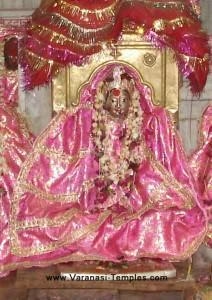
The Chitra Ghanta Devi Temple is dedicated to Maa Chitra Ghanta, the warrior goddess worshipped on the third day of Navratri. She represents the third power of Maa Durga, embodying a unique duality of fierce readiness for battle and serene, prosperous peace.
Phalaśruti: The Fruits of Visiting
According to the Kashi Khand of the Skanda Purana, the spiritual benefits of visiting this temple are unparalleled:
- Cleansing Ancestral Karma: It is believed that by worshipping Chitra Ghanta Devi and taking a holy dip in the nearby Chitra Koop, a devotee’s name is removed from the books of Chitra Gupta. This celestial entity records the sins of mankind; thus, visiting here effectively cleanses all sins, whether committed knowingly or unknowingly.
- Removal of Difficulties: Maa Chitra Ghanta is known to relieve her devotees of all difficulties, paving the way for success with ease.
- Instilling Bravery and Peace: Devotees who perform sincere pooja here inherit the might of a lion, yet exude the happy and peaceful radiance of the goddess.
Historical Origins & Scriptural Legend
Scriptural References
The existence of this temple is deeply rooted in the Kashi Khand. The text advises devotees to take a bath in the Chitra Koop, worship Chitra Gupteshwar, and perform pooja of Chitra Ghanta Devi. Tradition holds that these rituals ensure a life free from the fear of judgment in the afterlife.
Mythology of Chitra Ghanta
According to Puranic belief, Maa Chitra Ghanta is the warrior form of Durga. Her name derives from the crescent-shaped bell (Ghanta) she wears on her forehead. She is depicted with a golden glow, possessing ten hands that wield various weapons, riding a lion.
Despite her warrior stance—always ready for battle against evil forces—she presents a mild, prosperous, and peaceful form to her devotees. Her readiness ensures that she blesses her devotees quickly, shielding them with her grace.
Architectural Marvels
While the historical records for the specific founding date of this temple remain sparse in public archives, the structure embodies the traditional Hindu Temple architecture prevalent in Varanasi’s lane sanctuaries.
Vastu Elements and Design
Located in the heart of Varanasi at Thatheri Bazar, Ghasi Tola, the temple follows the principles of Vastu Shastra to channel cosmic energy. The sanctum (Garbhagriha) is designed to facilitate the direct flow of energy from the deity to the devotee. The architecture, while modest in exterior grandeur compared to regional capitals, features intricate carvings typical of the Nagara style influence found in Kashi.
The temple complex is maintained by the local trust and serves as a spiritual anchor in the bustling lane structure of the old city.
Darshan & Ritual Logistics
Daily Timings
The temple follows the standard Varanasi temple timings, adjusted for seasonal changes. Note that timings may vary slightly during festivals.
| Session | Timing |
|---|---|
| Morning Darshan | 05:00 AM – 12:00 PM |
| Afternoon Break | 12:00 PM – 3:00 PM |
| Evening Darshan | 4:00 PM – 10:30 PM |
Key Sevas & Booking
To participate in specific rituals, devotees can book services through the Varanasi Temple Trust online portal or visit the temple office.
- Abhishekam: Ritual bathing of the deity with water, milk, and honey. Best performed in the early morning.
- Archana: Recitation of hymns and the chanting of the devotee’s name.
- Special Navratri Pujan: On the third day of Navratri, a grand celebration is held, marking the birth of Chitra Ghanta.
Note: Online booking for general darshan is not required, but for specific Sevas, registration 24 hours in advance is recommended via the official Varanasi Temple Trust website.
Festival Calendar 2026
Plan your visit around these major events:
- Navratri (Chaitra): March 30 – April 7, 2026
- Navratri (Shardiya): September 22 – October 1, 2026 (The 3rd day, marking Chitra Ghanta Jayanti, is the peak day here).
- Diwali: October 20, 2026 (Deep Daan and lighting of diyas).
Practical Visitor Guidance
Dress Code & Etiquette
- Attire: Traditional Indian clothing (Sari, Kurta-Pajama) is highly recommended. Western attire should be modest (covering shoulders and knees).
- Footwear: Shoes must be removed outside the temple premises. Use the designated paid shoe-keeping facilities.
- Photography: Photography inside the sanctum sanctorum is strictly prohibited to maintain the sanctity of the deity.
Crowd Management
- Best Hours: The best time for a peaceful darshan is between 6:00 AM and 9:00 AM, or late evening after 8:00 PM.
- Seasonal Advice: Varanasi summers (April–June) are scorching; carry water and a head covering. Monsoon (July–Aug) brings humidity; an umbrella is essential.
- Accessibility: The temple is located in narrow lanes near Dashashwamedh Ghat. It is accessible by e-rickshaw from the main road, but pedestrians must navigate uneven stone paths.
Pilgrimage Connectivity
How to Reach
- Nearest Airport: Lal Bahadur Shastri International Airport (LBS) (Varanasi), approximately 25 km away. Taxis and cabs are readily available.
- Nearest Railway Station: Varanasi Junction (BSB) (approx. 5 km) and Mughal Sarai Junction (MGS) (approx. 12 km).
- By Road: The temple is located in the old city near Dashashwamedh Ghat. From BHU (Banaras Hindu University), it is a 20-minute drive via the Lahartara – Bhelupur Road. Auto-rickshaws are the preferred mode of transport for the last mile.
Nearby Sacred Sites
Complete your pilgrimage circuit with these nearby holy sites:
- Chitra Gupta Temple: Located very close by, dedicated to the celestial accountant.
- Kashi Vishwanath Temple: The ultimate Jyotirlinga, just a 10-minute walk from Chitra Ghanta.
- Dashashwamedh Ghat: Witness the spectacular Ganga Aarti in the evening.
Photo Gallery
Frequently Asked Questions (FAQ)
1. Is there a VIP Darshan entry at Chitra Ghanta Devi Temple?
Unlike large corporate temples, the Chitra Ghanta Devi Temple operates on a community basis. There is no formal paid VIP entry. However, locals or regular devotees may assist in accessing the deity during less crowded hours.
2. Can I perform an Abhishekam for the deity?
Yes, Abhishekam is allowed, typically between 7:00 AM and 10:00 AM. You must bring your own materials (milk, flowers, bilva leaves) or purchase a kit from the local vendors outside the temple.
3. How is this temple connected to Chitra Koop?
According to Kashi Khand, the Chitra Koop (a sacred well) is located in the vicinity. It is believed that bathing in this well before visiting the temple purifies the soul.
4. Is the temple open during monsoon season?
Yes, the temple remains open year-round. However, during heavy rains, access to the narrow lanes may be slippery. It is advised to wear rubber sandals with good grip.
5. What is the significance of the bell (Ghanta) in Chitra Ghanta?
The bell represents the sound of the divine that dispels negative energy and ignorance. Wearing the bell on her forehead signifies that the Goddess is always alert and ready to destroy the darkness of sin.
Contact Details
- Address: Thatheri Bazar, Ghasi Tola, Varanasi, Uttar Pradesh 221001
- Phone: Not publicly listed (Contact Varanasi Temple Trust for inquiries).
Recent Posts

Shri Kaamkoteeshwar Mandir, Varanasi – History & Significance
In the heart of Kashi, the eternal city of Lord Shiva, where the Ganges flows with celestial grace, stands the Shri Kaamkoteeshwar Mandir. This sacred Sannidhi is not merely a temple but a profound spiritual bridge between the Northern…

ओ सांवरे तूने ही मुझको संभाला – Lyrics & Meaning
ओ सांवरे तूने ही मुझको संभाला – A Prayer to Shyam Origin & Spiritual Essence Why This Bhajan Resonates Devotees chant this when overwhelmed by life’s storms—the refrain ‘तूने ही मुझको संभाला’ is the soul’s sigh of relief: “You…

कथा ये है महाराज मेरे की – Lyrics & Meaning
कथा ये है महाराज मेरे की छत्रपति संभाजी महाराज – A Prayer to Chhatrapati Sambhaji Maharaj Origin & Spiritual Essence Why This Bhajan Resonates Devotees chant this when their spirit feels tested—its powerful refrain “महाराज मेरे” is a soul’s…

Rigveda Samhita Yathartha Anuvada (ऋग्वेद संहिता यथार्थ अनुवाद) – Complete Set with Anvayartha & Hindi/English Translation
The Rigveda is the oldest surviving scripture of humanity and the foundational text of Sanātana Dharma. For serious students, scholars, UPSC aspirants studying ancient Indian history, Sanskrit learners, and spiritual seekers, a precise and grammatically structured translation is indispensable.…

आना भी अकेला है जाना भी अकेला है – Lyrics & Meaning | BharatTemples
आना भी अकेला है जाना भी अकेला है – A Prayer to the Divine Witness Origin & Spiritual Essence Why This Bhajan Resonates Devotees turn to this bhajan in moments of deep reflection—when life’s attachments begin to ache. The…

माता शेरावाली के द्वार जो भी जाता है – Lyrics & Meaning
माता शेरावाली के द्वार जो भी जाता है – A Prayer to Maa Sherawali Origin & Spiritual Essence Why This Bhajan Resonates Devotees turn to this bhajan in times of fear or uncertainty—its promise that no one leaves Maa’s…

मार लेना सपणी उबार लेणा भवरा – Lyrics & Meaning
मार लेना सपणी उबार लेणा भवरा – A Prayer to the Divine Beloved Origin & Spiritual Essence Why This Bhajan Resonates Devotees chant this in moments of deep vulnerability—its cry of “मार लेना सपणी, उबार लेणा भवरा” is the…

हमें श्याम सुंदर भरोसा तुम्हारा – Lyrics & Meaning
हमें श्याम सुंदर भरोसा तुम्हारा – A Prayer to Shyam Sundar Origin & Spiritual Essence Why This Bhajan Resonates Devotees chant this when feeling alone—its refrain ‘de do sahara’ is the soul’s cry for divine support. Lyrics in Hindi…

Mere Satguru Ne Di Thi Davai Lyrics in Hindi & Meaning
Mere Satguru Ne Di Thi Davai: Invoking the Guru’s Liberating Wisdom This soul-stirring bhajan venerates the Satguru (True Spiritual Master) as the divine physician who dispenses the only remedy for life’s deepest sufferings. Composed by Sant Karmaveer Tufani, it…

Janm Diyo Thari Maa Dukh Dekhiyo Lyrics in Hindi & Meaning
जन्म दियो थारी माँ दुख देखियो (Maa’s Grief Upon Birthing You) This soul-stirring Chetavani Bhajan (admonitory hymn) is addressed to the Divine Mother (Maa) – a call for repentance when children forget their filial duties in the dark age…