

Contents
Devaparai Bala Dhandayuthapani Temple, Yanaimalai, Madurai
| Date built: | – |
|---|---|
| Deity: | Murugan |
| Architectural style: | Dravidian architecture |
| Major festivals | – |
| Locale: | Yanaimalai |
| District:: | Madurai |
| Address: | – |
| Phone | – |
Introduction & Spiritual Essence
The Devaparai Bala Dhandayuthapani Temple is a revered hilltop sanctuary dedicated to Lord Murugan (also known as Karthikeya), located at Yanaimalai in the Madurai district of Tamil Nadu. The name “Devaparai” translates to “Celestial Rock,” signifying the divine presence atop this ancient geological formation. Here, the presiding deity is worshipped as Bala Dhandayuthapani, representing Lord Murugan as a youthful warrior holding the Vel (divine spear). Unlike the consort form, this is the Nirguna (formless) aspect of Murugan, emphasizing his role as a protector and the embodiment of wisdom.
Phalaśruti: The Fruits of Devotion
Devotees believe that offering prayers at this temple helps cleanse ancestral karma and remove obstacles in one’s path. It is particularly significant for students and those seeking clarity in decision-making. Performing Abhishekam with milk or sandalwood paste is believed to bring mental peace and prosperity. According to local legends, this rock has been a site of intense meditation for Siddhas, making it a powerful center for spiritual energy.
Historical Origins & Scriptural Legend
Ancient Roots and The Legend of Yanaimalai
While precise inscriptions regarding the construction era are yet to be fully cataloged by the Archaeological Survey of India (ASI), the temple is deeply embedded in the local folklore of the Madurai region. The hill itself, Yanaimalai, is historically significant, with references suggesting it was a Jain settlement in the past, a common feature of the landscape around Madurai before the re-establishment of Vedic Hinduism during the Pandya and Nayak periods.
Oral Traditions
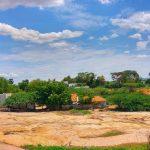
Tradition holds that the hill was formed to protect the earth from evil forces, and Lord Murugan descended to reside here in the form of a child. Unlike the grander temples built by kings, the Devaparai temple evolved from a simple rock shrine, embodying the Swayambhu (self-manifested) nature of Murugan worship. The temple reflects the syncretic history of Madurai, where the transition from Jainism to Bhakti-focused Hinduism is etched into the very rocks of the landscape.
Architectural Marvels
Dravidian Style and Natural Topography
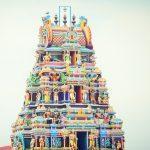
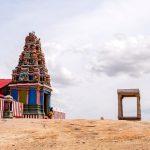
The Devaparai Temple is a testament to the Dravidian architectural style, which seamlessly integrates with the natural terrain. The structure is not merely built on the rock but is carved out of the rock itself, featuring a modest yet spiritually potent Vimana (tower) and Mandapas (pillared halls).
Key Architectural Elements
- The Sanctum (Garbhagriha): The inner sanctum houses the Bala Dhandayuthapani murti. The architecture here is minimalistic to accentuate the idol.
- Rock-Cut Sculptures: The exterior walls and the path leading to the hilltop feature ancient carvings, some believed to be from the Pandya era, depicting various deities and floral motifs.
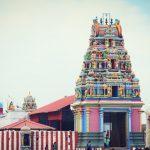
- Dravida Influence: The Gopuram (gateway tower) exhibits the classical Dravidian style with tiered structures, though it is smaller compared to the massive temples in central Madurai, reflecting the nature-based sanctity of the hill.
Darshan & Ritual Logistics
To ensure a smooth pilgrimage experience in 2026, devotees are advised to check the timings and book sevas in advance. The temple follows traditional Tamil Nadu temple administration standards.
Daily Temple Timings
| Session | Timings |
|---|---|
| Morning Darshan | 06:00 AM – 12:00 PM |
| Midday Closure | 12:00 PM – 04:00 PM |
| Evening Darshan | 04:00 PM – 08:00 PM |
Key Sevas & Online Booking
While the temple is historically managed by local trustees, the Tamil Nadu Hindu Religious and Charitable Endowments (HR&CE) Department streamlines many services. However, for this specific hill shrine, physical booking at the counter is often required, but for larger festivals, online portals may be active.
- Abhishekam: Performed with milk, honey, and sandalwood. Best time: Morning 7:00 AM.
- Archana: Recitation of Sri Subramanya Ashtottaram.
- Special Deeparadhana: Evening lamp offering.
Festival Dates for 2026
- Thai Poosam: January 13, 2026 (Peak pilgrimage day).
- Thaipusam: January 13, 2026 (Focus on Kavadi offerings).
- Skanda Shashti: May 28, 2026 – June 3, 2026 (Celebrating the victory of Murugan over Surapadman).
- Vaikasi Visakam: May 30, 2026 (Birth of Lord Murugan).
Practical Visitor Guidance
Etiquette and Essentials
Pilgrimage to Yanaimalai requires preparation due to the hill location.
- Dress Code: Traditional attire is mandatory. Men should wear Dhoti or formal pants with a shirt; women should wear saree or salwar kameez. Avoid jeans and t-shirts.
- Photography: Strictly prohibited inside the inner sanctum. External photography is allowed but restricted during rituals.
- Mobile & Lockers: As is standard for most hill temples, electronic devices are discouraged. There are no formal cloakrooms; it is advisable to leave valuables in your vehicle.
- Crowd Management: Weekends and festivals witness heavy crowds. The best time to visit for a peaceful Darshan is between 6:00 AM and 8:00 AM on weekdays.
- Seasonal Advice:
- Summer (March–June): Carry ample water; the rocks become extremely hot.
- Monsoon (November–January): The path can become slippery; wear rubber-soled footwear.
Pilgrimage Connectivity
How to Reach
The temple is strategically located on the Madurai–Melur Road (SH-33).
- Nearest Airport: Madurai International Airport (IXM) is approximately 22 km away. Taxis and buses are available to Othakadai.
- Nearest Railway: Madurai Junction (MDU) is roughly 12 km away.
- By Road: From Madurai Periyar Bus Stand or Mattuthavani Integrated Bus Terminus, take a bus towards Melur or Othakadai. Get down at Othakadai bus stop (approx. 2 km walk or a short auto ride).
Nearby Sacred Sites
Extend your pilgrimage with these nearby attractions:
- Thirumohur Kala Megha Perumal Temple: Located 6 km away, dedicated to Lord Vishnu.
- Adi Kesava Perumal Temple, Anandakailasam: A unique temple 10 km away, known for its Lotus Pond.
- Kallazhagar Temple (Alagar Koyil): A grand Vishnu temple 15 km away, situated in the Alagar hills.
Frequently Asked Questions (FAQ)
1. Is there a VIP Darshan entry available at Devaparai Temple?
Generally, the temple follows a standard darshan protocol. However, during major festivals like Thaipusam, special passes are issued by the local administration for faster access. It is best to inquire with the temple executive officer upon arrival.
2. Can I perform the “Kavadi” offering here?
Yes, Devaparai is a traditional site for Kavadi. However, for large-scale Kavadi processions, it is advisable to register with the local police and temple authorities beforehand to ensure crowd safety.
3. Is the temple wheelchair accessible?
Due to the natural hilltop location, the shrine requires climbing steep stone steps. While the base is accessible, the inner sanctum is not suitable for wheelchairs or those with limited mobility.
4. Are there accommodation facilities nearby?
There are no guest houses specifically at Devaparai. Pilgrims usually stay in Madurai city, which offers extensive accommodation options ranging from luxury hotels to economy lodges.
5. What is the significance of the name “Bala” Dhandayuthapani?
“Bala” refers to the child form of Lord Murugan. Worshipping this form is believed to remove ignorance and bestow the wisdom of the Vel (spear) to cut through life’s illusions.
Contact Details
Recent Posts

ओ सांवरे तूने ही मुझको संभाला – Lyrics & Meaning
ओ सांवरे तूने ही मुझको संभाला – A Prayer to Shyam Origin & Spiritual Essence Why This Bhajan Resonates Devotees chant this when overwhelmed by life’s storms—the refrain ‘तूने ही मुझको संभाला’ is the soul’s sigh of relief: “You…

कथा ये है महाराज मेरे की – Lyrics & Meaning
कथा ये है महाराज मेरे की छत्रपति संभाजी महाराज – A Prayer to Chhatrapati Sambhaji Maharaj Origin & Spiritual Essence Why This Bhajan Resonates Devotees chant this when their spirit feels tested—its powerful refrain “महाराज मेरे” is a soul’s…

Rigveda Samhita Yathartha Anuvada (ऋग्वेद संहिता यथार्थ अनुवाद) – Complete Set with Anvayartha & Hindi/English Translation
The Rigveda is the oldest surviving scripture of humanity and the foundational text of Sanātana Dharma. For serious students, scholars, UPSC aspirants studying ancient Indian history, Sanskrit learners, and spiritual seekers, a precise and grammatically structured translation is indispensable.…

आना भी अकेला है जाना भी अकेला है – Lyrics & Meaning | BharatTemples
आना भी अकेला है जाना भी अकेला है – A Prayer to the Divine Witness Origin & Spiritual Essence Why This Bhajan Resonates Devotees turn to this bhajan in moments of deep reflection—when life’s attachments begin to ache. The…

माता शेरावाली के द्वार जो भी जाता है – Lyrics & Meaning
माता शेरावाली के द्वार जो भी जाता है – A Prayer to Maa Sherawali Origin & Spiritual Essence Why This Bhajan Resonates Devotees turn to this bhajan in times of fear or uncertainty—its promise that no one leaves Maa’s…

मार लेना सपणी उबार लेणा भवरा – Lyrics & Meaning
मार लेना सपणी उबार लेणा भवरा – A Prayer to the Divine Beloved Origin & Spiritual Essence Why This Bhajan Resonates Devotees chant this in moments of deep vulnerability—its cry of “मार लेना सपणी, उबार लेणा भवरा” is the…

हमें श्याम सुंदर भरोसा तुम्हारा – Lyrics & Meaning
हमें श्याम सुंदर भरोसा तुम्हारा – A Prayer to Shyam Sundar Origin & Spiritual Essence Why This Bhajan Resonates Devotees chant this when feeling alone—its refrain ‘de do sahara’ is the soul’s cry for divine support. Lyrics in Hindi…

Mere Satguru Ne Di Thi Davai Lyrics in Hindi & Meaning
Mere Satguru Ne Di Thi Davai: Invoking the Guru’s Liberating Wisdom This soul-stirring bhajan venerates the Satguru (True Spiritual Master) as the divine physician who dispenses the only remedy for life’s deepest sufferings. Composed by Sant Karmaveer Tufani, it…

Janm Diyo Thari Maa Dukh Dekhiyo Lyrics in Hindi & Meaning
जन्म दियो थारी माँ दुख देखियो (Maa’s Grief Upon Birthing You) This soul-stirring Chetavani Bhajan (admonitory hymn) is addressed to the Divine Mother (Maa) – a call for repentance when children forget their filial duties in the dark age…
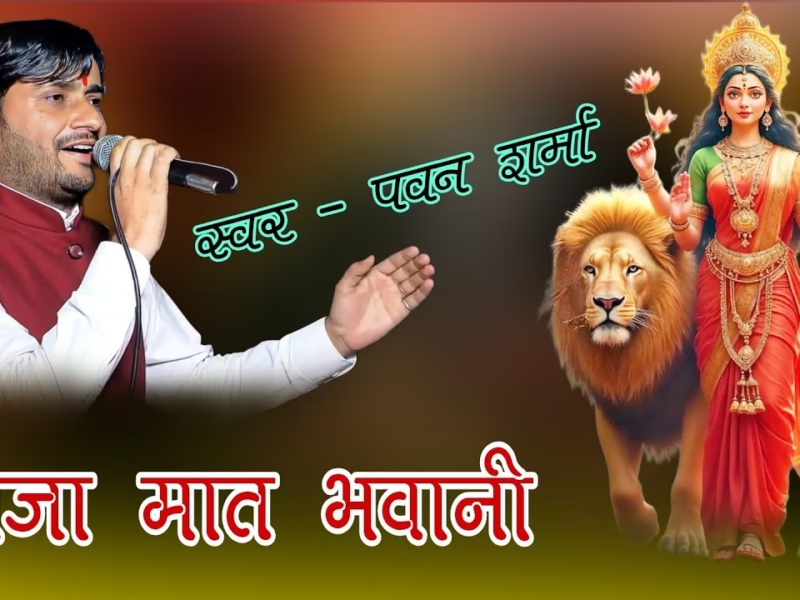
Bhadi Sabha Mein Thane Manaun Lyrics in Hindi & Meaning
Bhadi Sabha Mein Thane Manaun: Invoking the Spear-Wielding Mother Mata Bhawani (श्री ज्वाला भवानी), the fiery manifestation of Shakti worshipped as the Protector of Dharma in Her Dhaulagarh sanctum. Origin & Spiritual Essence Composed in Rajasthani folk tradition by…