
Contents
Introduction & Spiritual Essence
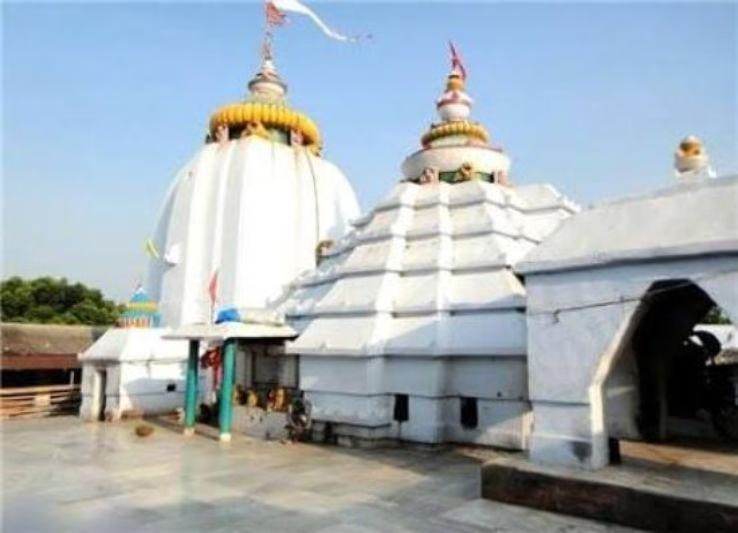
Nestled in the serene embrace of the mighty Mahanadi River, the Dhabaleswar Temple stands as a timeless beacon of spiritual solace in Cuttack, Odisha. Dedicated to the worship of Lord Shiva, this sacred island sanctuary is revered as the abode of Dhabaleswar (The Lord of the White Bull). The primary deity is a Swayambhu (self-manifested) Shiva Lingam, embodying the formless yet benevolent nature of the divine.
Devotees flock here not merely for the scenic beauty but for the profound Phalaśruti (spiritual benefits) associated with the temple. It is believed that offering prayers at this ancient shrine helps in cleansing ancestral karma and removing obstacles in one’s path. The serene ambiance, surrounded by flowing waters and lush greenery, invokes a deep sense of meditation and devotion, allowing pilgrims to connect with the eternal consciousness of Lord Shiva.
Historical Origins & Scriptural Legend
The Legend of the White Bull
The name “Dhabaleswar” carries a beautiful etymology derived from local lore. Dhabala means “white,” and Eeswar means “God.” According to a famous Sthala Purana (local legend), a thief once stole a black bull calf and hid inside the sanctum of the temple to evade an angry mob. When the crowd surrounded the temple, the thief prayed fervently to Lord Shiva for salvation. The Lord appeared before the crowd in the guise of a Sanyassin (ascetic). To dispel the crowd’s doubt, the ascetic brought the calf out. Miraculously, the black calf had turned white. The crowd, satisfied, left the thief alone. Realizing the Lord’s divine intervention, the thief repented and dedicated his life to serving the deity, thus establishing the name Dhabaleswar.
Scriptural References & Renovations
According to the Padma Purana and Linga Purana, this site holds immense significance. The Puranas mention that Lord Indra, after slaying the demon Namuchi (a Brahmin), sought to cleanse himself of the sin of Brahmahatya. He performed penance here and installed a Shiva Lingam, which is the present-day deity of Dhabaleswar.
Historically, the temple dates back to the early 10th and 11th centuries, evidenced by the intricate stone carvings. However, the current structural sanctum was constructed in the 14th century. Historical records indicate that Bir Kishor, the ruler of Khurda, discovered the temple in a derelict state during a hunting expedition in 1232 AD (1153 Saka Era). He ordered its renovation and granted land to the Mali family for its maintenance. Recently, the Bhubaneswar Development Authority undertook significant repairs to preserve this heritage site.
Architectural Marvels
The temple is a masterpiece of Kalinga architecture, characterized by its distinct style that evolved in Odisha. While the sanctum (Vimana) follows the traditional Rekha Deul style, the front porch and Mandapa showcase influences of the Pidha Deul style.
- The Shikhara: The towering spire (Shikhara) rises elegantly against the skyline, curving inward to a point, a hallmark of Odishan temple architecture.
- Sculptures: The exterior walls are adorned with exquisite carvings in black chlorite stone. Visitors can spot images of Narasimha, Varaha, and Kartikeya, alongside various other deities typical of the Hindu pantheon.
- The Island Setting: The temple is located on a unique island in the Mahanadi River. The approach to the temple adds to its architectural splendor—the Dhabaleswar Jhula (Suspension Bridge). Built in 2000, this bridge is approximately 254 meters long, making it one of the longest suspension bridges in India, connecting the mainland (Mancheswar) to the temple island.
While the temple is not listed under UNESCO World Heritage sites, it is a protected monument under the Archaeological Survey of India (ASI), ensuring the preservation of its ancient carvings and structural integrity.
Darshan & Ritual Logistics
Planning your visit requires an understanding of the daily schedules and key rituals. Below are the general timings for Darshan and Sevas. Note that timings may vary slightly during festivals or special occasions.
| Session | Timings |
|---|---|
| Morning Darshan | 06:00 AM – 01:00 PM |
| Evening Darshan | 04:00 PM – 08:30 PM |
| Maha Mangala Aarti (Special) | 07:00 PM (Daily) |
Key Sevas and Booking
The temple administration facilitates various Sevas (services) to devotees. The most popular include:
- Abhishekam: Ritual bathing of the Shiva Lingam with milk, honey, ghee, and holy water.
- Archana: Chanting of names accompanied by flower offerings.
- Maha Deepa Offering: Lighting of the ceremonial lamp for prosperity.
Online Seva Booking: While direct online booking for Dhabaleswar is currently handled through the temple office or local vendors, the Odisha Government is integrating more temples into the “Odisha Temple Administration” portal. For 2026, devotees are advised to check the official Bhubaneswar Development Authority (BDA) website for digital availability or contact the temple manager at the provided numbers.
Festival Dates for 2026
To experience the temple at its vibrant best, align your visit with these festivals:
- Maha Shivaratri: February 26, 2026 (Expect special night-long prayers).
- Bada Osha: Held on the Shukla Paksha Chaturdashi of the month of Kartika (Approx. November 4, 2026). This is the largest annual fair at the temple.
- Kartika Purnima: November 15, 2026 (Special boat rituals and lamps lighting).
- Pausha Purnima: January 13, 2026.
Practical Visitor Guidance
Dress Code & Etiquette
As a significant Hindu place of worship, modest dress is mandatory. Men should wear dhotis or full-length trousers and shirts; women are encouraged to wear sarees, salwar kameez, or traditional Odia attire. Western attire like shorts or sleeveless tops is generally discouraged.
Facilities & Rules
- Photography: Photography is restricted inside the inner sanctum (Garbhagriha) but allowed in the outer precincts.
- Mobile Lockers: Lockers are available near the entrance for electronic items, as mobile phones are not permitted inside the shrine.
- Accessibility: The temple is accessible via the suspension bridge, which is a flat walk. However, the sanctum has steep steps. Elderly visitors may require assistance.
Crowd Management & Seasonal Advice
- Best Hours: The least crowded time is early morning (6 AM – 8 AM) or late evening (after 7 PM).
- Seasonal Tips: During the summer months (April–June), Cuttack can be very hot. Carry water and wear a hat. The monsoon (July–September) sees heavy rains; check the Mahanadi water levels before visiting, as boat services may be suspended during floods.
Pilgrimage Connectivity
How to Reach Dhabaleswar Temple
Located approximately 27 km from the heart of Cuttack city, the temple is well-connected by road and water.
- By Air: The nearest airport is Biju Patnaik International Airport in Bhubaneswar, roughly 40 km away (1 hour drive).
- By Rail: The nearest major railway junction is Cuttack Railway Station (approx. 25 km). From there, taxis and buses are available to the ferry point.
- By Road: The temple is accessible via NH 55 and state highways connecting to the Mancheswar Ghat. Private vehicles can be parked at the designated parking areas near the bridge entry point.
- By Water/Boat: Traditional boat rides across the Mahanadi offer a scenic approach to the temple, operating during daylight hours.
Nearby Sacred Sites
Enhance your pilgrimage by visiting these nearby spiritual destinations:
- Chandi Mandir, Cuttack: A historic temple dedicated to Goddess Chandi, located within the city.
- Bhubaneswar (The Temple City): Just a short drive away, visit the Lingaraj Temple and Mukteswar Temple for a deeper dive into Kalinga architecture.
- Barabati Fort: Located in Cuttack, this 14th-century fort complex offers a blend of history and a serene amphitheater by the river.
Frequently Asked Questions (FAQ)
Is there a VIP darshan entry available?
Currently, the Dhabaleswar Temple does not have a formal VIP entry system like major Tirupati or Shirdi shrines. Darshan is based on a first-come, first-served basis. However, during special festivals, the temple management may organize separate queues for differently-abled and elderly visitors.
What is the entry fee for the temple?
General entry to the temple and the suspension bridge is free for all devotees. However, for the suspension bridge, a nominal maintenance fee (usually less than ₹20) is charged per person.
Are boats available throughout the year?
Boat services are available but are subject to the water levels of the Mahanadi River. During the peak monsoon (July-August) or severe drought seasons, the suspension bridge remains the primary mode of access.
Can I carry my own food and water?
Yes, you can carry water bottles and small snacks. However, it is advised to maintain the sanctity of the premises by not littering. There are small shops near the bridge and temple entrance offering prasadam and basic snacks.
What is the best time of year to visit?
The ideal time to visit is between October and March. The weather is pleasant, and the river flow is manageable. Visiting during Kartika Purnima offers a unique cultural experience with the Bada Osha fair.
Recent Posts

ओ सांवरे तूने ही मुझको संभाला – Lyrics & Meaning
ओ सांवरे तूने ही मुझको संभाला – A Prayer to Shyam Origin & Spiritual Essence Why This Bhajan Resonates Devotees chant this when overwhelmed by life’s storms—the refrain ‘तूने ही मुझको संभाला’ is the soul’s sigh of relief: “You…

कथा ये है महाराज मेरे की – Lyrics & Meaning
कथा ये है महाराज मेरे की छत्रपति संभाजी महाराज – A Prayer to Chhatrapati Sambhaji Maharaj Origin & Spiritual Essence Why This Bhajan Resonates Devotees chant this when their spirit feels tested—its powerful refrain “महाराज मेरे” is a soul’s…

Rigveda Samhita Yathartha Anuvada (ऋग्वेद संहिता यथार्थ अनुवाद) – Complete Set with Anvayartha & Hindi/English Translation
The Rigveda is the oldest surviving scripture of humanity and the foundational text of Sanātana Dharma. For serious students, scholars, UPSC aspirants studying ancient Indian history, Sanskrit learners, and spiritual seekers, a precise and grammatically structured translation is indispensable.…

आना भी अकेला है जाना भी अकेला है – Lyrics & Meaning | BharatTemples
आना भी अकेला है जाना भी अकेला है – A Prayer to the Divine Witness Origin & Spiritual Essence Why This Bhajan Resonates Devotees turn to this bhajan in moments of deep reflection—when life’s attachments begin to ache. The…

माता शेरावाली के द्वार जो भी जाता है – Lyrics & Meaning
माता शेरावाली के द्वार जो भी जाता है – A Prayer to Maa Sherawali Origin & Spiritual Essence Why This Bhajan Resonates Devotees turn to this bhajan in times of fear or uncertainty—its promise that no one leaves Maa’s…

मार लेना सपणी उबार लेणा भवरा – Lyrics & Meaning
मार लेना सपणी उबार लेणा भवरा – A Prayer to the Divine Beloved Origin & Spiritual Essence Why This Bhajan Resonates Devotees chant this in moments of deep vulnerability—its cry of “मार लेना सपणी, उबार लेणा भवरा” is the…

हमें श्याम सुंदर भरोसा तुम्हारा – Lyrics & Meaning
हमें श्याम सुंदर भरोसा तुम्हारा – A Prayer to Shyam Sundar Origin & Spiritual Essence Why This Bhajan Resonates Devotees chant this when feeling alone—its refrain ‘de do sahara’ is the soul’s cry for divine support. Lyrics in Hindi…

Mere Satguru Ne Di Thi Davai Lyrics in Hindi & Meaning
Mere Satguru Ne Di Thi Davai: Invoking the Guru’s Liberating Wisdom This soul-stirring bhajan venerates the Satguru (True Spiritual Master) as the divine physician who dispenses the only remedy for life’s deepest sufferings. Composed by Sant Karmaveer Tufani, it…

Janm Diyo Thari Maa Dukh Dekhiyo Lyrics in Hindi & Meaning
जन्म दियो थारी माँ दुख देखियो (Maa’s Grief Upon Birthing You) This soul-stirring Chetavani Bhajan (admonitory hymn) is addressed to the Divine Mother (Maa) – a call for repentance when children forget their filial duties in the dark age…
Bhadi Sabha Mein Thane Manaun Lyrics in Hindi & Meaning
Bhadi Sabha Mein Thane Manaun: Invoking the Spear-Wielding Mother Mata Bhawani (श्री ज्वाला भवानी), the fiery manifestation of Shakti worshipped as the Protector of Dharma in Her Dhaulagarh sanctum. Origin & Spiritual Essence Composed in Rajasthani folk tradition by…