
Contents
- 1 Dilli Amman Temple, Moovur: A Comprehensive Pilgrimage Guide
- 1.1 Introduction & Spiritual Essence
- 1.2 Historical Origins & Scriptural Legend
- 1.3 Architectural Marvels
- 1.4 Darshan & Ritual Logistics (2026 Schedule)
- 1.5 Practical Visitor Guidance
- 1.6 Pilgrimage Connectivity
- 1.7 Photo Gallery
- 1.8 Frequently Asked Questions (FAQs)
- 1.8.1 1. Is there a VIP Darshan entry at Dilli Amman Temple?
- 1.8.2 2. Are there accommodation facilities near the temple?
- 1.8.3 3. What is the significance of offering red garments (Vastra) to Dilli Amman?
- 1.8.4 4. Can I perform Satyanarayana Pooja at this temple?
- 1.8.5 5. Is the temple accessible for people with disabilities?
- 1.9 Contact Details
Dilli Amman Temple, Moovur: A Comprehensive Pilgrimage Guide
By Lead Heritage Architect, BharatTemples.com
Introduction & Spiritual Essence
Nestled in the tranquil village of Moovur in the Thiruvallur district of Tamil Nadu, the Dilli Amman Temple stands as a beacon of divine grace and ancestral protection. Dedicated to Goddess Dilli Amman, a fierce manifestation of Shakti, this temple is revered by locals and pilgrims alike for its potent spiritual energy and the fulfillment of vows.
Phalaśruti (Spiritual Benefits): Devotees visit the Dilli Amman Temple primarily to seek relief from doshas (astrological afflictions) and to cleanse ancestral karma. It is widely believed that offering prayers here brings protection from evil influences, resolution of prolonged legal disputes, and healing from chronic illnesses. The Goddess here is known to bless devotees with Sakthi (strength) to overcome life’s hurdles.
Historical Origins & Scriptural Legend
According to the Sthala Purana (local oral tradition), the temple dates back several centuries, though the exact date of construction remains undocumented in historical records. The presiding deity, Dilli Amman, is a Swayambhu (self-manifested) idol discovered by the villagers.
Tradition holds that the name “Dilli” is associated with the Goddess protecting the village as a guardian against negative forces, similar to the protective deities of ancient settlements. While the structure has undergone renovations over the years, the sanctity of the inner sanctum remains unchanged. The temple is a testament to the Dravidian architectural style, built by local artisans under the patronage of regional chieftains who ruled the Thiruvallur area.
Architectural Marvels
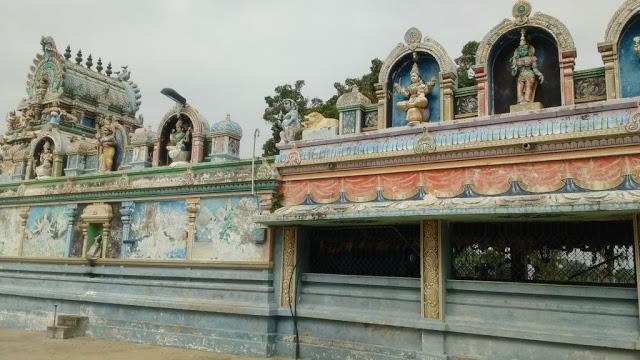
The Dilli Amman Temple is a classic example of the Dravidian architectural style. The structure is designed according to Vastu Shastra, ensuring the free flow of positive energy.
- Gopuram & Shikhara: The temple features a modest but intricately carved Shikhara (tower) above the sanctum sanctorum, adorned with motifs of deities and floral patterns.
- Mandapas: A spacious Maha Mandapa (pillared hall) allows devotees to gather for prayers and rituals. The pillars depict stories from Hindu mythology.
- The Sanctum: The inner sanctum houses the idol of Dilli Amman, usually depicted with multiple arms holding divine weapons, symbolizing her power to dispel darkness.
Visual Note: The temple complex reflects the vibrant color palette typical of Tamil Nadu village temples—vermilion, ochre, and turquoise.
Darshan & Ritual Logistics (2026 Schedule)
Planning your visit ensures a peaceful Darshan (holy viewing). Below are the general timings. Note that timings may vary slightly during festivals.
| Session | Timings | Notes |
|---|---|---|
| Morning Darshan | 6:00 AM – 12:00 PM | Best time for peaceful Abhishekam. |
| Afternoon Recess | 12:00 PM – 4:00 PM | Sanctum closed for deity rest. |
| Evening Darshan | 4:00 PM – 8:00 PM | Ideal for Deeparadhana (lamp offering). |
Key Sevas & Online Booking
While many village temples operate on traditional in-person bookings, digitization is advancing. For major festivals in 2026, it is advisable to check the Tamil Nadu Hindu Religious and Charitable Endowments (HR&CE) portal.
- Abhishekam: Ritual bathing of the deity (usually milk, honey, and sandalwood).
- Archana: Chanting of divine names; devotees can request specific mantras.
- Special Pujas: Navagraha Shanti Homa and Rahu-Ketu Pooja are popular here.
2026 Festival Dates (Tamil Calendar)
- Aadi Perukku: August 2, 2026 (Massive gathering at the temple tank).
- Navaratri: September 22 – October 1, 2026 (9 nights of special Alankaram).
- Thaipusam: January 12, 2026.
Practical Visitor Guidance
To ensure a respectful visit to this holy site, please adhere to the following guidelines:
- Dress Code: Traditional attire is recommended. Men should wear dhotis or trousers with shirts; women should wear sarees, salwar kameez, or full-length skirts. Avoid shorts and sleeveless tops.
- Photography: Photography is strictly prohibited inside the sanctum sanctorum. It may be allowed in the outer prakaram (corridor), but always seek permission from temple staff.
- Mobile Lockers: The temple complex generally provides a counter for mobile phones and footwear, but facilities are limited. Travel light.
- Crowd Management: The temple sees maximum rush on Sundays and during Amavasya (New Moon) and Pournami (Full Moon). To avoid crowds, visit on weekday mornings (8:00 AM – 10:00 AM). During summer (April–June), carry a water bottle and an umbrella, as the courtyards can be hot.
Pilgrimage Connectivity
How to Reach
The Dilli Amman Temple is well-connected via road and is a popular stop during the Thiruvallur district pilgrimage circuit.
- By Air: Chennai International Airport (MAA) is approximately 56 km away. Taxis and cabs are readily available.
- By Rail: Thiruvallur Railway Station is the nearest railhead, located about 13 km from the temple.
- By Road: The temple is located in Moovur village, accessible via State Highway 58 (SH-58) and connected to the Chennai – Tirupati Highway (NH 716). Regular buses ply from Thiruvallur and Poondi.
Nearby Sacred Sites
Enhance your pilgrimage by visiting these nearby temples:
- Sri Vedagiriswarar Temple (Thiruvallur): Dedicated to Lord Shiva, located roughly 10 km away.
- Poondi Reservoir: A serene water body and picnic spot, also housing a temple dedicated to Lord Rama.
- Sri Sahastralingeswara Swamy Temple (Kadambathur): An ancient Shiva temple about 20 km away.
Photo Gallery



Frequently Asked Questions (FAQs)
1. Is there a VIP Darshan entry at Dilli Amman Temple?
As a village temple, VIP darshan facilities are generally not formalized like in major cities. However, during festival days, special queues are arranged for elderly citizens and those with mobility issues. It is best to consult the temple executive officer on-site for any special passes.
2. Are there accommodation facilities near the temple?
Moovur is a small village with limited lodging options. For better accommodation, devotees typically stay in Thiruvallur, which has government-run guest houses and private lodges. Advance booking is advised during festival seasons.
3. What is the significance of offering red garments (Vastra) to Dilli Amman?
In Tamil Nadu, offering red clothes to Amman deities symbolizes the fiery energy of the Goddess and is believed to invoke her blessings for courage and the removal of obstacles. Devotees often offer red saris or cloth bundles.
4. Can I perform Satyanarayana Pooja at this temple?
Yes, Satyanarayana Pooja can be performed, but prior notice (at least 3 days) must be given to the temple authorities to arrange the necessary items and priests.
5. Is the temple accessible for people with disabilities?
The temple is an older structure. While the outer areas are navigable, the inner sanctum may require climbing a few steps. Wheelchair access to the main hall is possible, but access to the sanctum might be challenging. Please contact the temple office for assistance.
Contact Details
Dilli Amman Temple Trust
Moovur Village, Thiruvallur District, Tamil Nadu.
Note: Specific phone numbers for this village temple are not publicly listed in official databases; inquiries are best made via the local village administrative office or the Thiruvallur HR&CE office.
Recent Posts

ओ सांवरे तूने ही मुझको संभाला – Lyrics & Meaning
ओ सांवरे तूने ही मुझको संभाला – A Prayer to Shyam Origin & Spiritual Essence Why This Bhajan Resonates Devotees chant this when overwhelmed by life’s storms—the refrain ‘तूने ही मुझको संभाला’ is the soul’s sigh of relief: “You…

कथा ये है महाराज मेरे की – Lyrics & Meaning
कथा ये है महाराज मेरे की छत्रपति संभाजी महाराज – A Prayer to Chhatrapati Sambhaji Maharaj Origin & Spiritual Essence Why This Bhajan Resonates Devotees chant this when their spirit feels tested—its powerful refrain “महाराज मेरे” is a soul’s…

Rigveda Samhita Yathartha Anuvada (ऋग्वेद संहिता यथार्थ अनुवाद) – Complete Set with Anvayartha & Hindi/English Translation
The Rigveda is the oldest surviving scripture of humanity and the foundational text of Sanātana Dharma. For serious students, scholars, UPSC aspirants studying ancient Indian history, Sanskrit learners, and spiritual seekers, a precise and grammatically structured translation is indispensable.…

आना भी अकेला है जाना भी अकेला है – Lyrics & Meaning | BharatTemples
आना भी अकेला है जाना भी अकेला है – A Prayer to the Divine Witness Origin & Spiritual Essence Why This Bhajan Resonates Devotees turn to this bhajan in moments of deep reflection—when life’s attachments begin to ache. The…

माता शेरावाली के द्वार जो भी जाता है – Lyrics & Meaning
माता शेरावाली के द्वार जो भी जाता है – A Prayer to Maa Sherawali Origin & Spiritual Essence Why This Bhajan Resonates Devotees turn to this bhajan in times of fear or uncertainty—its promise that no one leaves Maa’s…

मार लेना सपणी उबार लेणा भवरा – Lyrics & Meaning
मार लेना सपणी उबार लेणा भवरा – A Prayer to the Divine Beloved Origin & Spiritual Essence Why This Bhajan Resonates Devotees chant this in moments of deep vulnerability—its cry of “मार लेना सपणी, उबार लेणा भवरा” is the…

हमें श्याम सुंदर भरोसा तुम्हारा – Lyrics & Meaning
हमें श्याम सुंदर भरोसा तुम्हारा – A Prayer to Shyam Sundar Origin & Spiritual Essence Why This Bhajan Resonates Devotees chant this when feeling alone—its refrain ‘de do sahara’ is the soul’s cry for divine support. Lyrics in Hindi…

Mere Satguru Ne Di Thi Davai Lyrics in Hindi & Meaning
Mere Satguru Ne Di Thi Davai: Invoking the Guru’s Liberating Wisdom This soul-stirring bhajan venerates the Satguru (True Spiritual Master) as the divine physician who dispenses the only remedy for life’s deepest sufferings. Composed by Sant Karmaveer Tufani, it…

Janm Diyo Thari Maa Dukh Dekhiyo Lyrics in Hindi & Meaning
जन्म दियो थारी माँ दुख देखियो (Maa’s Grief Upon Birthing You) This soul-stirring Chetavani Bhajan (admonitory hymn) is addressed to the Divine Mother (Maa) – a call for repentance when children forget their filial duties in the dark age…
Bhadi Sabha Mein Thane Manaun Lyrics in Hindi & Meaning
Bhadi Sabha Mein Thane Manaun: Invoking the Spear-Wielding Mother Mata Bhawani (श्री ज्वाला भवानी), the fiery manifestation of Shakti worshipped as the Protector of Dharma in Her Dhaulagarh sanctum. Origin & Spiritual Essence Composed in Rajasthani folk tradition by…