
Contents

Introduction & Spiritual Essence
Nestled within the labyrinthine alleys of Varanasi (Kashi), the Eka Danta Vinayak Temple stands as a timeless testament to devotion. The primary deity here is Lord Ganesha, specifically revered in his Eka Danta form—depicting the single-tusked elephant god.
In Hindu iconography, Eka Danta represents the ultimate sacrifice and wisdom, where the Lord sacrificed his tusk to write the Mahabharata. In the context of Kashi, this form is considered the “Bala Ganapati” (Youthful Ganapati) who safeguards the spiritual energy of the city.
Phalaśruti: Why Visit?
Devotees flock to this ancient shrine to:
- Remove Obstacles: As the Vighnaharta, worshipping here is believed to dissolve immediate hurdles in career and personal life.
- Cleansing Ancestral Karma: Performing Modakam offerings helps pacify the Pitru Dosha (ancestral flaws).
- Wisdom & Knowledge: The single tusk symbolizes the retention of the essence of knowledge while letting go of the unimportant.
Historical Origins & Scriptural Legend
Legends of Kashi Kshetra
While the exact construction date of the original shrine remains obscured by the mists of time—typical of the sacred Kashi Kshetra—local oral traditions (Sthala Purana) suggest its origins predate the medieval period. The current structure, rebuilt over centuries, houses a Swayambhu (self-manifested) idol.
According to temple records and priestly traditions, this idol was discovered in the earth long ago, when the river Ganga’s course shifted. The Eka Danta form is specifically linked to the sage Parashurama, who was directed by Lord Shiva to establish a Ganesha shrine in Varanasi to balance the potent energy of the Kashi Vishwanath Jyotirlinga.
Renovations
The temple complex has undergone multiple renovations to preserve the sanctity of the Garbhagriha (inner sanctum) while maintaining the traditional architectural integrity. The recent renovations have focused on structural stability while respecting the original stone carving styles.
Architectural Marvels
The temple is a modest yet potent representation of the Nagara style of architecture, blended with the organic aesthetics of the Varanasi riverfront structures.
Key Features
- The Shikhara (Spire): Unlike the towering spires of South Indian temples, the shikhara here is a gentle curve, adorned with amalaka (stone disk) finials.
- The Mandapa: The prayer hall features low-slung ceilings with intricate floral motifs, typical of the medieval stone masons of Benares.
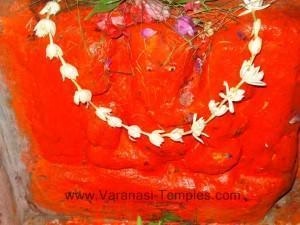
- The Idol: The black stone deity features a trunk curved to the right, carrying a Modak (sweet dumpling) and a protective axe. The third hand holds a Radish (representing health) and the fourth hands show the Abhaya (fearlessness) and Varada (boon-giving) mudras.
Darshan & Ritual Logistics
Unlike major tourist temples, Eka Danta Vinayak retains a local, authentic feel. The shrine is intimate, allowing for a personal connection with the deity.
Daily Timings
The temple follows the ancient Kashi timings where the deity remains awake for the majority of the day.
| Session | Timing | Activity |
|---|---|---|
| Morning | 5:00 AM – 1:00 PM | Mangala Aarti, Abhishekam, Sahastrarchana |
| Afternoon | 1:00 PM – 3:00 PM | Maha Naivedyam (Mid-day Meal) – Temple may close briefly |
| Evening | 5:00 PM – 11:00 PM | Sandhya Aarti, Darshan, Shayan Aarti |
Key Sevas & Online Booking
While many devotees perform pooja personally (as the temple is open practically all day), specific Sevas can be booked via the official Kashi Vishwanath Temple Trust portals or at the temple counter.
- Rudrabhishekam: Performed for planetary peace.
- Modakam Offering: Special offering of 21 modaks for fulfillment of wishes.
- Ganesh Sahastrachana: Recitation of 1000 names of Ganesha.
2026 Festival Calendar (Key Dates)
- Ganesh Chaturthi: Wednesday, August 26, 2026 (Major festivities).
- Magha Ganesh Chaturthi: Thursday, February 5, 2026.
- Sankashti Chaturthi: Monthly (Observe fasting on the 4th day of the Krishna Paksha).
Practical Visitor Guidance
Rules & Etiquette
- Dress Code: Modest attire is required. Traditional Indian wear (Dhoti/Saree/Salwar Kameez) is recommended. Avoid shorts/t-shirts.
- Photography: Strictly prohibited inside the sanctum sanctorum. Photography in the outer courtyard is generally permitted but seek permission from the priest.
- Mobile/Items: As per Kashi Vishwanath Corridor guidelines, leather items and electronic devices are discouraged. Carry minimal belongings.
Crowd Management & Best Time to Visit
- Best Hours: Early morning (before 8:00 AM) or late evening (after 8:00 PM) offer the most peaceful darshan.
- Seasonal Advice:
- Summer (April-June): Varanasi is hot. Carry a water bottle and head cover.
- Monsoon (July-Sept): The alleys can be slippery; wear rubber-soled footwear.
- Winter (Nov-Feb): Ideal time to visit. Mornings are foggy but pleasant.
Pilgrimage Connectivity
How to Reach Eka Danta Vinayak
The temple is located in Bengali Tola, Pushpa Danteshwar, Deep within the Kashi Vishwanath Corridor zone.
- By Air: Lal Bahadur Shastri International Airport (VNS) is approx. 25 km away. Taxis/Auto-rickshaws are readily available (approx. 45-60 mins).
- By Rail: Varanasi Junction (BSB) is the nearest major railway station (5 km). Kashi Vishwanath Express (BSB) is the dedicated shuttle service nearby.
- By Road: The temple is near the Kashi Vishwanath Corridor entry. It is not accessible by car directly; you must walk from the Corridor gateway (approx. 15-minute walk through the market).
Nearby Sacred Sites (Pilgrimage Circuit)
Make a complete spiritual circuit by visiting these sites within a 1km radius:
- Kashi Vishwanath Jyotirlinga: The primary goal of every pilgrim, just a short walk away.
- Sankat Mochan Hanuman Temple: Located 2km away; highly revered for removal of troubles.
- Manikarnika Ghat: The primary cremation ghat; witnessing the eternal cycle of life and death here is a profound spiritual experience.
Frequently Asked Questions (FAQ)
1. Is there a VIP Darshan entry at Eka Danta Vinayak?
Given the temple’s intimate size and location within the Kashi Vishwanath Corridor, there is no separate VIP entry system specific to this small shrine. However, accessing the temple is generally easier early in the morning before large crowds gather for the main Vishwanath temple.
2. Can I offer Modakam myself?
Yes. Unlike some major temples where priests handle all offerings, here devotees are often allowed to place modaks or flowers directly before the deity, especially during non-Aarti hours. However, it is advisable to coordinate with the temple priest for special offerings.
3. Is there a parking facility nearby?
No. Due to its location in the narrow lanes of the old city, vehicles cannot approach the temple. Visitors must park their vehicles at the designated parking lots near the Kashi Vishwanath Corridor entrance (Vishwanath Gangeshwar Parking) and walk to the temple.
4. What is the significance of the single tusk?
The single tusk (Eka Danta) symbolizes the sacrifice of imperfection. While writing the Mahabharata, Lord Ganesha broke his tusk to keep writing, symbolizing that one must sacrifice something precious (like the ego) to attain absolute truth and continuity.
5. Are mobile phones allowed inside?
While not strictly banned at the entrance of this specific smaller temple, out of respect, it is recommended to switch off your phone inside the sanctum. Note that mobile phones are generally discouraged in the main Kashi Vishwanath temple complex, so it’s best to be cautious.
Recent Posts

Shri Kaamkoteeshwar Mandir, Varanasi – History & Significance
In the heart of Kashi, the eternal city of Lord Shiva, where the Ganges flows with celestial grace, stands the Shri Kaamkoteeshwar Mandir. This sacred Sannidhi is not merely a temple but a profound spiritual bridge between the Northern…

ओ सांवरे तूने ही मुझको संभाला – Lyrics & Meaning
ओ सांवरे तूने ही मुझको संभाला – A Prayer to Shyam Origin & Spiritual Essence Why This Bhajan Resonates Devotees chant this when overwhelmed by life’s storms—the refrain ‘तूने ही मुझको संभाला’ is the soul’s sigh of relief: “You…

कथा ये है महाराज मेरे की – Lyrics & Meaning
कथा ये है महाराज मेरे की छत्रपति संभाजी महाराज – A Prayer to Chhatrapati Sambhaji Maharaj Origin & Spiritual Essence Why This Bhajan Resonates Devotees chant this when their spirit feels tested—its powerful refrain “महाराज मेरे” is a soul’s…

Rigveda Samhita Yathartha Anuvada (ऋग्वेद संहिता यथार्थ अनुवाद) – Complete Set with Anvayartha & Hindi/English Translation
The Rigveda is the oldest surviving scripture of humanity and the foundational text of Sanātana Dharma. For serious students, scholars, UPSC aspirants studying ancient Indian history, Sanskrit learners, and spiritual seekers, a precise and grammatically structured translation is indispensable.…

आना भी अकेला है जाना भी अकेला है – Lyrics & Meaning | BharatTemples
आना भी अकेला है जाना भी अकेला है – A Prayer to the Divine Witness Origin & Spiritual Essence Why This Bhajan Resonates Devotees turn to this bhajan in moments of deep reflection—when life’s attachments begin to ache. The…

माता शेरावाली के द्वार जो भी जाता है – Lyrics & Meaning
माता शेरावाली के द्वार जो भी जाता है – A Prayer to Maa Sherawali Origin & Spiritual Essence Why This Bhajan Resonates Devotees turn to this bhajan in times of fear or uncertainty—its promise that no one leaves Maa’s…

मार लेना सपणी उबार लेणा भवरा – Lyrics & Meaning
मार लेना सपणी उबार लेणा भवरा – A Prayer to the Divine Beloved Origin & Spiritual Essence Why This Bhajan Resonates Devotees chant this in moments of deep vulnerability—its cry of “मार लेना सपणी, उबार लेणा भवरा” is the…

हमें श्याम सुंदर भरोसा तुम्हारा – Lyrics & Meaning
हमें श्याम सुंदर भरोसा तुम्हारा – A Prayer to Shyam Sundar Origin & Spiritual Essence Why This Bhajan Resonates Devotees chant this when feeling alone—its refrain ‘de do sahara’ is the soul’s cry for divine support. Lyrics in Hindi…

Mere Satguru Ne Di Thi Davai Lyrics in Hindi & Meaning
Mere Satguru Ne Di Thi Davai: Invoking the Guru’s Liberating Wisdom This soul-stirring bhajan venerates the Satguru (True Spiritual Master) as the divine physician who dispenses the only remedy for life’s deepest sufferings. Composed by Sant Karmaveer Tufani, it…

Janm Diyo Thari Maa Dukh Dekhiyo Lyrics in Hindi & Meaning
जन्म दियो थारी माँ दुख देखियो (Maa’s Grief Upon Birthing You) This soul-stirring Chetavani Bhajan (admonitory hymn) is addressed to the Divine Mother (Maa) – a call for repentance when children forget their filial duties in the dark age…