

Contents
- 1 Ellamman Temple, Nathanallur: A Definitive Pilgrimage Guide for 2026
Ellamman Temple, Nathanallur: A Definitive Pilgrimage Guide for 2026
Welcome to the spiritual sanctuary of Ellamman Temple, nestled in the serene village of Nathanallur, Kanchipuram District. As we navigate the path of devotion in 2026, this comprehensive guide serves as your roadmap to understanding the historical grandeur, architectural significance, and divine logistics of this sacred site.
1. Introduction & Spiritual Essence
Located in the peaceful environs of Nathanallur, the Ellamman Temple stands as a testament to the unwavering faith of the local populace. The temple is dedicated to Ellamman (a form of the Divine Mother, Amman), revered as the protector and the granter of wishes.
The Divine Presence
Unlike many grand complexes, the deity here is known for her intimate connection with the villagers. The primary deity is worshipped in her Shakti form. Devotees believe that the name “Nathanallur” itself has roots in history, potentially linked to the great poet Nanthanar, adding a layer of cultural depth to the spiritual visit.
Phalaśruti: The Benefits of Visiting
Why do pilgrims traverse the roads of Kanchipuram to reach this village? Tradition holds that:
- Ancestral Blessings: The temple is renowned for helping devotees overcome Pitru Dosha (ancestral karmic obstacles).
- Removal of Obstacles: Prayers here are believed to clear hurdles in education and career paths.
- Mental Peace: The tranquil atmosphere allows for deep meditation and spiritual cleansing.
2. Historical Origins & Scriptural Legend
While specific dates for the initial construction are often lost in the mists of local oral history, the temple embodies the timeless Dravidian heritage of the Kanchipuram region.
Legends of the Village
Tradition holds that the village of Nathanallur carries a legacy tied to ancient Tamil scholarship. The nearby settlement of Madura Nallur (Nellur) was originally part of this agrarian community, with families migrating to cultivate distant lands—a history that binds the temple to the very soil of the region.
The Lineage of Kings
Though the specific dynasty is not explicitly etched on the temple walls, the architectural style suggests patronage from the Pallava or Chola eras, periods where temple construction was a primary act of piety. The temple has been maintained and renovated by the local temple trusts over centuries to preserve its sanctity.
3. Architectural Marvels
The Ellamman Temple is a classic example of Dravidian Architecture, characterized by its pyramid-like structures and intricate carvings.
Vastu Shastra & Layout
Following traditional Vastu Shastra, the temple is oriented to align with cosmic energies. The sanctum sanctorum (Garbhagriha) is positioned to allow natural light to illuminate the deity during specific solar transitions.
Key Features
- The Vimanam: The roof over the sanctum, built in the Dravidian style, often features tiered stupis (domes).
- The Mandapas: The pillared halls serve as spaces for religious discourses and the arts. As noted in local sources, the temple grounds are used for traditional street dramas (Therukoothu).
- The Theppakulam: The temple tank is a vital architectural component, essential for the famous Float Festival. It is designed to hold water year-round for ritual purification.
While this site is a local heritage gem, the region of Kanchipuram is dotted with many ASI (Archaeological Survey of India) protected structures, reflecting the historical density of the area.
4. Darshan & Ritual Logistics
To ensure a smooth spiritual journey in 2026, devotees should note the following schedules and seva options.
Daily Darshan Timings
| Session | Timings | Notes |
|---|---|---|
| Morning Darshan | 06:00 AM – 12:00 PM | Best time for peaceful darshan is 7:00 AM. |
| Afternoon Break | 12:00 PM – 04:00 PM | Temple remains closed. |
| Evening Darshan | 04:00 PM – 08:30 PM | Includes Deeparadhana and Palliyarai Pooja. |
Key Sevas & Online Booking
Devotees can participate in various rituals. While this is a village temple, modern logistics have been integrated for convenience:
- Abhishekam: Performed on Fridays and during festival days. Involves bathing the deity with milk, honey, and turmeric.
- Archana: Personal prayers recited by the priest (Rs. 10 – Rs. 50).
- Special Poojas: Available for birthdays and anniversaries.
Note on Online Booking: For specific sevas, devotees can check the Tamil Nadu Hindu Religious & Charitable Endowments (HR&CE) official portal, which manages many state temples. For Nathanallur, direct coordination with the temple office is often recommended for bulk bookings.
2026 Festival Calendar (Tentative)
- Float Festival (Thappu Utsavam): Celebrated during the Tamil month of Chithirai (April/May) on the first Amavasya (New Moon). This is a 10-day festival culminating in the floating of the deity in the temple tank.
- Navaratri: October 2026 – Special decorations and lighting.
- Thai Pongal: January 14, 2026 – Community offering of Pongal rice.
5. Practical Visitor Guidance
Visiting a village temple requires preparation to ensure respect for local customs and personal comfort.
Temple Etiquette
- Dress Code: Traditional attire is mandatory. Men should wear Veshti (dhoti) or trousers with a shirt. Women should wear saree, chudithar, or full-length dresses. Shorts and sleeveless tops are prohibited.
- Photography: Generally permitted in the outer precincts and mandapas. Strictly prohibited inside the sanctum sanctorum. Videography during rituals requires prior permission from the executive officer.
- Mobile Phones: Lockers are not always available in smaller village temples. It is advisable to minimize phone usage inside the temple premises as a mark of respect.
Crowd Management & Seasonal Advice
- Peak Hours: Sundays and festival days draw large crowds. Visit between 10:00 AM and 2:00 PM on weekdays for a quieter experience.
- Summer (May – June): Temperatures in Kanchipuram can exceed 38°C. Carry water and a head covering. The village shops may have limited supplies.
- Accessibility: The temple has basic accessibility for senior citizens, but the inner sanctum involves steps. Wheelchair access is limited to the mandapa (hall).
6. Pilgrimage Connectivity
How to Reach Ellamman Temple
Nathanallur is a small village in the Walajabad taluk of Kanchipuram district.
- By Road: The temple is located off Tamil Nadu State Highway 48 (SH-48). It is approximately 5.5 km from Walajabad and 21 km from Kanchipuram. From Chennai, it is a 65 km drive via the NH48 (Chennai-Bangalore Highway).
- Public Transport: Bus routes 579A and others operate every 10 minutes from the Walajabad junction bus stop to Nathanallur. You will need to get down at the “Nathanallur Koot Road” bus stop.
- By Rail: The nearest railway station is Walajabad Railway Station (WJ). The Kanchipuram Railway Station (CJ) is a major hub connected to Chennai Egmore.
- By Air: The nearest airport is Chennai International Airport (MAA), approximately 70 km away (approx. 1.5 hours drive).
Nearby Sacred Sites (Pilgrimage Circuit)
Enhance your spiritual trip by visiting these nearby temples:
- Kamakshi Amman Temple (Kanchipuram): One of the 51 Shakti Peethas, located 21 km away.
- Ekambareswarar Temple (Kanchipuram): Dedicated to Lord Shiva, known for its towering gopuram (30 km away).
- Virudhachalam Temple: Famous for Cuddalore (approx. 45 km), known for the removal of debt and sorrows.
7. Frequently Asked Questions (FAQs)
1. Is there a VIP darshan entry at Ellamman Temple?
As a village temple managed by local trust and HR&CE, there is no formal VIP entry system like in Tirupati. However, devotees performing special Archana or Abhishekam are generally given priority entry through the side door.
2. What are the accommodation options near the temple?
Nathanallur is a small village. For hotel stays, it is recommended to stay in Kanchipuram (20 km) or Walajabad (5 km), which have numerous lodges and guest houses ranging from budget to 3-star categories.
3. Can we perform housewarming (Griha Pravesh) Poojas here?
Yes, the temple priests (archakas) conduct special homams and housewarming rituals. It is advisable to contact the temple office a week in advance to arrange materials and priest availability.
4. Is the temple open on public holidays?
Yes, the Ellamman Temple remains open on most public holidays. However, timings may be extended during festivals like Chithirai Float Festival and Diwali.
5. Where is the Theppakulam (Temple Tank) located?
The temple tank is situated within the temple complex. It is the centerpiece of the annual Float Festival. While separate from the main sanctum, visitors can walk around the tank to view the festive decorations.
Photo Gallery
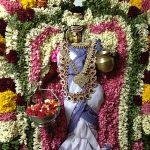
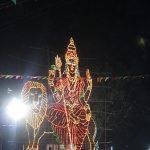
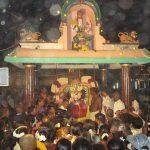
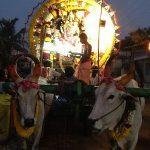
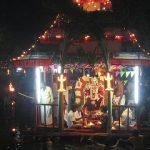
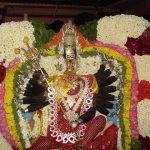
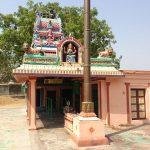
Visitor Alert: The Float Festival (April/May) is the most significant event at Ellamman Temple. Arrive early in the morning to witness the ‘Bullock Cart’ procession without the crowds.
Recent Posts

ओ सांवरे तूने ही मुझको संभाला – Lyrics & Meaning
ओ सांवरे तूने ही मुझको संभाला – A Prayer to Shyam Origin & Spiritual Essence Why This Bhajan Resonates Devotees chant this when overwhelmed by life’s storms—the refrain ‘तूने ही मुझको संभाला’ is the soul’s sigh of relief: “You…

कथा ये है महाराज मेरे की – Lyrics & Meaning
कथा ये है महाराज मेरे की छत्रपति संभाजी महाराज – A Prayer to Chhatrapati Sambhaji Maharaj Origin & Spiritual Essence Why This Bhajan Resonates Devotees chant this when their spirit feels tested—its powerful refrain “महाराज मेरे” is a soul’s…

Rigveda Samhita Yathartha Anuvada (ऋग्वेद संहिता यथार्थ अनुवाद) – Complete Set with Anvayartha & Hindi/English Translation
The Rigveda is the oldest surviving scripture of humanity and the foundational text of Sanātana Dharma. For serious students, scholars, UPSC aspirants studying ancient Indian history, Sanskrit learners, and spiritual seekers, a precise and grammatically structured translation is indispensable.…

आना भी अकेला है जाना भी अकेला है – Lyrics & Meaning | BharatTemples
आना भी अकेला है जाना भी अकेला है – A Prayer to the Divine Witness Origin & Spiritual Essence Why This Bhajan Resonates Devotees turn to this bhajan in moments of deep reflection—when life’s attachments begin to ache. The…

माता शेरावाली के द्वार जो भी जाता है – Lyrics & Meaning
माता शेरावाली के द्वार जो भी जाता है – A Prayer to Maa Sherawali Origin & Spiritual Essence Why This Bhajan Resonates Devotees turn to this bhajan in times of fear or uncertainty—its promise that no one leaves Maa’s…

मार लेना सपणी उबार लेणा भवरा – Lyrics & Meaning
मार लेना सपणी उबार लेणा भवरा – A Prayer to the Divine Beloved Origin & Spiritual Essence Why This Bhajan Resonates Devotees chant this in moments of deep vulnerability—its cry of “मार लेना सपणी, उबार लेणा भवरा” is the…

हमें श्याम सुंदर भरोसा तुम्हारा – Lyrics & Meaning
हमें श्याम सुंदर भरोसा तुम्हारा – A Prayer to Shyam Sundar Origin & Spiritual Essence Why This Bhajan Resonates Devotees chant this when feeling alone—its refrain ‘de do sahara’ is the soul’s cry for divine support. Lyrics in Hindi…

Mere Satguru Ne Di Thi Davai Lyrics in Hindi & Meaning
Mere Satguru Ne Di Thi Davai: Invoking the Guru’s Liberating Wisdom This soul-stirring bhajan venerates the Satguru (True Spiritual Master) as the divine physician who dispenses the only remedy for life’s deepest sufferings. Composed by Sant Karmaveer Tufani, it…

Janm Diyo Thari Maa Dukh Dekhiyo Lyrics in Hindi & Meaning
जन्म दियो थारी माँ दुख देखियो (Maa’s Grief Upon Birthing You) This soul-stirring Chetavani Bhajan (admonitory hymn) is addressed to the Divine Mother (Maa) – a call for repentance when children forget their filial duties in the dark age…
Bhadi Sabha Mein Thane Manaun Lyrics in Hindi & Meaning
Bhadi Sabha Mein Thane Manaun: Invoking the Spear-Wielding Mother Mata Bhawani (श्री ज्वाला भवानी), the fiery manifestation of Shakti worshipped as the Protector of Dharma in Her Dhaulagarh sanctum. Origin & Spiritual Essence Composed in Rajasthani folk tradition by…