Firinghi Kalibari Temple History and Darshan Timings | Kolkata Kali Guide
Receive daily temple updates, divine darshan, and morning bhajans directly on WhatsApp.
Contents
- 1 Introduction & Spiritual Essence
- 2 Historical Origins & Scriptural Legend
- 3 Architectural Marvels
- 4 Darshan & Ritual Logistics
- 5 Practical Visitor Guidance
- 6 Pilgrimage Connectivity
- 7 Photo Gallery
- 8 Frequently Asked Questions (FAQs)
Keywords: Firinghi Kalibari temple history and darshan timings, Kali Temple Bowbazar, online seva booking, significance of Anthony Firingee in Kali worship.
Introduction & Spiritual Essence
Amidst the bustling streets of Kolkata lies a sanctuary of profound spiritual resonance and unique syncretic history: the Firinghi Kalibari. Dedicated to Kali Mata (the Dark Goddess), this temple is not merely a stone structure but a living testament to devotion that transcends cultural and religious boundaries. Unlike conventional temples, the deity here is revered as a Swayambhu (self-manifested) idol, radiating a powerful, protective energy that has drawn devotees for centuries.
The primary deity is Maa Kali, depicted here in a serene yet formidable form. The temple is named after Anthony Firingee, a Portuguese settler who converted to Hinduism and became a legendary devotee of the Goddess. For devotees, a visit here is believed to cleanse ancestral karma and remove obstacles caused by malefic planetary alignments, particularly those associated with Rahu and Ketu. The Phalaśruti (fruits of worship) here is associated with granting courage, wisdom, and the destruction of deep-seated fears.
Historical Origins & Scriptural Legend
Origins and Age: While temple records and local folklore suggest the shrine is over 500 years old, dating back to the pre-colonial era of Bengal, the exact architectural patronage remains a subject of historical study. The structure has undergone several renovations, yet it retains the sanctity of its ancient foundation. The temple stands as a witness to the evolution of Kolkata itself.
The Legend of Anthony Firingee: The soul of Firinghi Kalibari is intertwined with the life of Anthony Firingee (c. 17th century). Originally a Portuguese pearl merchant named Anthony, he fell in love with the culture and spiritual ethos of Bengal. After his wife’s passing, he renounced his former life, adopted the name Kamalakar Bhattacharya, and settled in Kolkata. He became a devoted worshipper of Kali Mata, composing devotional songs (Shankirtan) in Bengali. It is said that Goddess Kali appeared in his dreams and instructed him to establish her idol at his residence. The temple was built around this sacred spot, and his tomb lies adjacent to the temple premises, a rare honor for a non-Hindu convert.
📖 Related: Shri Ravi Das Chalisa
Scriptural Context: While specific Vedic references to this specific location are localized in the Stahla Purana (local oral legends), the theology aligns with the Tantras and Shakta traditions where Kali is the supreme reality. The temple embodies the Bengali Renaissance spirit of inclusivity.
Architectural Marvels
The architecture of Firinghi Kalibari is a unique blend of traditional Bengali temple style and colonial influences. While it does not strictly follow the Nagara or Dravida styles of North or South India, it exhibits the distinct Navaratna (Nine Spire) style typical of Bengali Hindu architecture.
- The Shikhara (Tower): The central tower rises with curved Bengali roofs (Bangla Chala), topped by the Kalasha (pitcher).
- The Mandapa: A spacious prayer hall allows devotees to gather for kirtans. The flooring utilizes traditional terracotta tiles, a hallmark of regional craftsmanship.
- Sanctum Sanctorum: The inner sanctum houses the idol of Kali Mata. The idol is unique—often described as a blend of the Shyama (dark) and Gaura (fair) forms, reflecting the syncretic nature of the temple’s patron saint.
The temple does not currently hold UNESCO status, but it is a protected heritage site under the scrutiny of local heritage conservation bodies due to its historical significance in Kolkata’s urban fabric.
Darshan & Ritual Logistics
Visiting Firinghi Kalibari requires adherence to specific timings to ensure a peaceful darshan. The atmosphere shifts dynamically from the quiet morning rituals to the ecstatic evening aarti.
Daily Timings (2026 Schedule)
| Session | Timing | Activity |
|---|---|---|
| Morning | 6:00 AM – 11:00 AM | Mangal Aarti, Shringar Darshan |
| Afternoon | 12:00 PM – 4:00 PM | Sanctum Closed / Bhog Offering |
| Evening | 5:30 PM – 9:00 PM | Sandhya Aarti, Dhunuchi Naach |
📖 Related: Shri Giriraj Chalisa ||
Key Sevas & Online Booking
To facilitate devotees worldwide, the temple trust (managed by the Bhattacharjee family and local committees) has digitized certain offerings. While on-site bookings are primary, inquiries can be made via their official channels.
- Abhishekam: Ritual bathing of the deity with milk, honey, and ghee (usually performed on Tuesdays and Saturdays).
- Archana (Havan): Personalized recitation of mantras for specific planetary relief.
- Bhog Offering: Traditional offerings of sweets and fruits.
Note: For online seva booking, devotees should visit the official temple website or contact the trust office directly, as third-party links vary.
Major Festivals in 2026
- Kali Puja: October 31, 2026. The temple is illuminated with thousands of lamps. Tip: Arrive by 4:00 PM to secure a viewing spot.
- Satyajit Ray’s Birth Anniversary: May 2nd. A special cultural program is often held in honor of the films shot here (referencing the movie Jatismar and classics like Anthony Firingee).
- Anthony Firingee’s Urs/Samadhi: A unique festival celebrating the patron saint with devotional songs (Shankirtan) held on the temple grounds.
Practical Visitor Guidance
- Dress Code: Traditional Indian attire is preferred (Kurta-Pajama/Saree/Salwar Kameez). Modest clothing is mandatory.
- Photography: Strictly prohibited inside the inner sanctum. Photography in the outer courtyard is permitted with discretion.
- Mobile Lockers: Available near the entrance for a nominal fee. Electronic devices are discouraged during Aarti.
- Crowd Management: Weekends and festival days see massive influxes. Best hours to visit: Tuesday mornings (considered highly auspicious for Kali) or weekday late afternoons.
- Seasonal Advice: Kolkata summers (May-June) are humid; carry a water bottle. Monsoons (July-August) may cause minor flooding in Bowbazar; check local alerts.
Pilgrimage Connectivity
How to Reach
- By Air: The nearest airport is Netaji Subhas Chandra Bose International Airport (CCU), approximately 17 km away (45-60 mins by cab).
- By Rail: The closest station is Sealdah Railway Station (1.5 km). It is one of the busiest hubs in India. From Sealdah, take a yellow taxi or an auto-rickshaw to Bowbazar (10 mins).
- By Road: Located off BB Ganguly Street. If driving, park near the Central Avenue crossing. Note: Bowbazar is a congested area; public transport (Metro) is recommended.
📖 Related: Shri Baglamukhi Chalisa
Nearby Sacred Sites (The Kolkata Pilgrimage Circuit)
- Dakshineswar Kali Temple: (10 km north) Famous for its association with Sri Ramakrishna Paramahamsa.
- Belur Math: (12 km) The headquarters of the Ramakrishna Mission, located opposite Dakshineswar across the Hooghly River.
- Eco Park (New Town): For a post-pilgrimage relaxation amidst nature.
Photo Gallery

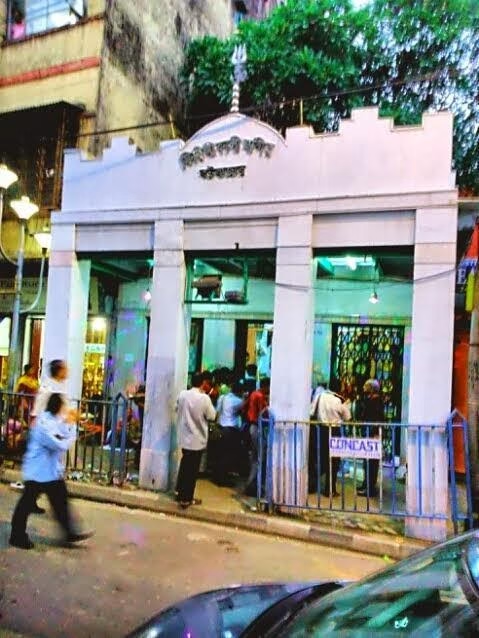
wpid-gobengal_firingi-kali-temple, Firinghi Kalibari, Kolkata, West Bengal

firinghi-kalibari2, Firinghi Kalibari, Kolkata, West Bengal

wpid-dsc_0537_20131030211329040-790255
maxresdefault (88), Firinghi Kalibari, Kolkata, West Bengal
firinghi-kalibari3, Firinghi Kalibari, Kolkata, West Bengal
Frequently Asked Questions (FAQs)
1. What is the significance of the name “Firinghi”?
The term “Firinghi” is derived from the Persian word “Firingi,” meaning “Frank” or European. It specifically refers to Anthony Firingee, a Portuguese convert who became a prominent devotee of Goddess Kali. The temple is named in his honor as he is believed to have established the deity’s worship at this location.
3. Is there a VIP darshan entry available?
Unlike large corporate-managed temples, Firinghi Kalibari follows a traditional approach. There is no formal VIP entry ticket. However, devotees with special needs or those wishing to perform specific rituals should contact the temple management office at least 24 hours in advance for assistance.
4. What are the parking facilities near the temple?
Bowbazar is a densely populated commercial area with limited parking. We recommend using public transport or the Kolkata Metro. The nearest metro station is Esplanade or Sealdah. If driving, paid parking is available near Central Avenue, about a 5-minute walk from the temple.
5. Is the temple accessible for senior citizens and divyang (disabled) visitors?
The temple is located on the ground floor and is generally accessible. However, the surrounding lanes are narrow and uneven. The temple trust advises assigning a companion for senior citizens. Wheelchairs can be arranged upon prior request, though maneuverability inside the sanctum might be challenging due to crowds.
6. When was the movie “Anthony Firingee” shot here?
The legendary Bengali film Anthony Firingee, starring Uttam Kumar, utilized the temple grounds for filming. Recently, Srijit Mukherjee’s film Jatismar (2023 context) also paid homage to this location. The temple remains a culturally significant site for Bengali cinema.