
Contents
Introduction & Spiritual Essence: The Abode of the Siddhas
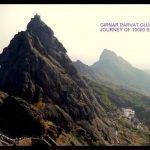
Girnar, also historically known as Girinagar (‘city-on-the-hill’) or Revatak Parvata, is not merely a mountain range; it is a celestial anchor point where the physical and spiritual realms converge. Rising majestically from the plains of the Saurashtra peninsula in Junagadh, Gujarat, this ancient volcanic complex is one of the most revered pilgrimage sites in Bharat. It serves as a profound spiritual sanctuary for both Jainism and Hinduism, representing the timeless pursuit of liberation (Moksha).
Why Devotees Visit: The Phalaśruti
According to ancient scriptures, Girnar is the site where the 22nd Jain Tirthankar, Neminath, attained Nirvana. It is also associated with the Trithankaras and Lord Krishna (as a cousin of Neminath). For devotees, a pilgrimage to Girnar is believed to cleanse ancestral karma and grant spiritual merit.
Hindus revere the hills as the eternal abode of the Siddhas (liberated souls). The circular path around the base of the mountain, known as the Parikrama, is considered equivalent to visiting all the holy tirthas of India combined. It is believed that performing the Girnar Parikrama washes away the sins of a lifetime and leads to a rebirth in a higher state of consciousness.
Historical Origins & Scriptural Legend
The history of Girnar is a tapestry woven with mythological narratives and recorded dynastic patronage.
Mythological Roots
Tradition holds that Girnar was originally a floating mountain in the cosmic ocean, which Lord Vishnu fixed to the earth at the beginning of the current Yuga. In Jain tradition, this is the place where Lord Neminath, cousin of Krishna, renounced worldly pleasures and attained salvation. It is said that the celestial beings (Yakshas and Yakshinis) still inhabit the upper ridges, protecting the sanctity of the hill.
Historical Timeline
While the mountains are volcanic and date back millions of years, the recorded human history on Girnar begins with the Mauryan Empire. In the 3rd century BCE, Emperor Ashoka carved several rock edicts here, establishing the region’s significance as a center of administration and philosophy. Subsequent centuries saw the patronage of the Chaulukya and Chavda dynasties.
Renovations
The current temple complex, particularly the Jain temples, was largely constructed and renovated between the 11th and 15th centuries. The famous Vastupala and Tejapala (ministers of the Vaghela dynasty) are credited with building the magnificent Neminath temple and other structures in the 12th century (circa 1128–1159 CE).
| Primary Deity: | Lord Neminath (Jainism); Siddhanath Shiva (Hinduism) |
|---|---|
| Location: | Junagadh, Gujarat |
| Major Festivals: | Girnar Parikrama, Mahashivratri, Paryushan |
| Architectural Style: | Rajput / Gujarati Stone Masonry |
Architectural Marvels
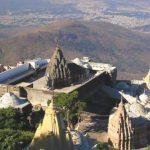
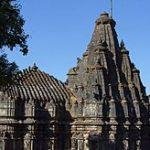
The architecture of Girnar is a testament to the zenith of Indian stone craftsmanship. It differs from the strictly Dravida or Nagara styles, evolving into a distinct Gujarati style characterized by intricate marble carving and towering shikharas.
The Neminath Temple
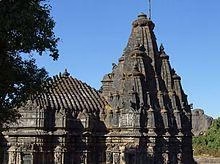
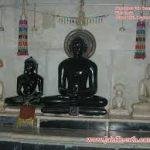
Built between 1128 and 1159 CE, this is the crown jewel of Girnar. It features a large quadrangular court (195 x 130 feet). The shrine houses a large black image of Neminath. The outer hall contains Padukas (footprints) of the Gandharas (the first disciples of the Tirthankaras). The ceiling is supported by carved pillars, and the walls are adorned with white marble sculptures depicting celestial beings and narratives from Jain scriptures.
Unique Features
- Amijhara Cave: A descent into a dark cave containing a white marble image of Neminath. It is named for the water droplets (nectar) that fall from the ceiling onto the idol’s shoulder.
- Sheshphani Parshwanath: A temple housing a marble image of Parshwanath canopied by a five-headed cobra—a motif more common in South India than North.
- Bhima Kunda: A historic tank located north of the Neminath temple, used for ritual bathing.
Ashokan Edicts
Located near the base of the hills (Girnar Taleti) are the famous Rock Edicts of Ashoka. Dating to circa 250 BCE, these 14 edicts are inscribed on a large boulder. They are among the earliest decipherable records of the Indian subcontinent. Later additions include the Rudradaman I inscription (150 CE) and the Skandagupta inscription (450 CE), making this rock a living chronicle of history.
Darshan & Ritual Logistics
Planning your visit requires attention to the mountain’s elevation and the schedule of rituals. The climb to the top temples is steep and takes approximately 1.5 to 2 hours for a fit pilgrim.
Daily Darshan Timings (2026)
| Service | Morning Slot | Evening Slot |
|---|---|---|
| Temple Opens | 05:00 AM | 06:00 PM |
| Abhishekam (Ritual Bath) | 06:00 AM – 08:00 AM | 06:30 PM – 08:00 PM |
| General Darshan | 08:00 AM – 12:00 PM | 08:00 PM – 10:00 PM |
| Closing Time | – | 11:00 PM |
Key Sevas & Online Booking
For 2026, the Girnar Devasthan management committee has streamlined the booking process.
- Abhishekam: A sacred ritual involving the bathing of the deity with milk, honey, and water. Special Abhishekam is performed for Lord Neminath.
- Archana: Chanting of the deity’s names.
- Online Booking: Devotees can book Sevas via the official Gujarat Tourism portal or the Girnar Devasthan website. It is highly recommended to book at least 24 hours in advance for weekend visits.
2026 Major Festival Dates
Plan your pilgrimage around these auspicious times:
- Parikrama (Girnar Fair): Held annually during the Kartik Purnima (November). In 2026, this falls in November (Exact dates TBA based on lunar calendar).
- Mahashivratri: Celebrated with great fervor at the Siddhanath Temple on the hills. February/March 2026.
- Paryushan: The most important Jain festival (August/September 2026), during which strict fasting is observed on the hills.
Photo Gallery
Practical Visitor Guidance
Respecting the sanctity of the mountain is paramount. Here are the essential guidelines for visitors.
Dress Code & Etiquette
Modesty is required. Men should wear dhotis or full-length trousers (no shorts). Women should wear sarees, salwar kameez, or long skirts. The marble floors of the temples can be hot during the day and cool at night; socks are recommended.
Crowd Management & Best Hours
- Early Morning (4:30 AM – 6:00 AM): The best time for a peaceful darshan and cool climbing weather.
- Seasonal Advice: Avoid peak summer (April–June) unless you are accustomed to extreme heat. Carry at least 2 liters of water per person. The rock retains heat, making the climb strenuous.
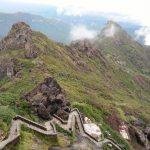
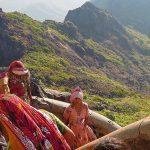
- Accessibility: The climb involves roughly 8,000 steps. For those unable to walk, Dolis (palanquins carried by palanquin bearers) are available at the base. There is no motorable road to the top temples.
Photography & Safety
Photography is allowed in the outer precincts but strictly prohibited inside the main sanctums (Garbhagriha). Mobile phones should be kept on silent mode. Lockers are available at the base entrance to store luggage.
Pilgrimage Connectivity
How to Reach Girnar
Girnar is located just south of Junagadh city.
- By Air: The nearest airport is Rajkot Airport (approx. 100 km). From there, taxis are available to Junagadh.
- By Rail: Junagadh Junction is well-connected to major cities like Ahmedabad and Mumbai.
- By Road: Girnar is located on the Junagadh-Mangrol State Highway. It is 2km from the city center. Private cars and state-run buses are easily available.
Nearby Sacred Sites
Extend your pilgrimage circuit to include:
- Somnath Temple (50 km): One of the 12 Jyotirlingas of Shiva.
- Dwarkadhish Temple (150 km): The westernmost Dham (Char Dham).
- Junagadh Buddhist Caves (2 km from Girnar base): Rock-cut caves dating back to the 3rd century BCE.
Frequently Asked Questions (FAQ)
1. Is there a VIP Darshan entry available?
Yes, the Girnar Devasthan committee offers a ‘Special Darshan’ ticket which allows you to bypass the general queue. This can be purchased online or at the counter at the base of the hill.
2. What is the best time of year to visit?
The ideal time is between October and March. The weather is pleasant, making the climb manageable. The monsoon season (July–September) offers lush greenery but be cautious of slippery steps.
3. Can I carry food and water?
Water bottles are allowed. However, there are multiple stalls along the path selling snacks, fruits, and buttermilk. Plastic bottles are discouraged; it is advisable to carry reusable containers.
4. Is the trek difficult for senior citizens?
The climb is steep and consists of thousands of steps. However, Doli services (palanquins) are available for senior citizens and those with mobility issues. The bearers are experienced in navigating the steps safely.
5. Are there accommodation facilities on the hills?
Basic Dharamshalas and guest houses run by the Devasthan are available at the foothills and on the mountain path for pilgrims wishing to stay overnight. Advanced booking is recommended.
Recent Posts

Shri Kaamkoteeshwar Mandir, Varanasi – History & Significance
In the heart of Kashi, the eternal city of Lord Shiva, where the Ganges flows with celestial grace, stands the Shri Kaamkoteeshwar Mandir. This sacred Sannidhi is not merely a temple but a profound spiritual bridge between the Northern…

ओ सांवरे तूने ही मुझको संभाला – Lyrics & Meaning
ओ सांवरे तूने ही मुझको संभाला – A Prayer to Shyam Origin & Spiritual Essence Why This Bhajan Resonates Devotees chant this when overwhelmed by life’s storms—the refrain ‘तूने ही मुझको संभाला’ is the soul’s sigh of relief: “You…

कथा ये है महाराज मेरे की – Lyrics & Meaning
कथा ये है महाराज मेरे की छत्रपति संभाजी महाराज – A Prayer to Chhatrapati Sambhaji Maharaj Origin & Spiritual Essence Why This Bhajan Resonates Devotees chant this when their spirit feels tested—its powerful refrain “महाराज मेरे” is a soul’s…

Rigveda Samhita Yathartha Anuvada (ऋग्वेद संहिता यथार्थ अनुवाद) – Complete Set with Anvayartha & Hindi/English Translation
The Rigveda is the oldest surviving scripture of humanity and the foundational text of Sanātana Dharma. For serious students, scholars, UPSC aspirants studying ancient Indian history, Sanskrit learners, and spiritual seekers, a precise and grammatically structured translation is indispensable.…

आना भी अकेला है जाना भी अकेला है – Lyrics & Meaning | BharatTemples
आना भी अकेला है जाना भी अकेला है – A Prayer to the Divine Witness Origin & Spiritual Essence Why This Bhajan Resonates Devotees turn to this bhajan in moments of deep reflection—when life’s attachments begin to ache. The…

माता शेरावाली के द्वार जो भी जाता है – Lyrics & Meaning
माता शेरावाली के द्वार जो भी जाता है – A Prayer to Maa Sherawali Origin & Spiritual Essence Why This Bhajan Resonates Devotees turn to this bhajan in times of fear or uncertainty—its promise that no one leaves Maa’s…

मार लेना सपणी उबार लेणा भवरा – Lyrics & Meaning
मार लेना सपणी उबार लेणा भवरा – A Prayer to the Divine Beloved Origin & Spiritual Essence Why This Bhajan Resonates Devotees chant this in moments of deep vulnerability—its cry of “मार लेना सपणी, उबार लेणा भवरा” is the…

हमें श्याम सुंदर भरोसा तुम्हारा – Lyrics & Meaning
हमें श्याम सुंदर भरोसा तुम्हारा – A Prayer to Shyam Sundar Origin & Spiritual Essence Why This Bhajan Resonates Devotees chant this when feeling alone—its refrain ‘de do sahara’ is the soul’s cry for divine support. Lyrics in Hindi…

Mere Satguru Ne Di Thi Davai Lyrics in Hindi & Meaning
Mere Satguru Ne Di Thi Davai: Invoking the Guru’s Liberating Wisdom This soul-stirring bhajan venerates the Satguru (True Spiritual Master) as the divine physician who dispenses the only remedy for life’s deepest sufferings. Composed by Sant Karmaveer Tufani, it…

Janm Diyo Thari Maa Dukh Dekhiyo Lyrics in Hindi & Meaning
जन्म दियो थारी माँ दुख देखियो (Maa’s Grief Upon Birthing You) This soul-stirring Chetavani Bhajan (admonitory hymn) is addressed to the Divine Mother (Maa) – a call for repentance when children forget their filial duties in the dark age…