

Contents
1. Introduction & Spiritual Essence
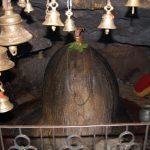
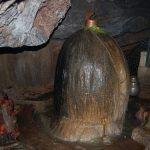
Nestled within the lush, verdant hills of Koraput in Odisha, the Gupteswar Cave Temple stands as a profound testament to devotion and natural wonder. Dedicated to Lord Shiva (Bholenath), this sacred shrine is often referred to as “Gupta Kedar,” signifying its hidden spiritual potency. The primary deity is a colossal, Swayambhu (self-manifested) Shiva Linga that resides deep within a limestone cavern.
The spiritual allure of Gupteswar lies in its isolation and the legend that the Linga is gradually increasing in size. Devotees undertake the arduous trek to this shrine seeking relief from chronic illnesses and liberation from the burdens of karma. The temple is the epicenter of the Bol Bam Yatra, a massive pilgrimage where devotees (Bol Bamins) walk barefoot for miles, carrying holy water from distant rivers to offer to the deity.
Phalaśruti (Spiritual Benefits): According to local belief and oral tradition, a darshan at Gupteswar removes the sins of past lives and cleanses ancestral karma. It is particularly revered by those seeking healing from ailments and removal of obstacles in life.
2. Historical Origins & Scriptural Legend
The Legend of Lord Rama
The Sthala Purana (local legend) weaves Gupteswar into the epic Ramayana. Tradition holds that during his exile, Lord Rama, along with Sita and Lakshmana, roamed the ancient Dandakaranya forest. It is believed that Lord Rama discovered this self-manifested Lingam and worshipped it here. The nearby hill is still named Ramagiri (Rama’s Hill), commemorating his presence.
The renowned poet Kalidasa immortalized the scenic beauty of this region in his famous work Meghadutam (The Cloud Messenger), describing the Ramgiri forest where the cave temple now stands.
Rediscovery and History
While its origins are rooted in ancient mythology, the temple fell into obscurity and was reclaimed by the dense forest over the centuries. Historical records indicate that in the late 19th century (circa 1880s), a local hunter from the Ramgiri area rediscovered the Lingam. Since then, the shrine has been actively worshipped, primarily by the indigenous tribes of the Koraput region, before gaining wider prominence across India.
Unlike grand structural temples built by dynasties, Gupteswar is a natural formation that has been preserved and maintained by the local community and the Archaeological Survey of India (ASI), respecting its geological and spiritual integrity.
3. Architectural Marvels
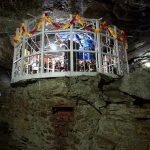
Gupteswar Cave is an exceptional example of nature’s architecture dominating man-made structures. While it lacks the towering Shikharas typical of the Nagara style, the cave temple presents a unique geological and spiritual layout.
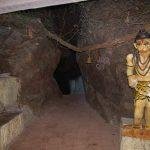
- The Cave Entrance: The entrance is approximately 3 meters wide and 2 meters high, leading pilgrims into a cool, subterranean sanctuary.
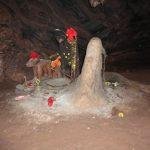
- The Sanctum: Inside, the naturally formed Shiva Lingam stands approximately 2 meters high. The limestone deposition process continues, fueling the local belief that the Lingam is growing eternally.
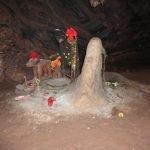
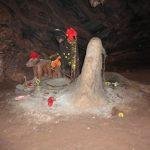
- The Kamadhenu Formation: Inside the second chamber of the cave lies a massive stalactite. Devotees worship this formation as the divine udder of Kamadhenu (the wish-fulfilling cow). Pilgrims often stand beneath it with cupped hands, waiting to collect the slow-dripping water droplets, considered highly sacred.
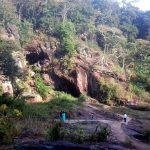
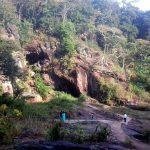
- Approach: Pilgrims must ascend roughly 200 stone steps to reach the cave entrance. The path is lined with ancient rows of Champak and Sal trees, enhancing the devotional atmosphere.
4. Darshan & Ritual Logistics
Due to the natural cave structure and safety regulations, darshan is strictly regulated. The temple is managed by the Shri Gupteswar Trust under the supervision of the local administration.
Daily Darshan Timings (2026 Schedule)
| Session | Timing |
|---|---|
| Morning | 6:00 AM – 12:00 PM |
| Afternoon Break | 12:00 PM – 3:00 PM (Cave Cleaning) |
| Evening | 3:00 PM – 8:00 PM |
*Note: Timings may vary during festivals and heavy monsoons.
Key Sevas & Booking
While specific Abhishekam inside the narrow cave is limited, the temple offers several rituals in the outer courtyard:
- Abhishekam: Performed during morning hours. Offerings include milk, honey, and water collected from the Kamadhenu stalactite.
- Maha Rudra Archana: A potent Vedic recitation for removing negativity.
- Bol Bam Seva: Dedicated registration for pilgrims participating in the annual yatra.
Online Booking: As of 2026, the temple administration encourages bookings through the official Odisha Temple Administration portal or via the contact number provided below.
Festival Dates 2026
- Maha Shivaratri: February 26, 2026. (Expect crowds exceeding 200,000 devotees; advance travel booking is essential).
- Bol Bam Yatra (Sawan): July – August 2026. The peak pilgrimage occurs on the last Monday of the Shravana month.
- Nag Panchami: July 28, 2026.
5. Practical Visitor Guidance
Rules & Regulations
- Prohibited Items: Plastic bags, leather items, and electronic gadgets (cameras/phones) are strictly banned inside the cave. Security checks are mandatory.
- Mobile Lockers: Free mobile lockers are available at the base of the hill before the ascent.
- Photography: Photography is prohibited inside the sanctum. However, photography is allowed in the outer courtyards.
- Dress Code:
Crowd Management & Best Time to Visit
- Best Time: October to February offers pleasant weather for the climb.
- Monsoon Warning: During heavy rains (July–August), the cave steps can be slippery. The administration may restrict entry during extreme weather.
- Early Morning: To avoid queues, arrive before 7:00 AM.
6. Pilgrimage Connectivity
How to Reach
Gupteswar Cave is located approximately 55 km from Jeypore and 100 km from Koraput town.
- By Air: The nearest airport is Visakhapatnam Airport (VTZ) in Andhra Pradesh (approx. 250 km), or Biju Patnaik International Airport (BBI) in Bhubaneswar (approx. 500 km).
- By Rail: The nearest major railway station is Jeypore (JYP). From Jeypore, one can hire a taxi to Kokalaba village.
- By Road: The shrine is accessible via National Highway NH-26 and state highways connecting Koraput. Private taxis and buses ply from Jeypore and Koraput.
Nearby Sacred Sites
Extend your pilgrimage to these nearby spiritual destinations in the Koraput valley:
- Jagannath Temple, Koraput: A historic temple reflecting the traditional Kalinga architectural style.
- Baflaury Temple (Sun Temple): Located near Sunabeda, this ancient site is dedicated to Surya Narayan.
- Duduma Waterfalls: A sacred cascade (Matsya Avatar associated) located roughly 90 km away.
7. Frequently Asked Questions
Is there a VIP darshan entry at Gupteswar?
No, there is no special VIP entry inside the cave due to its narrow width and safety regulations. All devotees must join the general queue. However, elderly and disabled pilgrims are assisted by volunteers.
Can we perform Abhishekam with water from the Kamadhenu stalactite?
No, the water dropping from the stalactite is collected and purified by priests. Devotees can collect this holy water for personal consumption, but external water is required for Abhishekam rituals.
Are there accommodation facilities near the temple?
Basic guest houses and lodges are available in Jeypore and Koraput. While there is no hotel at the cave base, the temple trust provides minimal shelter for pilgrims during major festivals.
Is the trek difficult for senior citizens?
The climb consists of 200+ steps. While manageable for average fitness, senior citizens may find it challenging. It is advisable to visit early morning when the weather is cooler.
The name “Gupteswar” translates to “Hidden Lord” in Sanskrit. It refers to the Lingam’s location deep within the cave, where it lay undiscovered (hidden from human eyes) for centuries until the late 19th century.






Recent Posts

Shri Kaamkoteeshwar Mandir, Varanasi – History & Significance
In the heart of Kashi, the eternal city of Lord Shiva, where the Ganges flows with celestial grace, stands the Shri Kaamkoteeshwar Mandir. This sacred Sannidhi is not merely a temple but a profound spiritual bridge between the Northern…

ओ सांवरे तूने ही मुझको संभाला – Lyrics & Meaning
ओ सांवरे तूने ही मुझको संभाला – A Prayer to Shyam Origin & Spiritual Essence Why This Bhajan Resonates Devotees chant this when overwhelmed by life’s storms—the refrain ‘तूने ही मुझको संभाला’ is the soul’s sigh of relief: “You…

कथा ये है महाराज मेरे की – Lyrics & Meaning
कथा ये है महाराज मेरे की छत्रपति संभाजी महाराज – A Prayer to Chhatrapati Sambhaji Maharaj Origin & Spiritual Essence Why This Bhajan Resonates Devotees chant this when their spirit feels tested—its powerful refrain “महाराज मेरे” is a soul’s…

Rigveda Samhita Yathartha Anuvada (ऋग्वेद संहिता यथार्थ अनुवाद) – Complete Set with Anvayartha & Hindi/English Translation
The Rigveda is the oldest surviving scripture of humanity and the foundational text of Sanātana Dharma. For serious students, scholars, UPSC aspirants studying ancient Indian history, Sanskrit learners, and spiritual seekers, a precise and grammatically structured translation is indispensable.…

आना भी अकेला है जाना भी अकेला है – Lyrics & Meaning | BharatTemples
आना भी अकेला है जाना भी अकेला है – A Prayer to the Divine Witness Origin & Spiritual Essence Why This Bhajan Resonates Devotees turn to this bhajan in moments of deep reflection—when life’s attachments begin to ache. The…

माता शेरावाली के द्वार जो भी जाता है – Lyrics & Meaning
माता शेरावाली के द्वार जो भी जाता है – A Prayer to Maa Sherawali Origin & Spiritual Essence Why This Bhajan Resonates Devotees turn to this bhajan in times of fear or uncertainty—its promise that no one leaves Maa’s…

मार लेना सपणी उबार लेणा भवरा – Lyrics & Meaning
मार लेना सपणी उबार लेणा भवरा – A Prayer to the Divine Beloved Origin & Spiritual Essence Why This Bhajan Resonates Devotees chant this in moments of deep vulnerability—its cry of “मार लेना सपणी, उबार लेणा भवरा” is the…

हमें श्याम सुंदर भरोसा तुम्हारा – Lyrics & Meaning
हमें श्याम सुंदर भरोसा तुम्हारा – A Prayer to Shyam Sundar Origin & Spiritual Essence Why This Bhajan Resonates Devotees chant this when feeling alone—its refrain ‘de do sahara’ is the soul’s cry for divine support. Lyrics in Hindi…

Mere Satguru Ne Di Thi Davai Lyrics in Hindi & Meaning
Mere Satguru Ne Di Thi Davai: Invoking the Guru’s Liberating Wisdom This soul-stirring bhajan venerates the Satguru (True Spiritual Master) as the divine physician who dispenses the only remedy for life’s deepest sufferings. Composed by Sant Karmaveer Tufani, it…

Janm Diyo Thari Maa Dukh Dekhiyo Lyrics in Hindi & Meaning
जन्म दियो थारी माँ दुख देखियो (Maa’s Grief Upon Birthing You) This soul-stirring Chetavani Bhajan (admonitory hymn) is addressed to the Divine Mother (Maa) – a call for repentance when children forget their filial duties in the dark age…