
Contents
Introduction & Spiritual Essence
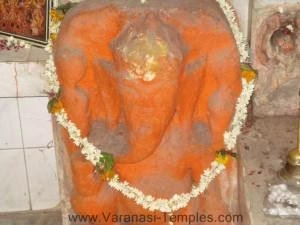
In the labyrinthine spiritual geography of Kashi (Varanasi), the Gyan Vinayak Temple stands as a sentinel of divine wisdom and protection. Dedicated to Lord Ganesha in his form as Gyan Vinayak (The Bestower of Knowledge), this ancient shrine is one of the revered “Astha Vinayak” temples of Varanasi, distinct from the eight Ganesha temples of Maharashtra. Here, the deity is worshipped as the guardian who protects the holy city from negative forces while blessing devotees with intellect and clarity.
Why do devotees visit? According to the Kashi Khand of the Skanda Purana, Lord Shiva designated Gyan Vinayak to protect the southern gate of Kashi. Visiting this temple is believed to fulfill wishes, remove obstacles in education and career, and cleanse ancestral karma. It is a mandatory stop for pilgrims undertaking the Panchakroshi Yatra (the 80-km circumambulation of Varanasi).
Historical Origins & Scriptural Legend
Scriptural References: The theological foundation of the Gyan Vinayak Temple is deeply rooted in the Kashi Khand. Legend holds that while Lord Shiva and Goddess Parvati were discussing the cosmic order, a demon named Brahmarakshasa tormented the region. Lord Ganesha vanquished this demon and established his presence here as Gyan Vinayak to maintain the spiritual balance of the city.
Architectural Timeline: While precise architectural records are sparse due to the antiquity of Varanasi, local inscriptions and temple history suggest the current structure has undergone renovations during the Maratha and Bhonsle periods (18th century). The temple is managed by local priests, with Shri Jai Prakash Pandey serving as the current Poojari, preserving the ancient Panchayatana worship style.
Architectural Marvels
The temple showcases a blend of traditional North Indian Nagara style architecture with influences of the local Bengali and Maratha architectural patterns common in Varanasi.
- The Sanctum (Garbhagriha): The inner shrine houses a Swayambhu (self-manifested) idol of Gyan Vinayak. The deity is depicted with a modak in one hand and a gout of knowledge in the other, crafted in black stone.
- The Shikhara: The spire above the sanctum is ornate with detailed carvings of floral motifs and miniature deities, typical of temple architecture in the Gangetic plains.
- Mandapas: The pillared hall allows devotees to sit for prayers and witness the daily Aarti. The lighting is kept minimal to preserve the mystical atmosphere of the narrow lane (Gulli) where it is located.
Darshan & Ritual Logistics
The temple follows a strict schedule aligned with the Dharmic cycles of the day. Unlike larger temples, the atmosphere here is intimate and devotional.
Daily Timings
Note: Temple timings may vary slightly during festivals or extreme weather conditions in Varanasi.
| Darshan Slot | Timings |
|---|---|
| Morning Darshan | 08:00 AM – 10:00 AM |
| Evening Darshan | 06:00 PM – 08:00 PM |
| Aarti Timings | Morning (6:00 AM) & Evening (7:00 PM) |
Sevas & Offerings
While the temple is small, several sevas are performed daily:
- Morning Abhishekam: Performed with milk, honey, and ghee (requires prior notice to the Poojari).
- Ganesh Atharvashirsha Path: A powerful Vedic recitation for success and wisdom.
- Sankalp Seva: Devotees can leave a written prayer (Sankalp) for specific goals.
Online Booking: Currently, this specific shrine does not have a dedicated online portal. Bookings for larger Kashi temples are available on the Kashi Vishwanath Corridor portal, but for Gyan Vinayak, offerings are managed directly at the temple counter.
2026 Key Festivals & Dates
Plan your visit around these auspicious days:
| Festival | Date (2026) | Significance |
|---|---|---|
| Ganesh Chaturthi | Saturday, September 2 | Birth of Lord Ganesha; Special Abhishekam |
| Magha Ganesh Chaturthi | Tuesday, February 3 | Auspicious day for students and new beginnings |
| Sankashti Chaturthi | Monthly (21st of each month) | Monthly observance for removal of obstacles |
Practical Visitor Guidance
Located in the heart of the old city, visiting Gyan Vinayak requires some preparation.
- Dress Code: Traditional attire is recommended. Men should wear dhoti/kurta, and women should wear saree or salwar kameez. Avoid shorts or sleeveless tops.
- Photography: Strictly prohibited inside the sanctum. Mobile photography in the outer hall may be permitted outside of prayer times.
- Mobile & Lockers: The temple has limited space. It is advisable to keep phones on silent and not carry large bags. There are no official lockers; utilize the Shoe Stall (Rs. 10-20) outside the lane for bags.
- Crowd Management: The lane leading to the temple (Khatri Medical Hall side) is narrow. Best hours: 8:00 AM – 9:00 AM (least crowded). Avoid weekends and festival evenings.
- Seasonal Advice: Varanasi summers (May-June) are scorching; carry a water bottle and cover your head. Monsoons (July-August) bring humidity; wear non-slip sandals.
Pilgrimage Connectivity
How to Reach
The temple is situated at Khowa Gulli Chowraha, CK.28/4, near Langlishwar Temple in the Chowk area.
- Nearest Railway Station: Varanasi Junction (BSB) – 6 km (30 mins by auto).
- Nearest Airport: Lal Bahadur Shastri International Airport (VNS) – 25 km (50 mins by cab).
- By Road: Take the Varanasi-Allahabad Highway (NH 19). Disembark at Dashashwamedh Ghat or Godaulia crossing and take a cycle rickshaw to Chowk.
- Walking Route: From Dashashwamedh Ghat, walk towards Vishwanath Gali. The temple is a 10-minute walk through the narrow market lanes.
Nearby Sacred Sites (Pilgrimage Circuit)
- Kashi Vishwanath Temple: Just 1 km away. The primary destination for all Varanasi pilgrims.
- Sankat Mochan Hanuman Temple: 3 km away. Located on the banks of the Assi Ghat, known for relieving troubles.
- Tridevi Temple: Located on the way to Kashi Vishwanath, dedicated to Saraswati, Lakshmi, and Parvati.
FAQs
Is there a VIP Darshan entry?
No, the Gyan Vinayak Temple is a small shrine. All devotees are treated equally, and darshan is usually quick unless a specific ritual is ongoing.
What is the best mode of transport to reach the temple?
Auto-rickshaws can take you to Chowk or Khatri Medical Hall. From there, you must walk (approx. 5 minutes) as vehicles cannot enter the narrow lanes.
Is the temple accessible for senior citizens?
The lane is narrow with uneven stones. While manageable for some, wheelchair access is not available. Assistance from local porters may be required.
Are there food options nearby?
Yes, the Chowk area is famous for street food like Kachori, Jalebi, and Rabri. However, for a pure vegetarian meal, head towards the Vishwanath Gali.
Photo Gallery

Map & Location
Recent Posts

Shri Kaamkoteeshwar Mandir, Varanasi – History & Significance
In the heart of Kashi, the eternal city of Lord Shiva, where the Ganges flows with celestial grace, stands the Shri Kaamkoteeshwar Mandir. This sacred Sannidhi is not merely a temple but a profound spiritual bridge between the Northern…

ओ सांवरे तूने ही मुझको संभाला – Lyrics & Meaning
ओ सांवरे तूने ही मुझको संभाला – A Prayer to Shyam Origin & Spiritual Essence Why This Bhajan Resonates Devotees chant this when overwhelmed by life’s storms—the refrain ‘तूने ही मुझको संभाला’ is the soul’s sigh of relief: “You…

कथा ये है महाराज मेरे की – Lyrics & Meaning
कथा ये है महाराज मेरे की छत्रपति संभाजी महाराज – A Prayer to Chhatrapati Sambhaji Maharaj Origin & Spiritual Essence Why This Bhajan Resonates Devotees chant this when their spirit feels tested—its powerful refrain “महाराज मेरे” is a soul’s…

Rigveda Samhita Yathartha Anuvada (ऋग्वेद संहिता यथार्थ अनुवाद) – Complete Set with Anvayartha & Hindi/English Translation
The Rigveda is the oldest surviving scripture of humanity and the foundational text of Sanātana Dharma. For serious students, scholars, UPSC aspirants studying ancient Indian history, Sanskrit learners, and spiritual seekers, a precise and grammatically structured translation is indispensable.…

आना भी अकेला है जाना भी अकेला है – Lyrics & Meaning | BharatTemples
आना भी अकेला है जाना भी अकेला है – A Prayer to the Divine Witness Origin & Spiritual Essence Why This Bhajan Resonates Devotees turn to this bhajan in moments of deep reflection—when life’s attachments begin to ache. The…

माता शेरावाली के द्वार जो भी जाता है – Lyrics & Meaning
माता शेरावाली के द्वार जो भी जाता है – A Prayer to Maa Sherawali Origin & Spiritual Essence Why This Bhajan Resonates Devotees turn to this bhajan in times of fear or uncertainty—its promise that no one leaves Maa’s…

मार लेना सपणी उबार लेणा भवरा – Lyrics & Meaning
मार लेना सपणी उबार लेणा भवरा – A Prayer to the Divine Beloved Origin & Spiritual Essence Why This Bhajan Resonates Devotees chant this in moments of deep vulnerability—its cry of “मार लेना सपणी, उबार लेणा भवरा” is the…

हमें श्याम सुंदर भरोसा तुम्हारा – Lyrics & Meaning
हमें श्याम सुंदर भरोसा तुम्हारा – A Prayer to Shyam Sundar Origin & Spiritual Essence Why This Bhajan Resonates Devotees chant this when feeling alone—its refrain ‘de do sahara’ is the soul’s cry for divine support. Lyrics in Hindi…

Mere Satguru Ne Di Thi Davai Lyrics in Hindi & Meaning
Mere Satguru Ne Di Thi Davai: Invoking the Guru’s Liberating Wisdom This soul-stirring bhajan venerates the Satguru (True Spiritual Master) as the divine physician who dispenses the only remedy for life’s deepest sufferings. Composed by Sant Karmaveer Tufani, it…

Janm Diyo Thari Maa Dukh Dekhiyo Lyrics in Hindi & Meaning
जन्म दियो थारी माँ दुख देखियो (Maa’s Grief Upon Birthing You) This soul-stirring Chetavani Bhajan (admonitory hymn) is addressed to the Divine Mother (Maa) – a call for repentance when children forget their filial duties in the dark age…