
Contents
Introduction & Spiritual Essence
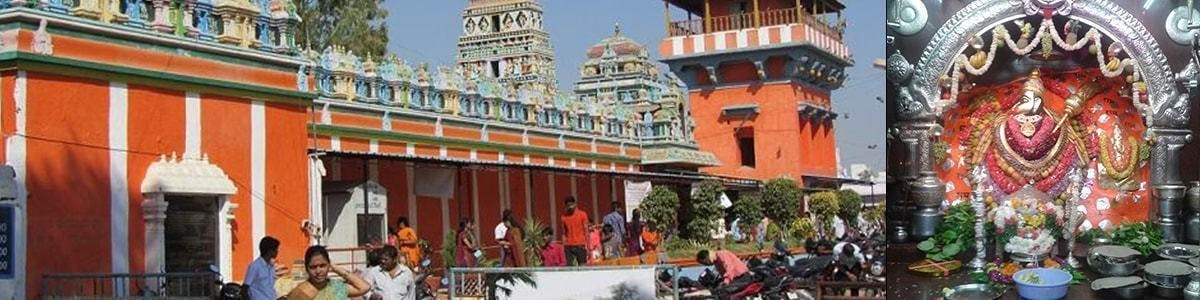
Amidst the bustling streets of Hyderabad lies a sanctuary of silence, strength, and unwavering devotion: the Karmanghat Hanuman Temple. Often referred to locally as the “Kar Man Ghat” temple, this shrine is a timeless beacon for devotees of Pavanputra Hanuman. The primary deity, Lord Hanuman, is enshrined here in a unique Dhyana Anjaneya Swamy form—seated in deep meditation rather than the typical standing posture. This form represents the supreme knowledge and inner fortitude the Lord grants to his devotees.
Phalaśruti: Why Devotees Visit
According to temple lore and the unwavering faith of pilgrims, visiting the Karmanghat Hanuman Temple offers profound Phalaśruti (spiritual benefits). It is widely believed that prayers here specifically aid in:
- Cleansing Ancestral Karma: Performing rituals here is said to pacify pitru doshas and bring peace to ancestors.
- Overcoming Obstacles: The meditation form of the deity grants the devotee the mental strength to navigate life’s hurdles.
- Protection from Evil: As the guardian of the south (Dakshina Mukha), Hanuman shields devotees from negative energies.
Historical Origins & Scriptural Legend
The temple’s history is a tapestry woven from royal benevolence and divine intervention. According to temple records and local Sthala Purana, the shrine dates back to the 12th century.
The Kakatiya Dynasty & The Divine Discovery
Tradition holds that the temple was constructed around 1143 AD by the Kakatiya ruler Prataparudra II. The legend narrates that while hunting in the dense forests near his capital, the King felt exhausted and rested under a tree. He heard a mystical chanting of the “Rama Mantra” emanating from a nearby stone. Upon investigation, he discovered an idol of Lord Hanuman in a sitting posture. That night, the Lord appeared in the King’s dream, instructing him to build a temple at that very spot.
The Miracle of Karmanghat
Centuries later, during the Mughal conquests of the Deccan, the temple faced a severe trial. According to tradition, Emperor Aurangzeb ordered the temple’s destruction. However, his armies were unable to cross the outer walls, repelled by an invisible, divine force. When Aurangzeb approached personally to demolish the shrine, a thundering voice reportedly echoed from the heavens: “Mandir todna hai raja, to kar maan ghat” (Oh King, if you wish to destroy this temple, harden your heart/forehead). Unable to withstand the divine roar, Aurangzeb retreated. The location was thus named Karmanghat (Fort of the Forehead/Heart).
Architectural Marvels
The Karmanghat Temple is a testament to the resilience of Vernacular architecture adapted for sacred spaces. While the core deity resides in a structure reflecting regional Telugu styles, the complex has evolved over the centuries.
Sculpture and Sanctum
The sanctum sanctorum houses the Swayambhu (self-manifested) idol of Lord Hanuman. The sculpture features unique iconography: the Lord is seated in PadmAsana (lotus position), holding a Gada (mace) and a Japa Mala (rosary), symbolizing the balance between physical strength and spiritual discipline. The surrounding complex houses shrines for Lord Rama, Lord Shiva, Goddess Durga, and Lord Venugopala Swamy, making it a comprehensive pilgrimage circuit within a single enclosure.
While not a classical Nagara or Dravida structure, the temple complex exhibits robust stone masonry typical of the Kakatiya period, featuring intricately carved pillars and a modest Shikhara (tower) that has been renovated over time to preserve its sanctity.
Darshan & Ritual Logistics (2026 Update)
For a seamless spiritual experience in 2026, devotees are encouraged to plan their visit and sevas in advance. The temple administration facilitates both in-person and online bookings.
Daily Timings
The temple remains open for extended hours to accommodate devotees from all walks of life.
| Session | Timings |
|---|---|
| Morning Darshan | 6:00 AM – 12:00 PM |
| Afternoon Break | 12:00 PM – 4:00 PM |
| Evening Darshan | 4:00 PM – 8:30 PM |
Key Sevas & Online Booking
Devotees can perform various Sevas (ritual offerings) to Lord Hanuman. Online Seva Booking is recommended for major festivals to avoid crowding.
- Abhishekam: Ritual bathing of the deity with holy waters and milk. Timing: 8:00 AM daily.
- Archana: Recitation of the 108 names of Hanuman. Available throughout open hours.
- Sahasra Namarchana: Recitation of the thousand names.
Note: To book online, visit the official Telangana Tourism or temple trust portal (links updated annually).
2026 Major Festival Dates
- Hanuman Jayanti: April 12, 2026 (Saturday) – Special Alankaram and Sahasra Deepalankara Seva.
- Sri Rama Navami: April 5, 2026 – Grand processions within Karmanghat.
- Ugadi (Telugu New Year): March 30, 2026 – Temple opens early for special pujas.
- Maha Shivaratri: February 26, 2026 – Night-long vigil and Abhishekam for the Shiva shrine within the complex.
Practical Visitor Guidance
To ensure a respectful and safe darshan experience, please adhere to the following guidelines:
Code of Conduct
- Dress Code: Traditional attire is preferred. Men should wear dhotis or trousers with shirts; women should wear sarees, salwar kameez, or modest dresses.
- Photography: Photography is strictly prohibited inside the sanctum sanctorum. Photography in the outer courtyards may be restricted during peak hours.
- Mobile Lockers: Small electronic devices and bags are allowed, but devotees are advised to use the free cloakroom facilities for leather items (belts, wallets) which are not permitted inside.
Crowd Management & Seasonal Advice
- Best Hours: Early mornings (6:00 AM – 7:30 AM) or late evenings (7:00 PM – 8:30 PM) offer a serene darshan.
- Summer (March–May): Hyderabad temperatures can exceed 40°C. Carry a water bottle and use the shaded waiting areas.
- Monsoon (June–September): While the weather is pleasant, check local alerts regarding the Ring Road traffic near Santoshnagar.
Pilgrimage Connectivity
The Karmanghat Hanuman Temple is strategically located near the Nagarjuna Sagar Ring Road, making it accessible via all modes of transport.
How to Reach
- By Road: The temple is 12 km from Mahatma Gandhi Bus Terminal (MGBS). TSRTC runs frequent buses to Karmanghat. If driving, take the Nagarjuna Sagar Ring Road (NH-65) and exit at the Karmanghat/Santoshnagar junction.
- By Rail: The nearest railway station is Secunderabad Junction (approx. 10 km) or Hyderabad Deccan (Nampally) (approx. 12 km). Taxis and metro rail are available.
- By Air: Rajiv Gandhi International Airport (RGIA) is approximately 20 km away. Pre-paid taxis and airport shuttles provide direct access to the temple.
Nearby Sacred Sites
Extend your pilgrimage with these nearby destinations:
- Chilkur Balaji Temple (15 km): Known as the “Visa Balaji” temple, located on the banks of Osman Sagar.
- Birla Mandir (12 km): A stunning marble temple dedicated to Lord Venkateshwara, situated on a hillock.
- Mecca Masjid & Charminar (12 km): For a glimpse of Hyderabad’s historic Islamic architecture and heritage.
Frequently Asked Questions (FAQ)
Is there a VIP darshan entry?
Yes, the temple trust provides a separate queue for senior citizens and differently-abled devotees. For VIP entry, prior permission from the temple executive officer is usually required, though it is rarely granted for personal darshans; general fast-track tickets are available during festivals.
Can I perform Rudrabhishekam at this temple?
While the primary deity is Hanuman, the temple complex houses a shrine for Lord Shiva. Rudrabhishekam and other Shiva rituals can be performed here upon prior booking with the temple priests (Pandits).
Is the temple accessible by Metro?
The nearest Metro station is Moosapet or LB Nagar depending on the line. From the station, you will need to take an auto-rickshaw or cab (approx. 3–5 km) to reach Karmanghat.
What are the accommodation options nearby?
While the temple does not have a guest house, several budget lodges and star hotels are available in the nearby Santoshnagar and LB Nagar areas. For a spiritual stay, devotees often prefer the government tourism hotels near Hussain Sagar.
Is non-vegetarian food allowed near the temple?
As this is a strictly vegetarian holy site, the immediate vicinity of the temple is meat-free. However, outside the 1 km radius in Karmanghat, all types of cuisine are available. Prasadam counters inside the temple offer free or paid sanctified food.
Recent Posts

आना भी अकेला है जाना भी अकेला है – Lyrics & Meaning | BharatTemples
आना भी अकेला है जाना भी अकेला है – A Prayer to the Divine Witness Origin & Spiritual Essence Why This Bhajan Resonates Devotees turn to this bhajan in moments of deep reflection—when life’s attachments begin to ache. The…

माता शेरावाली के द्वार जो भी जाता है – Lyrics & Meaning
माता शेरावाली के द्वार जो भी जाता है – A Prayer to Maa Sherawali Origin & Spiritual Essence Why This Bhajan Resonates Devotees turn to this bhajan in times of fear or uncertainty—its promise that no one leaves Maa’s…

मार लेना सपणी उबार लेणा भवरा – Lyrics & Meaning
मार लेना सपणी उबार लेणा भवरा – A Prayer to the Divine Beloved Origin & Spiritual Essence Why This Bhajan Resonates Devotees chant this in moments of deep vulnerability—its cry of “मार लेना सपणी, उबार लेणा भवरा” is the…

हमें श्याम सुंदर भरोसा तुम्हारा – Lyrics & Meaning
हमें श्याम सुंदर भरोसा तुम्हारा – A Prayer to Shyam Sundar Origin & Spiritual Essence Why This Bhajan Resonates Devotees chant this when feeling alone—its refrain ‘de do sahara’ is the soul’s cry for divine support. Lyrics in Hindi…

Mere Satguru Ne Di Thi Davai Lyrics in Hindi & Meaning
Mere Satguru Ne Di Thi Davai: Invoking the Guru’s Liberating Wisdom This soul-stirring bhajan venerates the Satguru (True Spiritual Master) as the divine physician who dispenses the only remedy for life’s deepest sufferings. Composed by Sant Karmaveer Tufani, it…

Janm Diyo Thari Maa Dukh Dekhiyo Lyrics in Hindi & Meaning
जन्म दियो थारी माँ दुख देखियो (Maa’s Grief Upon Birthing You) This soul-stirring Chetavani Bhajan (admonitory hymn) is addressed to the Divine Mother (Maa) – a call for repentance when children forget their filial duties in the dark age…
Bhadi Sabha Mein Thane Manaun Lyrics in Hindi & Meaning
Bhadi Sabha Mein Thane Manaun: Invoking the Spear-Wielding Mother Mata Bhawani (श्री ज्वाला भवानी), the fiery manifestation of Shakti worshipped as the Protector of Dharma in Her Dhaulagarh sanctum. Origin & Spiritual Essence Composed in Rajasthani folk tradition by…
श्याम सुन्दरवा छोटे छोटे कनुवा Lyrics & Meaning
श्याम सुन्दरवा छोटे छोटे कनुवा (Shyam Sundarva Chhote Chhote Kanuva) is a heartfelt invocation to Lord Krishna in his most enchanting form—Shyam Sundar (the dark, beautiful one). This bhajan is a plea for the divine child Kanha to grace…
Maat Meri Chintapurni Lyrics in Hindi & Meaning
Maat Meri Chintapurni is a heartfelt devotional prayer dedicated to Maa Chintapurni, a form of the Divine Mother. She is revered as the remover of worries and the granter of wishes, especially venerated in the Himalayan region of Himachal…
थारी रे नदियां का ढावा पे खीची राजा Lyrics & Meaning
खीची राजा का अद्भुत युद्ध: एक शौर्य गाथा यह भजन एक पौराणिक या ऐतिहासिक शूरवीर राजा की वीरता का वर्णन करता है, जो प्रायः गुजराती लोक संस्कृति में लोककथाओं का हिस्सा है। इसकी रचना दुर्गेश कटारा ने की है…