
Contents
- 1 Jagannath Temple, New Delhi: A Definitive Pilgrimage Guide
Jagannath Temple, New Delhi: A Definitive Pilgrimage Guide
| Date built: | – |
|---|---|
| Deity: | Jagannath, Shri Balabhadra, Maa Subhadara and Shri Sudarshan |
| Architectural style: | – |
| Major festivals | Rathyatra |
| Locale: | Thyagraj Nagar |
| District:: | – |
| Address: | C-Block, Safdarjung Deplopment Area, Bhagwan Jagannath Mg, Hauz Khas Vill- Rd, Hauz Khas, Delhi – 110016 |
| Phone | – |
Introduction & Spiritual Essence
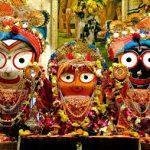
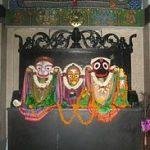
The Jagannath Temple in New Delhi is a vibrant sanctuary dedicated to the Lord of the Universe, Shri Jagannath. Alongside his siblings, Lord Balabhadra (Balarama), Maa Subhadra, and the Sudarshan Chakra, the Chaturdha Deities reside in the sanctum sanctorum (Garbhagriha). While the temple is located in the heart of the capital, its spiritual roots are deeply entwined with the ancient traditions of Odisha, specifically the rituals of the Shri Mandir in Puri.
Phalaśruti (Spiritual Benefits): Devotees visit this temple to wash away sins and cleanse ancestral karma. The temple is renowned for granting the wishes of childless couples and those seeking wisdom and prosperity. As stated in the lore surrounding Lord Jagannath, “You may belong to any caste, creed, sex, community, religion… whatsoever be your language and nationality.” The only prerequisite is devotion. This temple serves as a spiritual bridge, allowing those who cannot travel to Puri to experience the divine grace of the Lord in Delhi.
Historical Origins & Scriptural Legend
Unlike ancient stone temples that have stood for millennia, the Jagannath Temple in New Delhi is a testament to the devotion of the modern Oriya community settled in the capital. While specific records of the dynasty or century of construction are less ancient than those in Odisha, the temple stands as a monumental cultural center established to preserve Odissi heritage and Vedic traditions far from the coast.
Scriptural Context: The worship of Jagannath is rooted in the Vedas and Puranas, specifically the Skanda Purana and Brahma Purana, which describe the deity as a form of Lord Vishnu (Krishna). Tradition holds that the deity form is Swayambhu (self-manifested). The Delhi temple adheres strictly to the Maharashtra (Gauda) Kesari sect’s rituals, ensuring that the worship methodology remains identical to the parent temple in Puri.
Architectural Marvels
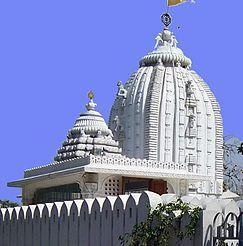
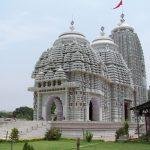
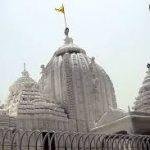
The structure of the New Delhi Jagannath Temple is a masterpiece of Kalinga (Odisha) style architecture, distinct from the Nagara or Dravida styles prevalent in North and South India respectively.
- Simhadwar (Lion’s Gate): The entrance is guarded by majestic stone lions, inviting devotees into the sacred space.
- Baishi Pahacha: A distinctive feature of Odisha temple architecture, the temple entrance features 22 steps known as “Baishi Pahacha” leading to the Mukhashala (front porch). These steps represent the 22 steps to salvation.
- Aruna Stambha: In front of the Mukha Shala stands a marble pillar, the Aruna Stambha. It is a tradition that devotees touch or embrace this pillar before entering the main temple to absorb its positive vibrations.
- Garbhagriha & Outer Carvings: The inner sanctum houses the Chaturdha Deities. Surrounding the main temple are smaller shrines dedicated to Lord Shiva, Navagraha, Lord Hanuman, Maa Bimala, Maa Lakshmi, and Lord Ganesha. The exterior walls are adorned with intricate engravings of deities like Shri Baraha, Shri Narasimha, and Shri Bamana.
Darshan & Ritual Logistics (2026 Guide)
Assuming the current year is 2026, devotees should note the daily schedule and key festival dates. The temple management is strict regarding entry times and dress codes.
Daily Timings
| Session | Timing | Activity |
|---|---|---|
| Morning | 5:30 AM – 1:00 PM | Mangala Alati, Abhishekam, Gopal Vallabh Bhog |
| Afternoon | 1:00 PM – 4:00 PM | Bhoga Bhog (Temple Closed) |
| Evening | 4:00 PM – 9:30 PM | Sandhya Alati, Shringar Bhog, Pahuda |
Key Sevas and 2026 Festivals
Booking for major Sevas is highly recommended due to high demand. Online booking portals typically open 30 days in advance.
- Abhishekam: Performed daily during the morning session.
- Archana: Can be performed individually or for families.
- Special Entry: VIP Darshan is available for donations to the temple trust.
Festival Calendar 2026:
- Chandan Yatra: April/May 2026 (Vaisakha Sukla Dwitiya).
- Ratha Yatra (Car Festival): This is the temple’s signature event. In 2026, it falls on Sunday, June 28th. The temple draws lakhs of devotees during this procession through Delhi streets.
- Gundicha Yatra & Return Bahuda Yatra: Early July 2026.
- Janmashtami: September 2026 (Date varies by lunar calendar).
Practical Visitor Guidance
Rules & Etiquette
- Dress Code: Strict adherence to traditional Indian attire is required. Men must wear Dhoti or Kurta-Pajama; Western clothing is prohibited. Women are expected to wear Saree, Salwar Kameez, or traditional skirts.
- Electronics: Photography is strictly prohibited inside the temple complex. Mobile phones and cameras must be deposited at the free locker facility at the entrance.
- Accessibility: The temple has ramps for wheelchair access, but the inner sanctum may be challenging due to steps.
Crowd Management
- Best Hours: For a peaceful darshan, visit immediately after opening (5:30 AM) or during the mid-afternoon lull (2:30 PM).
- Seasonal Advice: Delhi summers (May-June) are scorching. Carry a water bottle (to be deposited with locker) and wear cotton fabrics. During the Ratha Yatra in June/July, expect heavy crowds and plan travel accordingly.
Pilgrimage Connectivity
How to Reach
The temple is centrally located in Thyagraj Nagar, near Hauz Khas.
- Nearest Metro: INA Market Station (Yellow Line) is approximately 1 km away. Auto-rickshaws are readily available.
- Bus Route: Safdarjung Bus Terminal is adjacent to the temple. Major DTC routes halt here.
- By Road: Located off the Lodi Colony Ring Road. Parking is limited; public transport is advised.
Nearby Sacred Sites
Enhance your pilgrimage by visiting these nearby spiritual centers:
- Lakshmi Narayan Temple (Birla Mandir): Located 4 km north, this temple is dedicated to Lord Vishnu and Goddess Lakshmi.
- Lotus Temple: A Bahá'í House of Worship (approx. 5 km) known for its flower-like architecture and silence.
- Akshardham Temple: While a bit further (15 km), this complex offers a grand display of Indian culture and spirituality.
Photo Gallery
Frequently Asked Questions (FAQ)
1. Is there a VIP or Special Entry darshan available?
Yes, the temple offers a “Special Entry” darshan for a nominal donation. Tickets can usually be purchased at the temple counter or booked online via the official temple trust website. This allows devotees to bypass the general queue during peak hours.
2. Can I offer food (Prasad) from home?
No, the temple does not allow devotees to bring outside food for the deities. However, you can donate money or specific ingredients for the daily Bhog preparation. The temple kitchen (Mahaprasad) is run by the temple authorities following strict hygiene and traditional recipes.
3. What is the significance of the 22 steps (Baishi Pahacha)?
The 22 steps leading to the Mukhashala represent the 22 hurdles one must cross to attain liberation (Moksha). It is customary to touch each step or climb them with reverence as a form of physical prayer and humility.
4. Is the temple open on all days?
The temple is open daily, but hours may vary on major festivals like Ratha Yatra or Janmashtami. It is advisable to check the official notice board or website before planning a visit on these specific dates.
5. Is parking available at the temple?
Due to the temple’s location in a busy residential area, parking space is very limited. Devotees are strongly encouraged to use the Metro (INA Station) or the nearby Safdarjung Bus Terminal. Taxis and Auto-rickshaws are the most convenient options for private vehicles.
Contact Details
Official Address: C-Block, Safdarjung Development Area, Bhagwan Jagannath Marg, Hauz Khas, New Delhi – 110016
Recent Posts

Shri Kaamkoteeshwar Mandir, Varanasi – History & Significance
In the heart of Kashi, the eternal city of Lord Shiva, where the Ganges flows with celestial grace, stands the Shri Kaamkoteeshwar Mandir. This sacred Sannidhi is not merely a temple but a profound spiritual bridge between the Northern…

ओ सांवरे तूने ही मुझको संभाला – Lyrics & Meaning
ओ सांवरे तूने ही मुझको संभाला – A Prayer to Shyam Origin & Spiritual Essence Why This Bhajan Resonates Devotees chant this when overwhelmed by life’s storms—the refrain ‘तूने ही मुझको संभाला’ is the soul’s sigh of relief: “You…

कथा ये है महाराज मेरे की – Lyrics & Meaning
कथा ये है महाराज मेरे की छत्रपति संभाजी महाराज – A Prayer to Chhatrapati Sambhaji Maharaj Origin & Spiritual Essence Why This Bhajan Resonates Devotees chant this when their spirit feels tested—its powerful refrain “महाराज मेरे” is a soul’s…

Rigveda Samhita Yathartha Anuvada (ऋग्वेद संहिता यथार्थ अनुवाद) – Complete Set with Anvayartha & Hindi/English Translation
The Rigveda is the oldest surviving scripture of humanity and the foundational text of Sanātana Dharma. For serious students, scholars, UPSC aspirants studying ancient Indian history, Sanskrit learners, and spiritual seekers, a precise and grammatically structured translation is indispensable.…

आना भी अकेला है जाना भी अकेला है – Lyrics & Meaning | BharatTemples
आना भी अकेला है जाना भी अकेला है – A Prayer to the Divine Witness Origin & Spiritual Essence Why This Bhajan Resonates Devotees turn to this bhajan in moments of deep reflection—when life’s attachments begin to ache. The…

माता शेरावाली के द्वार जो भी जाता है – Lyrics & Meaning
माता शेरावाली के द्वार जो भी जाता है – A Prayer to Maa Sherawali Origin & Spiritual Essence Why This Bhajan Resonates Devotees turn to this bhajan in times of fear or uncertainty—its promise that no one leaves Maa’s…

मार लेना सपणी उबार लेणा भवरा – Lyrics & Meaning
मार लेना सपणी उबार लेणा भवरा – A Prayer to the Divine Beloved Origin & Spiritual Essence Why This Bhajan Resonates Devotees chant this in moments of deep vulnerability—its cry of “मार लेना सपणी, उबार लेणा भवरा” is the…

हमें श्याम सुंदर भरोसा तुम्हारा – Lyrics & Meaning
हमें श्याम सुंदर भरोसा तुम्हारा – A Prayer to Shyam Sundar Origin & Spiritual Essence Why This Bhajan Resonates Devotees chant this when feeling alone—its refrain ‘de do sahara’ is the soul’s cry for divine support. Lyrics in Hindi…

Mere Satguru Ne Di Thi Davai Lyrics in Hindi & Meaning
Mere Satguru Ne Di Thi Davai: Invoking the Guru’s Liberating Wisdom This soul-stirring bhajan venerates the Satguru (True Spiritual Master) as the divine physician who dispenses the only remedy for life’s deepest sufferings. Composed by Sant Karmaveer Tufani, it…

Janm Diyo Thari Maa Dukh Dekhiyo Lyrics in Hindi & Meaning
जन्म दियो थारी माँ दुख देखियो (Maa’s Grief Upon Birthing You) This soul-stirring Chetavani Bhajan (admonitory hymn) is addressed to the Divine Mother (Maa) – a call for repentance when children forget their filial duties in the dark age…