
Contents
Introduction & Spiritual Essence
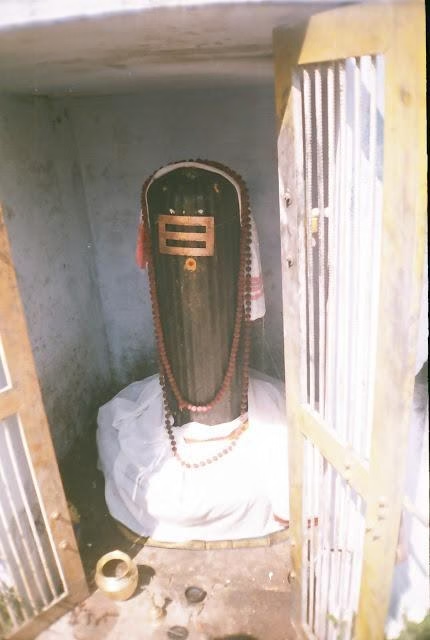
Steeped in the spiritual atmosphere of Kanchipuram, the temple of Jayantheeswarar stands as a testament to unwavering devotion and ancient lore. Often referred to simply as the Jayantheeswarar Temple Kanchipuram, this shrine is dedicated to Lord Shiva in the form of a Swayambhu (self-manifested) Lingam. The presiding deity, Jayantheeswarar (the “Lord of Victory” or “Ishta Siddhi”), is revered by devotees seeking spiritual triumph over internal and external obstacles.
Phalaśruti: Why Devotees Visit
According to popular belief, the Phalaśruti (benefits of worship) of this temple is potent. Tradition holds that this Lingam was worshipped by Jayandhan, the son of Indra (the King of Devas). Therefore, worshiping here is believed to bestow:
- Cleansing of Ancestral Karma: Freeing lineage from past karmic debts.
- Victory in Endeavors: Granting success in legal disputes and career endeavors.
- Mental Peace: Removing anxiety and mental stagnation, as the temple is situated near the serene Kailasanathar temple.
Historical Origins & Scriptural Legend
The Legend of Jayandhan
The primary scriptural reference for this temple is rooted in the Sthala Purana. Tradition holds that Jayandhan, the son of Lord Indra, desired to perform a yajna (fire ritual) dedicated to Lord Shiva. During his penance, a divine voice instructed him to locate the self-manifested Lingam. Upon finding the Lingam, he realized he could not move it to perform the ritual. The Lord granted him a boon to place a second, identical Lingam adjacent to the first. The original Swayambhu Lingam is the North-facing Jayantheeswarar, which receives the sacred rays of the rising sun.
Temple Records and Lineage
While specific inscriptions regarding the dynastic builders remain subjects of ongoing archaeological study, the temple is deeply woven into the fabric of Kanchipuram’s history. Located within a school complex near the Kailasanathar Temple, the structures exhibit the architectural sensibilities of the Pallava era, famed for establishing the Dravidian architectural style. Over the centuries, local patrons have renovated the vimana (tower) and prakaram (corridor), preserving the sanctity of the site.
Architectural Marvels
The Jayantheeswarar Temple is a classic example of the Dravidian architectural style. As one explores the complex, the elegance of the Pallava construction is evident in the sculptural details and the layout.
- Vastu Shastra Alignment: The temple faces East, aligning with the solar trajectory, allowing the first rays of the sun to fall directly on the presiding deity.
- The Shikhara (Vimana): The tower above the sanctum sanctorum features the traditional Dravidian tiers (Kalasam). Although modest in height compared to the nearby Kailasanathar, it is intricate and historically significant.
- Mandapas and Sculptures: The hall leading to the sanctum allows for circumambulation (Pradakshina). The pillars feature carvings of deities and mythical beasts typical of 7th-century aesthetics.
Darshan & Ritual Logistics
Devotees can participate in daily rituals to receive blessings. The temple follows standard Agamic rituals dedicated to Lord Shiva.
Daily Timings
| Session | Timings |
|---|---|
| Morning Darshan | 6:00 AM – 12:00 PM |
| Afternoon Break | 12:00 PM – 4:00 PM |
| Evening Darshan | 4:00 PM – 8:00 PM |
*Note: Timings may vary slightly during festival days.
Key Sevas & Online Booking
The primary Seva is the Abhishekam (ritual bathing of the deity), typically performed on Mondays. The Archana (recitation of names) is performed daily.
To book online seva, devotees can utilize the official Tamil Nadu Endowments Department portal. As we approach 2026, the platform has streamlined digital offerings for major festivals.
2026 Festival Calendar
- Maha Shivaratri: February 26, 2026 (Special night-long darshan).
- Arudra Darshanam: January 6, 2026 (Celebrating the cosmic dance of Shiva).
- Kartikai Deepam: November 4, 2026.
- Pradosham: Occurring twice monthly (13th and 28th of every month).
Practical Visitor Guidance
Code of Conduct
- Dress Code: Traditional attire is mandatory. Men should wear dhoti/veshti or formal trousers with a shirt; women should wear saree, salwar kameez, or formal modest attire.
- Photography: Photography is strictly prohibited inside the sanctum sanctorum.
- Electronics: Mobile phones must be kept on silent. While lockers are available near major temple entry points, small shrines like Jayantheeswarar may rely on voluntary silence.
Crowd Management & Best Times
Kanchipuram experiences peak pilgrim traffic on Mondays and weekends.
- Best Time to Visit: Tuesday to Friday mornings (8:00 AM – 10:00 AM).
- Seasonal Advice: Kanchipuram can be hot in May. Carry a water bottle and use an umbrella. The monsoon (Oct-Dec) brings a lush, spiritual atmosphere but requires rain gear.
Pilgrimage Connectivity
How to Reach Jayantheeswarar Temple
The temple is located in the heart of Kanchipuram town, easily accessible by road.
- Nearest Airport: Chennai International Airport (MAA) is approximately 75 km away.
- Nearest Railway Station: Kanchipuram Railway Station (KMU) is the closest broad-gauge terminal.
- By Road: The temple is accessible via the Grand Southern Trunk Road (NH 48) connecting Chennai to Bangalore. From Kanchipuram bus stand, local auto-rickshaws are readily available.
Nearby Sacred Sites
When visiting Kanchipuram, it is customary to visit these nearby temples to complete a holy circuit:
- Kailasanathar Temple: Located very close to Jayantheeswarar, this is an iconic rock-cut temple dedicated to Shiva.
- Ekambareswarar Temple: One of the Pancha Bhoota Stalas (representing Earth), located about 3 km away.
- Vaitheeswaran Koil: A renowned healing temple for blood-related ailments, accessible via a short drive.
Frequently Asked Questions (FAQs)
1. Is there a VIP Darshan entry available?
Yes, the temple authorities provide a special entry for senior citizens, physically challenged devotees, and those with specific Seva tickets. This is facilitated through a separate queue management system.
2. What is the significance of the name “Jayantheeswarar”?
The name translates to “The Lord of Victory.” It signifies that devotees who worship here will overcome negative life circumstances and achieve spiritual success.
3. Are non-Hindus allowed inside?
Like most traditional Shiva temples in Tamil Nadu, entry is generally restricted to Hindus only. However, exceptions may be made for researchers or cultural enthusiasts with prior administrative permission.
4. What is the best season to visit Kanchipuram?
October to February offers the most pleasant weather. However, visiting during Maha Shivaratri (Feb) offers a unique spiritual vibrancy.
5. Is parking available near the temple?
As the temple is situated near a school and within the town limits, dedicated parking is limited. It is advisable to park at the designated Kanchipuram town parking lots and take an auto-rickshaw to the temple.
Photo Gallery
Official Address & Contact
| Deity: | Jayantheeswarar |
| Architectural Style: | Dravidian Architecture |
| Location: | Near Kailasanathar Temple, Kanchipuram |
| District: | Kanchipuram, Tamil Nadu |
Original Source: https://tamilnadu-favtourism.blogspot.com/2016/12/jayantheeswarar-temple-kanchipuram.html
Recent Posts

Shri Kaamkoteeshwar Mandir, Varanasi – History & Significance
In the heart of Kashi, the eternal city of Lord Shiva, where the Ganges flows with celestial grace, stands the Shri Kaamkoteeshwar Mandir. This sacred Sannidhi is not merely a temple but a profound spiritual bridge between the Northern…

ओ सांवरे तूने ही मुझको संभाला – Lyrics & Meaning
ओ सांवरे तूने ही मुझको संभाला – A Prayer to Shyam Origin & Spiritual Essence Why This Bhajan Resonates Devotees chant this when overwhelmed by life’s storms—the refrain ‘तूने ही मुझको संभाला’ is the soul’s sigh of relief: “You…

कथा ये है महाराज मेरे की – Lyrics & Meaning
कथा ये है महाराज मेरे की छत्रपति संभाजी महाराज – A Prayer to Chhatrapati Sambhaji Maharaj Origin & Spiritual Essence Why This Bhajan Resonates Devotees chant this when their spirit feels tested—its powerful refrain “महाराज मेरे” is a soul’s…

Rigveda Samhita Yathartha Anuvada (ऋग्वेद संहिता यथार्थ अनुवाद) – Complete Set with Anvayartha & Hindi/English Translation
The Rigveda is the oldest surviving scripture of humanity and the foundational text of Sanātana Dharma. For serious students, scholars, UPSC aspirants studying ancient Indian history, Sanskrit learners, and spiritual seekers, a precise and grammatically structured translation is indispensable.…

आना भी अकेला है जाना भी अकेला है – Lyrics & Meaning | BharatTemples
आना भी अकेला है जाना भी अकेला है – A Prayer to the Divine Witness Origin & Spiritual Essence Why This Bhajan Resonates Devotees turn to this bhajan in moments of deep reflection—when life’s attachments begin to ache. The…

माता शेरावाली के द्वार जो भी जाता है – Lyrics & Meaning
माता शेरावाली के द्वार जो भी जाता है – A Prayer to Maa Sherawali Origin & Spiritual Essence Why This Bhajan Resonates Devotees turn to this bhajan in times of fear or uncertainty—its promise that no one leaves Maa’s…

मार लेना सपणी उबार लेणा भवरा – Lyrics & Meaning
मार लेना सपणी उबार लेणा भवरा – A Prayer to the Divine Beloved Origin & Spiritual Essence Why This Bhajan Resonates Devotees chant this in moments of deep vulnerability—its cry of “मार लेना सपणी, उबार लेणा भवरा” is the…

हमें श्याम सुंदर भरोसा तुम्हारा – Lyrics & Meaning
हमें श्याम सुंदर भरोसा तुम्हारा – A Prayer to Shyam Sundar Origin & Spiritual Essence Why This Bhajan Resonates Devotees chant this when feeling alone—its refrain ‘de do sahara’ is the soul’s cry for divine support. Lyrics in Hindi…

Mere Satguru Ne Di Thi Davai Lyrics in Hindi & Meaning
Mere Satguru Ne Di Thi Davai: Invoking the Guru’s Liberating Wisdom This soul-stirring bhajan venerates the Satguru (True Spiritual Master) as the divine physician who dispenses the only remedy for life’s deepest sufferings. Composed by Sant Karmaveer Tufani, it…

Janm Diyo Thari Maa Dukh Dekhiyo Lyrics in Hindi & Meaning
जन्म दियो थारी माँ दुख देखियो (Maa’s Grief Upon Birthing You) This soul-stirring Chetavani Bhajan (admonitory hymn) is addressed to the Divine Mother (Maa) – a call for repentance when children forget their filial duties in the dark age…