
Contents
- 1 Definitive Pilgrimage Guide: Jaygeeshyeshwar Temple, Varanasi
Definitive Pilgrimage Guide: Jaygeeshyeshwar Temple, Varanasi
1. Introduction & Spiritual Essence
Welcome to the spiritual corridors of Varanasi (Kashi), where every stone vibrates with ancient energy. At the heart of the Jyeshteshwar Kshetra lies the sacred Jaygeeshyeshwar Temple. This is not merely a structure of stone and mortar, but a Swayambhu (self-manifested) spiritual gateway rooted in the unwavering devotion of a sage.
The primary deity, Shri Jaygeeshyeshwar, is a manifestation of Lord Shiva (the destroyer and transformer). Known locally as the Adi Dev (First God) of this specific Kshetra (region), the temple holds immense significance for devotees seeking Moksha (liberation) and spiritual accomplishments.
Phalaśruti: The Spiritual Benefits
According to the Shiva Purana and local oral traditions, the rewards (Phalaśruti) of worshipping at Jaygeeshyeshwar are profound:
- Cleansing of Ancestral Karma: It is believed that worshipping the specific cave where Sage Jayageesh performed penance washes away the sins of previous generations.
- Yoga Siddhi: Lord Shiva promised that devotees practicing Yoga and Meditation in this region would attain Siddhi (supernatural powers and perfection).
- Divine Abundance: A unique legend states that feeding a single devotee of Shiva in the Jyeshteshwar region yields the spiritual merit of feeding one crore (10 million) hungry people.
2. Historical Origins & Scriptural Legend
The Legend of Sage Jayageesh
Tradition holds that Lord Shiva had been away in Mandarachal for an extended period, leaving the cosmic balance of Kashi in flux. The highly learned Sage Jayageesh undertook an austere penance in a cave to seek the Lord’s return.
By the time Lord Shiva arrived in Kashi after King Divodas had left, the sage had become emaciated through intense Tapas (penance) and fasting. Upon his arrival, Lord Shiva deputed Nandi (the divine bull) with a lotus flower to touch the sage. Instantly revitalized, Sage Jayageesh accompanied Nandi to the divine presence of Lord Shiva and Goddess Parvati.
The Boon and the Lingam
Overwhelmed with devotion, the sage sang praises of the Lord. Pleased, Shiva granted a boon. The sage requested that Lord Shiva remain present in a Lingam installed by his own hands. Lord Shiva agreed, manifesting as Jaygeeshyeshwar. The Lord decreed that any devotee worshipping this specific Lingam would be absolved of all sins.
Timeline and Renovations
While precise architectural dating is difficult due to the cave-like nature of the shrine, archaeological evidence and the style of the surrounding locality suggest origins in the medieval era of Kashi history. The shrine has been preserved by local caretakers rather than large dynastic empires, maintaining its tapobhumi (penance ground) atmosphere over centuries.
3. Architectural Marvels
The Jaygeeshyeshwar Temple is a prime example of the Kashi Vernacular style, which blends elements of classical Nagara temple architecture with the intimate, cave-like sanctuaries typical of Varanasi’s riverbanks.
Vastu Shastra & Layout
The temple is situated at K.66/3, Ishwar Gangi (Agni Kund). The layout is aligned with Vastu principles, oriented to allow natural light to illuminate the sanctum at specific intervals of the day. Unlike towering structures, this shrine draws the devotee inward and downward, mimicking the descent into a meditative cave.
The Sanctum and Sculpture
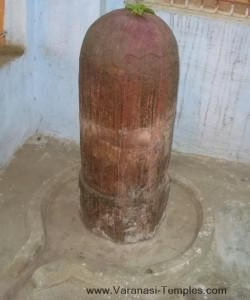
The Garbhagriha (sanctum sanctorum) houses the Jaygeeshyeshwar Lingam. The entrance is often adorned with traditional toranas (archways) and features remnants of intricate carvings depicting the divine couple and attendant deities. The proximity to the Agni Kund (Fire Pit) and the Bhoot Bhairav locality adds a layer of fierce, protective energy to the architecture.
Unique Structural Identity
The temple shares its architectural DNA with the nearby Jyeshta Gauri shrine, forming a spiritual complex. The stonework bears the marks of hand-hewn craftsmanship, preserving the authentic heritage of Kashi rather than modern industrial construction.
4. Darshan & Ritual Logistics (2026 Guide)
As a heritage custodian, I have compiled the current operational details. Please note that timings may vary slightly during festival seasons.
Daily Darshan Timings
| Session | Timings |
|---|---|
| Morning | 05:00 AM – 12:00 PM |
| Evening | 04:00 PM – 09:00 PM |
| Special Pujas | By Appointment Only |
Key Sevas (Rituals)
- Abhishekam: Ritual bathing of the Lingam with Panchamrit (milk, honey, yogurt, ghee, sugar).
- Rudrabhishek: A powerful Vedic ritual for fulfilling wishes and removing obstacles.
- Archana: Individual offerings and chanting of names.
Online Seva Booking
To facilitate devotees worldwide, the temple administration has partnered with standard Kashi digital platforms. For the specific temple ID, navigate to the Kashi Vishwanath Corridor app or the official Devashtana portal (search for “Jaygeeshyeshwar – K.66/3”). Booking opens 14 days in advance.
2026 Major Festival Dates
- Maha Shivaratri: February 26, 2026
- Kartik Purnima: November 4, 2026
- Sravana month (Mondays): July 14 – August 11, 2026 (Peak Devotion Period)
5. Practical Visitor Guidance
Visiting Jaygeeshyeshwar Temple requires navigating the narrow, winding lanes of Old Varanasi. Preparation ensures a peaceful darshan.
Rules & Etiquette
- Dress Code: Traditional Indian attire is preferred. Men should wear Dhoti or trousers; women should wear Saree or Salwar Kameez. Avoid shorts and sleeveless tops.
- Photography: Strictly prohibited inside the sanctum sanctorum. Photography of the exterior architecture is permitted with discretion.
- Mobile Phones: Please switch devices to silent mode. Lockers are available near the Agni Kund entrance for electronic devices.
Crowd Management & Seasonal Advice
- Best Hours: Visit between 6:00 AM – 8:00 AM for a quiet darshan. Evenings after 7:00 PM are serene but lit by traditional lamps.
- Summer (May-June): Varanasi can be hot. Carry a reusable water bottle; however, please do not bring plastic bottles inside the shrine area.
- Winter (Dec-Jan): Mornings are foggy. The cave-like structure keeps the temple warm.
Accessibility
The shrine is located deep within the lanes accessible by foot or rickshaw only. The flooring is uneven ancient stone. Senior citizens may require assistance for the final approach.
6. Pilgrimage Connectivity
How to Reach Jaygeeshyeshwar Temple
The temple is located in the Bhoot Bhairav/Jyeshteshwar region of Varanasi.
- Nearest Airport: Lal Bahadur Shastri International Airport (LBS) (Approx. 25 km / 1 hour by taxi).
- Nearest Railway Station: Varanasi Junction (BSB) (Approx. 6 km / 20-30 mins via auto-rickshaw).
- Road Access: The temple is accessible via NH 19 (Grand Trunk Road) leading into Varanasi. From the main road, take an auto to Godaulia or Lahurabir, then proceed on foot through the heritage lanes.
Nearby Sacred Sites (Pilgrimage Circuit)
To maximize your spiritual journey in the Jyeshteshwar region, visit these nearby sites:
- Jyeshta Gauri Temple: Located extremely close by, this temple houses the elder form of Goddess Gauri. (Refer to address: K.63/27).
- Divodaseshwar Temple: Located in the Madhyameshwar region, closely linked to the legend of King Divodas mentioned in the temple history.
- Agni Dhruveshwar Temple: Dedicated to the fire god, located near the entrance point of the lane.
7. Frequently Asked Questions (FAQ)
1. Is there a VIP darshan entry at Jaygeeshyeshwar Temple?
Being a heritage cave shrine, the temple does not have a separate VIP entry gate. However, devotees who have booked specific Sevas (like Rudrabhishek) online are given priority entry during their scheduled time slots.
The temple is located at K.66/3, Ishwar Gangi (Agni Kund). However, GPS can be tricky in the narrow lanes. It is best to navigate to Bhoot Bhairav Temple and ask a local guide for the Jaygeeshyeshwar cave entrance.
3. Are foreign tourists allowed inside?
Yes, Jaygeeshyeshwar Temple welcomes devotees from all backgrounds. Foreign tourists are requested to respect the sanctity of the shrine, dress modestly, and remove footwear before entering.
4. Is there a facility for Prasad distribution?
Yes, basic Prasad (offering of flowers and fruits) is available. Large-scale community kitchens are rare at this specific shrine, but nearby vendors in the Bhoot Bhairav market offer traditional Kashi Prasad.
5. How is this temple different from Kashi Vishwanath?
The Kashi Vishwanath (Vishwanath Temple) is the primary Jyotirlinga. Jaygeeshyeshwar is a Kshetra Pal (Guardian Deity) of a specific region within Kashi. It offers a more intimate, contemplative, and historically niche spiritual experience compared to the main corridor.
Photo Gallery
[Gallery shortcode placeholder for architectural details and interiors]
Contact Details
Phone: +91-XXX-XXXX-XXXX (Subject to change – verify via Kashi Vishwanath Temple Trust)
Office Address: Heritage Preservation Office, Varanasi.
Recent Posts

ओ सांवरे तूने ही मुझको संभाला – Lyrics & Meaning
ओ सांवरे तूने ही मुझको संभाला – A Prayer to Shyam Origin & Spiritual Essence Why This Bhajan Resonates Devotees chant this when overwhelmed by life’s storms—the refrain ‘तूने ही मुझको संभाला’ is the soul’s sigh of relief: “You…

कथा ये है महाराज मेरे की – Lyrics & Meaning
कथा ये है महाराज मेरे की छत्रपति संभाजी महाराज – A Prayer to Chhatrapati Sambhaji Maharaj Origin & Spiritual Essence Why This Bhajan Resonates Devotees chant this when their spirit feels tested—its powerful refrain “महाराज मेरे” is a soul’s…

Rigveda Samhita Yathartha Anuvada (ऋग्वेद संहिता यथार्थ अनुवाद) – Complete Set with Anvayartha & Hindi/English Translation
The Rigveda is the oldest surviving scripture of humanity and the foundational text of Sanātana Dharma. For serious students, scholars, UPSC aspirants studying ancient Indian history, Sanskrit learners, and spiritual seekers, a precise and grammatically structured translation is indispensable.…

आना भी अकेला है जाना भी अकेला है – Lyrics & Meaning | BharatTemples
आना भी अकेला है जाना भी अकेला है – A Prayer to the Divine Witness Origin & Spiritual Essence Why This Bhajan Resonates Devotees turn to this bhajan in moments of deep reflection—when life’s attachments begin to ache. The…

माता शेरावाली के द्वार जो भी जाता है – Lyrics & Meaning
माता शेरावाली के द्वार जो भी जाता है – A Prayer to Maa Sherawali Origin & Spiritual Essence Why This Bhajan Resonates Devotees turn to this bhajan in times of fear or uncertainty—its promise that no one leaves Maa’s…

मार लेना सपणी उबार लेणा भवरा – Lyrics & Meaning
मार लेना सपणी उबार लेणा भवरा – A Prayer to the Divine Beloved Origin & Spiritual Essence Why This Bhajan Resonates Devotees chant this in moments of deep vulnerability—its cry of “मार लेना सपणी, उबार लेणा भवरा” is the…

हमें श्याम सुंदर भरोसा तुम्हारा – Lyrics & Meaning
हमें श्याम सुंदर भरोसा तुम्हारा – A Prayer to Shyam Sundar Origin & Spiritual Essence Why This Bhajan Resonates Devotees chant this when feeling alone—its refrain ‘de do sahara’ is the soul’s cry for divine support. Lyrics in Hindi…

Mere Satguru Ne Di Thi Davai Lyrics in Hindi & Meaning
Mere Satguru Ne Di Thi Davai: Invoking the Guru’s Liberating Wisdom This soul-stirring bhajan venerates the Satguru (True Spiritual Master) as the divine physician who dispenses the only remedy for life’s deepest sufferings. Composed by Sant Karmaveer Tufani, it…

Janm Diyo Thari Maa Dukh Dekhiyo Lyrics in Hindi & Meaning
जन्म दियो थारी माँ दुख देखियो (Maa’s Grief Upon Birthing You) This soul-stirring Chetavani Bhajan (admonitory hymn) is addressed to the Divine Mother (Maa) – a call for repentance when children forget their filial duties in the dark age…
Bhadi Sabha Mein Thane Manaun Lyrics in Hindi & Meaning
Bhadi Sabha Mein Thane Manaun: Invoking the Spear-Wielding Mother Mata Bhawani (श्री ज्वाला भवानी), the fiery manifestation of Shakti worshipped as the Protector of Dharma in Her Dhaulagarh sanctum. Origin & Spiritual Essence Composed in Rajasthani folk tradition by…