
Contents
Jhandewalan Mandir: A Definitive Pilgrimage Guide
Nestled in the heart of New Delhi, amidst the bustling rhythms of the capital city, stands the revered Jhandewalan Mandir. This ancient sanctuary is not merely a structure of stone and mortar; it is a spiritual anchor for millions of devotees who flock here to seek the blessings of the Divine Mother. The temple is dedicated to Goddess Durga, specifically in her formidable and protective form. It is believed that the temple was established following the vision of Badri Bhagat, a great devotee of the Mother Goddess, who witnessed the idol hidden beneath the earth in a divine dream.
Today, the temple is located on the Jhandewalan Road, en route to Karol Bagh. The name “Jhandewalan” derives from the Hindi word “Jhanda,” meaning flag. It is a tradition for devotees to offer flags at the temple to have their wishes fulfilled, turning the sanctum into a vibrant tapestry of devotion and hope. It is deeply believed that the original idol of the Goddess is safely established at the ground level of the temple, while the upper level houses a newer idol for daily worship. On the occasion of Durga Puja and the nine sacred nights of Navratri, a massive influx of Hindu devotees transforms the temple into a sea of faith.
Introduction & Spiritual Essence
The Deity: Maa Durga in Her Swayambhu Form
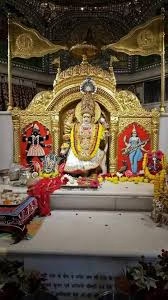
The presiding deity at Jhandewalan Mandir is Goddess Durga, revered as the Supreme Mother and the destroyer of all evils. The temple is unique because it houses a Swayambhu idol—a self-manifested idol believed to have emerged from the earth. This ancient idol is located on the ground floor, preserved in its original sanctity. The upper floor features a recently installed idol adorned with gold and precious jewels, where the daily rituals and Aarti are primarily conducted.
Phalaśruti: Why Visit?
According to Hindu scriptures, the Phalaśruti (benefits of worshipping) of visiting this temple is profound. Devotees believe that visiting this sanctum serves multiple purposes:
- Removal of Obstacles: Worshiping here eliminates negative energies and obstacles (Vighnas) from one’s life.
- Resolution of Ancestral Karma: It is said that offering prayers here aids in cleansing ancestral karma, bringing peace to departed souls.
- Fulfillment of Wishes: Tying a Jhanda (flag) on the temple premises is a traditional vow believed to ensure the fulfillment of sincere wishes.
Historical Origins & Scriptural Legend
The Legend of Badri Bhagat
The origin of the Jhandewalan Mandir is steeped in folklore and devotion. Tradition holds that the idol was discovered by Badri Bhagat, a devout disciple of the Mother Goddess. Living in the late 18th century, he was known for his intense spiritual practices. In a dream, he was guided to the location on Jhandewalan Road where the divine idol lay buried. Acting on this divine vision, he excavated the site and established a shrine, fostering the worship of the Goddess in that spot.
Historical Timeline and Renovations
According to temple records and historical accounts, the original structure dates back several centuries, deeply rooted in the history of Old Delhi. While the precise dynasty of its original builders remains a subject of historical study, the site has undergone significant renovations over the years to accommodate the growing number of pilgrims. The temple trust has maintained the delicate balance between preserving the ancient sanctity of the ground floor shrine and upgrading the upper floor for modern accessibility.
Architectural Marvels
Style and Layout
The architecture of Jhandewalan Mandir is a blend of traditional North Indian (Nagara style) temple architecture and modern structural elements. Unlike ancient temples that are exclusively built from stone, this temple utilizes concrete and marble to create a spacious environment for urban devotees. The design emphasizes verticality, leading the eye upward towards the ornate Shikhara (spire), which is adorned with intricate carvings and motifs representing various deities.
Vastu Shastra and Sculpture
The layout follows Vastu Shastra principles, with the main sanctum (Garbhagriha) positioned centrally, allowing for the circulation of spiritual energy. The MandapaDevi Mahatmya and the Ramayana, sculpted in relief. The gateways are guarded by marble statues of lions, symbolizing the vahana (vehicle) of Goddess Durga, representing power and fearlessness.
Darshan & Ritual Logistics
Daily Temple Timings (2026 Schedule)
The temple remains open throughout the week, though timings may vary slightly during festivals. Below is the standard schedule for 2026:
| Session | Timings | Activity |
|---|---|---|
| Morning | 05:00 AM – 12:00 PM | Opening, Pratah Aarti, Abhishekam |
| Afternoon | 12:00 PM – 04:00 PM | General Darshan (Quiet Period) |
| Evening | 04:00 PM – 10:00 PM | Sandhya Aarti, Closing |
Key Sevas and Online Booking
To cater to the needs of devotees globally, the temple trust facilitates online booking for various Sevas:
- Abhishekam: Ritual bathing of the idol with milk, honey, and ghee. Best performed on Tuesdays and Fridays.
- Archana: Recitation of 108 names of the Goddess.
- Special Navratri Pujas: Extended hours and elaborate rituals.
Booking Process: Devotees can visit the official website or use dedicated app channels (like UPI based payment portals available at the temple entrance) to book slots. It is advisable to book at least 24 hours in advance for weekend darshans.
2026 Festival Calendar
Mark your calendars for the major celebrations in 2026:
- Navratri (Spring): March 30 – April 7, 2026
- Navratri (Shardiya/ Autumn): September 22 – October 1, 2026 (Peak footfall expected).
- Durga Ashtami/ Mahanavami: October 1 & 2, 2026.
- Diwali: October 21, 2026 (Special evening Aarti).
Practical Visitor Guidance
Dress Code and Etiquette
As a place of worship, modesty is paramount. Visitors are required to wear traditional attire (Saree, Salwar Kameez, Kurta-Pajama) or decent clothing that covers shoulders and knees. Western outfits like shorts or sleeveless tops are generally discouraged. Footwear must be deposited at the designated counters outside the temple (usually a nominal fee applies).
Photography and Mobile Phones
Photography is strictly prohibited inside the main sanctum and the prayer hall to maintain the sanctity of the space. Photography is permitted in the outer courtyard. Silence is encouraged near the Garbhagriha.
Crowd Management & Accessibility
- Best Hours: For a peaceful Darshan, visit between 10:00 AM and 11:30 AM on weekdays. Avoid Saturday and Sunday evenings.
- Summer Advice (May–June): Delhi temperatures can exceed 40°C. Carry a water bottle (plastic bottles are available inside), and wear cotton clothing.
- Accessibility: The temple has ramps for wheelchair access, and the ground floor (ancient idol) is accessible via a dedicated lift.
Pilgrimage Connectivity
How to Reach Jhandewalan Mandir
The temple is centrally located in New Delhi, making it easily accessible via all modes of transport.
- By Metro: The most convenient route. Take the Blue Line and get down at Jhandewalan Metro Station (Gate number 2 or 3). The temple is a 2-minute walk from the station.
- By Bus: DTC buses frequently stop at the Jhandewalan Depot or Karol Bagh Terminal.
- By Road: The temple lies on the DB Gupta Road, accessible from the Mai Bada Marg (NH 8 link). Traffic can be heavy during peak hours (5 PM – 8 PM).
- By Air/Train: Nearest airport is Indira Gandhi International (DEL), 16 km away. The nearest railway station is New Delhi Railway Station (4 km) or Old Delhi Junction (6 km).
Nearby Sacred Sites
Enhance your pilgrimage circuit by visiting these nearby spiritual landmarks:
- Sri Digambar Jain Lal Mandir (Chandni Chowk): 4 km away. Known for its ancient bird hospital and Red Sandstone architecture.
- Kalkaji Mandir (Kalka Ji): 7 km away. Dedicated to Goddess Kali, another ancient Shakti Peeth in Delhi.
- Bangla Sahib Gurudwara: 5 km away. A serene complex offering community service and spiritual solace.
Photo Gallery

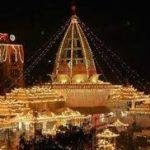

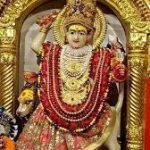
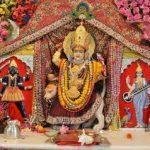
Frequently Asked Questions (FAQs)
1. Is there a VIP or Special Darshan entry available?
Yes, the temple offers a “Special Darshan” pass for elderly citizens and differently-abled visitors. These can be obtained at the administrative office upon arrival. However, there is no paid VIP entry; all darshans are treated equally by the temple trust.
2. What are the contact details for the temple?
For general inquiries or donation-related queries, you can contact the temple office at:
Phone: 011 2354 5810
Address: DB Gupta Road, Block E, Jhandewalan Extension, Paharganj, New Delhi, Delhi 110055
3. Is the original idol (Swayambhu) visible to the public?
Yes, the original idol is located on the ground floor and is accessible to the public. However, during peak festival days, the queue for the ground floor may be longer due to the sanctity associated with the ancient idol.
4. Is there parking available near the temple?
Parking in Karol Bagh and Jhandewalan is limited. It is highly recommended to use the Delhi Metro. If driving, there are paid parking lots near the Metro station, but they fill up quickly during weekends and festivals.
5. Are offerings (Prasad) allowed from outside?
No, outside food and offerings are not permitted. Only Prasad sold at the temple counters (such as flowers, garlands, and dry fruits) is allowed inside the sanctum. This is to ensure food safety and maintain temple cleanliness.
Recent Posts

Shri Kaamkoteeshwar Mandir, Varanasi – History & Significance
In the heart of Kashi, the eternal city of Lord Shiva, where the Ganges flows with celestial grace, stands the Shri Kaamkoteeshwar Mandir. This sacred Sannidhi is not merely a temple but a profound spiritual bridge between the Northern…

ओ सांवरे तूने ही मुझको संभाला – Lyrics & Meaning
ओ सांवरे तूने ही मुझको संभाला – A Prayer to Shyam Origin & Spiritual Essence Why This Bhajan Resonates Devotees chant this when overwhelmed by life’s storms—the refrain ‘तूने ही मुझको संभाला’ is the soul’s sigh of relief: “You…

कथा ये है महाराज मेरे की – Lyrics & Meaning
कथा ये है महाराज मेरे की छत्रपति संभाजी महाराज – A Prayer to Chhatrapati Sambhaji Maharaj Origin & Spiritual Essence Why This Bhajan Resonates Devotees chant this when their spirit feels tested—its powerful refrain “महाराज मेरे” is a soul’s…

Rigveda Samhita Yathartha Anuvada (ऋग्वेद संहिता यथार्थ अनुवाद) – Complete Set with Anvayartha & Hindi/English Translation
The Rigveda is the oldest surviving scripture of humanity and the foundational text of Sanātana Dharma. For serious students, scholars, UPSC aspirants studying ancient Indian history, Sanskrit learners, and spiritual seekers, a precise and grammatically structured translation is indispensable.…

आना भी अकेला है जाना भी अकेला है – Lyrics & Meaning | BharatTemples
आना भी अकेला है जाना भी अकेला है – A Prayer to the Divine Witness Origin & Spiritual Essence Why This Bhajan Resonates Devotees turn to this bhajan in moments of deep reflection—when life’s attachments begin to ache. The…

माता शेरावाली के द्वार जो भी जाता है – Lyrics & Meaning
माता शेरावाली के द्वार जो भी जाता है – A Prayer to Maa Sherawali Origin & Spiritual Essence Why This Bhajan Resonates Devotees turn to this bhajan in times of fear or uncertainty—its promise that no one leaves Maa’s…

मार लेना सपणी उबार लेणा भवरा – Lyrics & Meaning
मार लेना सपणी उबार लेणा भवरा – A Prayer to the Divine Beloved Origin & Spiritual Essence Why This Bhajan Resonates Devotees chant this in moments of deep vulnerability—its cry of “मार लेना सपणी, उबार लेणा भवरा” is the…

हमें श्याम सुंदर भरोसा तुम्हारा – Lyrics & Meaning
हमें श्याम सुंदर भरोसा तुम्हारा – A Prayer to Shyam Sundar Origin & Spiritual Essence Why This Bhajan Resonates Devotees chant this when feeling alone—its refrain ‘de do sahara’ is the soul’s cry for divine support. Lyrics in Hindi…

Mere Satguru Ne Di Thi Davai Lyrics in Hindi & Meaning
Mere Satguru Ne Di Thi Davai: Invoking the Guru’s Liberating Wisdom This soul-stirring bhajan venerates the Satguru (True Spiritual Master) as the divine physician who dispenses the only remedy for life’s deepest sufferings. Composed by Sant Karmaveer Tufani, it…

Janm Diyo Thari Maa Dukh Dekhiyo Lyrics in Hindi & Meaning
जन्म दियो थारी माँ दुख देखियो (Maa’s Grief Upon Birthing You) This soul-stirring Chetavani Bhajan (admonitory hymn) is addressed to the Divine Mother (Maa) – a call for repentance when children forget their filial duties in the dark age…