Jyoti Rupeshwar Temple Varanasi: History, Darshan Timings & Guide
Receive daily temple updates, divine darshan, and morning bhajans directly on WhatsApp.
Contents
- 1 Introduction & Spiritual Essence
- 2 Historical Origins & Scriptural Legend
- 3 Architectural Marvels
- 4 Darshan & Ritual Logistics
- 5 Practical Visitor Guidance
- 6 Pilgrimage Connectivity
- 7 Frequently Asked Questions
Introduction & Spiritual Essence
Deep within the spiritual labyrinth of Kashi (Varanasi), specifically in the sacred vicinity of Manikarnika Ghat, resides the Jyoti Rupeshwar Temple. Dedicated to Lord Shiva in his form as the “Light Lingam,” this temple is a jewel of the ancient Kashi Khand of the Skanda Purana. While Varanasi is home to hundreds of shrines, Jyoti Rupeshwar holds a unique theological significance as the self-manifested (Swayambhu) deity born from a divine column of light.
Phalaśruti (Spiritual Benefit): According to ancient scriptures, the primary deity is worshipped as Jyoti Lingeshwar. Devotees believe that worshiping this Lingam grants Siddhi (spiritual perfection). The Phalaśruti (benefit of pilgrimage) states that devotees who offer regular prayers here attain a radiant spiritual glow, mirroring the deity’s form as “Jyoti” (light). It is particularly potent for cleansing ancestral karma and removing ignorance, as the light represents the supreme knowledge of the universe.
Historical Origins & Scriptural Legend
Scriptural Origin: The existence of Jyoti Rupeshwar is firmly rooted in the Kashi Khand, Chapter 94. The text narrates that the river Ganga, revered as a Goddess, worships this specific Lingam eternally. It is considered one of the 52 Holy Shrines of Kashi where the divine energy manifests physically.
📖 Related: Dehli Vinayak Temple, Varanasi: History, Darshan Timings & Guide
The Legend: Tradition holds that long ago, Lord Vishnu performed severe penance (Tapa) at the nearby Chakra Pushkarini (the cosmic pool of water) located at Manikarnika. The intensity of his meditation pleased Lord Shiva, who appeared before him not as a figure, but as a blinding column of divine light. This light condensed into the Lingam known today as Jyoti Rupeshwar. Uniquely, unlike many temples in Varanasi with specific historical renovation dates, this shrine is located within the grounds of the Abhay Sanyas Ashram. It maintains the rustic, ancient atmosphere of a hidden sanctuary, preserved by the ascetics rather than royal dynasties.
Architectural Marvels
While the Jyoti Rupeshwar Temple does not follow the towering Nagara or Dravida styles of massive complexes, it exemplifies the intimate, domestic architecture typical of ancient Kashi shrines.
Sanctum and Vastu
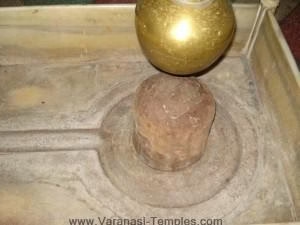
The temple is situated at Ck.8/10, Gomath, Abhay Sanyas Ashram. The architectural layout aligns with Kashi Vastu principles, where the inner sanctum is deep and focused, drawing the devotee’s gaze immediately to the Swayambhu Lingam. The Lingam itself is revered as a Jyoti Lingeshwar by locals—often depicted as a naturally occurring stone structure that appears to radiate light from within.
Unlike palatial temples, the structure here is humble, built to protect the sanctity of the site rather than showcase grandeur. The Ashram walls envelop the temple, creating a composite space where the architecture serves the spiritual atmosphere—stone floors, simple mandapas, and traditional oil lamps that enhance the “Jyoti” (light) aspect of the deity.
Darshan & Ritual Logistics
Devotees can access the temple through the Abhay Sanyas Ashram. The environment is meditative, making it ideal for Parikrama (circumambulation) and quiet chanting.
Daily Timings (Estimated)
Note: Temple timings are subject to change based on seasonal rituals and Ashram schedule.
| Session | Time |
|---|---|
| Morning Darshan | 05:00 AM – 12:00 PM |
| Midday Break | 12:00 PM – 4:00 PM |
| Evening Darshan | 04:00 PM – 9:00 PM |
📖 Related: Vashishteshwar Temple Varanasi: History, Darshan Timings & Guide 2026
Key Sevas (Rituals)
- Abhishekam: Performed with milk, honey, and Ganga Jal (holy water) for purification.
- Rudra Abhishek: A special elaborate ritual recommended for Mondays.
- Archana: Offering Bilva leaves and flowers to the Jyoti Lingeshwar.
Booking: While the shrine is traditional, arrangements for special rituals can be coordinated through the Abhay Sanyas Ashram administration. For general daily worship, no prior booking is required.
2026 Festival Dates
- Maha Shivaratri: February 26, 2026 (Major celebrations, night-long vigil).
- Shravan Mondays: July 6, 13, 20, 27, 2026 (Peak attendance).
- Kartik Purnima: November 5, 2026 (Special Ganga Aarti).
Practical Visitor Guidance
Reaching Jyoti Rupeshwar requires navigating the narrow, vibrant lanes of old Varanasi.
Rules & Etiquette
- Dress Code: Traditional attire is preferred. Men should wear dhoti/kurta or trousers and shirts; women should wear sarees or full-length dresses.
- Photography: Photography inside the inner sanctum is strictly prohibited to maintain sanctity. It may be allowed in the outer halls with permission.
- Mobile/Lockers: There are no formal electronic lockers. Devotees are advised to carry minimal belongings as the lanes are crowded and walking is required.
- Accessibility: The final approach involves walking through narrow alleys. It is not wheelchair accessible. Footwear must be removed outside the Ashram gates.
Crowd Management & Seasonal Advice
- Best Hours: Early morning (5:00 AM – 7:00 AM) offers the most peaceful Darshan.
- Summer (May-June): Carry a water bottle and cover your head. The stone floors can get hot.
- Monsoon (July-Sept): The lanes can be slippery; wear non-slip shoes.
Pilgrimage Connectivity
The temple is located in the heart of Varanasi’s Old City (Kashi).
📖 Related: Modak Priya Vinayak Temple Varanasi: History, Darshan Timings & Guide
How to Reach
- Nearest Airport: Lal Bahadur Shastri International Airport (VNS) – Approx. 25 km. Take a taxi to Godaulia, then a cycle rickshaw to Chowk.
- Nearest Railway: Varanasi Junction (BSB) – Approx. 5 km. Auto-rickshaws and e-rickshaws are available to Chowk.
- Route: Navigate to Chowk (the main market). From Chowk, the temple is accessible via a 10-minute walk through the narrow heritage lanes. Ask locals for the Abhay Sanyas Ashram near Gomath.
Nearby Sacred Sites (Pilgrimage Circuit)
- Manikarnika Ghat: Just steps away, this is the cremation ground where Jyoti Rupeshwar appeared.
- Digpatiya Ganesh Temple: A very old Ganesha shrine located nearby in the same lane.
- Sanjay Mission Hanuman Temple: Located on the other side of the ghat, known for protecting pilgrims.
Frequently Asked Questions
Is there a VIP darshan entry?
There is no formal VIP entry system at Jyoti Rupeshwar Temple. As it is a quiet sanctuary within an Ashram, all devotees are treated equally. However, visiting during early morning hours ensures a crowd-free darshan.
Is Jyoti Rupeshwar the same as the Kashi Vishwanath Jyotirlinga?
No. Kashi Vishwanath is the primary Jyotirlinga. Jyoti Rupeshwar is one of the 52 Holy Shrines of Kashi, holding a distinct significance as the embodiment of divine light described in the Kashi Khand.
Can we perform last rites (Antim Sanskar) here?
While Jyoti Rupeshwar is located near Manikarnika Ghat (the primary site for last rites), this temple is for worship. The Ashram maintains a peaceful environment, distinct from the cremation grounds.
Is there parking available?
No vehicle parking is available at the temple due to its location in the narrow lanes of the Old City. Visitors must park at designated spots outside the Old City (e.g., at Godaulia) and walk or take a cycle rickshaw.