
Contents
Introduction & Spiritual Essence
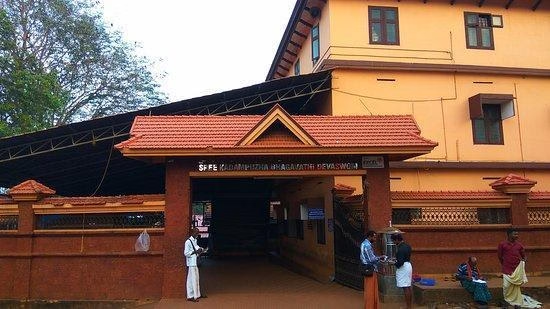
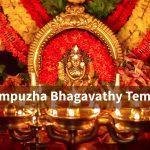
The Kadampuzha Devi Temple, located in the Malappuram district of Kerala, is one of the most powerful Shakti Peethams in South India. Dedicated to Goddess Parvati (manifested as Adi Parashakthi), the temple is renowned for its intense spiritual vibrations and the unique absence of a physical idol. Instead, devotees offer prayers to a holy pit (Garbha) believed to be the energy source of the Goddess.
Phalaśruti: Why Visit Kadampuzha?
According to temple records and devotee traditions, visiting Kadampuzha holds immense benefits (Phalaśruti):
- Removal of Ignorance: The Goddess is believed to grant the grace of Vidya (knowledge).
- Ancestral Karma Cleansing: Performing rituals here helps in liberating ancestors from the cycle of Karma and grants them Moksha.
- Destruction of Negativity: It is a prime location for warding off evil eye (Drushti) and negative planetary influences.
Historical Origins & Scriptural Legend
The origin of Kadampuzha is deeply rooted in the epic Mahabharata. The site is associated with the 12-year exile of the Pandavas.
The Kirata Legend
Tradition holds that during the 5th year of their exile, Arjuna left his brothers to perform intense penance to obtain the Pashupatastra from Lord Shiva. To test Arjuna’s devotion, Lord Shiva and Goddess Parvati assumed the forms of a Kirata (tribal hunter) and Kirati (his wife).
A demon named Mukasura took the form of a wild boar to distract Arjuna. Both Arjuna and the Kirata shot an arrow to kill the boar. A dispute arose regarding who killed it first. This led to a fierce duel where Arjuna was defeated. Realizing the divine presence, Arjuna offered flowers to a stone. When the flowers fell at the feet of the Kirata and Kirati, he realized he had been in the presence of Shiva and Parvati.
Architectural Origin
It was Adi Shankara (788–820 CE) who later identified this sacred spot. Legend says the hole in the sanctum was created by the arrow of Lord Parashurama (an incarnation of Vishnu) to quench the thirst of Goddess Parvati. Adi Shankara installed the deity of Narasimha (facing South) and the Sudarshana Chakra (facing North) to mark the sanctity of the location. The temple underwent significant renovations in 1974 and 1993 under the guidance of the Malabar Devaswom Board, replacing the wooden roof with a brass roof and laterite walls with granite.
Architectural Marvels
The Kadampuzha temple is a masterpiece of traditional Kerala temple architecture (Vastu Shastra), blending functionality with divine symbolism.
The Sanctum Sanctorum
Unlike typical temples, the inner sanctum (Sreekovil) does not house a Murti (idol). Instead, there is a rectangular pit covered by a stone slab. This pit represents the Garbhagriha of the Goddess. The sanctum is built using granite stones, and the roof is paved with brass, which reflects sunlight to illuminate the pit.
Sculptures and Shrines
The temple complex includes:
- Narasimha Shrine: Located in front of the sanctum, facing south.
- Sudarshana Chakra: Located directly opposite Narasimha, facing north.
- Sub-deities: Shrines for Shastha (Ayyappa), Naga Kanya (serpent deity), Ganapathi, and Madambiyarkavu (a nearby Shiva temple).
Note: The temple does not currently hold an ASI or UNESCO heritage status, but is protected and administered by the Malabar Devaswom Board.
Darshan & Ritual Logistics
Devotees visit Kadampuzha not just for Darshan (viewing the deity), but to perform specific Sevas (offerings) that are believed to yield immediate results.
Daily Timings (2026 Schedule)
Timings may vary slightly during festival seasons.
| Darshan Type | Timing |
|---|---|
| Morning Opening | 04:00 AM |
| Morning Darshan | 04:00 AM – 12:00 PM |
| Closure Break | 12:00 PM – 3:00 PM |
| Evening Opening | 03:00 PM |
| Evening Darshan | 03:00 PM – 9:00 PM |
| Closing Time | 09:30 PM |
Key Sevas and Booking
- Vilakku (Deepa Darshanam): Lighting of the lamp.
- Archana: Reciting the names of the Goddess.
- Abhishekam: Ritual bathing (Note: Water Abhishekam is not done on the main pit, but milk/juice offerings are made).
- Muttarukkal: Offering of 108 lotus flowers and turmeric powder. Highly sought after for wish fulfillment.
Online Booking: Sevas can be booked through the official Malabar Devaswom Board website or trusted partner portals. It is advisable to book Muttarukkal at least 2 weeks in advance.
2026 Festival Calendar
| Festival | Date (2026) |
|---|---|
| Navaratri (1st – 9th Day) | October 7 – October 15 |
| Vishu (Malayalam New Year) | April 14 |
| Thiruvathira | December 24 |
| Mandalakalam | December 16 – January 14 |
Practical Visitor Guidance
To ensure a smooth pilgrimage experience, adhering to the temple’s strict traditions is essential.
Dress Code and Conduct
- Men: Must wear Mundu (dhoti) or formal pants. Shirts are permitted, but vests are discouraged inside the sanctum.
- Women: Saree, Salwar Kameez, or traditional Kerala attire is required. Avoid western clothing like jeans and shorts.
Rules and Restrictions
- Photography: Strictly prohibited inside the temple premises and the sanctum.
- Mobile Phones: Electronic devices must be switched off or left in the designated lockers available at the entry point.
- Leather Items: Leather belts, wallets, and bags are prohibited as per temple customs.
Crowd Management
Best Hours to Visit: The early morning hours (4:00 AM – 6:00 AM) are ideal for a peaceful darshan. The evening hours (6:00 PM – 8:00 PM) are also relatively less crowded compared to the mid-morning rush.
Seasonal Advice: Kerala summers (March–May) are hot and humid. Carry a water bottle (to be kept in the locker) and wear breathable cotton fabrics. During Monsoons (June–September), carry an umbrella.
Pilgrimage Connectivity
Kadampuzha is well-connected by road and rail, making it accessible for devotees from across India.
How to Reach
- By Air: The nearest airport is Kozhikode (Calicut) International Airport, approximately 40 km away. Taxis and buses are available from the airport.
- By Rail: The nearest railway station is Tirur (TIR), located 14 km from the temple. Local buses and auto-rickshaws connect Tirur to Kadampuzha.
- By Road: Kadampuzha is situated on the Kuttippuram – Tirur Road. It is accessible via National Highway 66 (formerly NH 17).
Nearby Sacred Sites (Pilgrimage Circuit)
Extend your spiritual journey by visiting these nearby locations:
- Tirunavaya Navamukunda Temple: A historic temple located 12 km away, known for its association with the Mahabharata.
- Thirupparam Kunram Murugan Temple: Located 8 km away, dedicated to Lord Murugan.
- Kottakkal Arya Vaidya Sala: 10 km away, a renowned center for Ayurvedic treatments and wellness.
Photo Gallery
Frequently Asked Questions (FAQ)
1. Is there a VIP darshan entry at Kadampuzha?
Yes, the temple offers a special darshan lane for senior citizens and differently-abled devotees. Additionally, booking the Muttarukkal Seva allows for a closer and quicker darshan of the sanctum.
2. Can we perform abhishekam on the main sanctum?
No. Since there is no idol but a pit containing the Pranapratishta, water is not poured directly into the sanctum. However, specific offerings like milk, tender coconut water, and sandalwood paste are presented by the priests on your behalf.
3. What is the significance of the pit inside the sanctum?
The pit represents the womb of creation and the unmanifested energy of the Goddess. It is believed to be the spot where Lord Parashurama’s arrow struck the earth to release a spring of water to quench Goddess Parvati’s thirst.
4. Is Kadampuzha a Tantric temple?
Kadampuzha is a powerful Shakta temple, but it strictly follows Vedic traditions. While the rituals are potent, they are not ‘dark’ Tantric practices. The temple is known for its purity and adherence to the rules laid down by Adi Shankara.
5. Where is the nearest place to eat?
There is an Annapoora Kalam (food court) run by the Devaswom near the temple premises offering vegetarian meals. Private hotels are available in the town center, a 5-minute walk from the temple.
Contact Details
Official Address: Kadampuzha Devi Temple, Kadampuzha, Malappuram District, Kerala – 676553
Phone: 04942615790
Administration: Malabar Devaswom Board
Recent Posts

Shri Kaamkoteeshwar Mandir, Varanasi – History & Significance
In the heart of Kashi, the eternal city of Lord Shiva, where the Ganges flows with celestial grace, stands the Shri Kaamkoteeshwar Mandir. This sacred Sannidhi is not merely a temple but a profound spiritual bridge between the Northern…

ओ सांवरे तूने ही मुझको संभाला – Lyrics & Meaning
ओ सांवरे तूने ही मुझको संभाला – A Prayer to Shyam Origin & Spiritual Essence Why This Bhajan Resonates Devotees chant this when overwhelmed by life’s storms—the refrain ‘तूने ही मुझको संभाला’ is the soul’s sigh of relief: “You…

कथा ये है महाराज मेरे की – Lyrics & Meaning
कथा ये है महाराज मेरे की छत्रपति संभाजी महाराज – A Prayer to Chhatrapati Sambhaji Maharaj Origin & Spiritual Essence Why This Bhajan Resonates Devotees chant this when their spirit feels tested—its powerful refrain “महाराज मेरे” is a soul’s…

Rigveda Samhita Yathartha Anuvada (ऋग्वेद संहिता यथार्थ अनुवाद) – Complete Set with Anvayartha & Hindi/English Translation
The Rigveda is the oldest surviving scripture of humanity and the foundational text of Sanātana Dharma. For serious students, scholars, UPSC aspirants studying ancient Indian history, Sanskrit learners, and spiritual seekers, a precise and grammatically structured translation is indispensable.…

आना भी अकेला है जाना भी अकेला है – Lyrics & Meaning | BharatTemples
आना भी अकेला है जाना भी अकेला है – A Prayer to the Divine Witness Origin & Spiritual Essence Why This Bhajan Resonates Devotees turn to this bhajan in moments of deep reflection—when life’s attachments begin to ache. The…

माता शेरावाली के द्वार जो भी जाता है – Lyrics & Meaning
माता शेरावाली के द्वार जो भी जाता है – A Prayer to Maa Sherawali Origin & Spiritual Essence Why This Bhajan Resonates Devotees turn to this bhajan in times of fear or uncertainty—its promise that no one leaves Maa’s…

मार लेना सपणी उबार लेणा भवरा – Lyrics & Meaning
मार लेना सपणी उबार लेणा भवरा – A Prayer to the Divine Beloved Origin & Spiritual Essence Why This Bhajan Resonates Devotees chant this in moments of deep vulnerability—its cry of “मार लेना सपणी, उबार लेणा भवरा” is the…

हमें श्याम सुंदर भरोसा तुम्हारा – Lyrics & Meaning
हमें श्याम सुंदर भरोसा तुम्हारा – A Prayer to Shyam Sundar Origin & Spiritual Essence Why This Bhajan Resonates Devotees chant this when feeling alone—its refrain ‘de do sahara’ is the soul’s cry for divine support. Lyrics in Hindi…

Mere Satguru Ne Di Thi Davai Lyrics in Hindi & Meaning
Mere Satguru Ne Di Thi Davai: Invoking the Guru’s Liberating Wisdom This soul-stirring bhajan venerates the Satguru (True Spiritual Master) as the divine physician who dispenses the only remedy for life’s deepest sufferings. Composed by Sant Karmaveer Tufani, it…

Janm Diyo Thari Maa Dukh Dekhiyo Lyrics in Hindi & Meaning
जन्म दियो थारी माँ दुख देखियो (Maa’s Grief Upon Birthing You) This soul-stirring Chetavani Bhajan (admonitory hymn) is addressed to the Divine Mother (Maa) – a call for repentance when children forget their filial duties in the dark age…