
Contents
- 1 Introduction & Spiritual Essence
- 2 Historical Origins & Scriptural Legend
- 3 Architectural Marvels
- 4 Darshan & Ritual Logistics
- 5 Practical Visitor Guidance
- 6 Pilgrimage Connectivity
- 7 Photo Gallery
- 8 Frequently Asked Questions (FAQ)
- 8.1 1. Is there a VIP Darshan entry at Kalamega Perumal Temple?
- 8.2 2. What is the significance of the name “Kalamega Perumal”?
- 8.3 3. Are there accommodation facilities near the temple?
- 8.4 4. What is the contact number for temple inquiries?
- 8.5 5. Is non-vegetarian food allowed in the temple premises?
Introduction & Spiritual Essence
Welcome to the sacred grounds of the Kalamega Perumal Temple, a celestial abode of Lord Vishnu nestled in the historic town of Thirumohoor, Madurai. Unlike the modern structures that define our cities, this temple stands as a testament to ancient devotion and Dravidian architectural grandeur. It is revered as one of the 108 Divyadesams—holy shrines celebrated in the Divya Prabandha by the Azhwar saints.
Phalaśruti: The Divine Boon of Visiting
Devotees flock to this temple seeking liberation from the cycle of birth and death. According to scriptural tradition, Kalamega Perumal here is known as Marga Bandhu—the friend who guides the soul toward Moksha (salvation). It is believed that while Saint Nammalwar visited numerous shrines, it was the grace of Kalamega Perumal in Thirumohoor that bestowed upon him the ultimate spiritual realization. The temple tank, Thirupaarkadal, is considered a drop of the cosmic ocean of milk (Kshira Sagara), making a dip here a purification of ancestral karma.
Historical Origins & Scriptural Legend
The history of Kalamega Perumal Temple is deeply rooted in the lore of the Puranic age. While the exact date of construction remains undocumented in modern records, temple architecture and inscriptions suggest a foundational era under the Pandya dynasty, with significant enhancements and gopuram renovations attributed to the Madurai Nayaks (c. 16th–17th century CE).
The Legend of Thirumohoor
Tradition holds that the name Thirumohur derives from the Sanskrit word Moha (attraction or delusion). The local Sthala Purana narrates two intertwined legends:
- The Bhasmasura Tale: The demon Bhasmasura obtained a boon from Lord Shiva that anyone he touched on the head would turn to ashes. When the demon attempted to test this on Shiva himself, the terrified deity sought Vishnu’s help. Vishnu incarnated as Mohini, a celestial enchantress, and lured Bhasmasura into dancing until he exhausted himself and placed his own hand on his head, turning to ashes. The place where Mohini appeared became known as Thirumohur.
- The Churning of the Ocean: During the Samudra Manthan (churning of the ocean of milk) by Devas (gods) and Asuras (demons), Vishnu took the Mohini form to distract the Asuras and ensure the Devas received the nectar of immortality (Amrita). A drop of this nectar is believed to have fallen into the temple tank here.
Furthermore, scriptures state that Lord Brahma performed daily pujas here to Vishnu after the deity recovered the stolen Vedic scriptures from the demons Madhu and Kaidaba. It was here that Vishnu revealed his form as Kalamega Perumal (The Lord who is dark like a cloud) to satisfy Brahma’s desire to see him in his true Narayana form, rather than the female Mohini form.
Architectural Marvels
The temple is a masterpiece of Dravidian architecture, spread across approximately 2 acres. The complex is enclosed by a high granite wall protecting the sanctum and the water bodies.
Structural Highlights
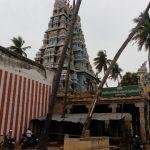
Rajagopuram: The towering gateway tower is a five-tiered structure, rising majestically to welcome pilgrims. It reflects the Nayak-era artistry with intricate stucco work and vibrant colorations.
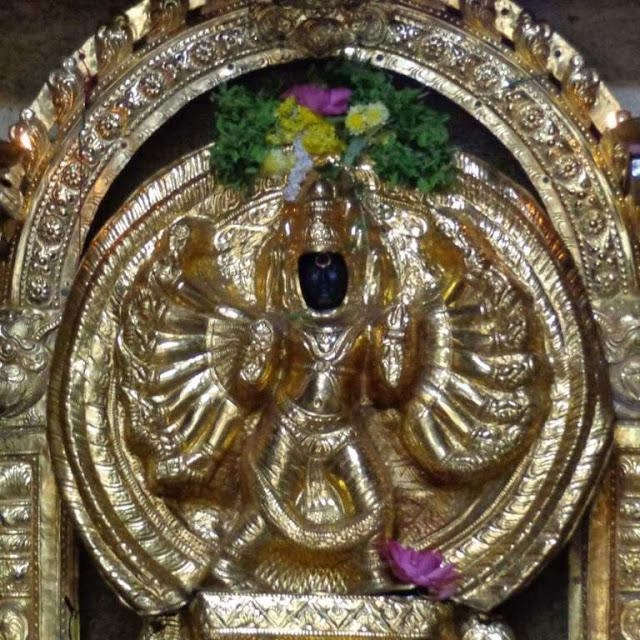
Sanctum Layout: The temple follows the classic Dravidian Panchakuta (five shrines) layout style. The central sanctum houses the presiding deity, Kalamega Perumal, in a standing posture (Namaskara Mandapam).
Shrines and Sculptures: The Garbhagriha (sanctum) is preceded by an Ardha Mandapam. The inner walls feature exquisite sculptures depicting the legends of Mohini and Bhasmasura. A separate shrine is dedicated to Tirumohurvalli, the consort, exquisitely carved with floral motifs. The Kalamega Perumal idol is unique, depicting a faint smile, which is said to symbolize the compassion of a close friend (Marga Bandhu).
The Temple Tank: Located in front of the Rajagopuram, the Thirupaarkadal tank is a significant ritualistic site used during festival processions.
Darshan & Ritual Logistics
The temple follows strict Agamic traditions with six daily rituals. The administration is managed by the Hindu Religious and Endowment Board of the Government of Tamil Nadu.
Daily Timings
| Session | Timing | Status |
|---|---|---|
| Morning Darshan | 7:00 AM – 12:00 PM | Open |
| Afternoon Closure | 12:00 PM – 4:00 PM | Closed |
| Evening Darshan | 4:00 PM – 8:00 PM | Open |
Key Pooja Timings
- Vishwaroopam: 6:00 AM – 6:30 AM
- Kaala Shanthi Pooja: 8:00 AM – 8:30 AM
- Thirumanjanam (Abhishekam): 11:00 AM – 12:00 PM
- Uchchi Kaala Pooja: 12:00 PM – 12:30 PM
- Sayaratchai: 6:00 PM – 6:30 PM
Online Seva Booking
While specific online booking links may vary via the TN HR&CE portal, devotees can generally book Archana and Special Darshan tickets online. Walk-in bookings for Abhishekam are available at the temple counter, typically closing 1 hour before the session begins.
2026 Major Festival Dates
Brahmotsavam: Celebrated in the Tamil month of Vaikasi (May–June). In 2026, the Brahmotsavam is expected to commence on May 18th, spanning 10 days.
Vaikuntha Ekadashi: January 3, 2026 (Mornings are particularly crowded).
Rama Navami: April 6, 2026.
Practical Visitor Guidance
Dress Code & Etiquette
Visitors must adhere to traditional dress codes. Men are required to wear Dhoti or formal trousers with a shirt; women should wear Saree, Salwar Kameez, or skirt and top. Western attire such as shorts and sleeveless tops is strictly prohibited inside the sanctum.
Crowd Management
Best Hours to Visit: Early mornings (7:00 AM – 8:00 AM) are serene and ideal for Darshan.
Seasonal Advice: Madurai experiences intense heat from April to June. Devotees are advised to carry water bottles and umbrellas, as queue lines are often outdoors.
Photography & Lockers: Photography is restricted inside the main sanctum. Mobile phones are allowed but must be silenced. No locker facility is explicitly mentioned; please carry minimal belongings.
Accessibility
The temple has level ground with ramps for wheelchair access to the main mandapams, though the sanctum entrance involves a few steps.
Pilgrimage Connectivity
How to Reach Kalamega Perumal Temple
By Air: Madurai International Airport (IXM) is the nearest airport, located approximately 25 km away. Taxis and airport buses are readily available.
By Rail: Madurai Junction (MDU) is the nearest railway station, located about 13 km from the temple.
By Road: The temple is located on the Madurai–Melur Road (State Highway 30).
Directions from Madurai: Take the Melur route. From Mattuthavani Integrated Bus Terminus, board a bus heading to Melur and alight at Othakadai (9 km). From Othakadai, take a local mini-bus or share auto (3 km) to reach the temple.
Nearby Sacred Sites
Extend your pilgrimage circuit with these nearby Divyadesams:
- Koodal Azhagar Temple (Madurai): 14 km away. A majestic Vishnu temple in the heart of Madurai.
- Azhagar Koyil (Kallazhagar Temple): 19 km away. A hill temple dedicated to Vishnu in his form as Thiruvaalagiri.
- Thiruparankundram Murugan Temple: 22 km away. A pivotal Murugan temple and one of the six abodes (Arupadaiveedu).
Photo Gallery
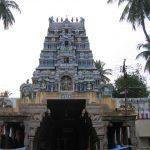
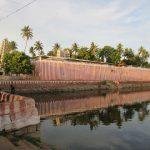
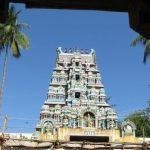
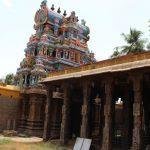
Frequently Asked Questions (FAQ)
1. Is there a VIP Darshan entry at Kalamega Perumal Temple?
Yes, the temple administration offers a Special Darshan ticket (typically ₹50 – ₹100 depending on the festival season) at the entry counter. This allows devotees to bypass the general queue during peak hours.
2. What is the significance of the name “Kalamega Perumal”?
Kalamega refers to “Dark Cloud” (Kala Meham), symbolizing the complexion of Lord Vishnu. This form is specifically worshipped as the one who grants salvation and guidance to devotees lost in the material world.
3. Are there accommodation facilities near the temple?
There are no guest houses directly attached to this temple. However, Madurai city (14 km away) offers a wide range of accommodations, from budget lodges to star hotels. It is recommended to stay in Madurai for better amenities.
4. What is the contact number for temple inquiries?
You can reach the temple administration at:
Phone: +91 452 2423227 / 2423444 / 2422744
Mobile: +91 98420 24866 / 98422 69683 / 98425 24325 / 95000 43011
5. Is non-vegetarian food allowed in the temple premises?
Strictly no. As a Vaishnava temple, the premises and the immediate vicinity are strictly vegetarian zones. Devotees are requested to consume only Sattvic food outside the temple boundaries.
Recent Posts

Shri Kaamkoteeshwar Mandir, Varanasi – History & Significance
In the heart of Kashi, the eternal city of Lord Shiva, where the Ganges flows with celestial grace, stands the Shri Kaamkoteeshwar Mandir. This sacred Sannidhi is not merely a temple but a profound spiritual bridge between the Northern…

ओ सांवरे तूने ही मुझको संभाला – Lyrics & Meaning
ओ सांवरे तूने ही मुझको संभाला – A Prayer to Shyam Origin & Spiritual Essence Why This Bhajan Resonates Devotees chant this when overwhelmed by life’s storms—the refrain ‘तूने ही मुझको संभाला’ is the soul’s sigh of relief: “You…

कथा ये है महाराज मेरे की – Lyrics & Meaning
कथा ये है महाराज मेरे की छत्रपति संभाजी महाराज – A Prayer to Chhatrapati Sambhaji Maharaj Origin & Spiritual Essence Why This Bhajan Resonates Devotees chant this when their spirit feels tested—its powerful refrain “महाराज मेरे” is a soul’s…

Rigveda Samhita Yathartha Anuvada (ऋग्वेद संहिता यथार्थ अनुवाद) – Complete Set with Anvayartha & Hindi/English Translation
The Rigveda is the oldest surviving scripture of humanity and the foundational text of Sanātana Dharma. For serious students, scholars, UPSC aspirants studying ancient Indian history, Sanskrit learners, and spiritual seekers, a precise and grammatically structured translation is indispensable.…

आना भी अकेला है जाना भी अकेला है – Lyrics & Meaning | BharatTemples
आना भी अकेला है जाना भी अकेला है – A Prayer to the Divine Witness Origin & Spiritual Essence Why This Bhajan Resonates Devotees turn to this bhajan in moments of deep reflection—when life’s attachments begin to ache. The…

माता शेरावाली के द्वार जो भी जाता है – Lyrics & Meaning
माता शेरावाली के द्वार जो भी जाता है – A Prayer to Maa Sherawali Origin & Spiritual Essence Why This Bhajan Resonates Devotees turn to this bhajan in times of fear or uncertainty—its promise that no one leaves Maa’s…

मार लेना सपणी उबार लेणा भवरा – Lyrics & Meaning
मार लेना सपणी उबार लेणा भवरा – A Prayer to the Divine Beloved Origin & Spiritual Essence Why This Bhajan Resonates Devotees chant this in moments of deep vulnerability—its cry of “मार लेना सपणी, उबार लेणा भवरा” is the…

हमें श्याम सुंदर भरोसा तुम्हारा – Lyrics & Meaning
हमें श्याम सुंदर भरोसा तुम्हारा – A Prayer to Shyam Sundar Origin & Spiritual Essence Why This Bhajan Resonates Devotees chant this when feeling alone—its refrain ‘de do sahara’ is the soul’s cry for divine support. Lyrics in Hindi…

Mere Satguru Ne Di Thi Davai Lyrics in Hindi & Meaning
Mere Satguru Ne Di Thi Davai: Invoking the Guru’s Liberating Wisdom This soul-stirring bhajan venerates the Satguru (True Spiritual Master) as the divine physician who dispenses the only remedy for life’s deepest sufferings. Composed by Sant Karmaveer Tufani, it…

Janm Diyo Thari Maa Dukh Dekhiyo Lyrics in Hindi & Meaning
जन्म दियो थारी माँ दुख देखियो (Maa’s Grief Upon Birthing You) This soul-stirring Chetavani Bhajan (admonitory hymn) is addressed to the Divine Mother (Maa) – a call for repentance when children forget their filial duties in the dark age…