
Contents
Introduction & Spiritual Essence
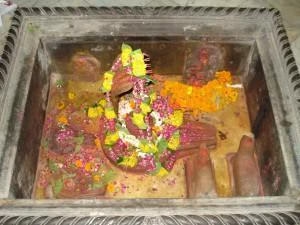
Nestled in the spiritual heart of Kashi (Varanasi), the Kapardeeshwar Temple stands as a beacon of divine grace and ancestral liberation. This ancient shrine is dedicated to Lord Shiva in his manifestation as Kapardeeshwar. The term “Kaparda” refers to the matted locks of hair, symbolic of the ascetic form of Shiva. Here, the deity is enshrined as a Swayambhu Lingam (self-manifested), radiating an aura of intense spiritual energy.
Phalaśruti (Spiritual Benefits): Devotees flock to Kapardeeshwar Temple not only for general well-being but specifically for emotional stability. It is believed that praying here grants “absolute control over emotions and Krodh (anger).” Furthermore, the temple precincts house the famous Pishachmochan Kund, a water body of immense scriptural importance. As per Kashi Khand, bathing in this Kund cleanses ancestral karma and offers Mukti (liberation) to the departed souls, making it a vital site for Pind Daan rituals.
Historical Origins & Scriptural Legend
The history of Kapardeeshwar Temple is deeply interwoven with the ancient texts known as the Kashi Khand of the Skanda Purana. According to Kashi Khand (Chapter 54), the temple’s origin is linked to a profound legend involving a Pishach (demon) and the sage Valmiki.
The Legend of Pishachmochan
Tradition holds that the sage Valmiki resided near this site, constantly chanting the Shiv Sahasranam. One day, a hideous demon appeared before him. The demon revealed that he was once a human residing near the Godavari River who committed many sins, resulting in his rebirth as a Pishach. Seeking salvation, he appealed to Valmiki.
Valmiki instructed the Pishach to bathe in a nearby pond (now known as Pishachmochan Kund) and pray to Lord Kapardeeshwar. Following the advice, the Pishach was cleansed of his sins and attained liberation (Mukti). Valmiki then bestowed upon him Vibhuti (sacred ash), instructing him to apply it on his forehead. This act signifies protection from untimely death and calamities.
Following this miraculous event, the pond was named Pishachmochan (Liberator of the Demon). While specific construction dates and dynastic builders are not definitively recorded in modern architectural surveys, the temple structures in Varanasi have evolved over centuries, with foundations often dating back to the medieval era, though rebuilt and renovated by devotees over time.
Architectural Marvels
The Kapardeeshwar Temple exemplifies the traditional Nagara style of temple architecture, adapted to the distinct urban fabric of Varanasi. While not a colossal structure like the Brihadeeswarar Temple, its architectural integrity lies in its intricate carvings and spiritual layout.
Key Architectural Features
- The Sanctum (Garbhagriha): The inner sanctum houses the Kapardeeshwar Lingam. The dark, intimate atmosphere of the Garbhagriha is designed to focus the devotee’s mind solely on the deity.
- Shikhara (Tower): The temple features a curvilinear tower (Shikhara) typical of North Indian temples, culminating in a Amalaka (stone disk) and Kalasha (pot finial).
- Mandapas: A pillared hall (Mandapa) precedes the sanctum, allowing space for devotees to gather for prayers and rituals. The pillars often feature carvings of various deities and geometric patterns.
- Pishachmochan Kund: Located within the temple complex, this large tank is a significant architectural element. It is well-maintained and features steps leading down to the water, facilitating ritual bathing.
Darshan & Ritual Logistics (2026 Guide)
Planning your visit requires awareness of daily schedules and festival dates. The temple follows the standard Varanasi puja timings, though specific aartis may vary seasonally.
Daily Timings
| Session | Timing | Activity |
|---|---|---|
| Morning | 05:00 AM – 12:00 PM | Mangala Aarti, Shringar Darshan |
| Afternoon | 12:00 PM – 03:00 PM | Rest period (Temple may close) |
| Evening | 04:00 PM – 09:00 PM | Bhog Aarti, Sandhya Aarti |
Key Sevas & Online Booking
Devotees can perform various Sevas (offerings) at Kapardeeshwar Temple:
- Abhishekam: Ritual bathing of the Lingam with water, milk, honey, and ghee.
- Archana: Recitation of the devotee’s name and lineage (Gotra) along with Shiva mantras.
- Rudrabhishek: A comprehensive Vedic ritual for prosperity and peace.
Online Booking: While smaller local temples in Varanasi often handle bookings directly at the counter, major rituals can now be coordinated through the official Varanasi temple administration or dedicated platforms. Pro Tip: It is advisable to inquire at the temple office upon arrival for real-time availability of specific Sevas.
2026 Major Festival Dates
- Mahashivratri: February 26, 2026 (Special night-long vigil and Rudrabhishek).
- Magh Month: January 21 – February 20, 2026 (Highly auspicious for Pind Daan at Pishachmochan Kund).
- Shukla Chaturdasi: The day before every new moon (Amavasya) is considered ideal for rituals at this site.
- Sawan Mondays (Shravan): July 14 – August 11, 2026 (Intense rush, special decorations).
Practical Visitor Guidance
Visiting the Kapardeeshwar Temple is a spiritual journey, but practical preparation ensures a peaceful experience.
Rules & Etiquette
- Dress Code: Traditional attire is recommended. Men should wear Dhoti or trousers (avoid shorts); women should wear Saree or Salwar Kameez.
- Photography: Photography is generally restricted inside the inner sanctum (Garbhagriha). Please respect the sanctity of the space.
- Mobile Phones: Silence mobile devices. Some temples provide lockers for storage; however, it is best to carry minimal electronic items.
- Accessibility: The temple is located in a crowded locality. The lanes are narrow; footwear must be removed outside. Senior citizens may find the steps to the Kund challenging.
Crowd Management & Seasonal Advice
- Best Hours: Early morning (6:00 AM – 8:00 AM) offers the most serene Darshan. Evenings can be crowded due to local devotees.
- Summer (May-June): Varanasi can be intensely hot. Carry a reusable water bottle and cover your head while walking in the sun.
- Monsoon (July-Sept): Humidity is high. Carry an umbrella as sudden showers are common.
Pilgrimage Connectivity
How to Reach
Kapardeeshwar Temple is located in the Pishachmochan area of Varanasi, near Chetganj.
- By Air: The nearest airport is Varanasi Lal Bahadur Shastri International Airport (VNS), located approximately 25 km from the temple.
- By Rail: The closest major railway station is Varanasi Junction (BSB), about 5-6 km away. Another nearby station is Manduadih (MUV).
- By Road: The temple is accessible via NH-19 and city roads. From the railway station, take an auto-rickshaw or e-rickshaw to Chetganj or Maldahiya. Cycle rickshaws are recommended for the final narrow lanes.
Nearby Sacred Sites (Pilgrimage Circuit)
- Manikarnika Ghat: Located nearby, this is the primary cremation ground in Kashi, representing the ultimate truth of life and death.
- Durga Temple (Monkey Temple): Situated in the Durga Kund area, this vibrant red temple is dedicated to Goddess Durga.
- Sankat Mochan Hanuman Temple: A short distance away, this temple is revered for the worship of Lord Hanuman and is believed to remove troubles.
Frequently Asked Questions (FAQ)
1. What is the significance of applying Vibhuti at Kapardeeshwar Temple?
According to the Kashi Khand, applying Vibhuti (sacred ash) procured from this temple is believed to protect the devotee from untimely death and misfortunes. It represents the indifference to material pain and pleasure.
2. Can we perform Pind Daan for ancestors at Kapardeeshwar?
Yes. The Pishachmochan Kund located within the temple complex is considered one of the most sacred places in Varanasi for performing Pind Daan (rituals for forefathers). The Magh month is particularly auspicious for this ritual.
3. Is there a VIP or special entry darshan available?
Kapardeeshwar Temple is a traditional shrine rather than a large commercial complex. However, during peak festivals like Mahashivratri, the temple administration may provide special passes for a closer darshan. It is best to consult the temple priest or administrator on arrival.
4. Is the temple open for 24 hours?
No, unlike the famous Kashi Vishwanath Temple, Kapardeeshwar Temple follows specific timings and closes in the afternoon (typically between 12 PM and 4 PM). Please check the current notice board for exact seasonal changes.
5. Is there parking available near the temple?
Due to the narrow lane structure (Galis) of Varanasi’s old city, vehicles cannot enter the immediate vicinity of the temple. Visitors should park their vehicles at designated parking areas near Chetganj or Maldahiya and proceed on foot or by cycle rickshaw.
Recent Posts

ओ सांवरे तूने ही मुझको संभाला – Lyrics & Meaning
ओ सांवरे तूने ही मुझको संभाला – A Prayer to Shyam Origin & Spiritual Essence Why This Bhajan Resonates Devotees chant this when overwhelmed by life’s storms—the refrain ‘तूने ही मुझको संभाला’ is the soul’s sigh of relief: “You…

कथा ये है महाराज मेरे की – Lyrics & Meaning
कथा ये है महाराज मेरे की छत्रपति संभाजी महाराज – A Prayer to Chhatrapati Sambhaji Maharaj Origin & Spiritual Essence Why This Bhajan Resonates Devotees chant this when their spirit feels tested—its powerful refrain “महाराज मेरे” is a soul’s…

Rigveda Samhita Yathartha Anuvada (ऋग्वेद संहिता यथार्थ अनुवाद) – Complete Set with Anvayartha & Hindi/English Translation
The Rigveda is the oldest surviving scripture of humanity and the foundational text of Sanātana Dharma. For serious students, scholars, UPSC aspirants studying ancient Indian history, Sanskrit learners, and spiritual seekers, a precise and grammatically structured translation is indispensable.…

आना भी अकेला है जाना भी अकेला है – Lyrics & Meaning | BharatTemples
आना भी अकेला है जाना भी अकेला है – A Prayer to the Divine Witness Origin & Spiritual Essence Why This Bhajan Resonates Devotees turn to this bhajan in moments of deep reflection—when life’s attachments begin to ache. The…

माता शेरावाली के द्वार जो भी जाता है – Lyrics & Meaning
माता शेरावाली के द्वार जो भी जाता है – A Prayer to Maa Sherawali Origin & Spiritual Essence Why This Bhajan Resonates Devotees turn to this bhajan in times of fear or uncertainty—its promise that no one leaves Maa’s…

मार लेना सपणी उबार लेणा भवरा – Lyrics & Meaning
मार लेना सपणी उबार लेणा भवरा – A Prayer to the Divine Beloved Origin & Spiritual Essence Why This Bhajan Resonates Devotees chant this in moments of deep vulnerability—its cry of “मार लेना सपणी, उबार लेणा भवरा” is the…

हमें श्याम सुंदर भरोसा तुम्हारा – Lyrics & Meaning
हमें श्याम सुंदर भरोसा तुम्हारा – A Prayer to Shyam Sundar Origin & Spiritual Essence Why This Bhajan Resonates Devotees chant this when feeling alone—its refrain ‘de do sahara’ is the soul’s cry for divine support. Lyrics in Hindi…

Mere Satguru Ne Di Thi Davai Lyrics in Hindi & Meaning
Mere Satguru Ne Di Thi Davai: Invoking the Guru’s Liberating Wisdom This soul-stirring bhajan venerates the Satguru (True Spiritual Master) as the divine physician who dispenses the only remedy for life’s deepest sufferings. Composed by Sant Karmaveer Tufani, it…

Janm Diyo Thari Maa Dukh Dekhiyo Lyrics in Hindi & Meaning
जन्म दियो थारी माँ दुख देखियो (Maa’s Grief Upon Birthing You) This soul-stirring Chetavani Bhajan (admonitory hymn) is addressed to the Divine Mother (Maa) – a call for repentance when children forget their filial duties in the dark age…
Bhadi Sabha Mein Thane Manaun Lyrics in Hindi & Meaning
Bhadi Sabha Mein Thane Manaun: Invoking the Spear-Wielding Mother Mata Bhawani (श्री ज्वाला भवानी), the fiery manifestation of Shakti worshipped as the Protector of Dharma in Her Dhaulagarh sanctum. Origin & Spiritual Essence Composed in Rajasthani folk tradition by…