
Contents
Introduction & Spiritual Essence
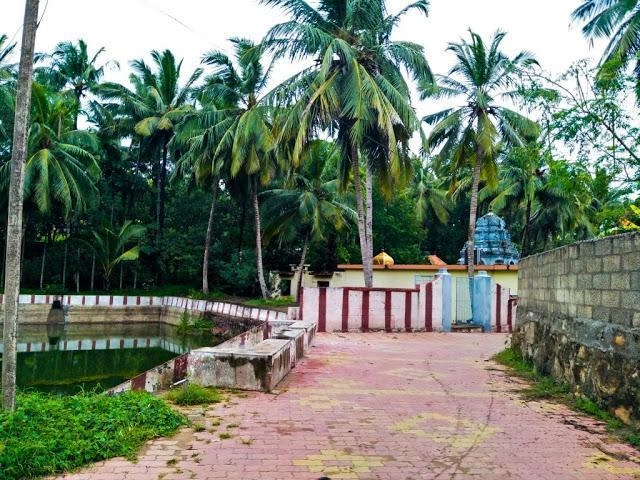
The Kasi Vishwanathar Temple in Kesavanputhoor, Kanyakumari, stands as a serene beacon of devotion dedicated to Lord Shiva. Here, the primary deity is worshipped as Kasi Vishwanathar, symbolizing the formless cosmic energy, while the consort, Mother Visalakshi, represents the divine feminine consciousness. This ancient shrine is not merely a stone structure but a living Jyotirlinga equivalent in the southern tip of Bharat, carrying the spiritual resonance of Varanasi (Kasi) to Tamil Nadu.
Phalaśruti (Spiritual Benefits): According to temple lore and local devotees, worshipping here bestows immense merit equivalent to a pilgrimage to the holy Kashi. The temple is particularly renowned for removing ancestral afflictions (Pitra Dosha) and bestowing spiritual clarity. The Padma Vinayagar (Lord Ganesha) here is revered as a powerful wish-fulfiller; devotees believe that circumambulating this Ganesha idol removes obstacles in career, education, and health.
Historical Origins & Scriptural Legend
Scriptural Connections & The Kasi Legend
While specific dynastic inscriptions regarding the initial construction are largely absent from current ASI records, the temple’s history is deeply rooted in the Dravidian architectural traditions of the Nadu Naadu region of the Pandya era. Tradition holds that the installation of the deity was performed by a sage who wished to create a spiritual vibration identical to the Kasi Vishwanathar in Uttar Pradesh, allowing local devotees to avoid the arduous journey north.
Local Sthala Purana
Legend narrates that this land was once a dense forest of Padma (lotus) flowers. Lord Ganesha, in his form as Padma Vinayagar, is said to have emerged from a lotus here, blessing the region. The temple serves as a testament to the syncretism of Shaivism and the worship of the Navagrahas, indicating a sophisticated understanding of Vedic astrology among the temple’s ancient patrons.
Architectural Marvels
The Kasi Vishwanathar Temple exemplifies the Dravidian style of architecture, characterized by its pyramid-like gateways and pillared mandapas.
Key Structural Elements
- The Sanctum (Garbhagriha): The innermost shrine houses the Swayambhu (self-manifested) Lingam of Kasi Vishwanathar. The chamber is designed to accumulate spiritual energy, accessible only through a narrow passage that focuses the devotee’s attention solely on the deity.
- The Mandapas: The temple features several pillared halls leading to the sanctum. These mandapas are adorned with intricate carvings depicting scenes from the Puranas, particularly the Skanda Purana (which details the glory of Kashi).
- Shikhara & Vimana: Unlike the towering Nagara spires of the north, the temple tower follows the Dravidian Vimana style with tiered structures reducing in size as they ascend, culminating in a Kalasham (pot).
- The Holy Tank: Adjacent to the temple is a large temple pond (Theertham). The water here is believed to be curative, and ritual baths prior to Darshan are considered auspicious.
Note: While the temple is a protected monument under local endowments, it is a heritage site of significant cultural value for the Kanyakumari district.
Darshan & Ritual Logistics (2026 Update)
To ensure a seamless spiritual experience, devotees are encouraged to review the schedule below. Please note that timings are subject to change during festival seasons.
Daily Timings
| Session | Timings |
|---|---|
| Morning Darshan | 6:00 AM – 12:00 PM |
| Afternoon Break | 12:00 PM – 4:00 PM |
| Evening Darshan | 4:00 PM – 8:00 PM |
| Raja Alankaram (Special) | 7:00 PM (Sundays & Pradosham) |
Key Sevas & Online Booking
The temple administration facilitates several Sevas (offerings). For 2026, devotees can book these services via the official Tamil Nadu Temples portal.
- Abhishekam: Performed on Mondays and Pradosham. Items include milk, honey, sandalwood paste, and sacred ash.
- Archana: Daily recitation of Lord’s names. Options include Rudram, Lakshmi Ashtotram, and Ganesha Pancharatnam.
- Kasi Viswanathar Pooja: A special ritual invoking the energies of Kashi. Best performed during Arudra Darshanam.
How to Book: Visit the official ttd.tn.gov.in portal or use the “Temple Connect” app. Select “Kesavanputhoor” under the Kanyakumari district list.
2026 Major Festival Dates
- Navaratri: September 22 – October 1, 2026
- Arudra Darshanam: January 10, 2026 (Major event for Shiva temples)
- Maha Shivaratri: February 26, 2026
- Aippasi Pournami: October 31, 2026
Practical Visitor Guidance
Dress Code & Etiquette
Traditional attire is mandatory. Men must wear Dhoti or trousers with a formal shirt; women are requested to wear Saree, Salwar Kameez, or traditional skirts. Modern clothing like jeans, shorts, or sleeveless tops is strictly prohibited inside the sanctum.
Crowd Management & Accessibility
Best Hours to Visit: Early mornings (6:00 AM – 7:30 AM) and late evenings (post 6:00 PM) are ideal for a peaceful Darshan. Mondays attract larger crowds due to the weekly Pradosham.
Seasonal Advice:
- Summer (April – June): Temperatures in Kanyakumari rise significantly. Carry a water bottle, umbrella, and use the free water facilities available near the temple pond.
- Monsoon (October – December): The region receives heavy rainfall. Use non-slip footwear.
Facilities
- Mobile Lockers: Available near the ticket counter for electronic devices (mandatory for phones inside the sanctum).
- Photography: Strictly prohibited inside the Garbhagriha. Allowed in the outer mandapas and courtyard.
- Accessibility: The temple has a few steps at the entrance. Wheelchair access is available for the outer campus, but the inner sanctum is difficult to access for those with mobility issues.
Pilgrimage Connectivity
How to Reach
The Kasi Vishwanathar Temple is located in Kesavanputhoor, easily accessible from Azhagiapandipuram.
- By Air: The nearest airport is Trivandrum International Airport (TRV), located approximately 85 km away (approx. 2 hours by car).
- By Rail: The nearest major railway junction is Nagercoil Junction (NCJ), located 18 km away. Local taxis and buses are available from Nagercoil.
- By Road: The temple is 18 km from Nagercoil via the Madurai-Kanyakumari Road (SH-90). Buses ply frequently from Nagercoil and Azhagiapandipuram to Kesavanputhoor.
Visiting Sacred Circuits (Pilgrimage Circuit)
Extend your spiritual journey by visiting these nearby sacred sites:
- Azhagiapandipuram Bhagavathi Amman Temple: Just 700 meters away, this ancient temple is dedicated to Goddess Bhagavathi and is known for its powerful energy.
- Suchindram Thanumalayan Temple: Located 24 km away, this temple is famous for its monolithic Hanuman statue and musical pillars.
- Kumarakovil Temple: About 30 km away, nestled on a hill, this is a unique temple dedicated to Lord Murugan (Subramanya) representing the formless state.
Photo Gallery



Frequently Asked Questions (FAQs)
1. Is there a VIP darshan entry?
Yes, the temple offers a special entry darshan ticket (₹20-₹50 usually) which allows devotees to bypass the general queue. However, during peak festivals like Arudra Darshanam, all darshans are generally unified.
2. Can I carry food inside the temple?
Outside food is not allowed inside the sanctum. However, the temple trust occasionally provides Prasadam (sweet rice/pongal) in the evening. It is advisable to eat before visiting.
3. Is there a guest house or accommodation available?
The temple does not have an attached guest house. However, budget hotels and lodges are available in Nagercoil (18 km) and Kanyakumari (44 km). Advanced booking is recommended during festival seasons.
4. What is the significance of the Padma Vinayagar here?
Lord Ganesha here is seated on a lotus flower (Padma Asana). Devotees worship him first to ensure the success of their main prayers to Lord Shiva. He is considered the remover of immediate obstacles.
5. Is the temple open for all religions?
Yes, the temple welcomes devotees from all backgrounds. Respect for local customs and traditions is expected from all visitors.
Recent Posts

ओ सांवरे तूने ही मुझको संभाला – Lyrics & Meaning
ओ सांवरे तूने ही मुझको संभाला – A Prayer to Shyam Origin & Spiritual Essence Why This Bhajan Resonates Devotees chant this when overwhelmed by life’s storms—the refrain ‘तूने ही मुझको संभाला’ is the soul’s sigh of relief: “You…

कथा ये है महाराज मेरे की – Lyrics & Meaning
कथा ये है महाराज मेरे की छत्रपति संभाजी महाराज – A Prayer to Chhatrapati Sambhaji Maharaj Origin & Spiritual Essence Why This Bhajan Resonates Devotees chant this when their spirit feels tested—its powerful refrain “महाराज मेरे” is a soul’s…

Rigveda Samhita Yathartha Anuvada (ऋग्वेद संहिता यथार्थ अनुवाद) – Complete Set with Anvayartha & Hindi/English Translation
The Rigveda is the oldest surviving scripture of humanity and the foundational text of Sanātana Dharma. For serious students, scholars, UPSC aspirants studying ancient Indian history, Sanskrit learners, and spiritual seekers, a precise and grammatically structured translation is indispensable.…

आना भी अकेला है जाना भी अकेला है – Lyrics & Meaning | BharatTemples
आना भी अकेला है जाना भी अकेला है – A Prayer to the Divine Witness Origin & Spiritual Essence Why This Bhajan Resonates Devotees turn to this bhajan in moments of deep reflection—when life’s attachments begin to ache. The…

माता शेरावाली के द्वार जो भी जाता है – Lyrics & Meaning
माता शेरावाली के द्वार जो भी जाता है – A Prayer to Maa Sherawali Origin & Spiritual Essence Why This Bhajan Resonates Devotees turn to this bhajan in times of fear or uncertainty—its promise that no one leaves Maa’s…

मार लेना सपणी उबार लेणा भवरा – Lyrics & Meaning
मार लेना सपणी उबार लेणा भवरा – A Prayer to the Divine Beloved Origin & Spiritual Essence Why This Bhajan Resonates Devotees chant this in moments of deep vulnerability—its cry of “मार लेना सपणी, उबार लेणा भवरा” is the…

हमें श्याम सुंदर भरोसा तुम्हारा – Lyrics & Meaning
हमें श्याम सुंदर भरोसा तुम्हारा – A Prayer to Shyam Sundar Origin & Spiritual Essence Why This Bhajan Resonates Devotees chant this when feeling alone—its refrain ‘de do sahara’ is the soul’s cry for divine support. Lyrics in Hindi…

Mere Satguru Ne Di Thi Davai Lyrics in Hindi & Meaning
Mere Satguru Ne Di Thi Davai: Invoking the Guru’s Liberating Wisdom This soul-stirring bhajan venerates the Satguru (True Spiritual Master) as the divine physician who dispenses the only remedy for life’s deepest sufferings. Composed by Sant Karmaveer Tufani, it…

Janm Diyo Thari Maa Dukh Dekhiyo Lyrics in Hindi & Meaning
जन्म दियो थारी माँ दुख देखियो (Maa’s Grief Upon Birthing You) This soul-stirring Chetavani Bhajan (admonitory hymn) is addressed to the Divine Mother (Maa) – a call for repentance when children forget their filial duties in the dark age…
Bhadi Sabha Mein Thane Manaun Lyrics in Hindi & Meaning
Bhadi Sabha Mein Thane Manaun: Invoking the Spear-Wielding Mother Mata Bhawani (श्री ज्वाला भवानी), the fiery manifestation of Shakti worshipped as the Protector of Dharma in Her Dhaulagarh sanctum. Origin & Spiritual Essence Composed in Rajasthani folk tradition by…