Painkulam Shiva Temple History & Darshan Timings: A Complete Guide
Receive daily temple updates, divine darshan, and morning bhajans directly on WhatsApp.
Contents
- 1 Introduction & Spiritual Essence
- 2 Historical Origins & Scriptural Legend
- 3 Architectural Marvels
- 4 Darshan & Ritual Logistics
- 5 Practical Visitor Guidance
- 6 Pilgrimage Connectivity
- 7 Frequently Asked Questions (FAQs)
Introduction & Spiritual Essence
Nestled on the serene border of Kanyakumari and Thiruvananthapuram districts lies the Painkulam Shiva Temple, a timeless sanctuary dedicated to Lord Shiva. Known locally as the Painkulam Mahadeva Temple, this ancient shrine is a beacon of spiritual tranquility amidst the lush landscapes of Munchirai, Tamil Nadu. Unlike commercialized pilgrimage centers, this temple retains a pristine, intimate atmosphere, allowing devotees to connect deeply with the divine.
The Deity (Murti): The primary deity is a Swayambhu (self-manifested) Shiva Linga, revered as Painkulam Shiva. The Linga is believed to be naturally formed in the sanctum sanctorum (Garbhagriha). As per tradition, the Lord is worshipped here in his form as the Atma Linga, representing the cosmic pillar of fire. The temple also houses shrines for Goddess Parvathi and other associated deities, creating a complete divine ecosystem.
Phalaśruti: The Divine Boon
Why do devotees undertake this pilgrimage? According to local scriptures and devotee beliefs, worshipping Painkulam Shiva offers profound spiritual benefits. The temple is renowned for:
- Resolution of Ancestral Karma: Performing rituals here is believed to cleanse ancestral sins, ensuring peace for departed souls.
- Relief from Kalathra Dosha: Devotees facing obstacles in marriage or marital discord visit to seek the Lord’s blessings for harmonious relationships.
- Overcoming Unknown Fears: The Swayambhu Linga is considered particularly powerful for removing deep-seated psychological fears and granting mental clarity.
📖 Related: Ramanathaswamy Temple Rameswaram: History, Darshan Timings & Guide
Historical Origins & Scriptural Legend
The Sthala Purana
While specific inscriptional evidence from dynasties like the Pandyas or Cholas is yet to be fully cataloged by the ASI, tradition holds that the temple dates back several centuries. The villagers of Munchirai and Painkulam have preserved the oral history (Sthala Purana) of this site.
The legend speaks of a Sage (Rishi) who resided in this forested region, performing intense penance to Lord Shiva. Pleased by his devotion, Shiva manifested as a Linga to grant his boon. The name “Painkulam” is deeply rooted in the local topography, referring to the surrounding water bodies and dense groves that once protected the sanctum.
Renovations and Legacy
The current structure reflects the resilience of the local community. Through generations, the temple has undergone several renovations to preserve its Dravidian heritage. According to temple records, the inner sanctum remains largely untouched, preserving the original energy of the Swayambhu Linga. The temple stands as a testament to the border culture of Kanyakumari, where Tamil and Malayalam traditions harmoniously merge.
Architectural Marvels
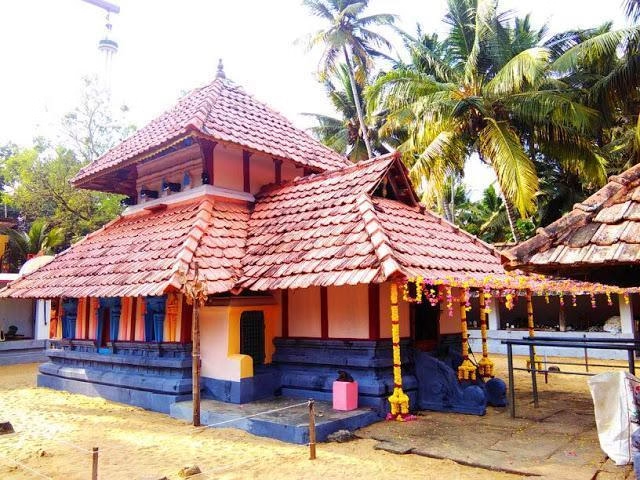
The Painkulam Shiva Temple is a classic example of traditional Dravidian Architecture. It follows the Agama Shastras and Vastu Shastra principles, oriented to align with cosmic energies.
- Sanctum Sanctorum (Vimana): The roof structure (Vimana) features the typical Dravidian tiered design, adorned with minimal yet classic carvings.
- Mandapas: The temple features a pillared hall (Mandapa) used for conducting rituals and housing the Balipeetham (offering altar). The stone pillars exhibit traditional motifs.
- Sculptures: While the temple is modest in size, the exterior walls feature sculptures of Dwarapalakas (guardian deities) guarding the sanctum. - Prakaram (Corridor): The circumambulatory path around the temple is spacious, allowing for the traditional Pradakshina (circumambulation).
**
ASI/UNESCO Status: Currently, this temple is protected and maintained by the local temple trust. While it may not yet hold a UNESCO tag, it is a protected heritage site of significant local importance.
Darshan & Ritual Logistics
To ensure a seamless spiritual experience, we have compiled the daily schedule and seva details. Note: Timings are subject to change during festivals; it is advisable to call ahead.
Daily Timings
| Darshan Session | Timings |
|---|---|
| Morning Opening | 06:00 AM |
| Morning Puja | 06:30 AM – 12:00 PM |
| Closing | 12:00 PM – 05:00 PM |
| Evening Opening | 05:00 PM |
| Evening Puja & Closing | 06:00 PM – 08:00 PM |
📖 Related: Kari Krishna Perumal Temple: Thiruayarpadi History, Darshan Timings & Guide
Key Sevas & Offerings
- Abhishekam: Performed with milk, honey, and sacred ash (Vibhuti). Best performed on Mondays.
- Archana: Recitation of Lord Shiva’s names. Available in Tamil and Sanskrit.
- Deeparadhana: The daily lamp offering.
Online Seva Booking
As of 2026, the Painkulam Shiva Temple Trust has initiated a digital portal for devotees worldwide. You can book the following services online:
- Visit the official Tamil Nadu Temple Trust portal (under development or specific link pending).
- Select “Painkulam Shiva Temple” under Kanyakumari District.
- Choose your Seva and preferred date.
2026 Festival Dates (Major Events)
- Maha Shivaratri: February 26, 2026 (Special Night Darshan).
- Pradosham: 13th and 28th of every month (Bi-monthly rituals).
- Kartikai Deepam: November 4, 2026 (Evening Lamp Lighting).
- Aadi Perukku: July 29, 2026 (Special abhishekam near the river).
Practical Visitor Guidance
Ensuring your visit is comfortable is a priority. Here are the essential guidelines for 2026.
Dress Code & Etiquette
- Attire: Traditional Indian wear is recommended. Men should wear dhotis or trousers with shirts; women should wear sarees, salwar kameez, or full-length skirts.
- Footwear: Please remove footwear before entering the temple premises. Designated racks are available.
- Photography: Photography is restricted inside the main sanctum (Garbhagriha). You may capture the outer courtyards and architecture, but silence must be maintained.
Crowd Management & Best Time to Visit
- Peak Hours: 7:00 AM – 9:00 AM and 6:00 PM – 7:30 PM. If you prefer a quiet darshan, visit between 10:00 AM and 4:00 PM.
- Seasonal Advice: Kanyakumari weather is generally humid. In May and June, temperatures rise; carry a water bottle and an umbrella. The monsoon (October-November) brings lush greenery but requires rain gear.
- Accessibility: The temple is accessible for elderly visitors, though the inner sanctum involves a few steps.
Pilgrimage Connectivity
The temple is strategically located on the border of two states, making it a significant waypoint for pilgrims.
📖 Related: Dharanishwarar Temple, Thamaraipakkam: History, Darshan Timings & Guide
How to Reach Painkulam Shiva Temple
Address: Painkulam, Munchirai Taluk, Kanyakumari District, Tamil Nadu 629171.
- By Air: The nearest airport is Trivandrum International Airport (TRV) in Kerala, located approximately 50-55 km away (about 1.5 hours by road via NH66).
- By Rail: The nearest railway junction is Kuzhithurai (11 km). Alternatively, Kanniyakumari Railway Station is 55 km away.
- By Road: The temple is situated 1 km from the Painkulam Bus Stop. It lies on the Marthandam to Thengapattinam Road.
Nearby Sacred Sites (The Pilgrimage Circuit)
- Thiruvalluvar Statue & Vivekananda Rock Memorial (Kanyakumari): Located 55 km south, this is a must-visit for history and spiritual enthusiasts.
- Muthukumaraswamy Temple (Munchirai): Just 5 km away, this temple is famous for its connection to the film Thangapathakam and Lord Murugan.
- Udayagiri Fort: Located 30 km away, this 17th-century fort offers a blend of history and nature.
Frequently Asked Questions (FAQs)
1. Is there a VIP Darshan entry available?
No, the Painkulam Shiva Temple does not have a formal VIP entry system. All devotees are treated equally, ensuring a democratic darshan experience. However, elderly and differently-abled visitors are given priority assistance at the entrance.
2. Is there a facility for mobile lockers?
Yes, a secure cloakroom facility is available near the entrance where you can deposit mobile phones, bags, and footwear before entering the inner sanctum. This is mandatory to maintain the sanctity of the temple.
3. Can we offer our own milk or coconut for Abhishekam?
Generally, only temple-provided materials are allowed for Abhishekam to maintain hygiene and ritual standards. However, you can purchase the materials (milk, honey, fruits) from the temple counter or nearby stalls.
4. Is the temple open year-round?
Yes, the temple is open daily, including weekends and most public holidays. It closes only during specific afternoon hours (12:00 PM – 5:00 PM) for rituals.
5. Are there hotels nearby?
Basic lodges are available in Munchirai and Marthandam. For more upscale accommodation, it is recommended to stay in Nagercoil (34 km) or Kanyakumari (55 km).

4354353453, Painkulam Shiva Temple, Munchirai, Kanyakumari
2017-xcx03-27, Painkulam Shiva Temple, Munchirai, Kanyakumari

4564564, Painkulam Shiva Temple, Munchirai, Kanyakumari
Shiva Temple, Painkulam Shiva Temple, Munchirai, Kanyakumari
**