
Contents
Introduction & Spiritual Essence
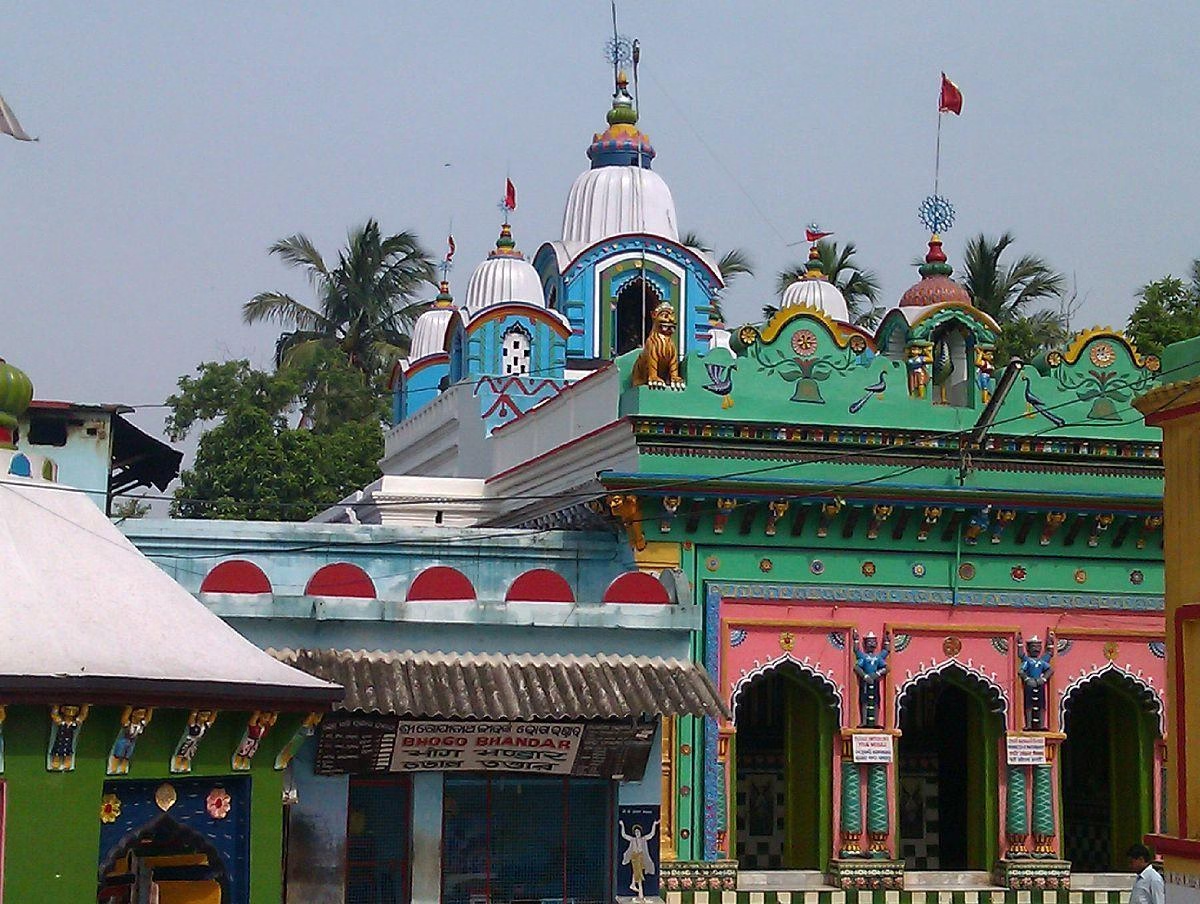
Nestled in the peaceful town of Remuna, just 9 kilometers from Balasore in Odisha, the Khirachora Gopinatha Temple stands as a timeless monument to divine love and devotion. This sacred shrine is not merely a historical site but a vibrant spiritual hub where the Deity is revered as Lord Krishna in his form as the Divine Consort of the Gopis.
The name “Khirachora” originates from the Odia language, meaning “Stealer of Milk” (Kshira – Milk, Chora – Thief). This epithet is deeply rooted in the temple’s local legend, narrating an episode from the childhood of Lord Krishna, whose love for milk products is celebrated in scripture. The presiding deity is Sri Gopinatha, a Swayambhu (self-manifested) idol that embodies the highest aesthetic sentiments of the Madhurya Rasa (sweetness of divine romance).
Phalaśruti: Why Visit?
Devotees flock to Khirachora Gopinatha to seek spiritual purification and ancestral blessings. According to the Puranas, offering prayers here is believed to cleanse ancestral karma and fulfill the sincere desires of the heart. The temple is particularly potent for devotees seeking relief from Graha Dosha (planetary afflictions) and for those yearning to deepen their Bhakti (devotion) to Lord Krishna.
Historical Origins & Scriptural Legend
The history of Khirachora Gopinatha is deeply intertwined with the Gaudiya Vaishnava tradition. While the temple’s architecture dates back to the early 14th century (approximately 1300 AD), the spiritual significance was cemented in the late 15th century by the great Madhavendra Puri, the spiritual grandfather of Sri Chaitanya Mahaprabhu.
The Legend of the Sweet Rice (Kheer):
According to the Sthala Purana and temple records, Madhavendra Puri visited Remuna while en route to Puri. Overwhelmed by the beauty of the Deity, he sat in the temple courtyard and inquired about the offering. The priest informed him that the Lord is offered sweet rice (Kheer) in twelve earthen pots every evening, a preparation known as Amrta Keli.
Madhavendra Puri felt a desire to taste this Kheer to prepare a similar offering for his own Deity, Sri Gopala in Vrindavan. However, he immediately checked himself, realizing he had committed an offense by desiring to taste the Lord’s remnants before they were offered. As he sat outside in a nearby marketplace, chanting in repentance, a boy secretly approached him, handed him a pot of Kheer, and disappeared. The pot smelled fragrant, and upon eating, Madhavendra Puri recognized it was the same celestial Amrta Keli from the temple. It is believed that Lord Gopinatha himself, through the form of a boy, stole the Kheer to satisfy his devotee’s desire—hence the name Khirachora (Stealer of Milk).
Architectural Marvels
The temple represents the classic Kalinga style of Architecture, predominant in Odisha, blending elements of Nagara and Dravida styles. It is a living testament to the medieval stone craftsmanship of the region.
Key Features:
- The Shikhara (Spire): The temple features a tiered Shikhara (tower) that rises gracefully towards the sky, culminating in a Kalasha (finial). The spire is adorned with intricate carvings depicting scenes from the life of Lord Krishna.
- The Vimana: The sanctum sanctorum (Garbhagriha) houses the Murti of Sri Gopinatha. The idol is unique; it is not a high-relief sculpture but is slightly raised from the floor, giving it a distinct standing appearance.
- Mandapas: The temple includes a Mukha Mandapa (front hall) and Naat Mandapa (dancing hall), though the latter has seen renovations over the centuries. The pillars are carved with motifs of Dwarapalas (guardian deities).
- Material: Constructed primarily using grey chlorite stone, a hallmark of ancient Odisha temples.
While the temple is a protected monument under the Odisha State Archaeology, it maintains its active worship status (living heritage site).
Darshan & Ritual Logistics
The temple follows strict Vedic rituals. The Kheer (Amrta Keli) remains the signature Maha Prasada of this temple and is distributed to devotees after the evening offering.
Daily Darshan Timings
The temple remains open from morning until late evening. (Timings are subject to change during festivals).
| Session | Timings | Ritual |
|---|---|---|
| Morning | 06:00 AM – 12:00 PM | Mangala Alati, Abhishekam, Offering |
| Afternoon | 12:00 PM – 04:00 PM | Temple Closed (Rest period) |
| Evening | 04:00 PM – 08:30 PM | Sandhya Alati, Kheer Offering |
Key Sevas & Online Booking
While traditional booking is available at the temple office, digital booking platforms are increasingly standard in 2026. Devotees can book the following:
- Maha Abhishekam: Performed on special Ekadashi days.
- Nitya Archana: Daily offering of flowers and incense.
- Kheer Offering (Amrta Keli): A special donation-based offering for the evening ritual.
Visit the official Shree Jagannath Temple Administration (SJTA) portal or the Odisha Government’s temple database for the online seva booking link.
2026 Major Festivals
Plan your visit around these auspicious dates:
- Jagannath Rath Yatra: June 27, 2026 (A grand procession in Remuna).
- Krishna Janmashtami: September 14, 2026 (The most significant festival here; the temple is decorated extensively).
- Radhashtami: September 1, 2026.
- Dola Purnima (Holi): March 13, 2026.
Practical Visitor Guidance
To ensure a seamless spiritual experience, please adhere to the following guidelines:
- Dress Code: Traditional attire is preferred. Men should wear Dhoti/Kurta or pants with a shirt; women should wear Saree, Salwar Kameez, or modest traditional wear. Western attire is discouraged inside the sanctum.
- Photography: Photography is strictly prohibited inside the sanctum sanctorum. Mobile phones should be switched to silent mode.
- Lockers: Mobile lockers and baggage deposit facilities are available near the entrance for a nominal fee.
- Crowd Management: Weekends (Sundays) and Tuesdays see higher footfall. The best time for a peaceful Darshan is between 6:00 AM and 7:30 AM.
- Seasonal Advice: Odisha summers (April-June) are hot and humid. Carry a water bottle (prior to entry) and wear cotton clothing. The Monsoon (July-Sept) brings lush greenery but occasional heavy rains; carry an umbrella.
Pilgrimage Connectivity
How to Reach Khirachora Gopinatha Temple
By Air: The nearest airport is Biju Patnaik International Airport in Bhubaneswar, approximately 200 km away. Taxis and buses are available from the airport to Balasore.
By Rail: The nearest railway junction is Balasore Railway Station (BLS). It is a major stop on the Kolkata-Chennai main line. From the station, the temple is just 9 km away, accessible via auto-rickshaws or local taxis.
By Road: Remuna is located on the National Highway 16 (NH 16) (formerly NH 5), connecting Kolkata and Chennai. Regular bus services operate from Bhubaneswar, Cuttack, and Kolkata to Balasore bus stand.
Nearby Sacred Sites (Pilgrimage Circuit)
- Chandaneswar: Located about 40 km away, this temple is famous for the annual Charak Mela and is dedicated to Lord Shiva.
- Baladevji Temple (Balasore): A historic temple in Balasore town dedicated to Lord Balarama.
- Panchalingeswar: Located near Nilagiri (approx 50 km), this is a unique Shiva temple where five lingas are situated under a perennial stream.
Frequently Asked Questions
Is there a VIP darshan entry at Khirachora Gopinatha?
Generally, VIP darshan is not distinct from general darshan at this specific temple. However, devotees donating to the temple trust for specific Sevas (like Abhishekam) are often allowed closer access during rituals.
What is the significance of the “Kheer” at this temple?
The Kheer offered here, known as Amrta Keli, is legendary. It is said to be the specific offering that captivated Madhavendra Puri. It is distinct from regular Kheer in taste and texture and is considered a direct mercy from the Lord.
How far is the temple from Balasore Railway Station?
It is approximately 9 kilometers west of Balasore Railway Station. The travel time is about 20-30 minutes by auto-rickshaw or taxi.
Are there accommodation facilities available in Remuna?
While Remuna has limited guest houses, the nearby town of Balasore offers a wide range of hotels and lodges. It is recommended to stay in Balasore for better amenities and travel to the temple for Darshan.
What are the timings for the Kheer offering?
The Kheer offering typically takes place during the Evening Sandhya Alati, usually around 7:00 PM to 7:30 PM. Devotees can purchase the Kheer Prasada after the offering.
Recent Posts

ओ सांवरे तूने ही मुझको संभाला – Lyrics & Meaning
ओ सांवरे तूने ही मुझको संभाला – A Prayer to Shyam Origin & Spiritual Essence Why This Bhajan Resonates Devotees chant this when overwhelmed by life’s storms—the refrain ‘तूने ही मुझको संभाला’ is the soul’s sigh of relief: “You…

कथा ये है महाराज मेरे की – Lyrics & Meaning
कथा ये है महाराज मेरे की छत्रपति संभाजी महाराज – A Prayer to Chhatrapati Sambhaji Maharaj Origin & Spiritual Essence Why This Bhajan Resonates Devotees chant this when their spirit feels tested—its powerful refrain “महाराज मेरे” is a soul’s…

Rigveda Samhita Yathartha Anuvada (ऋग्वेद संहिता यथार्थ अनुवाद) – Complete Set with Anvayartha & Hindi/English Translation
The Rigveda is the oldest surviving scripture of humanity and the foundational text of Sanātana Dharma. For serious students, scholars, UPSC aspirants studying ancient Indian history, Sanskrit learners, and spiritual seekers, a precise and grammatically structured translation is indispensable.…

आना भी अकेला है जाना भी अकेला है – Lyrics & Meaning | BharatTemples
आना भी अकेला है जाना भी अकेला है – A Prayer to the Divine Witness Origin & Spiritual Essence Why This Bhajan Resonates Devotees turn to this bhajan in moments of deep reflection—when life’s attachments begin to ache. The…

माता शेरावाली के द्वार जो भी जाता है – Lyrics & Meaning
माता शेरावाली के द्वार जो भी जाता है – A Prayer to Maa Sherawali Origin & Spiritual Essence Why This Bhajan Resonates Devotees turn to this bhajan in times of fear or uncertainty—its promise that no one leaves Maa’s…

मार लेना सपणी उबार लेणा भवरा – Lyrics & Meaning
मार लेना सपणी उबार लेणा भवरा – A Prayer to the Divine Beloved Origin & Spiritual Essence Why This Bhajan Resonates Devotees chant this in moments of deep vulnerability—its cry of “मार लेना सपणी, उबार लेणा भवरा” is the…

हमें श्याम सुंदर भरोसा तुम्हारा – Lyrics & Meaning
हमें श्याम सुंदर भरोसा तुम्हारा – A Prayer to Shyam Sundar Origin & Spiritual Essence Why This Bhajan Resonates Devotees chant this when feeling alone—its refrain ‘de do sahara’ is the soul’s cry for divine support. Lyrics in Hindi…

Mere Satguru Ne Di Thi Davai Lyrics in Hindi & Meaning
Mere Satguru Ne Di Thi Davai: Invoking the Guru’s Liberating Wisdom This soul-stirring bhajan venerates the Satguru (True Spiritual Master) as the divine physician who dispenses the only remedy for life’s deepest sufferings. Composed by Sant Karmaveer Tufani, it…

Janm Diyo Thari Maa Dukh Dekhiyo Lyrics in Hindi & Meaning
जन्म दियो थारी माँ दुख देखियो (Maa’s Grief Upon Birthing You) This soul-stirring Chetavani Bhajan (admonitory hymn) is addressed to the Divine Mother (Maa) – a call for repentance when children forget their filial duties in the dark age…
Bhadi Sabha Mein Thane Manaun Lyrics in Hindi & Meaning
Bhadi Sabha Mein Thane Manaun: Invoking the Spear-Wielding Mother Mata Bhawani (श्री ज्वाला भवानी), the fiery manifestation of Shakti worshipped as the Protector of Dharma in Her Dhaulagarh sanctum. Origin & Spiritual Essence Composed in Rajasthani folk tradition by…