

Contents
- 1 Kodi Kuzhagar Temple, Kodiakkarai: The Definitive Pilgrimage Guide (2026)
Kodi Kuzhagar Temple, Kodiakkarai: The Definitive Pilgrimage Guide (2026)
1. Introduction & Spiritual Essence
Nestled in the quiet, forested fringes of Kodikkarai (Point Calimere) in Nagapattinam District, the Kodi Kuzhagar Temple stands as a testament to solitary devotion and ancient Saivite heritage. Locally revered as the Amirthakadeswarar Temple, this shrine is the 244th Padal Petra Sthalam featured in the Tevaram.
The Deity: The primary deity, Lord Shiva, is a Swayambhu (self-manifested) Lingam known as Amirthakadeswarar (or Kodi Kuzhagar). He faces East. The consort, Goddess Gnana Prasunambikai (also known as Anjanakshi), faces South.
Phalaśruti (Spiritual Benefits):
- Removal of Curability: It is believed that worshipping here cures chronic illnesses.
- Education & Wisdom: Devotees pray here for academic excellence and clarity of thought.
- Marriage & Progeny: The temple is powerful for those seeking delayed marriages or blessing of children.
- Ancestral Liberation: Performing rituals here is said to cleanse ancestral karma, offering peace to forefathers.
2. Historical Origins & Scriptural Legend
Chola Legacy: While exact construction dates are obscured by the mists of time, temple inscriptions and architectural evidence point to the Chola Dynasty as the primary builders. Numerous inscriptions from the Chola period are preserved on the temple walls, detailing land grants and endowments.
Saivite Canon: The temple finds its place in the Tevaram, the 7th-century Tamil Saiva canonical work by the Nayanars (saint poets). Specifically, Sundarar (Thirunavukkarasar) sang hymns praising the loneliness and serenity of this shrine.
Local Lore (Sthala Purana):
- Rama & Sugriva: Legend holds that Sugriva suggested building the bridge to Lanka (Ramasetu) from Kodiakkarai, as it is geographically closer. However, Lord Rama refused, stating it was adharmic to attack Ravana from behind. He moved to Dhanushkodi to establish a front-facing approach. Before departing, Rama worshipped Lord Shiva here, and his footprints are preserved near the temple sanctum.
- The Nectar (Amrita): During the churning of the cosmic ocean, Vayu (wind god) held the pot of nectar. Asuras caused a disturbance, tilting the pot. A drop of nectar fell here, forming the Swayambhu Lingam. Meanwhile, Lord Muruga (Subramanya) collected the remaining nectar in a pot (Amrita Kalasam), an idol of which is found in the prakaram (circumambulatory path).
3. Architectural Marvels
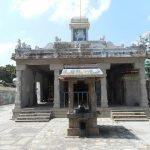
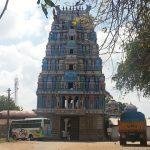
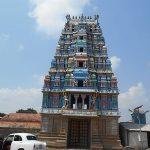
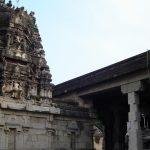
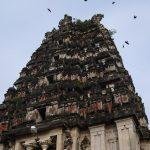
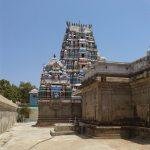
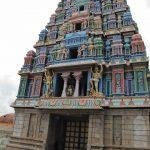
The Kodi Kuzhagar Temple is a classic example of Dravidian Architecture. Despite its secluded location, the temple features an imposing Rajagopuram (gateway tower) that welcomes devotees.
Key Features:
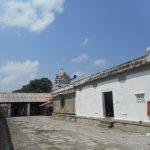
- Sanctum & Mandapa: The temple has a single prakaram (enclosure) surrounding the sanctum. The Artha Mandapa (pillared hall) houses the niche deities.
- Shikhara: The tower above the sanctum follows the Dravidian style, distinct from the Nagara style of North India.
- Notable Sculptures: Aside from the main deities, the temple houses a shrine for Subramanya holding the Amrita Kalasam. The inner walls feature carvings of various manifestations of Shiva.
- Preservation: The temple is maintained by the Government of Tamil Nadu Hindu Religious and Charitable Endowments (HR&CE) Department.
4. Darshan & Ritual Logistics
Daily Pooja Schedule
The temple follows a traditional schedule with six daily rituals. Please note that timings may vary slightly during festivals or specific rituals.
| Pooja / Darshan | Timings |
|---|---|
| Morning Opening | 6:00 AM |
| Ushathkalam Pooja | 6:30 AM |
| Kalasanthi Pooja | 8:00 AM |
| Uchikalam Pooja | 12:00 PM |
| Evening Opening | 5:00 PM |
| Sayarakshai Pooja | 6:00 PM |
| Ardhajama Pooja (Closing) | 8:00 PM |
Key Sevas & Booking
Popular Sevas include Abhishekam (sacred bathing of the Lingam) and Archana (recitation of names). Devotees often offer White Vastra (cloth) to the deity.
Online Booking: While specific links vary by HR&CE updates, devotees can typically book general and special darshans via the official Tamil Nadu HR&CE website or the ‘Arulmigu’ mobile app. For immediate assistance, contact the temple landline provided below.
2026 Festival Calendar
- Maha Shivaratri: February 26, 2026 (Major Celebrations)
- Arudra Darshanam: January 2026 (Date varies based on Tamil Calendar)
- Navaratri: October 2026
- Pradosham: Monthly (13th and 28th of every month)
5. Practical Visitor Guidance
- Dress Code: Strict traditional attire is required. Men should wear Dhoti or trousers with a shirt. Women should wear Saree, Salwar Kameez, or skirt/top. Avoid jeans and shorts.
- Photography: Photography is strictly prohibited inside the sanctum sanctorum. However, you can take photos in the outer corridors and the temple tank.
- Mobile & Lockers: There are no high-tech lockers. It is advised to travel light and keep valuables secure in your vehicle. Mobile phones should be on silent mode inside the shrine.
- Crowd Management: Being a relatively secluded temple, it is rarely crowded. However, Pradosham and Shivaratri attract local crowds. Best Time to Visit: Early mornings (6:00 AM – 8:00 AM) offer the most serene darshan.
- Seasonal Advice: During peak summer (April–June), the coastal heat is intense; carry water and an umbrella. Monsoon (Nov–Dec) brings humidity; light cotton clothing is recommended.
6. Pilgrimage Connectivity
How to Reach
By Air: The nearest airport is Tiruchirappalli International Airport (TRZ), approximately 100 km away.
By Rail: The nearest railway junction is Mayiladuthurai (approx. 45 km) or Nagapattinam (approx. 35 km).
By Road:
- Kodiakkarai is located 9 km from Vedaranyam.
- Access is via the Vedaranyam–Kodiakkarai road (State Highway).
- From Trichy: Route via Kumbakonam, Thiruthuraipoondi to Vedaranyam.
- Note: Due to the sensitive coastal nature of the region, vehicles are checked at police checkpoints before reaching the temple. Ensure ID proofs are available.
Nearby Sacred Sites (The Vedaranyam Circuit)
Enhance your pilgrimage by visiting these nearby temples:
- Vedaranyeswarar Temple, Vedaranyam: A Shaiva Kshetram of great significance, located just 9 km away.
- Thirukuvalai (Naganathaswamy Temple): The birthplace of Saint Thirugnana Sambandar, approx 20 km away.
- Sikkal Singaravelan Temple: Famous for the ‘Veeravan’ festival where Murugan receives the Spear (Vel) from Parvati.
Photo Gallery
7. Frequently Asked Questions (FAQ)
1. Is there a VIP darshan entry at Kodi Kuzhagar Temple?
Due to the temple’s location in a protected forest zone, the temple management maintains a simple structure. There is no formal VIP entry like in larger city temples. However, devotees with special requirements for Abhishekam should contact the office in advance.
2. What is the significance of the footprint near the sanctum?
It is believed to be the footprint of Lord Rama. It represents the spot where Rama stood before proceeding to Dhanushkodi to build the Ram Setu, after refusing to attack Ravana from the rear direction at Kodiakkarai.
3. Are outside vehicles allowed inside the temple complex?
Yes, two-wheelers and cars are allowed right up to the temple entrance. However, due to police security checks at the entrance of the Kodiakkarai forest range, ensure you carry valid vehicle documents.
4. Is food available nearby?
There are limited eateries in Kodiakkarai. The temple may offer Prasadam during noon. It is advisable to carry water and light snacks, or plan your meal back in Vedaranyam or Nagapattinam.
5. What makes this a Paadal Petra Sthalam?
It is classified as a Paadal Petra Sthalam because it is one of the 275 temples revered in the Tevaram hymns sung by the Nayanar saints (Sundarar, Appar, Sambandar) in the 7th century CE.
Contact Details
Sri Kodi Kuzhagar Koil – Amudha Kadeswarar Koil
Kodiakadu – 614 821, Nagapattinam District, Tamil Nadu.
Phone: +91 – 4369 272 470
Recent Posts

Shri Kaamkoteeshwar Mandir, Varanasi – History & Significance
In the heart of Kashi, the eternal city of Lord Shiva, where the Ganges flows with celestial grace, stands the Shri Kaamkoteeshwar Mandir. This sacred Sannidhi is not merely a temple but a profound spiritual bridge between the Northern…

ओ सांवरे तूने ही मुझको संभाला – Lyrics & Meaning
ओ सांवरे तूने ही मुझको संभाला – A Prayer to Shyam Origin & Spiritual Essence Why This Bhajan Resonates Devotees chant this when overwhelmed by life’s storms—the refrain ‘तूने ही मुझको संभाला’ is the soul’s sigh of relief: “You…

कथा ये है महाराज मेरे की – Lyrics & Meaning
कथा ये है महाराज मेरे की छत्रपति संभाजी महाराज – A Prayer to Chhatrapati Sambhaji Maharaj Origin & Spiritual Essence Why This Bhajan Resonates Devotees chant this when their spirit feels tested—its powerful refrain “महाराज मेरे” is a soul’s…

Rigveda Samhita Yathartha Anuvada (ऋग्वेद संहिता यथार्थ अनुवाद) – Complete Set with Anvayartha & Hindi/English Translation
The Rigveda is the oldest surviving scripture of humanity and the foundational text of Sanātana Dharma. For serious students, scholars, UPSC aspirants studying ancient Indian history, Sanskrit learners, and spiritual seekers, a precise and grammatically structured translation is indispensable.…

आना भी अकेला है जाना भी अकेला है – Lyrics & Meaning | BharatTemples
आना भी अकेला है जाना भी अकेला है – A Prayer to the Divine Witness Origin & Spiritual Essence Why This Bhajan Resonates Devotees turn to this bhajan in moments of deep reflection—when life’s attachments begin to ache. The…

माता शेरावाली के द्वार जो भी जाता है – Lyrics & Meaning
माता शेरावाली के द्वार जो भी जाता है – A Prayer to Maa Sherawali Origin & Spiritual Essence Why This Bhajan Resonates Devotees turn to this bhajan in times of fear or uncertainty—its promise that no one leaves Maa’s…

मार लेना सपणी उबार लेणा भवरा – Lyrics & Meaning
मार लेना सपणी उबार लेणा भवरा – A Prayer to the Divine Beloved Origin & Spiritual Essence Why This Bhajan Resonates Devotees chant this in moments of deep vulnerability—its cry of “मार लेना सपणी, उबार लेणा भवरा” is the…

हमें श्याम सुंदर भरोसा तुम्हारा – Lyrics & Meaning
हमें श्याम सुंदर भरोसा तुम्हारा – A Prayer to Shyam Sundar Origin & Spiritual Essence Why This Bhajan Resonates Devotees chant this when feeling alone—its refrain ‘de do sahara’ is the soul’s cry for divine support. Lyrics in Hindi…

Mere Satguru Ne Di Thi Davai Lyrics in Hindi & Meaning
Mere Satguru Ne Di Thi Davai: Invoking the Guru’s Liberating Wisdom This soul-stirring bhajan venerates the Satguru (True Spiritual Master) as the divine physician who dispenses the only remedy for life’s deepest sufferings. Composed by Sant Karmaveer Tufani, it…

Janm Diyo Thari Maa Dukh Dekhiyo Lyrics in Hindi & Meaning
जन्म दियो थारी माँ दुख देखियो (Maa’s Grief Upon Birthing You) This soul-stirring Chetavani Bhajan (admonitory hymn) is addressed to the Divine Mother (Maa) – a call for repentance when children forget their filial duties in the dark age…